

How to Become an Occupational Therapist in the UK
By Mobile Occupational Therapist • 17 October 2026 • 12 min read
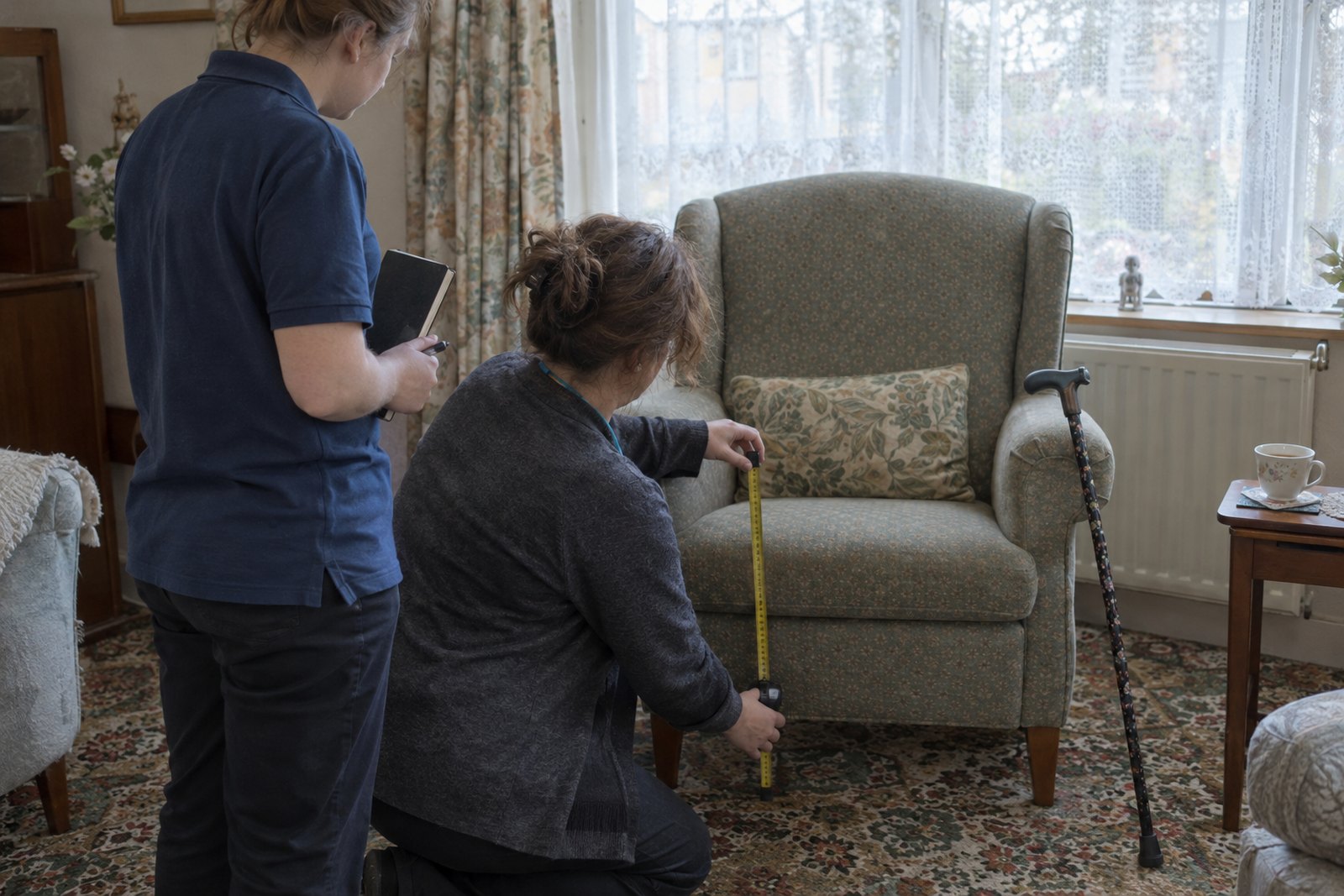
To become an occupational therapist in the UK, you complete a degree-level course approved by the Health and Care Professions Council (HCPC), then register with the HCPC. "Occupational therapist" is a protected title in law, so nobody can call themselves one without that registration. There is no shortcut around it, and no short online course that gets you there, whatever the adverts say.
There are three main ways in. A BSc (Hons) degree, usually three years full time in England, Wales and Northern Ireland and four in Scotland. A pre-registration MSc, usually two years, for people who already have a degree in another subject. Or a degree apprenticeship, where you are employed and paid while you study. All three lead to the same registration and the same jobs. Which one suits you depends mostly on where you are starting from and how you will pay the bills while you train.
First, what the job actually is
Occupational therapists help people do the everyday things that matter to them when illness, injury, disability, age or mental health gets in the way. That might be getting washed and dressed after a stroke, managing a job with a long-term condition, helping a child cope with school, or making a home safe enough for someone to leave hospital. If you want a fuller picture before committing, our plain English guide to occupational therapy and the overview of the different types of occupational therapy are written for the public but are a decent starting point.
It is a broad profession. The same qualification can take you into a hospital ward, a mental health team, a council office, a school, a prison or someone's front room. That breadth is one of the best things about it, and also why people sometimes struggle to explain to relatives what they do.
The three routes in
The BSc (Hons) degree
This is the most common route, particularly for school and college leavers. You study anatomy, physiology, psychology, the theory of occupation, assessment and intervention, research methods and professional practice, and you spend a large part of the course on placement. Some universities also offer part-time versions, which can suit people with caring responsibilities or a job they need to keep, though placements still take real chunks of time.
The pre-registration MSc
If you already have an undergraduate degree, usually in a related subject such as psychology, sport science, biology or social sciences, but not always, you can take a pre-registration master's. These are often described as accelerated because they cover the same ground for registration in roughly two years. They are intense. Expect fewer long holidays and a lot of independent study. Do not confuse these with post-registration MSc courses, which are for people who are already qualified occupational therapists. Only a course labelled pre-registration (and approved by the HCPC) leads to registration.
The degree apprenticeship
In England, some employers offer occupational therapy degree apprenticeships. You are employed, usually by an NHS trust, council or care provider, and you study for the degree alongside your job, with your training paid for through apprenticeship funding rather than by you. Many places go to people already working as occupational therapy support workers or assistants. Places are limited and are advertised by employers, often on NHS and council job sites, rather than through the usual university application system. Apprenticeships tend to take longer than a full-time degree because you are working at the same time.
Getting a foot in the door first
If you are not ready to apply, or want to test the waters, a job as an occupational therapy support worker, rehabilitation assistant or care worker is genuinely useful. It shows universities you understand the work, it can lead to an apprenticeship, and it will tell you quickly whether you like it.
HCPC registration and RCOT accreditation: what they mean
The HCPC is the regulator. It approves training programmes, keeps the register of occupational therapists, and sets the standards you must meet: its standards of proficiency for occupational therapists and its standards of conduct, performance and ethics. When you finish an approved course, you apply to join the register. Once registered, you renew every two years, keep a record of your continuing professional development, and must have appropriate professional indemnity cover. The HCPC publishes a list of approved programmes on its website. Before you apply anywhere, check the course is on it.
The Royal College of Occupational Therapists (RCOT) is the professional body. It accredits pre-registration courses against its own education standards, which sit alongside HCPC approval, and offers membership, guidance, specialist sections and professional support. Membership is optional, although many occupational therapists join, and student membership is available. In short: HCPC registration is the legal requirement; RCOT accreditation is a sign the course also meets the profession's own benchmark.
Entry requirements, in general terms
Every university sets its own requirements, so treat this as a rough guide and check the course page.
- For a BSc: A levels, Scottish Highers or equivalent qualifications such as a BTEC or an Access to Higher Education Diploma. Some courses ask for a particular subject, often biology or a social science. Most also want GCSE English and maths, or equivalents.
- For a pre-registration MSc: an honours degree, often at 2:1 or above, though some universities consider other grades alongside relevant experience.
- Evidence you understand the profession: shadowing an occupational therapist is hard to arrange, and universities know it. Paid or voluntary work in care, health, education or support roles, and being able to talk thoughtfully about what occupational therapists do, usually count for a lot.
- An interview or selection day: often values-based, looking at how you think about people, dignity and teamwork as much as what you know.
- Checks: an enhanced criminal record check (DBS in England and Wales, PVG in Scotland, AccessNI in Northern Ireland) and occupational health clearance before placements.
- English language: international applicants will need to meet the university's language requirements, and the HCPC sets its own English language standard for registration.
Mature students and career changers are common in occupational therapy. Life experience is often seen as an asset, not a problem.
Funding, in general terms
Funding differs between the four nations and changes from time to time, so check the official sources rather than relying on what a friend was told a few years ago.
- England: most eligible students use Student Finance England for tuition and maintenance loans. Eligible students on approved courses can also apply to the NHS Learning Support Fund, run by the NHS Business Services Authority, which offers non-repayable support and help with some placement costs such as travel. Check its eligibility rules, including how they apply to postgraduate courses.
- Wales: has its own arrangements for healthcare students. Check with Student Finance Wales and Health Education and Improvement Wales.
- Scotland: check with the Student Awards Agency Scotland (SAAS).
- Northern Ireland: check with Student Finance NI and the university.
- Apprenticeships: you do not pay tuition fees and you earn a wage, which is why they are competitive.
Think about the practical side too. Placements are usually full time, may be some distance from home and can run on shift patterns. Holding down a regular part-time job through them is harder than many students expect.
Placements
Practice placements are where you learn the job. Accredited courses include at least 1,000 hours of assessed practice, in line with international standards for occupational therapy education. You will normally be placed in a range of settings, for example a hospital, a community team, a mental health service and perhaps a school, charity or social care team. Some courses use role-emerging placements, in settings with no occupational therapist on site, supervised from a distance.
You are supervised and assessed by a practice educator, an experienced occupational therapist who signs off your competence. A few honest tips:
- Ask questions early and often. Nobody expects you to know everything; they do expect you to say when you do not.
- Keep good notes of what you did and why. It helps with assessments and later with job applications.
- Treat every setting as useful, even the one you did not want. Skills transfer more than you think.
- If a placement is going badly, tell your university tutor sooner rather than later.
Your first job
Once you are registered, you can apply for jobs as a qualified occupational therapist.
The NHS
Newly qualified occupational therapists in the NHS usually start at Band 5 on the Agenda for Change pay scale. Many acute and community trusts offer rotational posts, where you move between areas such as medicine, orthopaedics, community rehabilitation and mental health every few months. Most employers offer a preceptorship, a structured period of support for new registrants. It is worth asking about this at interview.
Social care
Local councils employ occupational therapists in adult social care, and sometimes children's services. The work centres on social care assessments (under the Care Act 2014 in England, with equivalent laws in Wales, Scotland and Northern Ireland), equipment, home adaptations and supporting applications for adaptation funding such as Disabled Facilities Grants. It suits people who like problem-solving in real homes and are comfortable with paperwork and budgets.
Private and third sector
Occupational therapists also work for charities, housing associations, care home groups, case management firms, schools and independent practices. Some private employers take newly qualified staff; many prefer a year or two of experience. Plenty of new graduates find that the structure, supervision and variety of an NHS or council post makes a solid foundation, wherever they end up.
Specialising
After a few years, most occupational therapists start to focus. Progression in the NHS typically runs through Band 6 and Band 7 posts towards clinical specialist, advanced practice and consultant roles, with management, education and research as alternative paths. Common specialisms include neurology, paediatrics, hand therapy, mental health, older people, housing, vocational rehabilitation, seating and wheelchairs, and driving assessment. Some of these involve further postgraduate training. RCOT's specialist sections are a good way to meet people already working in an area and find out what the route looks like.
Moving into independent practice later
Many occupational therapists eventually work privately, either full time or alongside an employed post. There is no legal minimum amount of experience, but working alone in people's homes demands sound clinical judgement, so most build several years of experience first, ideally in the area they plan to work in.
Going independent means taking on things an employer used to handle. You remain bound by HCPC standards and must have suitable professional indemnity insurance. You will also need to register as self-employed or set up a company, keep secure records and meet data protection rules, arrange your own clinical supervision and continuing development, and think about how you will get referrals.
Typical private work includes home visits and assessments, equipment and adaptation recommendations, reports for grants, benefits or legal cases, paediatric work and workplace assessments. It is worth reading what the public is told to check when choosing a private occupational therapist, because that is exactly what your future clients will look for. Our home assessments page gives a feel for this kind of work from the client's side.
Is occupational therapy the right career for you?
It helps to know where occupational therapy sits next to similar professions, because applicants sometimes pick the wrong one.
- Physiotherapy focuses on movement, strength, exercise and physical rehabilitation. If what excites you is the body itself and getting it moving, look at physio.
- Speech and language therapy covers communication and swallowing.
- Nursing centres on direct clinical care and health monitoring.
- Social work deals with safeguarding, rights, family situations and access to support.
- Occupational therapy is about what people do day to day, and changing the task, the environment or the approach so they can do it. It suits practical, creative problem-solvers who are interested in the whole person.
It is also demanding. Expect emotionally hard situations, a fair amount of writing, and the frustration of knowing what someone needs and waiting for it to be funded. If that sounds like something you can live with, the work is varied and often deeply satisfying.
Frequently asked questions
How long does it take to become an occupational therapist?
Usually three years for a full-time BSc in England, Wales and Northern Ireland, four years in Scotland, or around two years for a pre-registration MSc if you already have a degree. Part-time courses and apprenticeships take longer. Add a short time after graduating for your HCPC registration to be processed.
Can I become an occupational therapist without a degree?
No. You must complete an HCPC-approved programme, all of which are at degree level or above. A degree apprenticeship lets you earn while you study, but it still includes the degree. Support worker and assistant roles do not require a degree and can be a route towards one.
Am I too old to train as an occupational therapist?
Very unlikely. Career changers in their thirties, forties and beyond are common on occupational therapy courses, and the pre-registration MSc exists largely for graduates moving across from other fields. Experience of work, parenting or caring often helps.
Do I have to join the Royal College of Occupational Therapists?
No. HCPC registration is the legal requirement to practise. RCOT membership is optional, though many occupational therapists find its guidance, specialist sections and professional support worth having.
I qualified as an occupational therapist abroad. Can I work in the UK?
You will need to apply to the HCPC through its international registration route, which assesses whether your training and experience meet UK standards, including English language requirements. Check the HCPC website for the current process and documents needed before you plan a move.
How much do occupational therapists earn?
In the NHS, pay follows the Agenda for Change bands, with newly qualified staff usually starting at Band 5. The pay scales are published and updated each year, so check the current figures on the NHS Employers or NHS Health Careers websites. Pay in councils, charities and private practice varies by employer and area.
Next steps
If you are already qualified and curious about home-visit work, see our home assessments page for the kind of work private occupational therapists do, or visit our page for occupational therapists to find areas to cover, and choose an area below.
Talk to an occupational therapist near you
This guide is general information. For advice about your own situation - or someone you look after - a local occupational therapist can visit you at home and see it for themselves.
Choose your area: