

Night Time Incontinence in Older Adults: Practical Help
By Mobile Occupational Therapist • 25 September 2026 • 13 min read
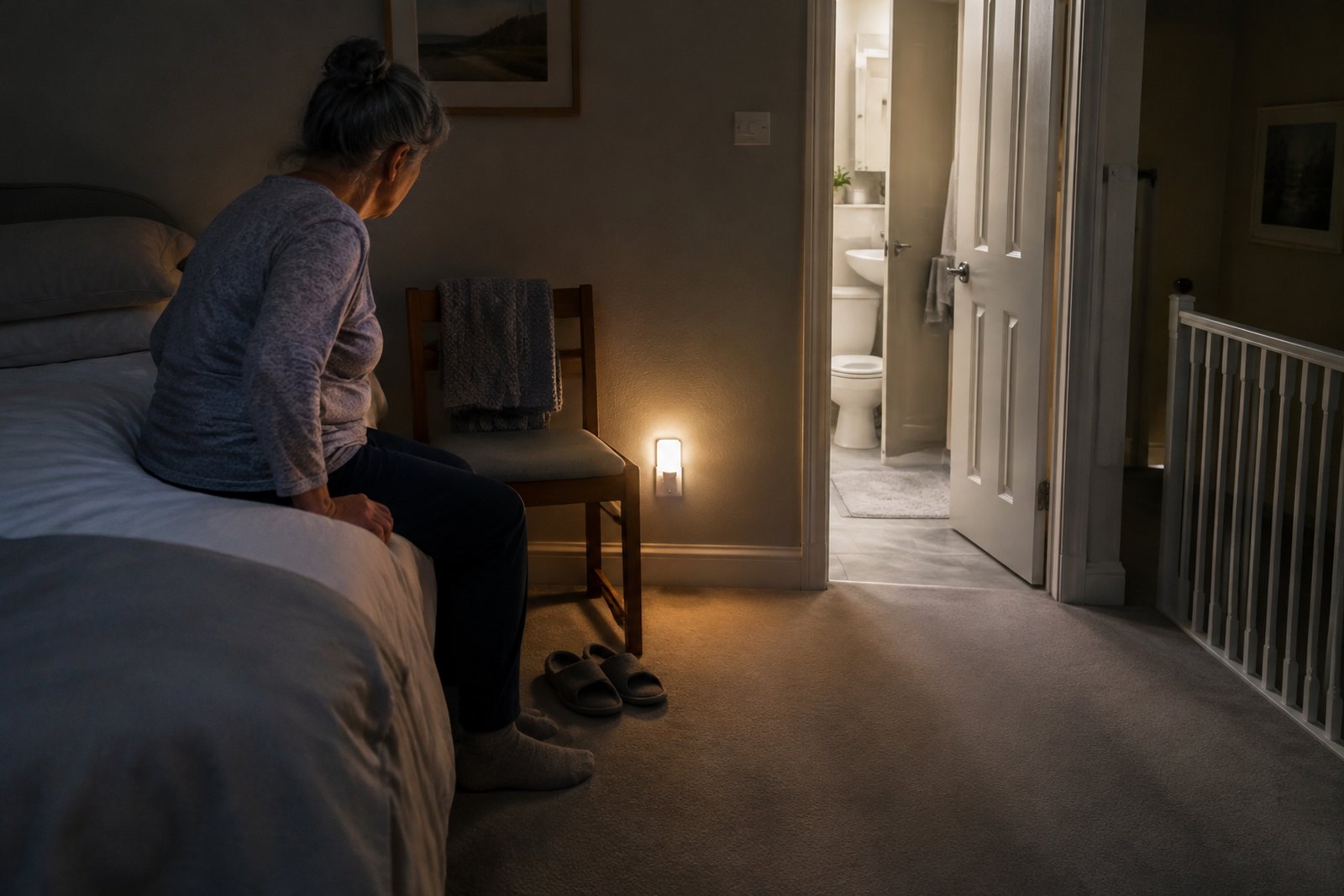
Night time incontinence in older adults usually improves most when you tackle it from two directions at once: get the medical causes checked, and make toileting easier and safer at night. It is rarely just "old age".
If you are dealing with bedwetting in an elderly parent, or you are the one getting up four, five, six times a night, you do not need to wait until you are at breaking point. There are practical changes you can start today. But the first step is making sure there is not something treatable going on.
First, get it checked
Night time incontinence can happen because the bladder is overactive, because someone cannot get to the toilet in time, because they are not waking properly, or because they are producing more urine overnight (called nocturnal polyuria, which can lead to nocturia, meaning waking at night to pass urine). A GP or continence service can help work out which is most likely.
Do not feel you have to "earn" an appointment. You can say: "This is affecting sleep and it is unsafe at night. We need help."
When to seek help urgently
Some situations need prompt medical advice rather than home tweaks:
- Sudden new incontinence, especially if it started over hours or days.
- New confusion, agitation or extreme sleepiness alongside incontinence. Infections, dehydration and some medicines can tip people into delirium.
- Pain or burning when passing urine, fever, shivering, feeling generally unwell, or blood in urine.
- New weakness, numbness, severe back pain, or loss of bowel control.
If you are seriously worried, call NHS 111 for advice. If someone is very unwell, has severe symptoms, or you think they are in danger, call 999.
Common treatable causes to ask about
These are some of the things a GP will often consider. You do not need to diagnose. It just helps to know what might be on the list.
- Urinary tract infection. In older adults this often shows up with urinary symptoms such as burning or pain when passing urine, increased frequency or urgency, new incontinence, or fever and feeling unwell. Confusion or behaviour change can occur with many illnesses and should not be assumed to be a UTI on its own, so it needs prompt assessment.
- Constipation. A backed up bowel can press on the bladder and make urgency and leakage worse. Constipation is common if someone is less mobile or on certain pain medicines.
- Prostate problems in men (for example difficulty starting, weak flow, dribbling, feeling not fully emptied). Some men get overflow leaking because the bladder is not emptying properly.
- Diabetes. High blood glucose can increase urine production and thirst.
- Heart failure and swollen ankles. Fluid can shift back into the bloodstream when lying down, leading to more urine overnight. This needs medical input.
- Medicines. Water tablets (diuretics), some sleeping tablets, and some medicines for blood pressure, mood or Parkinson's can affect continence or how well someone wakes. Do not stop medicines yourself, but do ask for a medication review.
- Mobility, pain and balance problems. Sometimes the bladder is fine. It is the trip to the toilet that is not.
What to do before the appointment
You will get more out of a GP or continence appointment if you bring a simple "bladder diary" for 2 to 3 days. Use any notebook. Write down:
- What time they drink, and roughly how much
- What time they pass urine
- Any leaks (what time, how much, what was happening)
- Any bowel movements (and whether they seemed constipated)
- Night waking (how many times, whether they made it in time)
If you are supporting a parent, take photos of the current set-up (route to the toilet, bathroom doorway, the bed height) so you can show the GP or continence nurse what you are dealing with.
Make the trip to the toilet easier and safer
A lot of "night time incontinence" is really "night time not getting there". When someone is sleepy, stiff, in pain, unsteady, or worried about falling, accidents are more likely. Your aim is to make the journey short, obvious, well-lit, and something they can do half asleep.
Start with a clear, lit route
Think like a tired person in the dark. Then simplify.
- Light the route from bed to toilet. A low level light can reduce falls without fully waking someone up. Keep the bathroom light easy to switch on.
- Remove trip hazards like loose mats, trailing leads and clutter in the bedroom and hallway.
- Make the toilet door easy. If someone struggles with handles or locks, it adds precious seconds.
- Keep walking aids where they are used. If someone uses a stick or frame, it needs to be within reach before they stand up.
If you are also worrying about falls, read our practical guide to safer nights here: night-time safety for older adults.
Bring the toilet closer
If the bathroom is far away, stairs are involved, or someone is not steady, a bedside option can be the difference between sleeping and not sleeping.
- A commode by the bed can reduce urgency accidents and reduce falls risk. It needs to be the right height and stable, with a clear transfer space beside the bed.
- A urinal can work for some people, especially if standing and walking is the main barrier. The key is safe positioning, adequate lighting, and a plan for emptying and cleaning that preserves dignity.
For some families, a commode feels like "giving up". In reality it is often a short-term safety measure while you get medical assessment, rehab, or bathroom changes in place.
Make the toilet easier to use
Once someone gets into the bathroom, the toilet itself can still be the problem. Common issues are low toilet height, poor balance when turning, and not having anything safe to hold.
- Check the seat height. If knees are much higher than hips, standing up is harder and slower.
- Consider a raised toilet seat if standing is difficult. It should be fitted securely.
- Add rails or a toilet frame if balance is poor. Do not assume towel rails or basins are safe to pull on. Many are not designed to take body weight.
- Check wiping and clothing management. If someone cannot twist, reach, or use one hand well, they may need a different routine, different positioning, or equipment.
If you rent or you are unsure what can be fitted safely, an assessment can help you plan changes that are secure and appropriate.
Reduce accidents without restricting fluids
It is tempting to cut drinks dramatically. It often backfires. Dehydration can worsen constipation, increase falls risk (from dizziness), and increase the risk of urinary tract infection. The aim is smarter drinking, not hardly drinking.
Time drinks, do not eliminate them
- Front-load fluids earlier in the day where possible. Many people find it helps to drink regularly in the morning and early afternoon, then slow down later.
- Keep sips available if someone wakes with a dry mouth or takes tablets at night.
- Watch caffeine and alcohol in the late afternoon and evening. Both can worsen urgency for some people.
If someone has kidney disease, heart failure or swallowing difficulties, get medical advice on safe fluid targets rather than guessing.
Look at the evening routine
Small routine changes can reduce last-minute urgency:
- Toilet "just in case" about 30 to 60 minutes before bed, then again right before settling.
- Warmth and pain control as advised by clinicians. When someone is cold or sore, moving quickly is harder.
- Lay out night items so there is no rummaging: glasses, hearing aids, stick, dressing gown, slippers, continence products and wipes if used.
Make clothing faster
At night, fiddly clothing becomes a continence problem.
- Choose easy waistbands and avoid tight fastenings.
- Keep layers simple. Multiple waistbands, long nightdresses under cardigans, or belts can slow everything down.
- Prioritise warmth without bulk if they are getting cold and stiff at night.
If arthritis, tremor or one-handed ability is part of the picture, it can be worth practising a new "night toilet routine" in the daytime, when everyone is calmer.
Protect the bed and skin
Even with the best plan, accidents happen. The goal is to protect skin, protect sleep, and keep the clean-up as quick as possible.
Bed protection that makes nights easier
Think in layers. You want something that:
- protects the mattress
- is comfortable (not crinkly or sweaty)
- can be changed quickly
Common options include waterproof mattress protectors and washable or disposable bed pads. Some families use two sets of layers so they can remove one and put the person back to bed quickly, then deal with laundry properly in the morning.
If someone is also at risk of pressure sores, choose protection that does not bunch up, wrinkle, or trap heat against the skin.
Pads and NHS continence services
Many areas provide pads through an NHS continence service, but the criteria vary. Some people will be offered products, some will be offered advice and pelvic health support, and some will be directed to buy their own. It is still worth asking, especially if cost is becoming a problem.
Our guide to accessing help is here: free incontinence pads and NHS continence services.
Skin care and when to involve a nurse
Urine against the skin can cause soreness quickly, particularly if someone is frail, has diabetes, or spends long periods sitting or in bed. The basics matter:
- Change wet pads and clothing promptly where possible.
- Clean gently with warm water or suitable wipes and pat dry. Avoid vigorous rubbing on fragile skin.
- Check the skin daily, especially the bottom, groin, inner thighs and any pressure points.
- Use barrier products if advised by a pharmacist, continence nurse or district nurse, especially if skin is breaking down.
If you see broken skin, blistering, weeping areas, a strong smell from the skin, or increasing redness that does not settle, seek clinical advice. If you are unsure what you are seeing, our plain English guide can help you describe it: pressure ulcer categories explained for family carers.
Dignity, sleep and support for carers
Night time incontinence is not only a practical problem. It is a dignity problem, a relationship problem, and a sleep problem. It can also bring old feelings to the surface: embarrassment, anger, grief, stubbornness, fear.
Talking about it without a row
Many older adults would rather risk a fall than admit they are wetting the bed. A conversation usually goes better in the daytime, not at 2am. Helpful phrases can be:
- "This is about safety and sleep, not about you being a nuisance."
- "We are going to try a few changes for two weeks and see what helps."
- "Let's get it checked. Sometimes there is a simple reason."
If a parent refuses help, pick one change that benefits them clearly (for example better lighting) and start there. Once they feel less pushed, they may accept more.
Protect the carer's sleep where you can
Broken sleep is a health issue. It affects your judgement, your mood, and your ability to keep someone safe.
- Reduce the number of trips by making toileting quicker (clothing, lighting, commode).
- Share the night load if there is anyone else who can do even one night a week.
- Ask about care support through your council if needs are high. Carers can also request their own assessment.
- Be realistic about risk. If you are so exhausted you are dozing while helping someone walk to the toilet, that is a falls risk for both of you.
If nights are unsafe, it is reasonable to say: "We cannot manage this without changes." That might mean equipment, a different care plan, or a different living arrangement. Saying it early is kinder than waiting until there is an ambulance involved.
Where an occupational therapist fits
An occupational therapist (OT) does not treat infections or prescribe continence medicines. A GP and continence service are the right people for that. What an OT can do is make nights workable again by focusing on function, routines and safety in the real home.
A private occupational therapist visiting at home can:
- assess transfers in and out of bed and on and off the toilet, including balance and "near misses"
- recommend the most suitable toileting set-up, which might include toilet height changes, rails, a commode, or a different bed position
- look at the whole route at night and reduce falls risk (lighting, clutter, footwear, walking aids, doorways)
- problem-solve clothing and fastenings so someone can manage quickly and with less help
- advise on routines and pacing, particularly when fatigue or breathlessness makes night-time harder
- support families to talk about dignity, privacy and what help is acceptable
- write clear recommendations that can support requests to the council or other services, when appropriate
If the main issue is pelvic floor weakness after childbirth, a specialist pelvic health physiotherapist may be the best lead. If someone has memory problems affecting toileting, a GP and memory clinic assessment may be needed alongside practical home support. If there are swallowing problems or coughing with drinks, a speech and language therapist should be involved as well.
Frequently asked questions
Is night time incontinence normal in older age?
It is common, but it is not something you should automatically accept. There are many treatable contributors, including infection, constipation, prostate problems, diabetes, medication effects and mobility issues. A check-up is worth it even if you think nothing will change.
How many times is "too many" to wee at night?
There is no single cut-off. If night waking is disrupting sleep, causing falls risk, or leading to daytime exhaustion, it is worth discussing with a GP or continence service. Bringing a simple bladder diary helps show the pattern clearly.
Should we stop drinks in the evening to prevent bedwetting?
Usually no. Cutting fluids too much can lead to dehydration, constipation and higher risk of urinary tract infection, which can worsen incontinence. Aim to drink regularly earlier in the day, then reduce gradually later on, and ask a clinician if there are conditions that need a specific fluid plan.
Can the NHS provide pads for older adults?
Many areas have an NHS continence service that can assess and may provide products, but criteria differ by location and by need. Start by asking the GP surgery how to refer, or whether self-referral is available locally. The continence team may also offer advice and treatment options, not just pads.
What if my mum or dad is suddenly wetting the bed and seems confused?
Seek medical advice promptly. Sudden incontinence plus confusion can be a sign of infection, dehydration or another acute illness, and older adults can become unwell quickly. If you are worried about their immediate safety, call NHS 111, or 999 in an emergency.
What is the best way to protect the mattress and skin?
A waterproof mattress protector plus an absorbent pad that stays flat is a practical starting point. Change wet layers as soon as you reasonably can, and check skin daily for redness or soreness. If skin is breaking down, ask a clinician for advice rather than trying to manage it alone.
Next steps
If you want practical, tailored advice for your home, see our home assessment page, or current guide prices, and choose your area below.

Talk to an occupational therapist near you
This guide is general information. For advice about your own situation - or someone you look after - a local occupational therapist can visit you at home and see it for themselves.
Choose your area: