

Visual Neglect After Stroke: Signs, Risks And Help At Home
By Mobile Occupational Therapist • 4 November 2026 • 12 min read
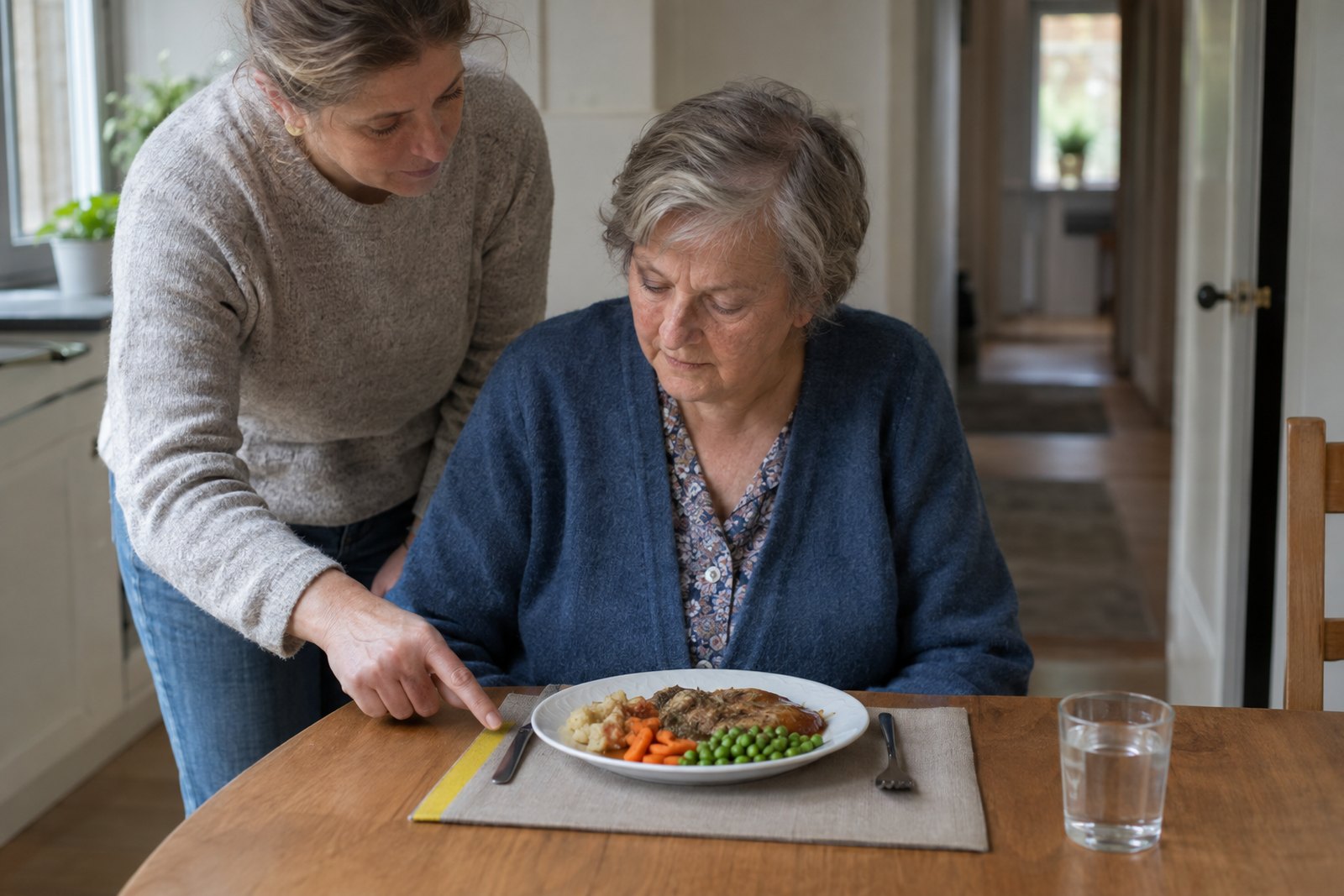
Visual neglect after stroke (also called inattention after stroke or unilateral neglect) is when the brain does not take in what is happening on one side. It is not the same as being blind on that side. A person can have eyes that work, but their attention does not go there unless they are prompted. It is most common after a right-sided stroke, and often affects the left side of space or the left side of the body.
For families, the day to day problem is usually safety and frustration: food left on one side of the plate, door frames bumped, one shoe forgotten, half a face shaved, a wheelchair arm caught in the wheel, or someone stepping into a road without checking properly. The good news is that there are practical strategies you can start at home, and an occupational therapist can teach a structured approach that fits your relative and your layout.
What visual neglect after stroke is
Neglect is an attention and awareness problem. The brain is not automatically searching, noticing or responding to one side. People often describe it as if that side of the world has gone missing.
Neglect can affect:
- Personal space - not noticing the affected arm or leg, forgetting it exists, leaving it trapped in an awkward position, or not dressing one side.
- Near space - missing objects on one side of the table, plate, sink or worktop.
- Far space - bumping into one side of doorways, missing people approaching from that side, misjudging position when walking outdoors.
It can come with other stroke effects, such as weakness on one side, reduced sensation, fatigue, slower thinking, or changes in vision. Neglect can also vary through the day. It is often worse when someone is tired, in pain, rushed, or in a noisy environment.
Neglect is not the same as hemianopia (but they can overlap)
A common confusion is between visual neglect and visual field loss. Hemianopia is the loss of half of the visual field. After a stroke it is usually the same side in both eyes, because of damage to the visual pathways in the brain. Neglect is different: the visual information may be there, but the brain is not attending to it.
Why it matters: the strategies are similar in places (for example, scanning), but the emphasis can differ, and a person can have both problems at once. If you suspect either, ask the stroke team, GP or optometry service what assessments have been done and what was found. This article on hemianopia after stroke explains visual field loss in plain English.
If someone has new visual symptoms, double vision, severe headache, sudden worsening, new weakness or confusion, treat it as urgent. Call 999.
How neglect shows up day to day
Neglect may be less obvious in a quiet therapy room, and it often shows up more clearly in normal life when there is movement, clutter, time pressure, and tasks with several steps. It shows up in normal life, when there is movement, clutter, time pressure, and tasks with several steps. Signs you might notice include:
- Eating and drinking - only eating from the right side of the plate or bowl; leaving drinks on one side untouched; not noticing food on one side of the mouth.
- Grooming - shaving or applying make-up to one side; brushing one side of hair; washing one armpit only.
- Dressing - one arm left out of a sleeve; one sock or shoe missed; clothing twisted because one side is not checked.
- Mobility - catching the affected foot on thresholds; walking too close to one side and clipping furniture; turning the wrong way when asked to look.
- Wheelchair use - the affected arm slipping off an armrest or getting into the wheel; not noticing a foot is not on the footplate.
- Reading and paperwork - starting in the middle of a page; missing the left side of lines; leaving out words on one side.
- Conversation - not responding when spoken to from the affected side, even though hearing is fine.
Some people are not aware they are missing anything. That is part of the condition. Correcting them can feel like an argument, because to them, they are looking straight ahead and doing the task.
Why neglect increases risk at home
Neglect is not just inconvenient. It can make everyday activities actively risky, especially when combined with weakness, poor balance, reduced sensation, or impulsivity.
Common safety risks to watch for
- Falls - catching feet on door thresholds, missing one side of stairs, turning too quickly, not noticing obstacles.
- Burns and scalds - not noticing the affected hand is near a hot mug, hob edge or radiator; reaching across a hot surface without scanning.
- Cuts - missing the position of a hand when cutting food; not noticing a sharp object on the neglected side.
- Wheelchair injuries - hands or feet pulled into moving parts, or pressure injuries from poor positioning.
- Road safety - not scanning fully at crossings, stepping into the path of others, misjudging kerbs.
- Medication and meals - missing items placed on one side, or not noticing that part of a meal has not been eaten.
If you are worried about falls, this guide to falls prevention at home covers practical changes beyond exercise. With neglect, the priority is usually reducing hazards and simplifying spaces, alongside training scanning habits.
Practical strategies you can try at home
The aim is not to nag someone to look left. It is to build reliable habits and set the environment up so the safer choice is the easier choice. These ideas are commonly used in occupational therapy and stroke rehabilitation. Use the ones that fit, and stop anything that makes your relative more distressed or unsafe.
1) Start with set-up, not shouting
If neglect is strong, your relative cannot just decide to notice that side consistently. Instead of repeating prompts, change what the task demands.
- Reduce clutter on tables and worktops. Too many items makes scanning harder.
- Use consistent places for essentials. If the phone, remote, drink and call bell always live in one spot, there is less searching.
- Improve lighting and reduce glare, especially near steps and in hallways.
- Clear routes between bed, chair and toilet. Move footstools, rugs and low furniture out of the way.
2) Use anchors to mark the neglected side
An anchor is a clear visual cue that says, 'This is the edge'. The goal is to help the brain find that side more automatically.
- On a table or plate: a brightly coloured placemat, or a bold strip placed on the neglected side of the plate area, can help remind someone to scan across.
- On paper: a thick line at the left margin can help with reading and writing. (If reading is hard, ask speech and language therapy for help too, because language and attention can overlap.)
- In a room: a distinctive object on the neglected side of the room can act as a 'find me' target for scanning practice.
Keep anchors simple. One strong cue is better than lots of fiddly cues.
3) Build a scanning routine that fits the task
Scanning means deliberately turning eyes and head to search towards the neglected side. It takes energy and practice. Pick one or two situations and practise them every day.
- At meals: before the first bite, pause and do a slow 'sweep' across the plate to the far edge. Some people find it easier to rotate the plate part-way during the meal as a prompt.
- When moving: practise 'stop, look, step' at doorways. Stop, look to the neglected side, then move through.
- When washing: use a simple sequence (for example face, left arm, right arm, chest) and keep the order the same.
Expect scanning to fall apart when someone is tired. That is not laziness. Plan the trickiest tasks for the best time of day, and keep high risk tasks supervised for now.
4) Think about where you stand and how you cue
Families often ask, 'Should I approach from the neglected side to make them look, or from the good side so I do not startle them?' The honest answer is: it depends on the person and the goal.
- If the priority is calm and cooperation, approaching from the stronger attention side may reduce stress, especially early on.
- If the priority is rehabilitation practice, a therapist may ask you to approach from the neglected side at certain times, with clear verbal cueing, to encourage turning and scanning.
A useful middle ground is to speak first so your relative knows you are there, then move into a position that supports the task you are doing. If a therapist has given specific advice for your relative, follow that, even if it feels counter-intuitive at first.
5) Protect the affected arm and leg during transfers and wheelchair use
Neglect plus reduced sensation can mean someone does not notice their arm is trapped, twisted, or sliding. That can cause injury.
- Before standing up: check where the affected hand is. Make sure it is not hooked on an armrest or under the body.
- In a wheelchair: check arm support and foot placement every time. If the affected arm tends to fall, ask an OT or physio to assess positioning options. Do not improvise straps or ties.
- In bed or a chair: support the affected arm so it is visible and comfortable, not hanging in space.
If you are physically helping someone move and you are unsure what is safe, ask for moving and handling guidance. Injuries to carers often happen during rushed transfers.
6) Make outdoor walking and road crossing simpler
Neglect can make busy environments overwhelming. Start with the easiest route and build up.
- Choose quiet times and familiar places.
- Walk on the side that gives you best control (this varies). Some carers prefer to walk on the neglected side as a reminder to scan. Others prefer the opposite for physical support. Safety comes first.
- At crossings: practise a set script out loud such as 'stop, look right, look left, look right again' (or whatever is appropriate for the road layout). Do it the same way every time.
If your relative cannot reliably scan or follow safety instructions outdoors, they may need supervision outside for now.
Driving after a stroke with neglect
Do not assume that because someone can walk around the house, they are safe to drive. Neglect can affect scanning, reaction to hazards, lane position, and awareness of vehicles or pedestrians on one side.
After a stroke, there are legal responsibilities about driving and medical conditions. In general terms, you should not drive again until you have checked what applies to your situation, and you may need medical clearance and a specialist driving assessment. This guide to driving after a stroke explains the practical steps and what usually needs to happen before someone returns to driving.
Where an occupational therapist fits
Neglect is one of the stroke effects where good occupational therapy can make a real difference to everyday safety and independence, because the problem is most obvious in real environments doing real tasks.
A private occupational therapist visiting at home can help by:
- Assessing neglect in context - what actually happens at your front door, on your stairs, in your bathroom, at your dining table.
- Analysing risky moments - for example transfers, kettle use, toileting at night, wheelchair positioning.
- Teaching a tailored strategy programme - scanning routines linked to the tasks your relative needs to do, plus clear guidance for family so everyone is cueing in the same way.
- Setting up the environment - layout changes, decluttering plans, lighting suggestions, and practical adaptations to reduce falls and injury risk.
- Grading practice - starting with simpler tasks and building complexity without overwhelming the person.
- Supporting return to roles - hobbies, basic cooking, managing post, using a phone, getting out and about.
Who else might be involved:
- Physiotherapy leads on balance, gait training, strength and physical rehabilitation.
- Optometry, orthoptics or ophthalmology can assess vision and visual field loss.
- Speech and language therapy helps if there are communication, swallowing, reading or attention issues affecting communication.
- Neuropsychology can help with attention, insight, mood, and coping strategies, where available.
- Your GP is the right starting point if symptoms worsen, new symptoms appear, or you need medical review.
Frequently asked questions
Is unilateral neglect the same as ignoring one side on purpose?
No. It is not stubbornness. Neglect is a change in how the brain processes attention and space. Your relative may genuinely believe they have looked, or that nothing is there on that side.
Does visual neglect after stroke get better?
It can improve, especially with practice that is repeated in real situations. Progress is often uneven. Many people do better in quiet settings and worse when tired, stressed or in busy places.
Can someone have neglect and hemianopia together?
Yes. They can overlap, and that is one reason why assessment matters. If you are unsure what has been diagnosed, ask the stroke team or GP what vision and attention assessments have been done, and what the results were.
Should we move the TV and favourite chair to the neglected side?
Sometimes. Putting meaningful things on the neglected side can encourage turning and scanning, but it can also increase frustration if it is too hard. A common approach is to start with short, planned practice, rather than forcing all day exposure.
Is it safe to leave someone with neglect alone at home?
It depends on severity and what they are doing. Risks are higher with cooking, stairs, bathing, outdoor walking and anything involving heat or sharp objects. If there have been near misses, burns, falls, or unsafe road behaviour, get a professional assessment.
What is the quickest win we can try today?
Declutter one key area (usually the route to the toilet, or the table where meals happen) and introduce one simple routine, such as a slow scan across the plate before eating. Keep the language consistent and the environment calm.
Next steps
See our home assessments page or neurological occupational therapy, check current guide prices, and choose your area below.

Talk to an occupational therapist near you
This guide is general information. For advice about your own situation - or someone you look after - a local occupational therapist can visit you at home and see it for themselves.
Choose your area: