

Moving an Elderly Parent In With You: Adapting Your Home
By Mobile Occupational Therapist • 22 October 2026 • 12 min read
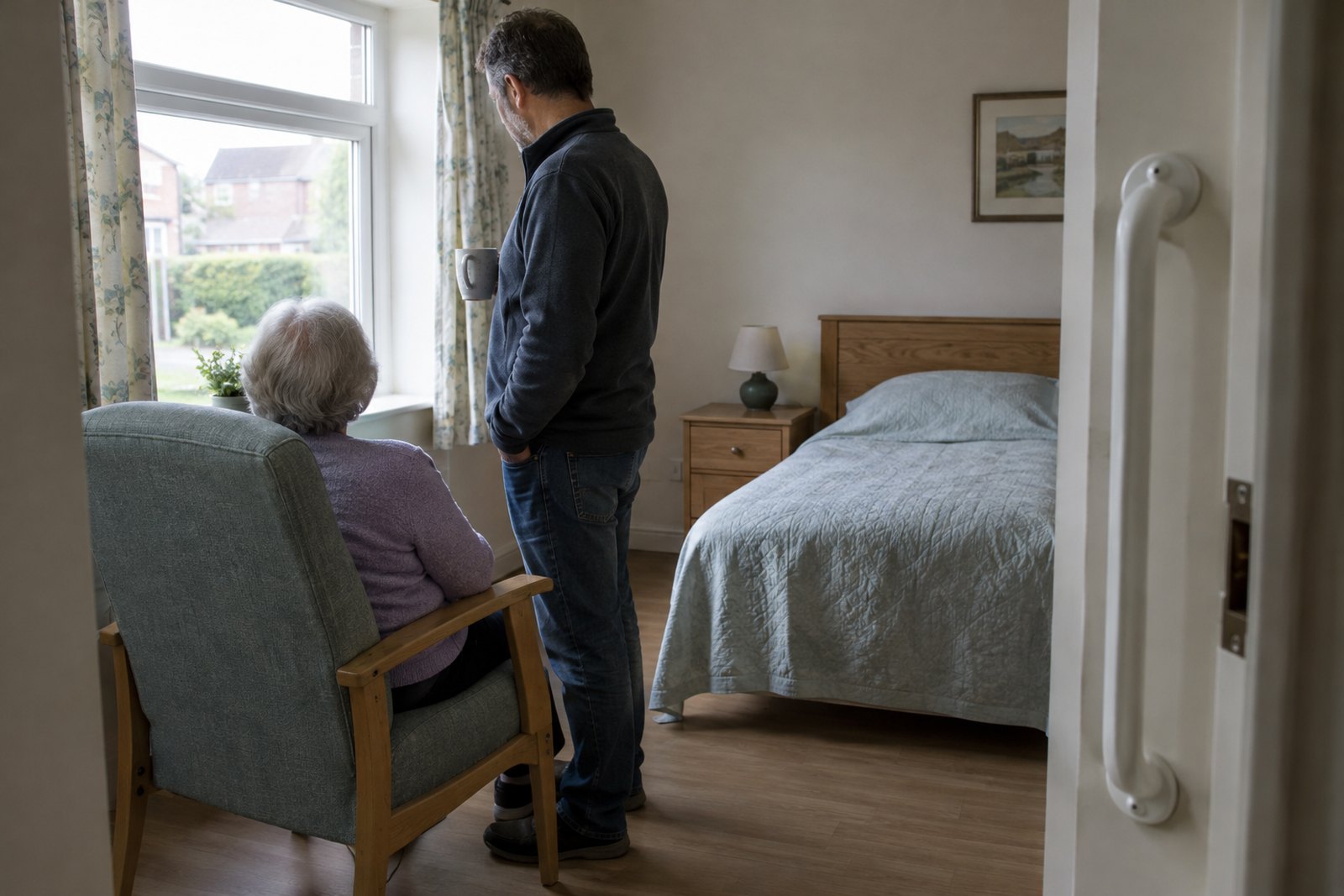
Moving an elderly parent in with you can work well. It works best when you decide it with your eyes open, rather than in the week after a fall or a hospital stay, which is when many families end up deciding it. Before anyone packs a box, be clear about three things: what care your parent needs now and is likely to need in a year or two, whether your home can be made to fit, and whether everyone who lives there, including you, is genuinely up for it.
On the home side, the usual priorities are a bedroom and toilet on the same floor, a bathroom they can use safely, rails where they need something to hold, and a plan for the stairs. Much of the equipment is cheap or can be borrowed. Bigger adaptations may be funded by a grant based on your parent's needs. An occupational therapist can look at your parent and your house together and tell you what will actually help, before you spend money on the wrong thing.
Questions to ask before you say yes
These are the conversations families skip because they feel awkward. They are much more awkward a year in.
What do they need now, and what might they need later?
Write down an ordinary day. Can your parent get out of bed, wash, dress, use the toilet, make a drink and get about on their own? Do they need help at night? Are they managing their own tablets? Then think honestly about the direction of travel. Someone recovering from a hip operation may need less help in three months. Someone with a progressive condition such as dementia or Parkinson's will probably need more. If you cannot picture managing the next stage, say so now.
Privacy, for them and for you
Where will your parent go when they want to be alone? Where will you go? A room with only a bed in it is not enough space for an adult to live a life. They need a chair, their own things, a radio or television, and somewhere to see a visitor without the whole house listening. You need evenings that are still yours.
The rest of the household
A partner who is quietly reluctant, a teenager losing a bedroom, children asked to keep the noise down: all of it matters. Ask properly, not as a formality, and talk about the small clashes too, from television volume to the heating.
Brothers and sisters
The sibling whose home it is tends to become the sibling who does everything. Agree in advance what others will do: regular visits, a weekend a month, paperwork, money. Put it in an email. This is not about mistrust. It is about memories differing.
Money, in general terms
This is where families get caught out, so get advice rather than guessing.
- Household costs. Agree what your parent will contribute to food and bills. It keeps things fair and lets them feel they are paying their way, not living as a guest.
- Benefits. Your parent may be entitled to benefits they are not claiming, such as Attendance Allowance if they are over State Pension age and need help with personal care. You may be able to claim Carer's Allowance. In Scotland these are being replaced by Pension Age Disability Payment and Carer Support Payment. Rules change, so check GOV.UK or mygov.scot, or ask a benefits adviser.
- Your own discounts. Another adult moving in can affect things like a single person council tax discount or means-tested benefits you receive. Check before the move.
- Their house and savings. If your parent sells their home, gives you money or pays towards an extension, take independent legal advice. Who owns what matters if things change, and money given away can still be counted if they later need help paying for care.
- Power of attorney. If your parent has not made a power of attorney (called a Lasting Power of Attorney in England and Wales), this is a good moment, while they have the mental capacity to do so. GOV.UK explains how, and the rules are different in Scotland and Northern Ireland.
Adapting the home: what usually matters most
You do not need to turn your house into a hospital. You need to make the handful of things your parent does every day possible and safe.
A bedroom and toilet on the same floor
If stairs are a struggle, the simplest answer is often a downstairs bedroom in a converted dining room, study or front room. What makes or breaks this is the toilet. A downstairs toilet close by turns a workable plan into a good one. Without one, you are looking at a commode at night, which some people accept happily and others hate, or building a new downstairs toilet or shower room.
Walk the route from bed to toilet in the dark. It should be short, clear of rugs and cables, and lit. Plug-in night lights or motion-sensor lights cost little and help a lot. Bring their own armchair if you can: it is familiar, and they already know how to get out of it.
The bathroom
Bathing is where many older people first struggle. Options tend to go in this order:
- Small equipment: a bath board, a shower stool or chair, a raised toilet seat or toilet frame, long-handled sponges.
- Grab rails by the bath, shower and toilet, properly fixed to the wall.
- Building work: replacing the bath with a level-access shower or wet room, widening a door, changing the toilet height.
Plenty of people manage for years with a bath board and a rail. Others simply cannot lift a leg over the side of a bath, and no gadget will fix that.
Rails, steps and doors
Watch how your parent moves around now. If they steady themselves on furniture, door frames, the towel rail or the sink, those are the places a fixed rail may be needed. Check the front and back doors too. A step with nothing to hold, a high threshold or a steep path can trap someone indoors.
Stairs
If your parent will use the stairs, a second banister so there is a rail on both sides is one of the most useful things you can fit, along with good lighting at the top and bottom. A stairlift can be the right answer, but not for everyone, for example someone who is very confused or cannot safely get on and off the seat at the top. Get an assessment before you buy one.
Assessments that open the door to help
There are three worth knowing about. They are separate, and you can ask for all of them.
A needs assessment for your parent
Anyone who appears to need care and support can ask their council's adult social care team for a needs assessment. It is free whatever their income, and looks at what help might be arranged, from home care to equipment. If your parent is moving areas, contact the council where you live. Our guide to the Care Act needs assessment explains how to prepare.
A carer's assessment for you
If you provide care, you are entitled to your own assessment of how caring affects your health, work and life. It is easy to think this is not meant for you. It is. See our guide to the carer's assessment.
An occupational therapy home assessment
This looks at your parent and the house together. Councils provide it, sometimes after a wait, or you can pay privately. Equipment a council or NHS assessor recommends can often be borrowed from a community equipment service rather than bought.
Paying for adaptations
A Disabled Facilities Grant from the council can pay towards work such as a level-access shower, a downstairs toilet, ramps or wider doors. It is based on the disabled person's needs, and in England the means test looks at your parent's finances (and their partner's), not yours as the homeowner. You can usually apply for a parent who lives with you, and will normally be asked to confirm they intend to live there long term. The council has to agree the work is necessary and appropriate, which usually involves an occupational therapist. Rules differ across the UK, and do not start work before approval. Our guide to the Disabled Facilities Grant goes through the process.
If your home has an extra room, bathroom or space needed because of your parent's disability, you may qualify for a council tax disabled band reduction, and a separate annexe lived in by a dependent relative may be exempt, so ask your council.
Keeping their independence and identity
The biggest risk in moving a parent in is not a fall. It is that they stop being who they were and become someone who is looked after. Out of kindness, families take over the cooking, the money, the front door and bedtime. Within months the parent can do less than when they arrived.
- Let them do what they can, even slowly: making tea, folding washing, laying the table.
- Give them a role, not just a room.
- Keep their things: photos, ornaments, their own bedding.
- Keep their people: friends, clubs, the old neighbour who rings on Sundays. If they are moving away, plan how to keep these going and find local ones.
- Respect their choices, including ones you would not make. An adult with mental capacity is entitled to them.
- Protect the relationship. If you are doing all their personal care, ask whether paid carers could do some, so you can stay their son or daughter rather than their nurse.
Getting breaks before you need them
Plan breaks from the start, not at breaking point. A day centre, a sitter one evening a week, a sibling taking a weekend, a short care home stay while you go on holiday. A carer's assessment can be the route to some of this. See our guide to respite care and short breaks, and write down what should happen if you are suddenly ill.
When it stops working
Sometimes it does, and that is not a failure. Signs to take seriously:
- Your own health, sleep or work is suffering and not recovering.
- Your parent needs help most nights and you are the only one giving it.
- Moving them safely now takes two people or a hoist.
- Falls keep happening despite changes.
- You are snapping at each other in ways you both hate.
- Your parent is safe but unhappy and isolated.
Ask the council to reassess your parent's needs and yours. Options include more paid care, extra care housing or a care home. If your parent becomes suddenly more confused, drowsy or unwell, contact their GP or NHS 111 the same day, as sudden changes often have a treatable cause. If they fall and are hurt, cannot get up, or hit their head and seem unwell, call 999. If they hit their head while taking blood thinners, get urgent medical advice the same day even if they seem fine.
Where an occupational therapist fits
An occupational therapist looks at how your parent manages everyday life, such as washing, dressing, the toilet, the kitchen and the stairs, in the home they will actually live in. Ideally that happens before the move, or soon after, so you are not guessing.
A private occupational therapist visiting at home can watch your parent move around your house, advise which room suits them as a bedroom, recommend equipment by type and where rails should go, and write a report on adaptations. That report can support your case, though the council will usually still do its own assessment for a grant, so ask how they treat private reports. Our home assessments page explains what is involved.
They are not the right person for everything. The GP reviews health problems and medicines. A physiotherapist leads on strength, balance and walking. A speech and language therapist assesses swallowing problems or coughing at meals. A social worker arranges care. A solicitor handles property, gifts and powers of attorney.
Frequently asked questions
Can I get paid for looking after my parent?
You may be able to claim Carer's Allowance if you care for at least 35 hours a week and your parent gets certain disability benefits, such as Attendance Allowance. There is an earnings limit and other conditions, so check GOV.UK. Council direct payments can sometimes pay a relative, but usually not one living in the same household unless the council agrees it is necessary.
Will my parent's benefits change if they move in with me?
Attendance Allowance is not means tested, so living with you should not affect it in itself. Means-tested benefits such as Pension Credit or Housing Benefit may change. Report the change of address and get a benefits check from the council, Age UK or Citizens Advice.
Do we need planning permission to turn a downstairs room into a bedroom?
Using an existing room differently does not usually need permission. Extensions, annexes and new bathrooms may need planning permission or building regulations approval, so check with your council before work starts.
Should adaptations be done before my parent moves in?
Small equipment and rails, ideally yes. Bigger work can take months to fund and build, so plan a temporary set-up, such as a downstairs bed and a commode, and start the grant process early. Waiting for a perfect bathroom should not hold up a safe move.
What if my parent has dementia?
A move can be unsettling, and they may take time to adjust. Bring familiar furniture, keep their routines and light the way to the toilet at night. Dementia usually progresses, so ask the GP or memory service what to expect and plan for it.
Next steps
If you are thinking about moving a parent in, an assessment before you spend money saves a lot of guesswork. See our home assessment and home adaptations pages, or current guide prices, and choose your area below.
Talk to an occupational therapist near you
This guide is general information. For advice about your own situation - or someone you look after - a local occupational therapist can visit you at home and see it for themselves.
Choose your area: