

Council Tax Disabled Band Reduction: Who Qualifies and How to Apply
By Mobile Occupational Therapist • 12 October 2026 • 12 min read
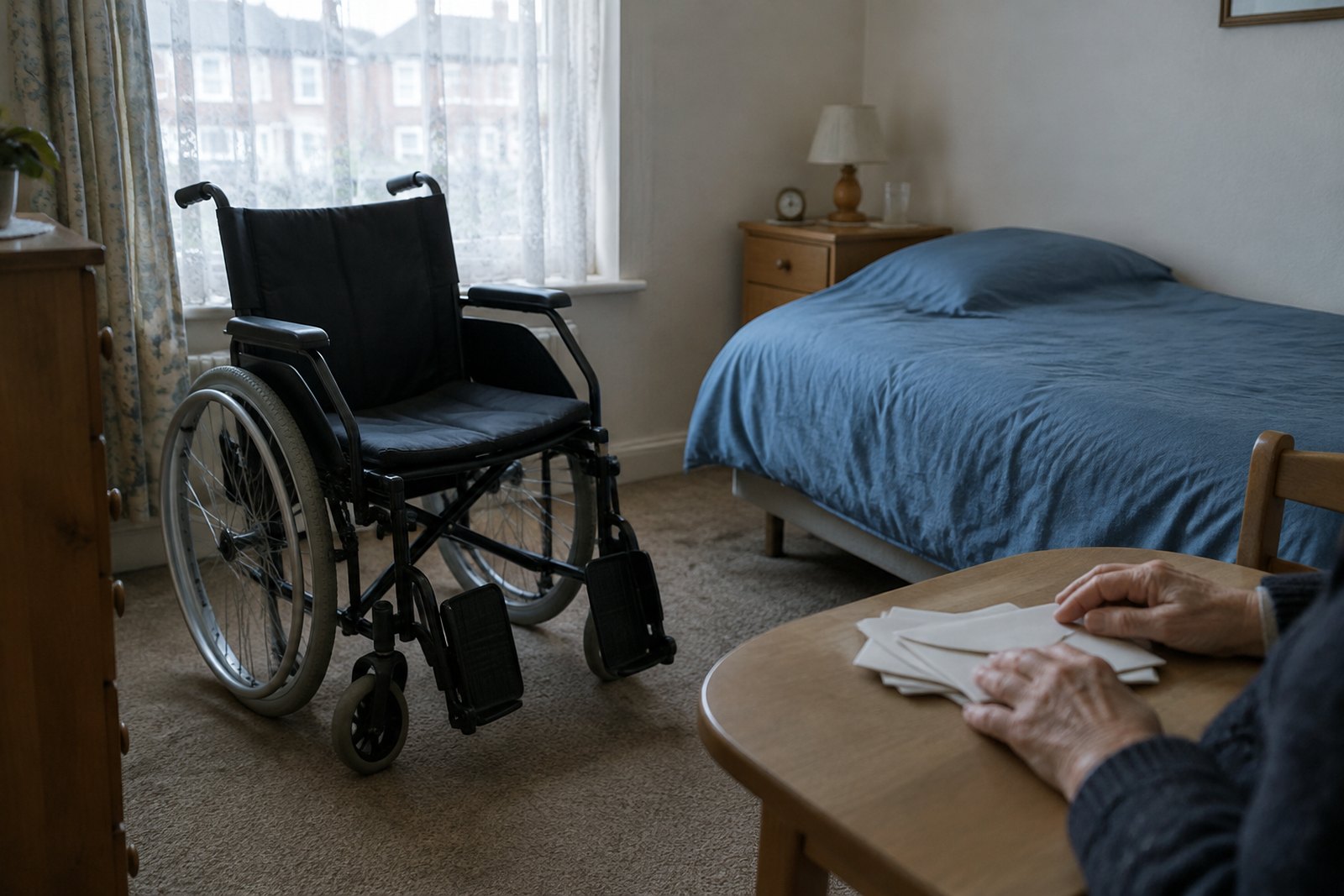
The Disabled Band Reduction Scheme lowers your council tax if your home has extra space or features that a disabled person living there needs because of their disability. In England and Wales, a successful claim means your bill is worked out as if your home were in the council tax band below its actual band. If your home is already in band A, the lowest band, you still get a reduction. Your home's official band does not change. Only the bill does.
It is not means-tested and does not depend on what benefits anyone gets. It covers disabled adults and disabled children, and the disabled person does not have to be the one who pays the bill. To qualify, a disabled person must live in the home, and the home must have at least one of three things: a room (not a bathroom, kitchen or toilet) used mainly by them and needed because of their disability; an extra bathroom or kitchen they need; or enough space to use a wheelchair indoors. You apply to your local council. Scotland has a similar scheme. Northern Ireland does not have council tax at all and uses a domestic rates system with its own help for disabled people.
First, which reduction are you looking for?
A lot of people search for "council tax reduction disabled" and land in the wrong place, because two different schemes have confusingly similar names.
- The Disabled Band Reduction Scheme is about the home itself. It depends on the space or features a disabled person needs. Income does not matter.
- Council Tax Reduction (sometimes called Council Tax Support) is help for people on a low income. Each council runs its own version, and being disabled can affect how your income is assessed, but it is a separate claim.
You can claim both if you qualify for both. This article is mainly about the first one, with the other discounts covered further down.
Who counts as disabled for this scheme
The rules talk about someone who is "substantially and permanently disabled". That is not tied to any particular diagnosis or benefit. It could be an older person who uses a wheelchair after a stroke, a child with complex physical needs, an adult with a learning disability or an autistic child who needs a quiet room. What the council looks at is how the disability affects daily life and whether the feature in the home is genuinely needed because of it.
The disabled person must live in the home as their main residence. It does not matter whether you own the property or rent it, or whether the bill is in the disabled person's name or a family member's.
The three features that qualify
You only need one of these. Many households have more than one, but meeting one is enough.
1. A room used mainly by the disabled person
This means a room, other than a bathroom, kitchen or toilet, that is used predominantly by the disabled person and is needed to meet their needs. The room does not always have to have been specially built or adapted. What matters is how it is used and why.
Examples that households often put forward include:
- A downstairs sitting room or dining room turned into a bedroom because the person can no longer manage the stairs.
- A room used for treatment at home, such as dialysis, or for storing and using a lot of equipment.
- A quiet or sensory room for a child or adult who needs somewhere calm to regulate.
- A room used for therapy, exercise or a specialist bed and hoist.
An ordinary bedroom used for sleeping, the way anyone would use it, is less likely to be accepted on its own. The question is whether the room is being used differently, or exists, because of the disability. Councils vary in how they read this, so describe the use clearly and honestly.
2. An extra bathroom or kitchen
This applies if the home has a second bathroom, shower room or kitchen that the disabled person needs. A ground floor wet room added for someone who cannot get upstairs is a common example, as is a separate accessible kitchen. If you have had adaptations done through a Disabled Facilities Grant, it is worth checking whether they now make you eligible. People often do not realise they are linked.
3. Space to use a wheelchair indoors
This applies if the disabled person needs to use a wheelchair inside the home and the property has enough floor space for it. The wheelchair has to be used indoors. If it only goes out for trips and the person walks or uses a frame inside, this feature will not usually count. It does not matter whether the wheelchair came from the NHS or was bought privately (if you are still waiting for one, see our guide to NHS wheelchair services).
The test councils apply
Having the feature is not quite enough. The council has to be satisfied that it is essential, or of major importance, to the disabled person's wellbeing because of the nature and extent of their disability. In plain terms: would their life be significantly harder, less safe or less healthy without it?
That is why the way you describe things matters. "Mum uses the back room" is weak. "Mum cannot climb stairs safely after two falls, so the back room is now her bedroom, with her bed, commode and walking frame, and she spends most of her day there" gives the council what it needs.
How to apply
- Find your council's form. Search your council's website for "disabled band reduction" or use the council tax section of GOV.UK, which will direct you to your local council. Some councils have an online form; others ask you to phone or write.
- Describe the disability and the feature. Explain who the disabled person is, how their disability affects them day to day, which of the three features your home has, and why it is essential or of major importance to them.
- Add supporting evidence. See the next section. It is not always required, but it often speeds things up.
- Expect a possible visit. Some councils send an officer to look at the room or space. This is normal and not a sign anything is wrong.
- Keep paying your current bill while the council decides. If the claim succeeds, any overpayment will be adjusted or refunded.
- Tell the council about changes. If the disabled person moves out, goes into a care home permanently or dies, or the room stops being used in that way, you need to let the council know.
What evidence helps
Councils differ in what they ask for. Some accept your own description; others want something from a professional. Even when it is not required, a short letter from someone who knows the person's needs can make the difference between a quick yes and a long exchange of letters.
Useful evidence includes:
- A letter from a GP or consultant confirming the disability and that it is substantial and permanent.
- A letter or report from an occupational therapist describing how the person uses the room, bathroom or wheelchair space and why it matters for their safety and independence. Occupational therapists look at exactly this sort of thing, so their reports tend to answer the council's question directly.
- Paperwork from adaptations, such as Disabled Facilities Grant approval, or an NHS or social care assessment that recommended the changes.
- Benefit award letters, such as Attendance Allowance, PIP or DLA. These are not required, but they can help show the level of disability. Our plain English guide to Attendance Allowance covers that claim if you have not made it yet.
- Photographs of the room, bathroom or wheelchair space, if the council asks or you think they help.
If you already have an occupational therapy assessment from the NHS or council, ask whether you can use it or get a copy. You do not need to pay for a new one if an existing report says what is needed.
Backdating, refusals and appeals
Backdating
If your home has met the conditions for some time and you have only just found out about the scheme, ask the council to backdate the reduction. Many councils will look at backdating to the date you first qualified, and some go back several years, but practice varies. Say clearly on your application when the feature first started being needed and ask the council to confirm how far back it will go. Evidence of dates, such as when adaptations were finished or when the person moved downstairs, helps.
If the council says no
First, ask the council in writing to reconsider, explaining why you think the decision is wrong and adding any extra evidence. If they still refuse, or do not reply within the time allowed, you can usually appeal to the valuation tribunal (the Valuation Tribunal for England or the Valuation Tribunal for Wales). There are time limits, so check GOV.UK's guidance on council tax appeals as soon as you get a refusal. Keep paying your bill while you appeal.
Scotland and Northern Ireland
Scotland has a disabled reduction that works in a broadly similar way, with similar qualifying features. Apply to your local council and check the details on its website, as the rules and the band A position are set separately.
Northern Ireland does not have council tax. Homes pay domestic rates, and there is a separate scheme to help disabled people whose homes have been adapted or have extra features. Rates are handled by Land and Property Services, and the nidirect website explains what is available.
Other council tax discounts worth checking
While you are dealing with the council, check whether any of these apply too. Several can be combined.
- Severe mental impairment. Someone with a severe mental impairment, such as advanced dementia, can be "disregarded" for council tax if a doctor certifies it and they get a qualifying benefit. If they live alone, the home may be fully exempt.
- Carers. A carer who lives with the person and provides substantial care (the rules set a minimum number of hours a week) can also be disregarded, though the rules exclude partners and parents caring for a child under 18.
- Single person discount. If only one adult is counted in the home, including after someone else is disregarded, you can get a discount.
- Council Tax Reduction. If the household is on a low income, apply to your council for this separately.
- Care homes and hospital. If a home is empty because the person has moved permanently into a care home or hospital, it may be exempt. Ask the council.
Our guide to grants for disabled people and older adults covers wider financial help.
Where an occupational therapist fits
Let us be honest about this. An occupational therapist does not decide your claim, cannot guarantee it will succeed and is not a benefits adviser. The council decides. For help with the forms themselves, a local Citizens Advice, Age UK or carers' organisation may help for free.
Where an occupational therapist is genuinely useful is in describing need. They assess how someone manages everyday tasks like washing, dressing, getting about and using the toilet, and they can explain in plain, practical terms why a downstairs bedroom, a ground floor shower room or wheelchair space is essential for that person. That is precisely the question the council is asking.
An occupational therapist can also help in a more useful way than the bill alone: if your home does not work well for the disabled person yet, they can recommend equipment or adaptations, which may in turn mean the home qualifies. Our guide to how an OT home adaptations assessment works explains what that involves.
If the person already has an NHS or council occupational therapist, ask them first. If not, or if there is a long wait, a private occupational therapist visiting at home can write a functional assessment report you can use as evidence. It is a judgement call whether paying for one makes sense. Often a GP letter and a clear description of your own will be enough.
Frequently asked questions
Does the disabled person have to pay the council tax bill?
No. The disabled person just has to live in the home. The bill can be in a parent's, partner's or adult child's name.
Can I get the disabled band reduction for a disabled child?
Yes. The scheme applies to disabled children as well as adults. A room for therapy or a quiet sensory space, an extra bathroom or indoor wheelchair space can all count if they are needed because of the child's disability.
Does my income or savings affect the disabled band reduction?
No. It is not means-tested. If your income is low, you may also be able to get Council Tax Reduction, which is a separate claim.
Will my home be moved into a lower band permanently?
No. Your home's band stays the same. The council simply charges you at the rate for the band below for as long as you qualify. If you move, you would need to apply again at your new address.
Do I have to reapply every year?
Not usually, but some councils review claims from time to time and may ask you to confirm things have not changed. You must tell them yourself if circumstances change.
We live in band A. Is it worth applying?
Yes. Band A homes cannot go down a band, but in England and Wales they still get a reduction under the scheme. Check the details with your council.
Next steps
If you need evidence of how a home supports someone's disability, see our functional assessments and reports or home adaptations pages, or current guide prices, and choose your area below.
Talk to an occupational therapist near you
This guide is general information. For advice about your own situation - or someone you look after - a local occupational therapist can visit you at home and see it for themselves.
Choose your area: