

Living With MND at Home: Equipment, Adaptations and Planning Ahead
By Mobile Occupational Therapist • 27 September 2026 • 13 min read
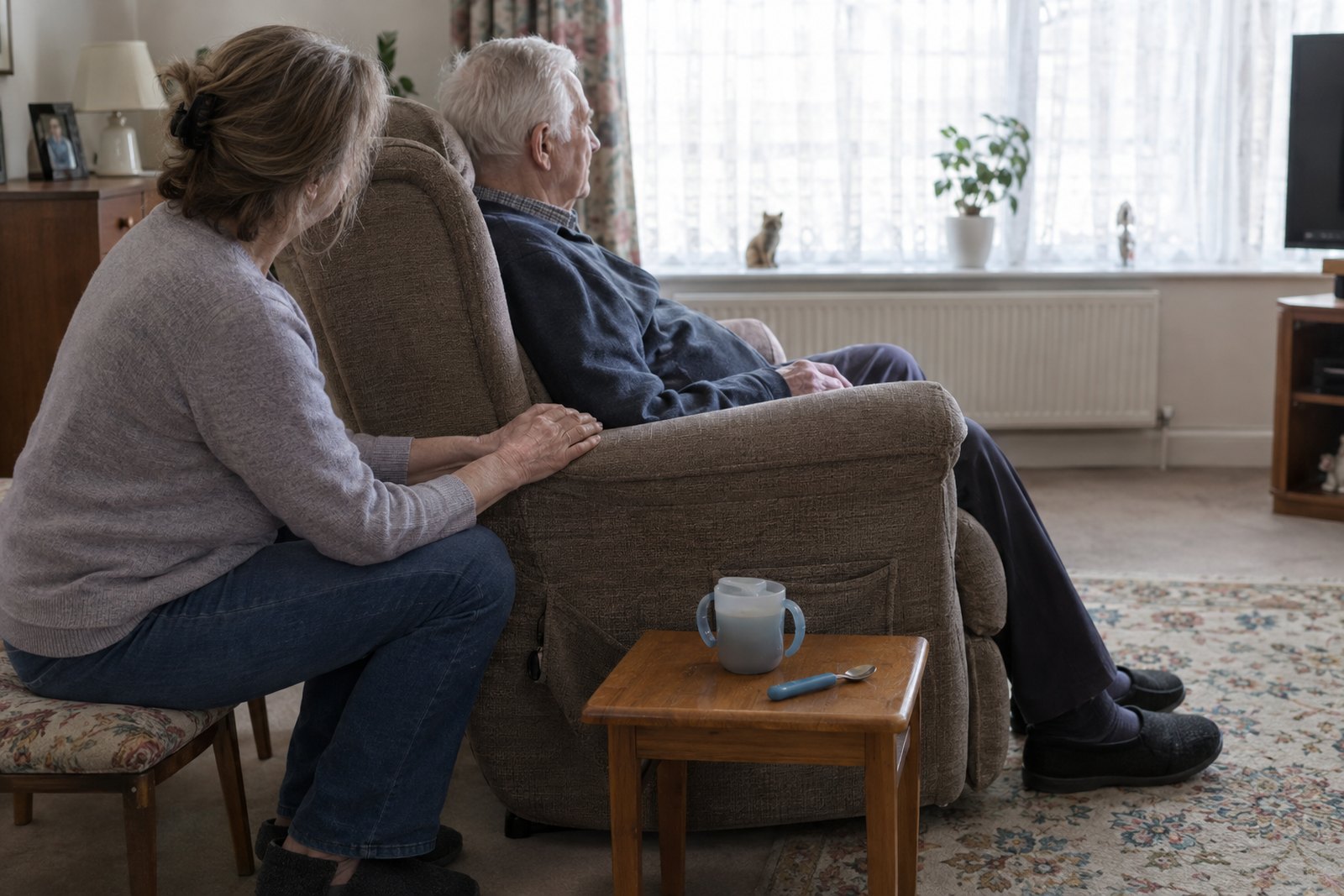
If you or someone you love has recently been told they have motor neurone disease, the practical side of life at home can feel like a lot to take in at once. The short answer is this: you do not need to buy everything now, but it really does help to start planning early. MND changes at different speeds for different people. Some of the help you may want later, especially home adaptations and some specialist equipment, takes months to arrange.
Most of that help comes through a specialist MND care team, which usually includes an occupational therapist alongside a physiotherapist, speech and language therapist, dietitian, specialist nurse and others. The MND Association can also support you with information, equipment and grants. This guide walks through what tends to help at home, task by task, and how to get the timing right so you are not always catching up.
Why planning ahead matters with MND
With many conditions, you deal with a problem when it arrives. With MND that approach tends to leave people waiting for things they needed weeks ago. Equipment has to be assessed for, ordered and delivered. Wheelchairs are often set up to measure. Adaptations need surveys, quotes, approvals and builders. None of it is instant.
Planning ahead does not mean dwelling on what might happen. It means having conversations early, while you have the energy and the voice to say what matters to you, so the people helping can put things in place at a sensible pace. Many people find it less frightening to know a plan exists than to lie awake wondering about it.
A useful rule: sort out what you need now, and ask your team what you are likely to need next, so that request goes in before it becomes urgent.
Your MND care team and coordinator
After diagnosis, most people are linked with a specialist neurology team and, in many areas, an MND care centre or network. NICE guidance recommends that people with MND are cared for by a coordinated multidisciplinary team with regular reviews. You will usually have a named person, often called an MND coordinator or specialist nurse, who keeps track of what is happening and who to contact.
If you are not sure who your coordinator is, ask the neurologist's secretary, your GP or the MND Association helpline. It is worth having one number you can ring when something changes.
Who does what
- Occupational therapist - daily tasks, equipment, seating, beds, home adaptations, energy conservation, and often wheelchair referrals.
- Physiotherapist - movement, walking, stretches, posture, falls and some breathing support.
- Speech and language therapist - speech, communication aids and swallowing.
- Dietitian - keeping weight and nutrition up, and advice on feeding options.
- Respiratory team - breathing assessments and breathing support if it is needed.
- Palliative or supportive care team - help with symptoms and comfort at any stage, not only towards the end of life.
- GP - day-to-day health, medicines and referrals.
Names and arrangements vary by area. The point is that you should not have to work all this out on your own.
Equipment for hands and everyday grip
Weakness in the hands often makes ordinary tasks fiddly early on. Small equipment can make a real difference, and much of it is inexpensive.
- Built-up or lightweight handles on cutlery, pens, toothbrushes and razors.
- Key turners, and lever taps instead of round knobs.
- Jar and bottle openers that grip the lid for you.
- Kettle tippers, or a smaller, lighter kettle filled with only what you need.
- Wrist or hand splints to support a weak wrist or keep a hand comfortable, which an occupational therapist or physiotherapist can assess for.
- Touch, voice or switch controls for phones, tablets and lights, which an OT can help set up.
A tip many families learn the hard way: do not buy a box of gadgets at once. Try one or two, see what you actually use, and ask the OT before spending much.
Eating and drinking
Mealtimes matter, socially as well as for nutrition. The right equipment can help you keep feeding yourself for longer, if that is what you want.
- Angled or lightweight cutlery, and cutlery with chunky handles.
- Plate guards or lipped plates, and non-slip mats so things do not slide away.
- Lidded cups with two handles, or cups with a cut-out rim so you do not have to tip your head back.
- Mobile arm supports, which take the weight of the arm so the hand can reach the mouth. These need specialist assessment.
- Good seating. Sitting upright and well supported makes eating safer and less tiring.
If eating or drinking makes you cough, food sticks, meals take much longer than they used to or you are losing weight, tell your team. Swallowing is led by the speech and language therapist and the dietitian, not the OT. They can advise on food textures, positions and, if it becomes relevant, other ways of getting nutrition. Those conversations are easier to have early and on your own terms.
Dressing and personal care
- Choose clothes a size looser, with elastic waists and stretchy fabrics.
- Swap fiddly buttons for magnetic or hook-and-loop fastenings, or use a button hook and zip puller.
- Sit down to dress, on a stable chair or the edge of a bed at a comfortable height.
- Slip-on shoes with a firm back, or elastic laces, plus a long-handled shoe horn.
- In the bathroom, a shower chair or bath board, a raised toilet seat or toilet frame, and grab rails where your OT advises.
- An electric toothbrush and a long-handled sponge both reduce effort.
Personal care is often where help from someone else starts. It is fine to accept help with the most tiring parts so you have energy left for the parts you would rather do yourself.
Mobility, seating and beds
Walking and wheelchairs
A physiotherapist usually leads on walking, stretches and walking aids. If foot drop is a problem, you may be referred for an ankle-foot orthosis, a lightweight splint that holds the foot up as you walk. Falls are a real risk when legs or balance are affected, so tell your team about any trips or near misses, not just actual falls.
Wheelchairs come through NHS wheelchair services. Many services recognise that people with MND need to be seen promptly, and some have faster routes for progressive conditions, so ask your team to refer early. A chair that suits now may need changing later, for example to add tilt or more head and trunk support. Our guide to NHS wheelchair services explains how the process works.
Seating
The chair you spend most of the day in matters more than most people expect. A riser recliner can help you stand up and rest comfortably. Later, some people need a specialist chair with tilt-in-space and supportive head and side supports. Neck weakness can make holding the head up tiring, and there are head supports designed with MND in mind; your team can advise which type suits. Try not to buy an expensive chair before an assessment. The wrong chair can be uncomfortable and hard to sell on.
Beds and transfers
A profiling bed, which raises the head and knees electrically, can make sitting up, turning and getting out of bed much easier, and may help if lying flat is uncomfortable. Profiling beds and pressure-relieving mattresses are often provided on loan through community equipment services after an assessment. Later, a hoist may be needed for moving between bed and chair; there is more in our guide to hoists at home.
If you are breathless when lying flat, waking with headaches or sleeping badly, mention it to your team. These can be signs that breathing needs reviewing.
Communication aids: speech and language therapy leads
If speech is affected, the speech and language therapist is the lead professional. They can help with strategies, simple tools such as alphabet and picture boards, and more advanced communication aids, from text-to-speech apps to systems controlled by eye movement. In England, people with more complex needs can be referred to specialist NHS services for augmentative and alternative communication.
Many people are offered voice banking or message banking early on. This means recording your own voice, or familiar phrases, while speech is still clear, so a communication aid can sound more like you later. If this interests you, ask sooner rather than later. The MND Association has information about it.
The OT often works alongside the speech and language therapist on the practical side: how you will reach or control the device, mounting it on a wheelchair or bed, switches, and linking it to the TV, lights or front door through environmental controls.
Home adaptations and why to start early
Equipment covers a lot, but sometimes the home itself needs to change. Common adaptations for people with MND include:
- A level-access shower or wet room in place of a bath.
- A stairlift, or for people likely to need a wheelchair, a through-floor lift.
- A downstairs bedroom and bathroom, in a converted room or an extension.
- Ramps and level thresholds at entrances.
- Wider doorways and space for a wheelchair to turn.
- Ceiling track hoists between bedroom and bathroom.
- Door entry systems and environmental controls.
The key with MND is to plan for the needs you are likely to have, not only the needs you have today. A stairlift can be useful for a while, but it may not suit someone who later uses a wheelchair or cannot transfer easily. An occupational therapist can help you weigh this up honestly, so the money and disruption go into the right thing.
The Disabled Facilities Grant
In England, Wales and Northern Ireland, many adaptations are funded through a Disabled Facilities Grant (from your local council, or the Housing Executive in Northern Ireland); Scotland has its own scheme for adaptations, and the rules, including means testing, differ between nations. The process involves an OT assessment, plans, quotes, a means test for adults, approval and then the building work. Even when it runs smoothly it can take many months from first contact to finished work, which is exactly why starting early matters with MND. Some councils have faster routes for people with progressive conditions, so ask directly. GOV.UK sets out the current rules and how to apply, and our guide to the Disabled Facilities Grant explains how the OT assessment fits in. The MND Association may be able to help with some costs too.
If you rent, talk to your landlord or housing association early as well. If your home cannot reasonably be adapted, moving may be the better answer, and that also takes time.
Energy conservation: saving strength for what matters
Fatigue is common with MND, and pushing through it usually costs more than it saves. OTs often talk about the four Ps.
- Plan - spread demanding tasks across the day and the week, and gather what you need before you start.
- Prioritise - decide what you actually want to spend energy on. If a shower wears you out before the grandchildren visit, could someone help with it, or could it move to the evening?
- Pace - rest before you are exhausted, not after. Several short breaks usually help more than one long collapse.
- Position - sit rather than stand for washing, dressing, grooming and preparing food. Keep everyday items between waist and shoulder height.
Keeping a simple diary for a week often shows where energy goes, and what could be dropped, handed over or done differently.
Support for you and your family
The MND Association offers a helpline, information for every stage, local branches and groups, and in some cases equipment loans and financial support. Family members who help with care can ask the council for a carer's assessment; our guide to carer's assessments explains what to expect. Benefits advice is worth getting early, and the MND Association can point you to it.
When to get help urgently
- Call 999 if someone is choking and it does not clear, is struggling to breathe, or has collapsed.
- Contact your GP, MND team or NHS 111 if breathing seems to be getting worse, there are signs of a chest infection such as a new cough with a temperature, or eating and drinking has suddenly become much harder.
- Tell your team about falls, new changes or anything that worries you, even if it seems small.
Where an occupational therapist fits
For most people with MND, an NHS occupational therapist is part of the care team, through a specialist MND or neurology service or community therapy. That OT is usually your main route to loaned equipment, wheelchair referrals and council-funded adaptations, and should stay involved as things change. If you have not been referred, ask your coordinator.
A private occupational therapist visiting at home does not replace that team, and should not try to. Some families choose private help alongside it, for example a detailed home assessment to plan adaptations, a report to support a building project, advice before buying a chair or bed, or help planning a move to a more suitable home. If you go private, choose someone HCPC-registered with experience of neurological conditions, and ask them to share their findings with your NHS team. Our neurological occupational therapy page explains more.
OTs do not lead on speech, swallowing, breathing, medicines or medical decisions. Those sit with the speech and language therapist, dietitian, respiratory team, neurologist and GP.
Frequently asked questions
Should we buy equipment straight away after an MND diagnosis?
Usually not. Get assessed first, because much of the larger equipment is available on loan, and what suits one person may not suit another. Small, cheap items for grip and dressing are fine to try, but ask your OT before spending serious money.
Is MND equipment free on the NHS?
Much of the essential equipment, such as profiling beds, pressure-relieving mattresses, hoists, bathing equipment and wheelchairs, is often provided on loan through community equipment or wheelchair services after an assessment. Some smaller items you may need to buy. The MND Association may be able to help with equipment or costs, so it is worth asking.
How long do home adaptations take?
It varies a great deal by council and by the size of the job. Larger adaptations funded by a Disabled Facilities Grant can take many months. Start the conversation with your OT and council as early as you can, and ask whether there is a faster route for progressive conditions.
Who arranges a communication aid?
The speech and language therapist leads on communication and will assess which aids suit you, including referral to specialist services if needed. The OT may help with access, such as switches and mounting. Ask about voice banking early.
Is a stairlift a good idea with MND?
Sometimes, for a period. But stairlifts need you to transfer on and off safely and sit securely, which may become harder. Talk it through with an OT, who can compare a stairlift with options like a through-floor lift or moving a bedroom downstairs.
Can I keep working with MND?
Many people want to, at least for a while. You can ask your employer about reasonable adjustments, and Access to Work may help with equipment or support. Acas and GOV.UK explain your rights, and your team or the MND Association can help you think it through.
Next steps
If you want help planning the home ahead of time, an occupational therapist can look at how you live now and what may help next. See our home adaptations and equipment and aids pages, or current guide prices, and choose your area below.
Talk to an occupational therapist near you
This guide is general information. For advice about your own situation - or someone you look after - a local occupational therapist can visit you at home and see it for themselves.
Choose your area: