

Mistakes After a Knee Replacement: What to Avoid at Home in the First Weeks
By Mobile Occupational Therapist • 17 September 2026 • 9 min read
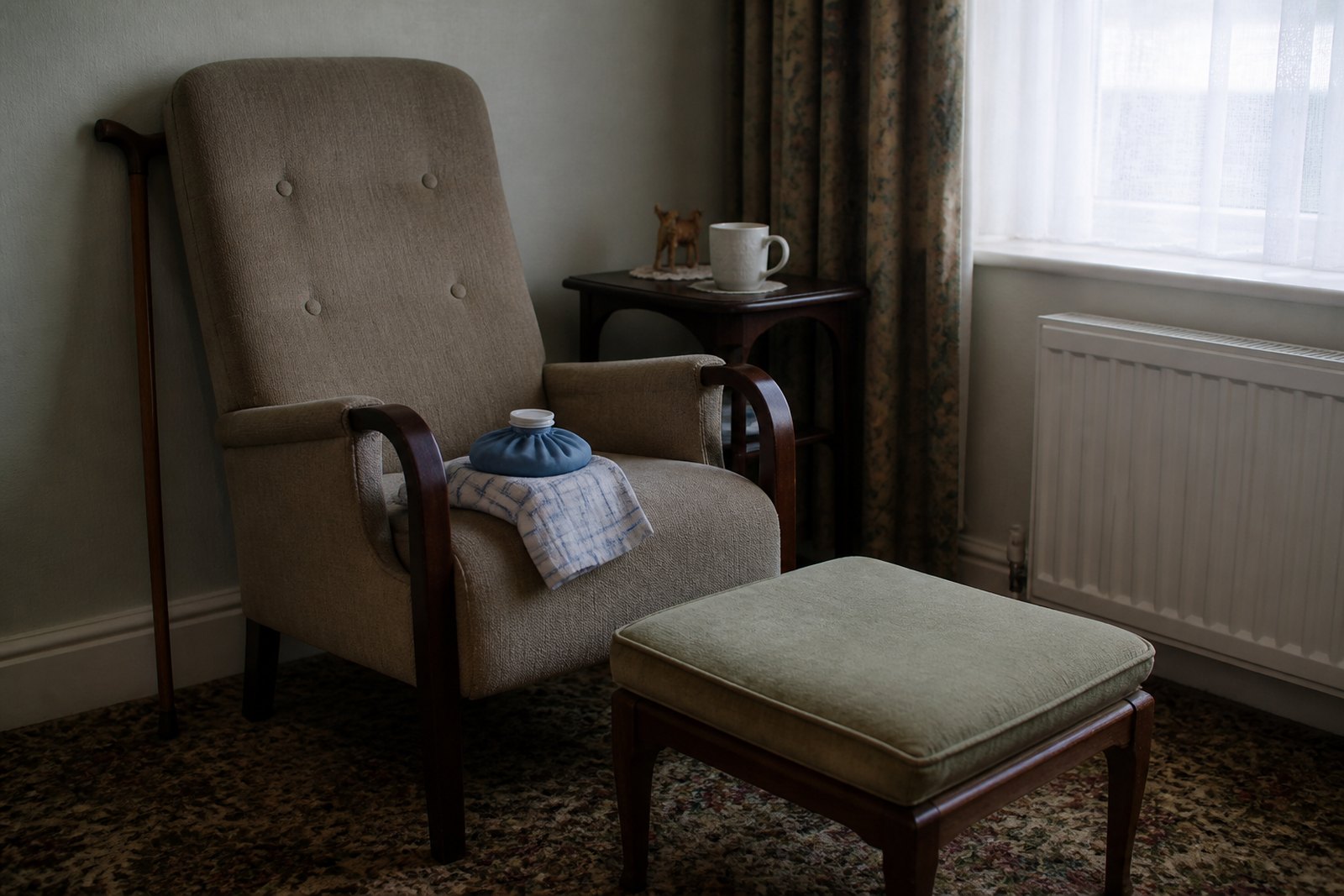
The knee is the operation people underestimate. A new hip often feels better within days; a new knee hurts, swells and takes months, and almost everything that goes wrong at home in the first weeks is ordinary rather than dramatic. Lists of the top 5 mistakes after knee replacement are all over the internet, usually written by somebody selling something. This is the occupational therapy version: the mistakes we actually see in people's front rooms, and what to do instead.
Everything here sits underneath one rule. Your surgeon's instructions and your physiotherapist's programme override anything on this page, and this is not an exercise guide. What follows is the rest of the day: how you sit, how you sleep, how the house is arranged, and when to ring somebody.
The two opposite mistakes: too little and too much
The first is doing too little because it hurts. A new knee is painful, and the natural response is to keep it still and bent, which is exactly what stiffens it. A knee that has not been regularly straightened and bent in the first six weeks can be very hard to get back, and sometimes needs a further procedure to free it. Moving early is not bravado; it is the operation working.
The second is the opposite, and it usually arrives in week three, when the painkillers are doing their job and you feel unexpectedly well. People clean the house, walk into town, do the garden, and spend the next two days with a hot, swollen knee that will not bend. Recovery is not linear, and progress is not a reward for effort. Steady daily work beats one heroic afternoon.
Stopping the exercises when the pain eases is the same mistake in a different coat: they are what keeps the movement you bought with three painful weeks. Carry on to the end of the programme, not to the end of the pain.
The best sitting position after knee replacement
The best sitting position after knee replacement is a high, firm seat with arms, hips level with or slightly above the knees, both feet on the floor and the operated leg free to move. Low soft chairs and deep sofas are the problem: they hold the knee bent at an angle you cannot change, they are hard to stand up from, and they encourage you to stay put for hours. If the only comfortable chair in the house is a low one, raise it before the operation rather than after; our guide to choosing the right chair covers height and depth.
Two habits matter more than the chair. Get up and move every 30 to 45 minutes, because a knee left still for two hours stiffens and swells. And spend part of the day with the leg out straight, heel resting on a stool and the knee itself unsupported, which is how the last few degrees of straightening come back.
That is why a pillow under the knee is discouraged, in the chair and in bed. It is comfortable, and it holds the knee in exactly the bent position everybody is working to get you out of. A knee propped that way for weeks can end up unable to straighten fully, which changes how you walk for good. Put the pillow under the calf or ankle instead, so the knee hangs straight.
Total knee replacement pain at night is normal, miserable, and worth naming, because people assume it means something has gone wrong. It usually settles over two to three months. Take pain relief on the schedule you were given rather than waiting until it wakes you, and tell the GP or surgical team if it is not controlled.
Letting the swelling routine slide
Swelling is what actually limits how far the knee bends, and managing it is a routine, not a one-off. Elevation means the ankle above the level of the heart, which is lying down with the leg on pillows, not sitting with a foot on a footstool. Twenty minutes at a time, several times a day, is the usual advice.
Ice helps too, wrapped in a damp tea towel and never straight onto skin, for the length of time your hospital advised. Check the skin afterwards, and leave ice alone if sensation in that leg is reduced. The common pattern is doing this diligently for a fortnight and then stopping, when swelling carries on for months and so should the routine.
Kneeling, driving and permanent restrictions after knee replacement
Kneeling is the question everybody asks. Most surgeons say kneeling does the implant no harm once the wound has healed, commonly after six to twelve weeks, but a great many people never find it comfortable again. The front of the knee stays numb or tender and pressure on it is unpleasant. Worth knowing honestly if your work or your garden involves kneeling: a kneeling stool, long-handled tools or a different working height solve more of it than willpower.
Beyond that, permanent restrictions after knee replacement are fewer than people fear. The usual advice is to avoid repeated high-impact activity such as running on hard ground, jumping and contact sport, and to accept that deep squatting may not return. Walking, swimming, cycling, bowls, golf, dancing and gardening are normally encouraged. Anyone with a revision, a complication or an unusual implant may be given specific limits, and those come from their own surgeon.
How long after knee replacement you can drive is commonly four to six weeks for a left knee in an automatic and six weeks or more for a right knee, but the date is not the point. You must be off strong painkillers that affect concentration, able to make an emergency stop firmly and without hesitation, and able to get in and out of the car without hauling yourself. Tell your insurer, and confirm with your surgeon that you are fit to drive.
Not setting the house up before the operation
Most of what makes the first fortnight hard is decided before you go in, and a house is far easier to change in advance than on crutches.
- Chair height. A firm chair with arms, high enough to stand up from, in the room you actually sit in. Blocks under the legs are cheap and work.
- Bed height, and where the bed is. Feet touching the floor as you sit on the edge. If the only bathroom is upstairs, a bed downstairs with a commode for a few weeks is a sensible plan rather than a defeat.
- The toilet. A raised seat and a frame mean sitting and standing without pulling on the basin. See our post on toilet aids, raised seats and frames.
- A perching stool. So making a meal does not mean standing on a swollen knee for twenty minutes. Our guide to perching stools explains how to get one.
- Stairs and carrying. You need a hand on the banister, so nothing can be carried in it. Use a shoulder bag or a rucksack, or leave things at the bottom of the stairs.
- The route. Clear the path between bed, toilet and chair of rugs, trailing flexes and low tables, and leave a light on overnight.
Ask about all of this before surgery. Most hospitals run a joint school or a pre-operative telephone assessment where an occupational therapist works out what you need and issues equipment on loan, free, ready for discharge. Our guide to coming home from hospital covers what else to ask for.
Ignoring the things that are not normal recovery
Some things are not part of it. Contact your GP or the surgical team promptly if the wound becomes red, hot, swollen or starts leaking, if you develop a fever, or if pain increases sharply after a period of improvement, because an infection is treated far more easily early. Pain, swelling, redness or heat in the calf can be a blood clot, and sudden breathlessness or chest pain needs emergency help. Clots after joint surgery are uncommon and very treatable, and nobody minds being rung about one.
Frequently asked questions
What are the top 5 mistakes after knee replacement?
If it has to be five: resting the knee because it hurts, overdoing it on the first good day, sitting for hours in a low chair with a pillow under the knee, letting the swelling routine slide after the first fortnight, and stopping the exercises when the pain eases. A sixth, and arguably the biggest, is not setting the house up before the operation.
What is the best sitting position after a knee replacement?
A high, firm seat with arms, hips level with or slightly above the knees, both feet on the floor and nothing propping the knee into a bend. Get up every 30 to 45 minutes, and spend part of the day with the leg out straight, heel supported and the knee itself unsupported.
Are there permanent restrictions after knee replacement?
For most people there are no formal ones. Repeated high-impact activity is discouraged for the life of the joint, deep squatting and comfortable kneeling may not come back, and beyond that ordinary life is expected. Specific permanent limits belong to specific knees and come from your own surgeon, not from a website.
What is knee replacement recovery time like for elderly patients?
Older people generally do well, and age by itself is rarely a reason not to have the operation. Recovery tends to be slower rather than worse: walking indoors within a week or two, out and about at six to twelve weeks, and the last of the swelling and confidence over six to twelve months. Other health conditions, leg strength beforehand and the help available at home matter far more than the birth date.
Next steps
If a knee replacement is coming up, the most useful thing anybody can do is sort the chair, the bed, the toilet and the route between them before the date. An occupational therapist can work through all of it in one visit. Find your local occupational therapist through our areas we cover page, or see our prices page.
Talk to an occupational therapist near you
This guide is general information. For advice about your own situation - or someone you look after - a local occupational therapist can visit you at home and see it for themselves.
Choose your area: