

Misophonia: When Everyday Sounds Trigger Strong Reactions
By Mobile Occupational Therapist • 17 October 2026 • 12 min read
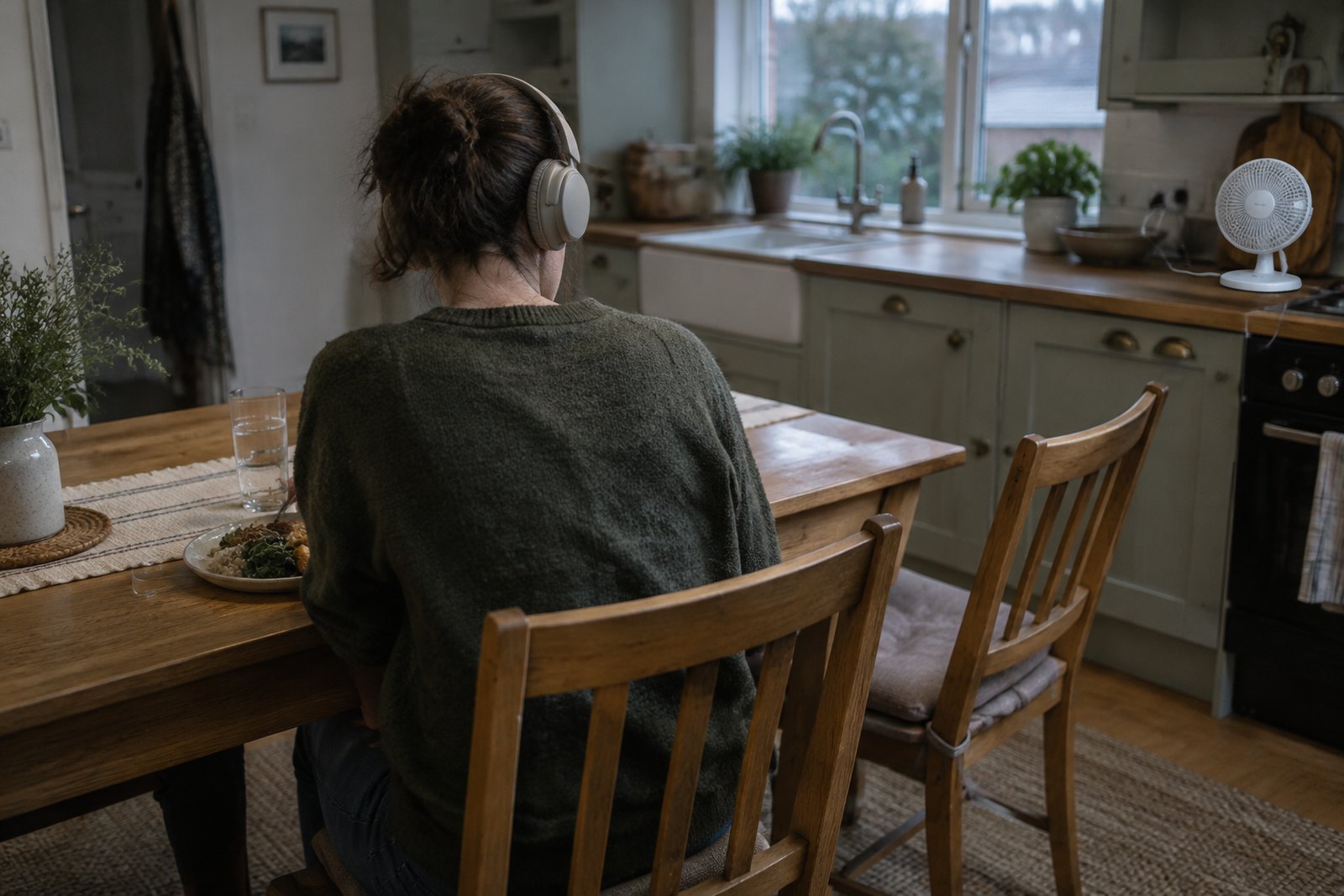
Misophonia is when particular everyday sounds, most often chewing, slurping, breathing, sniffing or throat clearing, set off a strong, fast and unwanted reaction. Usually that is anger, disgust or a surge of panic, often with a powerful urge to get away or make the sound stop. It is not simply finding a noise annoying. Most people find loud chewing irritating. People with misophonia can feel a rush of rage at a sound that is not even loud, made by someone they love, and then feel guilty about it for the rest of the evening.
It is real. It is not a character flaw and you are not being precious. Research is still catching up. Misophonia is not yet listed as a separate diagnosis in the main medical classification systems, there is no single agreed test, and no treatment has been shown to cure it. But it is increasingly recognised, there are practical ways to make daily life much more manageable, and there are professionals who can help. This guide covers what it is, what tends to help at home and at work, and who to see.
What misophonia actually feels like
The word means "hatred of sound", which is not quite right. People with misophonia do not usually hate sound in general. They react to specific sounds, and the reaction is about the sound itself rather than how loud it is. A quiet sniff across a silent office can be far worse than a passing lorry.
Common triggers include:
- Mouth sounds: chewing, crunching, slurping, lip smacking, swallowing, chewing gum.
- Breathing and nose sounds: heavy breathing, sniffing, snoring, a whistling nose.
- Throat sounds: coughing, repeated throat clearing.
- Repetitive sounds: pen clicking, tapping, typing, a ticking clock, a dripping tap.
- Movement: some people also react to seeing repetitive movement, such as a jiggling foot or someone fidgeting, even with no sound at all.
The reaction tends to be quick and physical. Muscles tighten, your heart speeds up, you feel hot, you might clench your jaw or fists. Thoughts can be intense and not very charitable. Afterwards many people feel embarrassed, ashamed or exhausted. Reactions are often strongest to sounds made by the people closest to you, which is part of what makes it so hard on relationships.
Misophonia often seems to start in late childhood or the teenage years, though some people notice it later. Many people find their reactions are worse when they are tired, stressed, hungry or already overloaded. That matters, because it means some of what helps is not about the sound at all.
Misophonia is not the same as hyperacusis
These get muddled, including by professionals, so it is worth being clear.
- Hyperacusis is when ordinary sounds seem too loud, uncomfortable or even painful. It is mainly about volume. A hand dryer or a crowded café might be unbearable.
- Misophonia is about particular sounds and the emotional reaction they cause, often regardless of volume.
- Phonophobia is a fear of certain sounds, often anticipating a sudden loud noise.
You can have more than one. Some people with misophonia also have tinnitus or hyperacusis, and some autistic people or people with ADHD describe strong sound sensitivity of various kinds. Many people with misophonia have none of these. If your difficulty is mostly with loud or busy environments, our guide to noise sensitivity and ear defenders explains that side of things, and sensory processing difficulties in adults covers broader sensory overload.
Practical coping at home
There is no trick that makes triggers vanish. What most people find is that a combination of small changes lowers how often they are triggered and how bad it gets when they are.
Use background sound to soften triggers
Triggers are usually worst in quiet rooms, where a single sound stands out. Steady background sound blurs the edges. Options include:
- A fan, a radio at low volume, or music during meals.
- Steady "noise" sounds, such as white, pink or brown noise, or recordings of rain or running water, played from a speaker.
- A sound machine by the bed if a partner's breathing or snoring is the problem.
Experiment. Some people find music with words distracting in a good way; others need something constant and featureless. Keep the volume moderate. You are trying to take the sharpness off a sound, not drown it out at full blast.
Earplugs and headphones, used thoughtfully
Earplugs, foam or reusable, and headphones can be a real relief. Noise-cancelling headphones are better at steady background noise, like engine hum, than at sudden close sounds like crunching, so many people get better results combining them with music or masking sound.
The thoughtful part is using them for specific situations rather than all day, every day. Audiologists often caution that blocking out sound constantly can make some people more sensitive over time and more anxious about being without protection. A reasonable approach is to use them where triggers are hard to escape, such as a train, a shared office or a family meal you cannot avoid, and go without when you can.
Change the setting, not just the person
- At meals, sit side by side rather than directly opposite someone, especially if seeing a mouth moving makes it worse.
- Eat some meals with the television or radio on, or in a larger room where sound carries less.
- Soft furnishings, rugs and curtains reduce echo in hard rooms.
- Have a quiet place you can go to without explanation, even for five minutes.
- Small fixes count: a silent clock, a dripping tap repaired, felt pads on chair legs.
Talking to the people you live with
This is often the hardest part. People who trigger you are usually doing nothing wrong. They are just eating. Asking them to stop chewing is neither fair nor realistic, and it tends to go badly.
What usually works better:
- Talk when you are calm, not in the middle of a trigger. Explain what misophonia is and that the reaction is not a judgement on them.
- Ask for a few specific, small things, not a list of rules. For example, music on at dinner, or not eating crisps right next to you.
- Agree a signal that means "I need to step out for a minute", so leaving the room is not read as a sulk.
- Offer something back. You might use earplugs at some meals so the household does not have to change everything for you.
Couples and families often find it helps to read about misophonia together, so it becomes a shared problem to manage rather than one person's complaint.
In the moment
When a trigger hits, the aim is to get through it without saying or doing something you regret.
- Step away briefly if you can. It is not rude to leave a room.
- Slow your breathing, with a longer breath out than in. It will not stop the feeling, but it can take the edge off.
- Shift your attention: put on music, focus on a different sound, or press your feet firmly into the floor.
- Some people find quietly making a different sound of their own, like humming, helps.
- Afterwards, be fair to yourself. The reaction is not something you chose.
Lower the overall load
Because tiredness and stress make reactions stronger, the dull basics really do matter. Protect your sleep, eat regularly, build in quiet time before situations you know are hard, such as a long family meal, and do not stack all your most triggering situations into one day.
Misophonia at work
Open-plan offices can be very hard: colleagues eating at desks, constant typing, pen clicking, throat clearing in silent rooms. Common adjustments that help include:
- A desk away from shared eating areas, or at the edge of the room.
- Permission to wear headphones or earplugs while working.
- Access to a quiet room for focused work.
- Some home or hybrid working, where the role allows.
- Not having meetings over food, or being able to leave a working lunch.
- Agreeing that people eat in a kitchen area rather than at desks nearby, if the team is willing.
Whether misophonia counts as a disability under the Equality Act 2010 depends on how much it affects your day-to-day life and for how long, so it will not apply to everyone. Many employers will make sensible changes either way, and asking is reasonable. Our guide to reasonable adjustments at work explains how to ask and what to say, and ACAS has clear guidance on employers' duties. If your employer has an occupational health service, a referral can help put adjustments in writing. If misophonia is feeding anxiety or low mood at work, anxiety and depression at work covers that side.
Children and teenagers
Because misophonia often starts young, parents may first notice a child who suddenly refuses family meals, flies into a rage at a sibling's chewing or begs to eat alone. It is easy to read this as rudeness or defiance. It is worth asking calmly which sounds bother them and how it feels. The same approaches apply: background sound, seating changes, a quiet exit, and earplugs or headphones for specific situations. If it is affecting school, talk to the class teacher or SENCO about where your child sits and what happens at lunch.
When to get help, and who from
Your GP
A GP is the right first stop if misophonia is affecting your relationships, work, schooling or mood. They can check for anything else going on, such as hearing problems or tinnitus, and refer you on. Not every GP will be familiar with misophonia, so it helps to describe specific examples and the effect on your life, rather than just the word.
Audiology
An audiology or hearing service can check your hearing and assess for tinnitus and hyperacusis. Some NHS audiology and tinnitus services see people with sound sensitivity and offer sound therapy and advice, but this varies a lot by area. Ask your GP what is available locally.
Psychological therapy
Psychological approaches, particularly ones based on cognitive behavioural therapy, are being actively researched for misophonia, and some people find them helpful for managing the reaction and the anxiety that builds around triggers. Specialist misophonia therapy is not widely available on the NHS. In England you can refer yourself to NHS Talking Therapies if misophonia is causing anxiety or low mood. Our guide to getting mental health support in the UK explains the routes. Be cautious about anyone offering a guaranteed cure.
Urgent help
If your reactions ever frighten you, or you are having thoughts of harming yourself or someone else, get help the same day. Contact your GP, call NHS 111, or call Samaritans on 116 123 at any time. If someone is in immediate danger, call 999.
Where an occupational therapist fits
An occupational therapist does not cure misophonia and is not a replacement for audiology or psychological therapy. Where they can help is the practical side: how your days, your home and your work are organised around sound.
A private occupational therapist visiting at home can look at your routine and spot where sensory load builds up, help you plan meals, commuting and work so the hardest situations are spaced out, and suggest specific changes to rooms and seating. They can help you and your family agree a workable plan rather than arguing about it each evening. For work, an occupational therapist can assess your workspace and write a report recommending adjustments, which can carry weight with an employer. For children, they can advise on home and school environments. See our sensory needs page for more on this kind of support.
If the main issue is anxiety, anger or low mood, a psychological therapist leads. If you think your hearing has changed, or you have ringing in your ears, start with your GP or audiology.
Frequently asked questions
Is misophonia a real condition?
Yes. It is increasingly recognised by researchers and clinicians, and brain imaging studies suggest the reactions are genuine rather than imagined. It is not yet a separate formal diagnosis in the main classification systems, and understanding of its causes is still developing.
Is it a hearing problem or a mental health problem?
It does not fit neatly into either. People with misophonia usually have normal hearing. The difficulty lies in how the brain responds emotionally to certain sounds. That is why help can come from audiology, psychological therapy and practical support together.
Will misophonia go away?
Nobody can promise that. Some people find it eases over time or becomes much more manageable with the right strategies; for others it stays but stops dominating daily life. Avoid anything sold as a quick cure.
Is misophonia linked to autism or ADHD?
Some autistic people and people with ADHD experience misophonia or other sound sensitivity, but many people with misophonia are neither. Having misophonia does not mean you are autistic. If you have other reasons to wonder, raise them with your GP.
Can I get a misophonia diagnosis on the NHS?
There is no standard NHS diagnostic pathway for misophonia. A GP, audiologist or psychologist may recognise and describe it, and that recognition can still be useful, for example when asking for adjustments at work or school.
Should I wear earplugs all the time?
Usually not. They are most useful for specific situations where triggers are hard to avoid. Wearing them constantly may make some people more sensitive and more anxious without them. If in doubt, ask an audiologist.
Next steps
If misophonia is making home life or work hard to manage, an occupational therapist can help you rethink routines and spaces. See our sensory needs and work and ergonomics pages, or current guide prices, and choose your area below.

Talk to an occupational therapist near you
This guide is general information. For advice about your own situation - or someone you look after - a local occupational therapist can visit you at home and see it for themselves.
Choose your area: