

Menopause at Work: Practical Adjustments That Help
By Mobile Occupational Therapist • 1 November 2026 • 13 min read
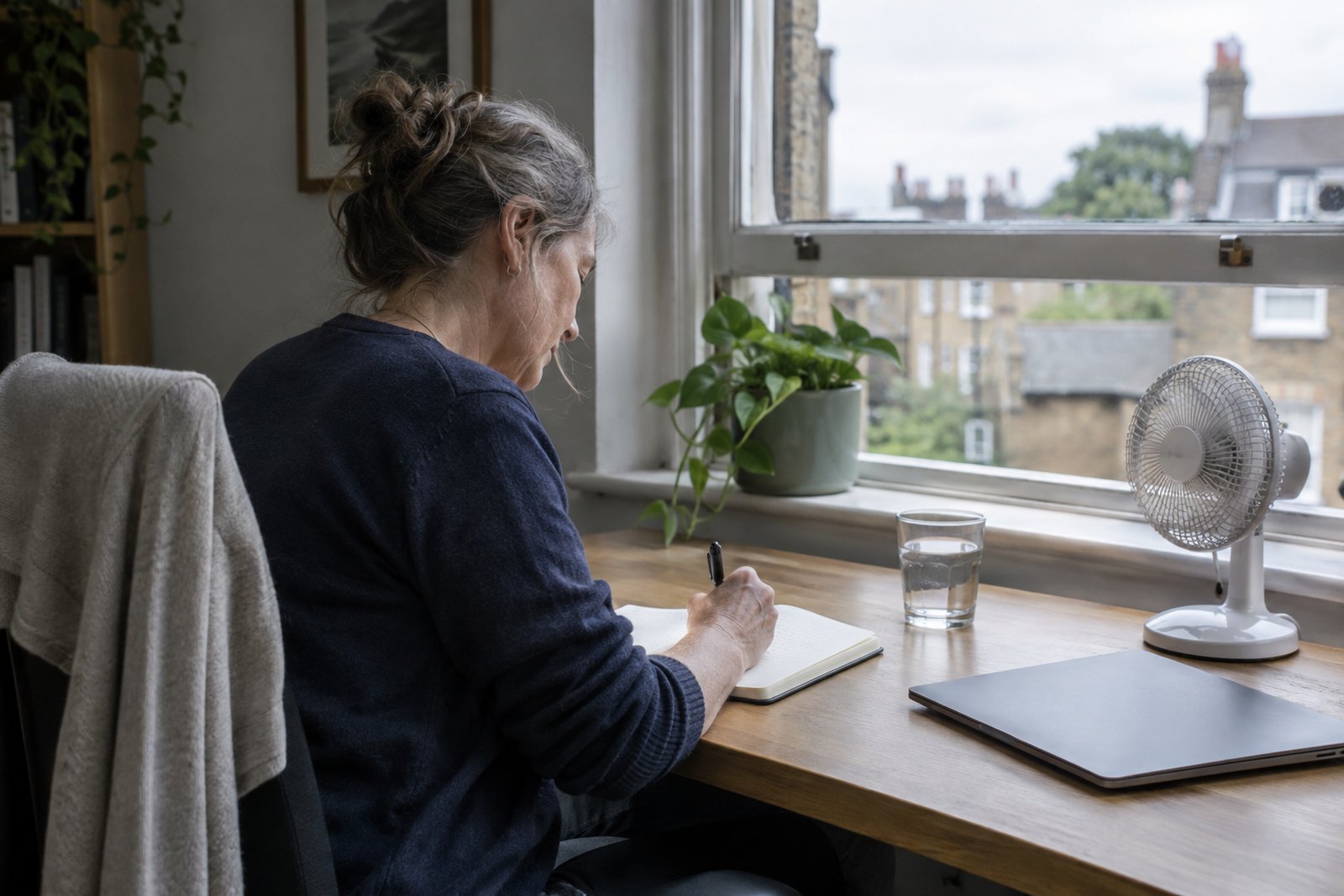
Yes, menopause can make work genuinely harder, and no, you are not imagining it. Hot flushes in a warm office, nights broken by sweats, losing a word halfway through a meeting, aching joints at the end of a shift: these are common, and for some people they go on for years. The good news is that most of what helps at work is simple and cheap. A desk fan. A lighter uniform. A later start after a bad night. A quiet room for ten minutes. A written list instead of trusting your memory.
You are entitled to ask your employer for changes like these, and a sensible employer will want to help, because keeping an experienced person at work is far easier than replacing them. Employers already have duties around health and safety and treating staff fairly. In some cases menopause symptoms can be severe and long-lasting enough to count as a disability under the Equality Act 2010, which brings a legal duty to make reasonable adjustments. This guide covers the practical side: which symptoms tend to cause trouble at work, the adjustments that help, how to ask, and where occupational health, your GP and an occupational therapist fit in.
How menopause symptoms show up at work
Menopause is when periods stop. Perimenopause is the run-up to it, and symptoms can start years before periods actually end. Some people barely notice anything. Others find their working life turned upside down. Below are the symptoms that most often cause problems at work, and why.
Hot flushes and night sweats
A hot flush can arrive with no warning: sudden heat in the face, neck and chest, sweating, sometimes a thumping heart, then a chill afterwards. At work the problem is often less the flush itself than where it happens. In front of a class. On a ward in a synthetic tunic. Behind a counter with no window. In a meeting room where the thermostat is controlled by someone in another building. Night sweats then feed straight into the next problem.
Broken sleep and fatigue
Waking three or four times a night, soaked or simply wide awake at 4am, wears you down quickly. Tiredness makes everything else worse: concentration, patience, mood and how you cope with a flush. It also tends to hit hardest at exactly the times your rota allows for it least.
Brain fog, memory and concentration
Many people describe walking into a room and not knowing why, losing the thread of a sentence, forgetting names they have known for years, or reading the same email three times. It can be frightening, especially if your job depends on being sharp. It is a recognised symptom, it often improves, and there are practical ways round it. If memory problems are severe or getting steadily worse, see your GP, because other causes are worth ruling out.
Joint pain and aches
Stiff, aching joints and muscles are common and easily blamed on age or the job. They matter most in physical work, long periods of standing, or a day spent at a badly set-up desk.
Anxiety, low mood and confidence
Some people feel anxious for the first time in their lives, or find their confidence quietly draining away. Add worry about what colleagues think when you go red in a meeting, and work can start to feel like something to survive rather than something you are good at.
Practical adjustments that help
Most workplace adjustments fall into a few groups. Nobody needs all of them, and the best ones are matched to your actual job rather than copied from a generic list.
Temperature and clothing
- A desk fan, or a seat near a window that opens. Moving away from radiators, heaters, ovens, hot machinery or sunny glass.
- Some control over the temperature where you work, or at least a clear agreement about who can adjust it.
- Uniform changes. Breathable or natural fabrics instead of synthetic ones, short sleeves, layers you are allowed to remove, and a spare uniform so you can change after a bad flush.
- Easy access to cold drinking water and toilets, including on the shop floor, in vehicles and out on visits.
- Somewhere to freshen up and keep a change of clothes.
Breaks, hours and pace
- Short breaks when you need them, rather than only at fixed times.
- Flexible start and finish times, so a terrible night does not mean a disastrous morning.
- Temporary changes to shifts, such as fewer nights or early starts, or more recovery time between them.
- Working from home on some days, where the job allows.
- Spreading heavy or demanding tasks across the week instead of stacking them on one day.
If fatigue is a big part of the picture, the pacing principles used for other conditions translate well. Our practical guide to fatigue management and pacing explains how to plan your energy across a day and a week.
Brain fog: task planning and memory aids
- Written instructions, or a short follow-up email after meetings and handovers, so you are not relying on what was said.
- One running to-do list, paper or digital, kept in one place. Not five sticky notes and a mental note.
- Checklists for routine but important tasks, so you do not have to remember every step.
- Doing the work that needs most concentration at your best time of day.
- Fewer interruptions for focused work: a protected hour, a quieter desk, or permission to wear headphones.
- Calendar or phone reminders for deadlines and appointments.
- Agendas sent before meetings, so you can prepare and jot down questions in advance.
None of these are special treatment. They are good working habits that happen to matter more when your memory is unreliable.
A quiet space
A cool, quiet room you can use for a few minutes after a flush, a wave of panic or sudden exhaustion can make the difference between finishing the day and going home. It does not need to be anything special. A spare office or first aid room that is genuinely available, without having to explain yourself each time, is enough.
Physical work and long periods on your feet
If joints are the problem, look at how the work is done. A better chair, a sit-stand arrangement, a perching seat for standing roles, rotating tasks so you are not doing the same movement all day, and reviewing lifting and carrying can all help. If you work at a computer, ask for a proper workstation assessment; your employer should already be doing these for regular screen users.
What you can do yourself, starting today
You do not have to wait for a meeting with HR to make the day more manageable.
- Dress in layers you can take off quickly, in cotton, linen or other breathable fabric.
- Keep a small kit at work: a water bottle, a spare top, wipes and a small handheld fan if your workplace allows.
- Keep a simple symptom diary for two or three weeks. Note when flushes, fatigue or fog hit, what you were doing and how you slept. It makes your GP appointment more useful and your request at work more specific.
- Notice your triggers. Hot drinks, alcohol, spicy food, stress and warm rooms set off flushes for some people, though not everyone.
- Protect sleep where you can: a cooler bedroom, lighter bedding, layers you can kick off in the night.
- Write things down the moment you think of them.
- If it feels right, tell one trusted colleague. Having someone who knows why you have stepped out takes a surprising amount of pressure off.
How to ask for adjustments at work
You do not need a formal diagnosis to start a conversation, and you only need to share as much as you are comfortable with. Saying "I am going through the menopause and a couple of symptoms are affecting my work" is enough to begin.
- Check what already exists. Many employers have a menopause policy, or a wider health and wellbeing policy. Some have menopause champions or support groups.
- Be specific. "I get hot flushes several times a day and the office is very warm. A fan and a desk by the window would help" gets a quicker yes than "I am struggling".
- Choose who to talk to. Usually your line manager. If that feels impossible, HR, another manager, a menopause champion or a union rep can be a starting point.
- Get it in writing. Ask for what was agreed to be recorded, so it does not vanish when your manager changes.
- Agree a review date. Symptoms change. What works now may need adjusting in three months.
On the legal side, in England, Scotland and Wales, menopause is not a protected characteristic on its own under the Equality Act 2010 (Northern Ireland has its own, similar laws, and the Labour Relations Agency can advise there). However, treating someone unfairly because of menopause symptoms can amount to discrimination related to sex, age or disability. Symptoms may count as a disability where they have a substantial and long-term effect on your normal day-to-day activities. Whether yours do depends on your circumstances, and it is not something you need to prove before asking. Many adjustments are simply good management. ACAS publishes clear guidance on menopause at work and runs a free helpline if things are not going well, and GOV.UK explains the reasonable adjustments duty. Our guide to reasonable adjustments at work and how to ask for them goes into more detail.
Occupational health and fit notes
If your employer has an occupational health service, ask to be referred, or agree to a referral if your manager suggests one. An occupational health professional (often a nurse or doctor, sometimes an occupational therapist or physiotherapist) looks at how your health affects your work and recommends practical changes to your employer. Their recommendations carry weight, and they can be particularly useful if your manager is unsure what is reasonable. Our guide to what happens at an occupational health referral explains how to prepare.
If you are off sick or struggling to stay at work, a fit note can say you "may be fit for work" with changes such as amended duties, altered hours or a phased return. Fit notes can be issued by GPs and by certain other healthcare professionals. Our guide to fit notes and how to use one explains what they can and cannot do.
Treatment is a conversation for your GP
Workplace adjustments help you cope with symptoms. They do not treat them. Hormone replacement therapy (HRT) is the main medical treatment for menopause symptoms, and your GP can talk through whether it suits you, along with non-hormonal options and talking therapies. Your GP can also check whether something else is adding to the picture, as conditions such as thyroid problems, anaemia and depression can cause similar tiredness, low mood and poor concentration.
See your GP promptly if you have very heavy or unusual bleeding, bleeding between periods or after sex, or any bleeding after your periods have stopped. See them too if low mood or anxiety is not lifting. If you are not sure how urgent something is, call NHS 111. Call 999 if you have chest pain, or if you are thinking about harming yourself and feel you might act on it.
Where an occupational therapist fits
To be clear, an occupational therapist does not treat menopause and will not advise on HRT or medication. Where they can help is the practical side of getting through a working day.
A private occupational therapist can:
- Look at your job task by task and work out exactly which parts are causing problems and why.
- Assess your workstation, posture, equipment and environment, including heat, noise and lighting.
- Help you build a realistic pacing and energy plan around fatigue and broken sleep.
- Work with you on strategies for brain fog, such as planning systems, checklists and routines that suit how you work.
- Write a clear report recommending specific adjustments, which you can share with your employer or occupational health.
- Support a planned return to work after a period of sickness absence.
Other people lead on other things. Your GP leads on medical treatment. A physiotherapist is the right person for persistent joint or muscle pain that needs treatment. For anxiety or low mood, your GP or NHS Talking Therapies (which you can self-refer to in England) is the place to start. For disputes with your employer, HR, a union rep or the ACAS helpline. And plenty of people never need an occupational therapist at all, just one decent conversation with a manager who listens.
Frequently asked questions
Do I have to tell my employer I am going through the menopause?
No. Your health is private. But it is hard for an employer to make adjustments for something they do not know about. You can choose how much to share, and you might start by describing the symptom and the fix without going into detail.
Can menopause count as a disability?
In some cases. If symptoms have a substantial and long-term effect on your normal day-to-day activities, they may meet the Equality Act definition of disability. It depends on your individual situation, and ultimately only a tribunal can decide. ACAS and GOV.UK have guidance, and you do not need to establish disability before asking for reasonable changes.
What if I do not feel comfortable talking to my manager?
That is common. You could speak to HR, another manager, a menopause champion if your workplace has one, or a union rep. You can also ask for an occupational health referral, which gives you a professional to talk to who can then make recommendations to your employer.
Can menopause-related sickness absence be held against me?
Absence policies should be applied fairly, and ACAS guidance encourages employers to take menopause symptoms into account when managing absence. If your symptoms amount to a disability, failing to consider adjustments before taking action could be discriminatory. If you are worried, get advice from HR, your union or ACAS early.
Does working from home help?
For many people, yes. You control the temperature, can change clothes, rest briefly after a bad night and work at your best times. It can also be isolating, and it does not suit every job. A mix of home and workplace days is often a sensible compromise.
Does any of this apply before my periods stop?
Yes. Perimenopause symptoms can be just as disruptive and can start years before periods end. The same adjustments help, whether symptoms come with natural menopause, surgical or medical menopause, and for trans and non-binary people who experience them.
Next steps
If symptoms are making work harder and you would like a practical assessment of your job and a clear report of adjustments to share with your employer, see our work and ergonomics page, or current guide prices, and choose your area below.

Talk to an occupational therapist near you
This guide is general information. For advice about your own situation - or someone you look after - a local occupational therapist can visit you at home and see it for themselves.
Choose your area: