

Managing Stairs Without a Stairlift
By Mobile Occupational Therapist • 17 September 2026 • 8 min read
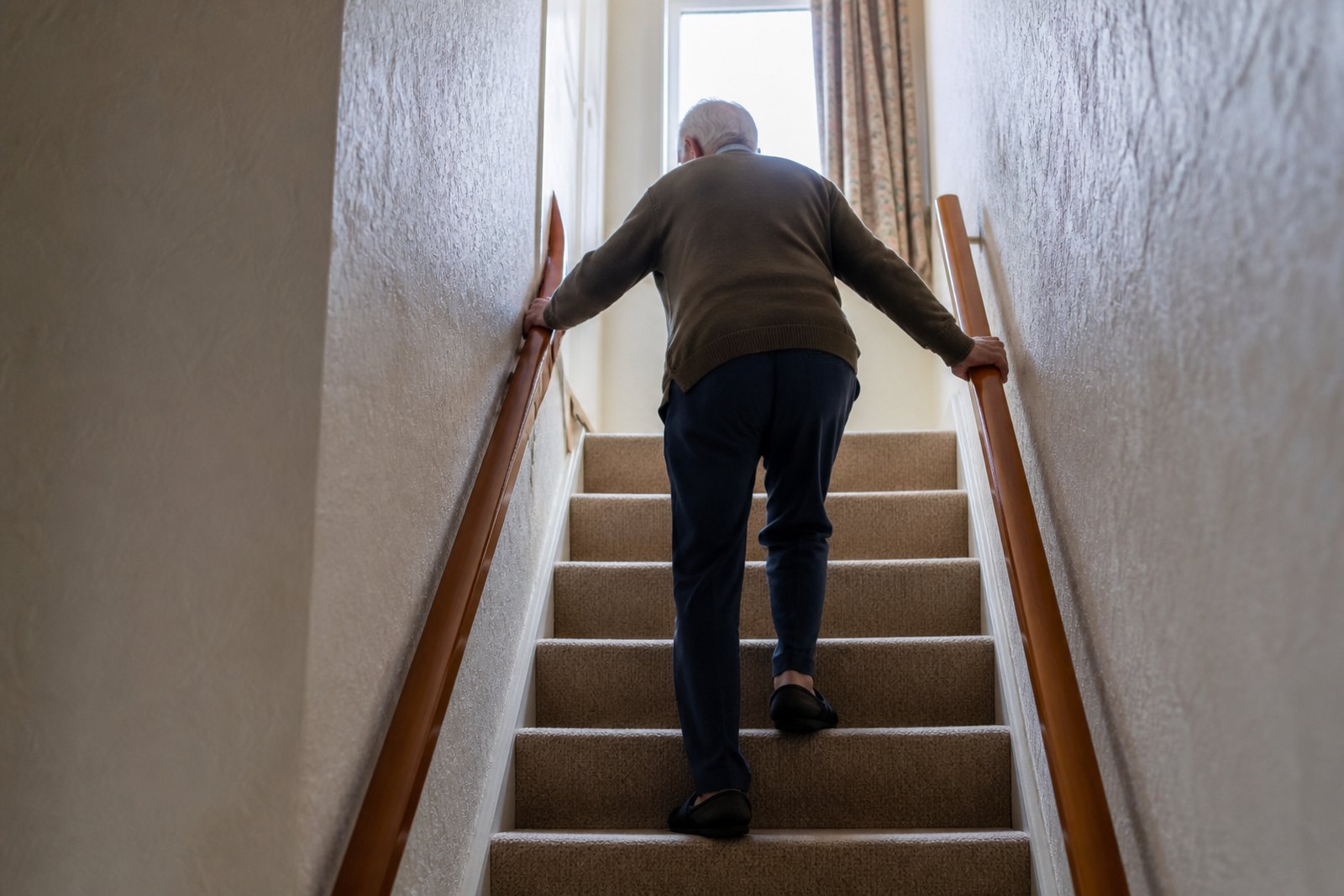
Most people struggling with stairs do not need a stairlift straight away. The alternatives that occupational therapists reach for first are a second stair rail so both hands have support, a safer climbing technique - leading with the stronger leg going up and the weaker leg coming down - deliberate rest points, better lighting, and reorganising the day so the stairs are climbed less often. For some people the honest answer is moving life downstairs, either for a recovery period or permanently. Which of these fits depends on why the stairs have become hard, which is exactly what a home assessment works out.
First, a safety warning
Stairs are where falls do the most damage, because there is furthest to fall and nothing soft to land on. If you have recently fallen on the stairs, feel dizzy on them, or are hauling yourself up by the banister, do not keep pushing through. Stay downstairs, ask for help when you must climb, and get assessed promptly. New dizziness or new leg weakness is a reason to see a doctor, not to buy equipment. Nothing below is worth attempting on a staircase you already feel unsafe on.
Why stairs get harder
Stairs demand strength, balance, stamina and confidence all at once, which is why they are often the first part of the house to become difficult. The reason matters: painful knees need a different answer from one-sided weakness after a stroke, and both differ from the loss of confidence that follows a fall. An elderly person struggling with stairs is rarely struggling for just one reason, and the fix that works is the one matched to the actual cause, not the first product in the catalogue.
The second stair rail - the cheapest big improvement
Most staircases have one banister. A second rail on the opposite wall is the most effective inexpensive change available, and usually the first thing an occupational therapist recommends.
- Two hands beat one. A rail on each side lets you steady yourself with both hands, transforming balance and sharing the effort between both arms.
- It solves the one-sided problem. After a stroke, a single banister is only on the useful side in one direction. A second rail means a strong-side handhold both ways.
- Run it the full length. It should extend slightly beyond the top and bottom steps, so you can take hold before the first step and stay held after the last.
- Fix it properly. It must anchor into something that can take a sudden snatch load, not plasterboard alone - our grab rails guide covers fixings and what never to grab.
Councils frequently supply and fit a second stair rail free of charge as a minor adaptation, following a care needs assessment you can request yourself.
Technique: up with the stronger, down with the weaker
The classic therapy teaching, for anyone with one leg stronger than the other - after stroke, surgery, injury or with painful joints:
- Going up, lead with the stronger leg. The strong leg lifts your body weight to the next step; the weaker leg joins it.
- Coming down, lead with the weaker leg. The strong leg stays on the upper step, bending under control to lower you, while the weaker leg reaches down first.
The strong leg always does the hard work - lifting on the way up, controlled lowering on the way down. One step at a time, both feet on each step, is not a failure; it is the stable pattern. Hold the rail on your stronger side where you can, stay upright rather than leaning into the slope, and never carry things in both hands on the stairs - use pockets or a shoulder bag. If you use a stick, ask a therapist to show you the stairs pattern with it, because getting stick, rail and feet in the wrong order is worse than leaving the stick at the bottom.
Rest points and pacing
Fatigue causes stair falls as surely as weakness does. If breathlessness or stamina is the limit, plan the climb rather than enduring it: pause on a step, both hands on the rails, and breathe before carrying on. A chair at the top and bottom gives you somewhere to recover before and after. Just as useful is cutting the number of climbs: one planned trip upstairs rather than five forgotten-item trips, a commode or downstairs toilet to avoid urgent night-time climbs, and duplicates of glasses, chargers and medication on both floors.
Make the staircase itself safer
- Light it properly. A two-way switch at top and bottom, bright bulbs, and a night light on the landing. Coming down in the dark is a classic fall.
- Fix the carpet. Loose stair carpet and worn treads are trip hazards in the one place a trip is unaffordable.
- Clear the steps. Stairs are not storage. Nothing lives on them, ever.
- Mark the edges if eyesight is poor. A contrasting strip on the nosing of each step makes the edge visible on the way down.
- Deal with footwear. Backless slippers and loose socks cause stair falls; well-fitting slippers with backs are a genuinely useful gift.
These overlap heavily with general falls prevention - our guide to preventing falls at home covers the rest of the house.
Living downstairs: temporary tactic or permanent plan
Moving life downstairs is often treated as defeat. It is better understood as a tool. After surgery, a hospital stay or a stroke, a few weeks of downstairs living - bed in the living room, washing at the sink, commode at night - takes the stairs out of the equation while strength returns, and is a standard part of many discharge plans.
Done by accident rather than deliberately, though, it can quietly shrink a life: the person who has not been upstairs in a year, sleeping in a chair, with nobody having ever actually decided any of it. If downstairs living looks permanent, it deserves a proper plan - a real bed, somewhere dignified to wash and dress, and a look at whether a downstairs WC or shower is feasible. Larger changes of that kind may qualify for a Disabled Facilities Grant, which is means-tested and involves an OT assessment.
When to accept the stairs are no longer safe
Honesty matters here. Warning signs that management is no longer enough: falls or near-misses on the stairs, needing another person's support every time, hauling yourself up arm-over-arm, or genuine fear of the staircase. At that point the realistic options are a stairlift, a permanent and properly equipped downstairs life, or moving home - and pretending otherwise leads to the fall everyone was dreading. A stairlift is the right answer for many people, but it is a significant purchase with real limitations, so read our guide on whether you need an OT assessment before buying a stairlift before signing anything. An assessment weighs all three options against your stairs, your condition and its likely direction - a judgement, not a product decision.
Who benefits from a stairs assessment
- Older people finding the stairs slower, more tiring or more frightening than a year ago
- Anyone home from hospital after a stroke or joint replacement, needing a safe interim plan
- People with one-sided weakness, painful joints or breathlessness
- Families who have noticed a parent quietly avoiding the upstairs, or sleeping in a chair
- Anyone being quoted for a stairlift who wants an independent view first
Frequently asked questions
What helps an elderly person struggling with stairs?
Start with the cheap, high-impact changes: a second stair rail so both hands have support, good lighting, secure carpet, clear steps and proper footwear. Then reduce how often the stairs are needed, and learn the stronger-leg-up, weaker-leg-down technique. If falls, fear or exhaustion remain, it is time to assess the bigger options.
Is a second stair rail worth fitting?
Almost always, yes. It is inexpensive, it lets you use both hands, and it puts a rail on your stronger side in both directions - which one banister never can. Councils commonly fit one free as a minor adaptation after a needs assessment, or a joiner can fit one privately, provided it runs the full length and is fixed into something solid.
How do you manage stairs after a stroke?
Lead with your stronger leg going up and your weaker leg coming down, one step at a time, holding the rail on your stronger side - which usually means fitting a second rail so a strong-side hold exists in both directions. Practise first with your physiotherapist or occupational therapist, because the safe pattern with a stick or ankle support is individual. Until you have been shown, treat the stairs as a supervised activity, not a solo one.
Next steps
If the stairs are becoming the hardest part of the house, an occupational therapist can watch how you actually manage them, fit the technique and rails to you, and give an honest view on whether a stairlift, downstairs living or something simpler is the right call - a home assessment covers the stairs alongside everything else. Find your local therapist via our areas we cover page, or see our prices page for current guide pricing.
Talk to an occupational therapist near you
This guide is general information. For advice about your own situation - or someone you look after - a local occupational therapist can visit you at home and see it for themselves.
Choose your area: