

Living With Ataxia: Daily Life, Balance and Equipment That Helps
By Mobile Occupational Therapist • 23 September 2026 • 12 min read
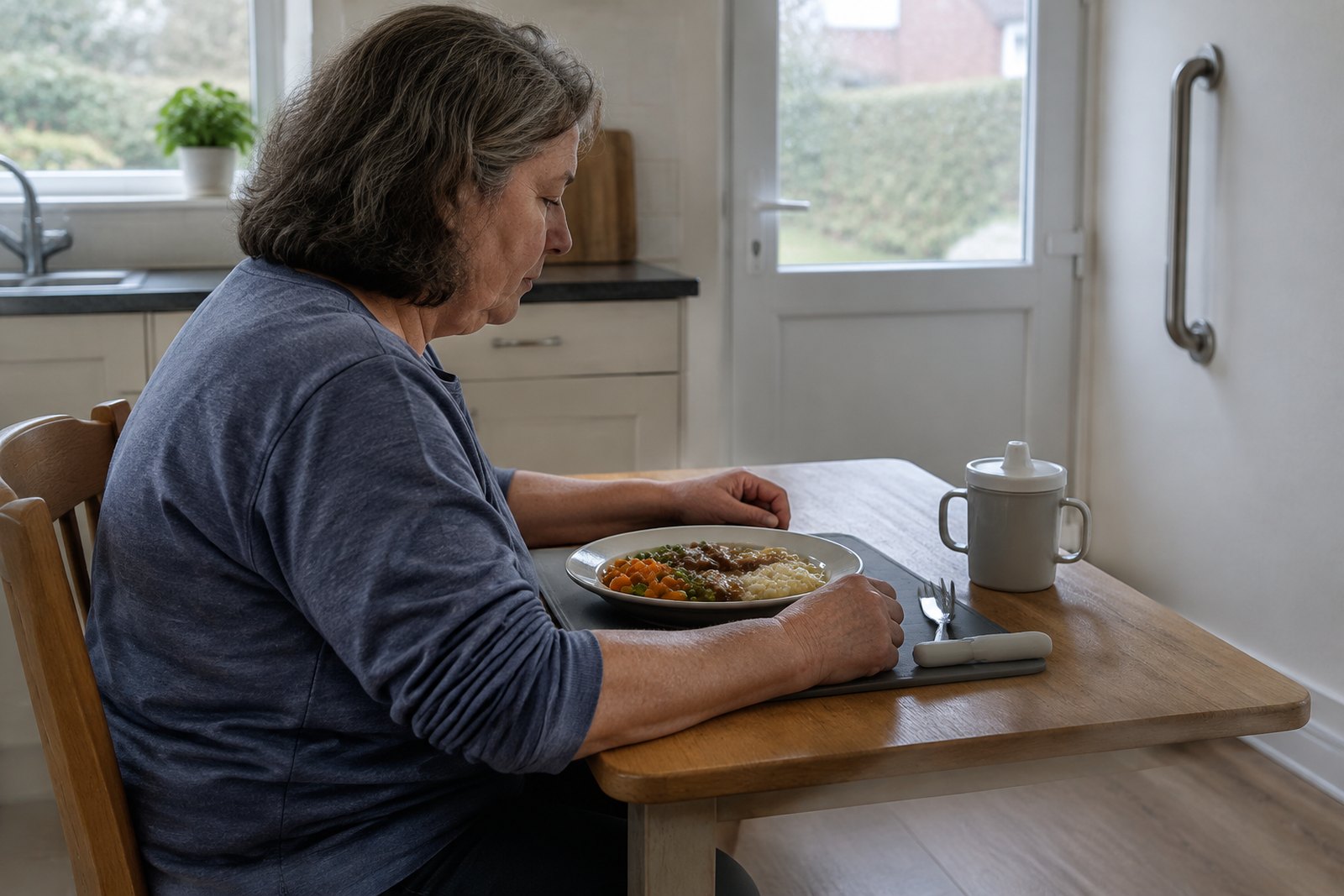
Ataxia means poor coordination. It is not a single illness but a sign that the part of the brain that fine-tunes movement, the cerebellum, or the nerve pathways connected to it, is not working as it should. Movement becomes less smooth and less accurate than you intend: an unsteady, wide-based walk, a hand that overshoots the cup, speech that sounds slurred or slow, and sometimes trouble with swallowing and focusing the eyes.
There are many possible causes, from a stroke or multiple sclerosis to inherited conditions, low vitamin levels and the effects of alcohol or some medicines, so a proper assessment by a neurologist matters. This guide is not about diagnosis. It is about the day to day: getting around, eating, drinking, washing, talking and managing tiredness, and the practical changes that make those things easier and safer at home.
If ataxia comes on suddenly, meaning new unsteadiness, slurred speech or clumsiness over minutes or hours, call 999. It can be a sign of a stroke or another emergency and needs urgent assessment, not a wait and see.
What ataxia actually is
The cerebellum sits at the back of the brain, underneath the larger main part. It does not decide to move. Its job is to make movement accurate: the timing, the force, the direction, and the constant tiny corrections that keep you upright without you noticing. When it, or its connections, are damaged, those corrections arrive late or are the wrong size. You still know exactly what you want to do. Your body just does a rougher version of it.
Doctors usually group ataxia by cause:
- Acquired ataxia comes from something that has happened to the brain or nerves, such as a stroke, head injury, multiple sclerosis, an infection, a tumour, long-term heavy drinking, low levels of certain vitamins, an underactive thyroid, or as a side effect of some medicines.
- Hereditary ataxia runs in families. Friedreich's ataxia and the spinocerebellar ataxias are among the better-known types.
- Idiopathic ataxia is the label used when no cause is found despite investigation.
Why this matters to you: some causes can be treated or stopped from getting worse, some stay fairly stable, and some progress slowly over years. Your plan for daily life looks different in each case. If you have not had a neurologist's assessment, ask your GP about a referral. And do not stop or change any medicine because you suspect it is involved. Talk to your GP or pharmacist first.
How ataxia shows up in everyday life
Walking and balance
Walking often becomes wide-based and staggering, a bit like walking on a moving boat. Turning, stopping suddenly, stepping over things and walking on uneven ground are usually the hardest parts. Many people find their balance is worse in the dark, when they look up or turn their head quickly, or when someone talks to them while they are moving. Falls and near misses are common, and the fear of falling can shrink someone's life faster than the ataxia itself.
Hands and arms
Reaching for something can go wide or overshoot. The hand may shake more as it gets closer to the target, which is why pouring, threading, doing up buttons, writing and using a phone screen can be so frustrating. This is different from the resting tremor people often associate with Parkinson's. With ataxia the shake usually gets worse with effort and precision, not better.
Eating and drinking
Spills are the obvious problem: soup that leaves the spoon before it reaches your mouth, a full mug that slops. Less obvious, and more important, are swallowing difficulties. Coughing or spluttering during meals, food sticking, a wet or gurgly voice after drinking, or repeated chest infections all need checking.
Speech
Speech can become slower, slurred, uneven in rhythm or volume, or harder for others to follow when you are tired. People sometimes assume the person is drunk, which is both wrong and upsetting.
Eyes, tiredness and thinking
Some people have flickering or jumpy eye movements, which can make reading and focusing hard. Fatigue is very common, partly because every movement takes more effort and concentration than it used to. Some types of ataxia also affect thinking speed, planning or mood, and these deserve as much attention as the physical side.
Moving around more safely
Walking aids: let the physio lead
Walking aids, balance work and exercise are the physiotherapist's territory, and they are worth getting right. With ataxia, the wrong aid can make things worse. A single stick may not give enough support for a sideways stagger. Some wheeled walkers can roll away from you if your steps are uneven. A heavier, wider-based frame may suit one person and slow another down. Ask your GP or neurology team for a physiotherapy referral, ideally to someone with neurological experience, rather than picking one off a shelf. Our guide to walking frames, sticks and wheeled walkers explains the main types and how fit is checked.
Stabilising tricks that help
Ataxia tends to be worse the further a movement is from your body and the less support you have. So the general rule is: bring the task close, and fix what you can. Things people find useful:
- Sit down for fiddly or risky tasks. Dressing, chopping, shaving, doing make-up and filling in forms are all easier and safer seated.
- Anchor your elbows. Resting your forearms or elbows on a table, or tucking your upper arm against your side, steadies the hand a great deal for eating, writing or using a phone.
- Use two hands where you can, for a mug, a saucepan or a jug.
- Lean on something solid. Standing with your hips or side against a kitchen worktop leaves your hands freer.
- Widen your stance and turn in small steps rather than pivoting on one foot.
- Do one thing at a time. Stop to talk, then walk. Stop to look up, then carry on.
- Slow down at the start of a movement rather than rushing to get it over with. Speed usually makes the overshoot bigger.
Setting up the home
A few changes reduce the number of times a day you have to balance unsupported:
- Rails where you actually need them: beside the toilet, at the shower or bath, at the front and back doors, and a second banister on the stairs. Towel rails and radiators are not substitutes. See our guide to grab rails and what not to grab.
- A clear route from bed to toilet and chair to kitchen, with loose rugs, trailing cables and low furniture moved out of the way.
- Good, even lighting, including night lights on the way to the toilet, because many people with ataxia lean heavily on their eyes for balance.
- A shower seat or bath board so you are not standing on a wet surface with your eyes shut while washing your hair.
- Things at waist height in the kitchen, so you are not bending low or reaching high.
- A kitchen trolley for moving plates and drinks, rather than carrying them while walking.
For a wider look at reducing risk, including what to do about the floor, footwear and getting help quickly if you do fall, read falls at home: practical prevention beyond exercise.
Hands, meals and drinks
Mealtimes are where small pieces of equipment can make the biggest difference, and they are also where people give up and quietly stop eating in front of others. Some options:
- Weighted cutlery. Extra weight can damp down the overshoot for some people. It does not help everyone, and heavier cutlery can tire the arm faster over a long meal, so try before you buy if you can.
- Lidded cups and two-handled mugs. A lid with a small spout or a straw stops spills. Check with a speech and language therapist first if swallowing is a problem, because spouts and straws are not right for everyone.
- Non-slip matting under plates and bowls, so they stay put while you chase food around.
- Plate guards or deep-sided dishes to push food against.
- A kettle tipper so you pour without lifting a full kettle.
Our guide to adapted cutlery, plate guards and drinking aids describes each type and who it suits.
Elsewhere in the day, think about fastenings and screens. Magnetic or larger fastenings, slip-on shoes with a firm heel, and sitting to dress all help. For phones, tablets and computers, voice control and dictation, larger on-screen buttons, a stylus with a thicker grip, or a keyboard guard that stops neighbouring keys being pressed can turn a daily battle into something manageable.
Speech and swallowing: the speech and language therapist leads
If speech or swallowing are affected, the right person is a speech and language therapist, not an occupational therapist. They can assess how safely you swallow, suggest changes to food and drink textures or posture if needed, and work on speech clarity, breath control and pacing. Where speech becomes very hard to understand, they can also look at communication aids. Ask your GP or neurology team for a referral. Coughing or choking at meals, or repeated chest infections, should not be left until the next routine appointment.
In the meantime, some simple things help conversation: talk in a quiet room, face the person, turn the television off, and give yourself time. Family members can help by not finishing sentences.
Fatigue and the bad days
When every step takes concentration, you run out of energy sooner. Many people notice their coordination gets worse as they tire, which makes the late afternoon and evening the riskiest part of the day. Pacing helps: spread heavy jobs across the week, do the tasks that need the most precision when you are freshest, sit for anything you can, and build in rests before you need them rather than after. Illness, heat, stress, poor sleep and alcohol often make symptoms worse for a while.
Where an occupational therapist fits
Ataxia is managed by a team, and it helps to know who does what. The neurologist works out the cause and any treatment. The GP coordinates care and referrals. The physiotherapist leads on walking, balance, exercise and walking aids. The speech and language therapist leads on speech and swallowing. Ataxia UK, the national charity, offers information, a helpline and support groups.
An occupational therapist looks at the things you need and want to do each day, and how to make them possible and safer. On a home visit, an occupational therapist can:
- watch how you manage real tasks such as getting on and off the toilet, showering, dressing, cooking and getting in and out of bed;
- suggest stabilising techniques and different ways of doing things;
- recommend equipment, and say what is worth trying and what is not;
- advise on rails, stair rails, bathroom changes and other adaptations, and write reports that support a council or grant application;
- help with fatigue planning, work and getting back to hobbies;
- plan ahead if the ataxia is progressive, so changes to the home are made in the right order.
You can get occupational therapy through the NHS, usually via your GP or neurology team, or through your council's adult social care if you need help at home. Some people also choose a private occupational therapist, for example to get advice sooner or for a detailed report.
Frequently asked questions
Does ataxia always get worse?
No. It depends on the cause. Ataxia after a stroke may improve over time, some types stay fairly stable, and some inherited or idiopathic types progress slowly. Your neurologist is the person to ask about your own outlook.
Should I use a walking stick?
Possibly, but get it checked by a physiotherapist first. A stick does not suit everyone with ataxia, and the wrong height or type can make you less steady. A physio can also advise on balance exercises.
Do weighted cutlery and cups really help?
For some people, yes. For others the extra weight makes no difference or tires the arm. Anchoring your elbows on the table and using a non-slip mat often help as much as the weight. Trying a few options is the honest answer.
Can I still drive with ataxia?
You must tell the DVLA about a medical condition that could affect your driving, and ataxia often can. Check the current rules on GOV.UK and talk to your GP or neurologist. Specialist driving assessment centres can test whether adaptations would let you drive safely.
Can I get equipment and adaptations free?
Often. Your council's adult social care can assess you and may provide equipment on loan and small adaptations. Larger changes, such as a level-access shower, may be funded through a Disabled Facilities Grant in England, Wales and Northern Ireland, which is means-tested for adults. Scotland has its own system of council help with adaptations. Check with your council.
When is ataxia an emergency?
Call 999 if unsteadiness, slurred speech or clumsiness come on suddenly, or come with face drooping, arm weakness, a severe headache, confusion or a recent head injury. If existing ataxia is gradually getting worse, see your GP. If you are unsure, call NHS 111.
Next steps
If daily tasks at home are getting harder with ataxia, a home visit from an occupational therapist can help you work out what to change first. See our neurological occupational therapy page, or current guide prices, and choose your area below.
Talk to an occupational therapist near you
This guide is general information. For advice about your own situation - or someone you look after - a local occupational therapist can visit you at home and see it for themselves.
Choose your area: