

Living With a Stoma Bag: Clothing, Bathing, Exercise and Daily Life
By Mobile Occupational Therapist • 27 October 2026 • 15 min read
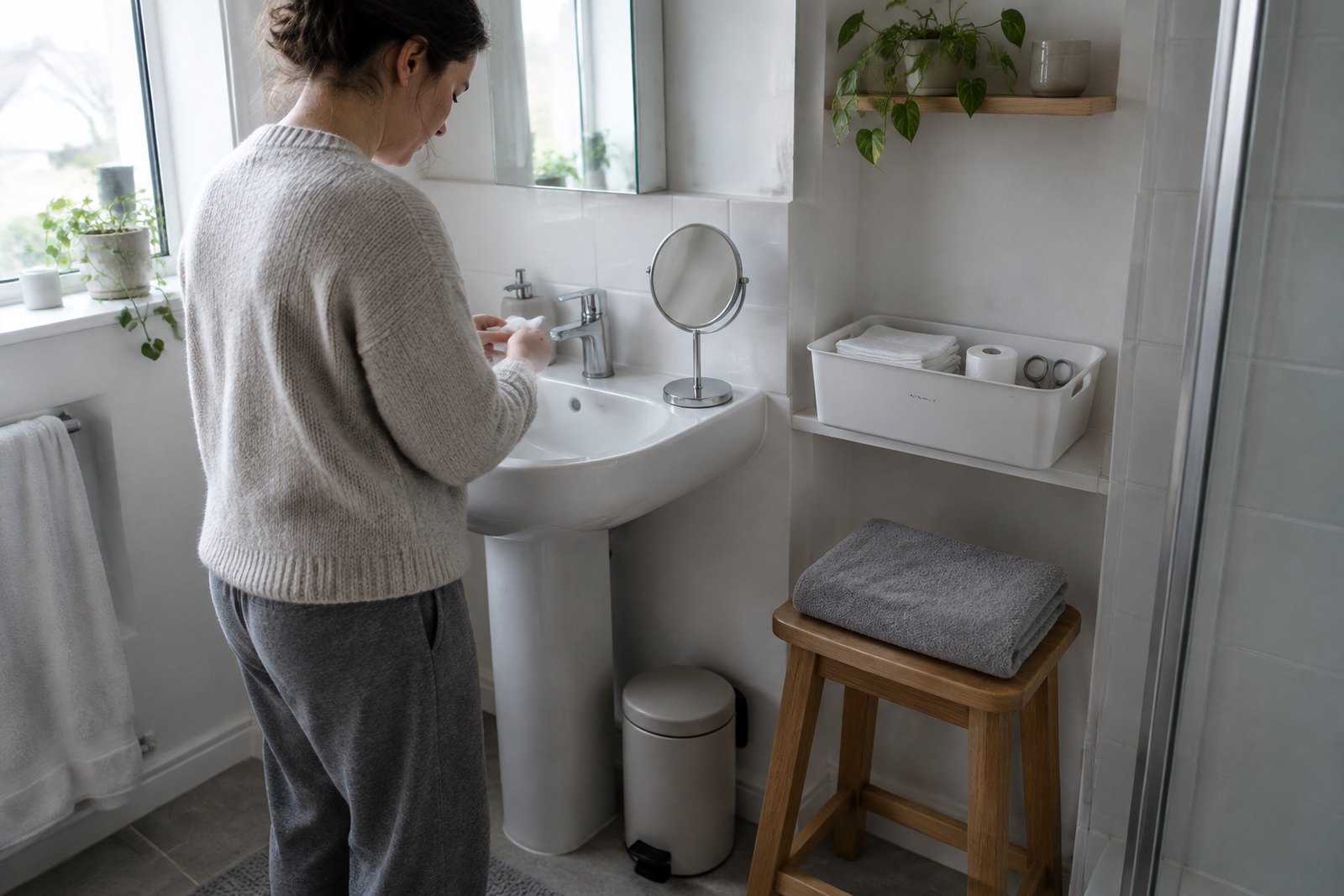
For most people, living with a stoma turns out to be more ordinary than they feared while lying in a hospital bed. Once your wound has healed and you have the hang of emptying and changing your bag, you can usually wear the clothes you wore before, shower, swim, sleep in your own bed, travel, go back to work and have a sex life. The first few weeks are the hardest. After that, looking after a stoma tends to become a routine that takes a few minutes a day.
Your stoma nurse usually leads on stoma care and appliances, and their advice is the best place to start for skin, products, diet and when you can start lifting and exercising, alongside your surgical team and GP. This guide fills in the practical gaps around that: how to set up the bathroom, what to carry when you go out, how to get supplies, what to wear, the warning signs that need urgent help, and what to do if your hands or eyesight make changing a bag harder than it should be. It covers colostomy, ileostomy and urostomy, and says where they differ.
Colostomy, ileostomy and urostomy: what is different day to day
A colostomy is made from the large bowel. The output is often firmer and less frequent, and many people use a closed bag that is changed before it gets too full, often when it is about one third to half full, which may be once or twice a day.
An ileostomy is made from the small bowel. The output is looser and more frequent, so most people use a drainable bag that is emptied several times a day and changed every day or every few days. People with an ileostomy lose more fluid and salt, which matters in hot weather and when ill.
A urostomy carries urine. The bag has a tap at the bottom, needs emptying often, and at night is usually connected to a larger drainage bag beside the bed.
Your own pattern will depend on your surgery and your body. Your stoma nurse will tell you what is normal for you, and that is the benchmark to use.
Emptying and changing at home
Set up the bathroom so everything is within reach
Fumbling for things with a bag off is how leaks and stress happen. A small amount of organising makes a big difference.
- Keep a changing kit together in a box or basket at waist height, not on the floor or a high shelf. Bags, dry wipes, adhesive remover, measuring guide, scissors if you cut your own, and disposal bags.
- Sit down to change if you can. A stable chair or stool by the sink is less tiring than standing, especially in the early weeks or if you are unsteady.
- Use a mirror on a stand so you can see the stoma clearly, particularly if it sits low or at the side. One with a light helps a lot.
- Good lighting over the sink, so you can check the skin around the stoma properly.
- A lidded bin or a bag hook close by for used bags.
- Warm water within reach in a bowl or from the tap, plus a spare towel you keep for this.
- A cut-and-ready supply. If you cut bags to size, cut a few in advance so a change is never held up.
A simple changing routine
- Get everything ready before you take anything off.
- Peel the old bag off gently from the top down, supporting the skin with your other hand. An adhesive remover helps if it pulls.
- Clean around the stoma with warm water and dry wipes. Plain water is usually enough. Avoid oily soaps, moisturisers and baby wipes with lotion unless your stoma nurse has suggested them, because they can stop the new bag sticking.
- Pat the skin completely dry.
- Look at the stoma and the skin. The stoma should be moist and pink or red. Sore, broken or itchy skin is worth mentioning to your stoma nurse early rather than putting up with it.
- Fit the new bag, smoothing it down from the stoma outwards. Holding your hand over it for a minute or so helps it settle.
Stomas usually shrink over the first weeks after surgery, so the size you cut or choose may need to change. Re-measure as your stoma nurse shows you. A gap that is too big lets output reach the skin; too small and it can rub the stoma.
Emptying a drainable bag
Sit well back on the toilet, or sit or kneel facing it, whichever is steadier. Laying some toilet paper on the surface of the water first cuts down splashing. Wipe the outlet clean, close it securely, and check it is sealed before you pull your clothes back up.
Wrap used bags in a disposal bag and put them in the household bin. Do not flush stoma bags, wipes or disposal bags down the toilet. If you are unsure about collections, your council can advise.
Getting supplies on prescription
Stoma supplies are prescribed by your GP, usually based on what your stoma nurse has recommended. You can collect them from a pharmacy or use a dispensing appliance contractor, a specialist supplier that delivers to your door. Many delivery services will also cut bags to your size and add free extras such as disposal bags and wipes, which is well worth asking about if your hands are stiff.
In England, people with a permanent stoma (including colostomy, ileostomy or urostomy) can usually apply for a medical exemption certificate, which means free prescriptions for everything, not just stoma supplies. Ask your GP surgery for the application form. If your stoma is temporary you may have to pay unless you are exempt for another reason, and a prescription prepayment certificate can reduce the cost. Prescriptions are free in Scotland, Wales and Northern Ireland. Check the current rules on the NHS website, as they can change.
Order in good time and keep a couple of weeks' spare at home, but there is no need to stockpile. If bags keep leaking or your skin is sore, that is a reason to see your stoma nurse for a product review, not just to order more.
Going out
The first trip out is often the scariest. A small kit that lives in your bag or coat pocket takes most of the worry away:
- One or two spare bags, already cut to size
- Dry wipes and a small pack of adhesive remover wipes
- Disposal bags
- Spare underwear, and for some people a change of trousers
- Your stoma nurse's phone number
Empty your bag before you leave. Learn where toilets are on routes you use often. A RADAR key opens thousands of locked accessible toilets across the UK, which have more space and a sink in the same room, ideal for a change. The stoma charities also offer cards explaining that you need urgent access to a toilet, which you can show in shops and cafes.
Clothing
Most people find they can wear what they wore before. A few things help:
- Waistbands sitting directly on the stoma can press on it and push output under the seal. Higher-waisted trousers that go over the bag, or lower ones that sit beneath it, are usually more comfortable.
- Braces instead of a tight belt can be easier.
- Close-fitting underwear or a light support garment holds the bag flat and close to your body, which many people find reassuring.
- Patterned or slightly looser tops hide a full bag better than thin plain fabric.
- Fabric covers for the bag stop plastic sticking to skin in warm weather and look nicer.
A full bag is more noticeable than an empty one, so emptying regularly is the simplest way to feel confident in what you are wearing.
Showering, bathing and swimming
Water can splash onto the stoma but it does not usually cause harm, so you can shower with the bag on or off. Many people like to shower with it off on changing days, then dry the skin thoroughly before putting on a new one. If the stoma is active you may prefer to keep a bag on. Baths are fine too once your wound has healed and your stoma nurse is happy.
Swimming is usually possible once you have healed. Empty the bag first, make sure the seal is good, and consider a swimming costume or trunks with a higher waist or a pattern. Some people use smaller bags for swimming. Ask your stoma nurse before you start, and if you are worried about the bag coming loose, extra adhesive strips around the edge can help.
If getting in and out of the bath was already a struggle before surgery, a seat, board or rail may make it safer while your tummy heals. An occupational therapist can advise on this.
Sleeping
Empty the bag before bed. If you have an ileostomy, eating your main meal earlier in the evening may mean less output overnight, though check any diet changes with your stoma nurse. People with a urostomy usually connect to a night drainage bag so they do not need to wake to empty.
You can usually sleep in any position, including on your front once healed. Lying on your side with the bag resting on the mattress or a pillow can stop it pulling. A waterproof mattress protector under the sheet takes the worry out of the odd leak. If you are leaking regularly at night, tell your stoma nurse, as a different product often fixes it.
Exercise, lifting and parastomal hernia
Gentle activity helps recovery, and walking is usually encouraged early on. What needs care is lifting and straining. Surgery weakens the tummy muscles around the stoma, and heavy lifting too soon raises the risk of a parastomal hernia, a bulge around the stoma where part of the bowel pushes through the weakened muscle.
- Follow your stoma nurse's or surgeon's timescale for lifting. It varies with your operation and your health, so do not rely on a number from someone else's experience.
- Watch the everyday lifts: full shopping bags, laundry baskets, the vacuum cleaner, a grandchild, moving furniture, the dog.
- Build up gradually. Your stoma nurse may show you gentle core exercises, and in some areas there are physiotherapists who specialise in exercise after abdominal surgery.
- When you do lift, bend your knees, keep the load close, and breathe out as you lift rather than holding your breath.
- Support garments such as a support belt or high-waisted support underwear may be recommended for lifting, gardening or sport. Your stoma nurse can assess you and they may be available on prescription.
If you notice a bulge or swelling around the stoma, or the bag starts to fit differently, tell your stoma nurse.
Travel
Take at least twice the supplies you expect to need, and split them between bags so one lost suitcase is not a crisis. Keep enough in your hand luggage for the journey and a day or two after. Cut bags at home before flying, as scissors may not be allowed in hand luggage. The stoma charities offer travel certificates explaining your stoma in several languages, and you can ask for a private search at security if you prefer.
In hot weather, people with an ileostomy lose fluid more quickly, so drink more and know the signs of dehydration below. Heat can also affect how well bags stick, so store supplies somewhere cool. Declare your stoma when buying travel insurance.
Sex, relationships and body image
It is completely normal to feel differently about your body after stoma surgery, and to worry about sex. Most people are able to have a sex life again once they have healed and feel ready. There is no rush.
Practical things help: empty the bag first, use a smaller bag or a cap if your stoma nurse agrees, and wear a bag cover, wrap or underwear you feel good in. Talking honestly with a partner usually goes better than either of you guessing. Some operations, especially those involving the rectum, can affect erections, vaginal dryness or comfort. These are common, often treatable, and worth raising with your GP or stoma nurse. Your GP can also refer you to psychological or psychosexual support if low mood or anxiety about your body is getting in the way.
The charities Colostomy UK, the Ileostomy and Internal Pouch Association (IA) and the Urostomy Association run helplines and peer support, where you can talk to people who have been through exactly this.
Warning signs: when to get help
Call 999 or go to A&E if:
- Your stoma turns very dark red, purple or black
- You have no output from your stoma together with vomiting, tummy pain, cramping or a swollen tummy, which can mean a blockage
- There is heavy bleeding from inside the stoma, or bleeding that will not stop
Contact your stoma nurse, GP or NHS 111 the same day if:
- You have an ileostomy and very high, watery output with signs of dehydration: great thirst, dark urine or passing little urine, dizziness, cramps or feeling very tired (go to A&E urgently if you feel faint or confused, cannot keep fluids down, or are getting worse)
- You have a urostomy and a high temperature, cloudy or strong-smelling urine, or pain in your back or side
- Your stoma is swelling, shrinking back into the skin, or coming out further than usual
- The skin around the stoma is broken, bleeding or very painful
Where an occupational therapist fits
An occupational therapist does not manage your stoma. Your stoma nurse does, with your surgical team, GP and sometimes a dietitian. Where an occupational therapist can help is when something else makes the practical tasks of daily life difficult.
That is often the case for people who live with arthritis in their hands, a tremor, poor eyesight, a stroke or memory problems. Peeling backing paper, closing an outlet, cutting accurately and seeing the stoma clearly all need fine finger control and good vision. A private occupational therapist visiting at home can watch you change your bag in your own bathroom and suggest changes, for example:
- Sitting position, support for your elbows and a steadier set-up to reduce shaking, building on the ideas in our guide to living with a tremor
- Lighting, a magnifying mirror and colour contrast so you can see what you are doing
- Ways to reduce strain on painful joints, in line with joint protection for arthritic hands
- Questions to take back to your stoma nurse, such as whether pre-cut bags, easier closures or a different type of bag would suit your hands better
- Equipment for the rest of daily life while you recover, such as a raised toilet seat, rails, a shower seat or dressing aids, which is covered on our equipment and aids page
An occupational therapist can also help with fatigue, pacing and getting back to work or hobbies after major surgery. If a family member helps with changes, they can be included in the visit.
Frequently asked questions
Can people tell I have a stoma bag?
Usually not. Modern bags are thin and lie flat under normal clothes, especially when emptied regularly. Most people who meet you will have no idea unless you tell them.
How often do I need to change a stoma bag?
It depends on the type of stoma and bag. Closed colostomy bags are often changed once or twice a day, while drainable ileostomy and urostomy bags are emptied often and changed every day or every few days. Your stoma nurse will advise what suits you.
Can I get free prescriptions with a stoma?
In England, people with a permanent stoma can usually apply for a medical exemption certificate through their GP surgery, which covers all prescriptions. Prescriptions are free in Scotland, Wales and Northern Ireland. Check the current rules on the NHS website.
Will a stoma bag smell?
A well-fitted bag should not smell when it is closed, because modern bags use odour-proof film and many also have a filter. You may notice a smell when emptying or changing, as anyone would in the toilet. A persistent smell usually means a leak, so check the seal and talk to your stoma nurse.
Can I go back to work with a stoma?
Most people do, often on a phased return. Think about toilet access, where to keep supplies and any lifting in your job. Your employer may need to make reasonable adjustments, and your GP or occupational health service can help plan the return.
Can a stoma be reversed?
Some stomas are made as temporary and can be reversed later, and some are permanent. Whether a reversal is possible depends on why you had surgery and on your health, so this is a question for your surgeon.
Next steps
If arthritis, a tremor, poor sight or general recovery is making daily life with a stoma harder, an occupational therapist can help alongside your stoma nurse. See our home assessment page, or current guide prices, and choose your area below.
Talk to an occupational therapist near you
This guide is general information. For advice about your own situation - or someone you look after - a local occupational therapist can visit you at home and see it for themselves.
Choose your area: