
RADAR Keys: What They Are, Who Can Get One and Where They Work
By Mobile Occupational Therapist • 17 September 2026 • 9 min read
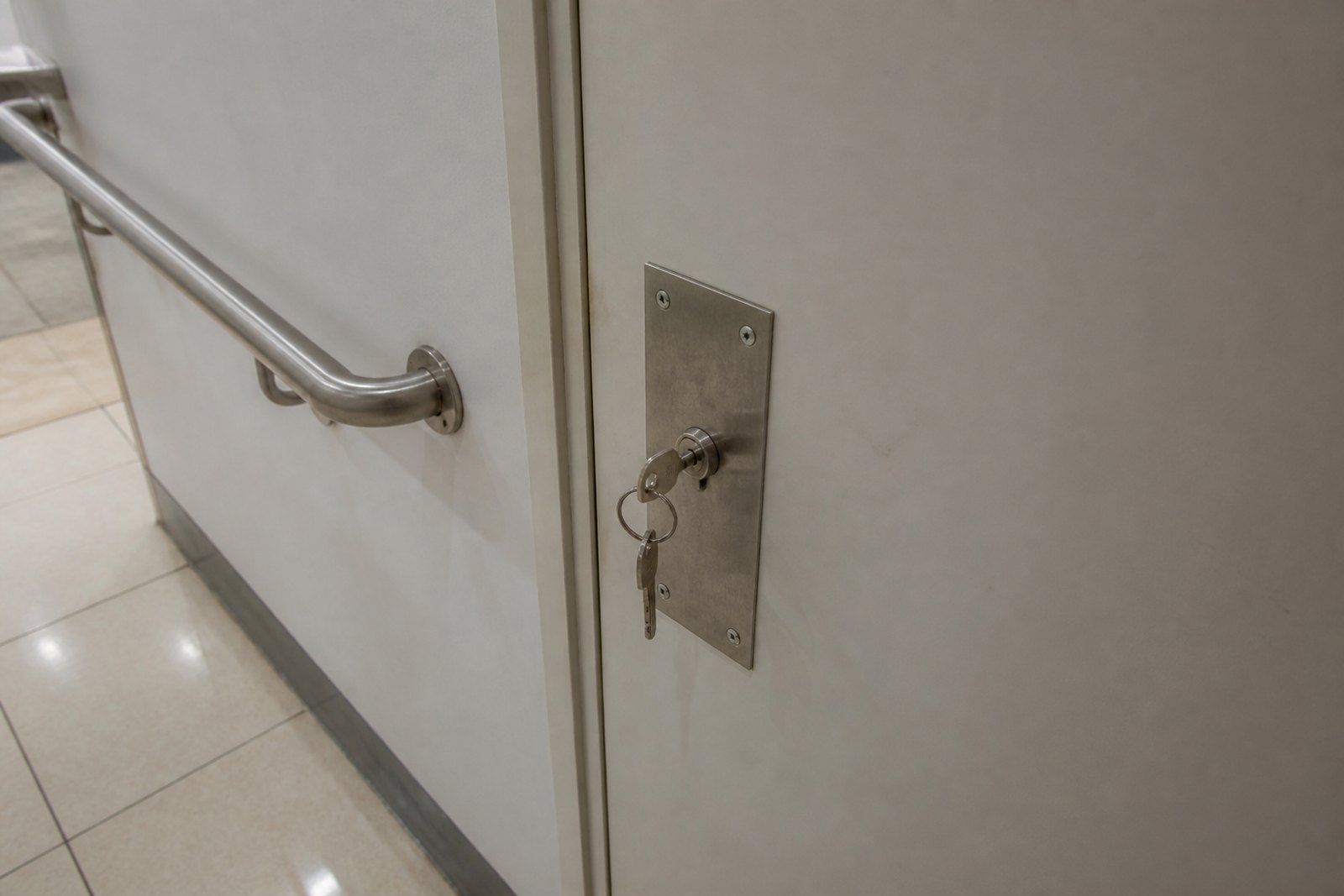
A radar key is a large, chunky key that opens the lock on thousands of accessible public toilets across the UK. It exists to solve one narrow problem: a toilet can be kept locked against vandalism and misuse, and still be available without asking to the people who need it. Anyone who has stood outside a locked accessible toilet while a member of staff goes to find the key knows why it was invented.
The most useful thing to know is that there is no formal eligibility test. Nobody assesses you, nobody countersigns anything, and you do not need a Blue Badge, a benefit award or a letter from your GP. If you have a disability or a health condition that means you need an accessible toilet, the scheme is for you. That includes a great many conditions nobody can see from the pavement: a bowel condition, a stoma, a bladder that gives no warning, a catheter, severe arthritis, or simply needing more space and something to hold.
What the National Key Scheme is
The scheme's proper name is the National Key Scheme, run by the charity Disability Rights UK. Almost everybody calls it the RADAR key scheme after the organisation that started it, which later merged into Disability Rights UK. The name stuck, and you will see the same key sold as a RADAR key, a National Key Scheme key or simply a disabled toilet key. They are all the same thing.
The idea is one standard lock and one standard key. Councils, transport operators, shopping centres, pubs, libraries and hundreds of other organisations fit that lock to their accessible toilets, and anyone carrying a key can let themselves in. It is one of the very few disability schemes with no gatekeeping in it, which is worth saying plainly: people go without a key for years on the assumption that they would not qualify.
Who a radar key is for
The scheme is for anyone whose disability or health condition means they need an accessible toilet. That covers a much wider group than the wheelchair symbol on the door suggests, and the people who most often hesitate have hidden conditions.
- Bowel and bladder conditions. Crohn's disease, colitis, irritable bowel syndrome, a stoma, an overactive bladder, a catheter or continence problems of any kind. Urgency is the point: the walk is possible, but not in the time available.
- Conditions that make a small cubicle unworkable. Severe arthritis, a stiff hip, a recent joint replacement or breathlessness, where you need space, a higher seat and a grab rail rather than a narrow stall with an inward-opening door.
- People who use equipment. A wheelchair, a walking frame, crutches or a mobility scooter, none of which fit through a standard cubicle door.
- People who need help. Anyone assisted by a partner or a carer needs a room two people can get into and close the door.
- Fatigue and neurological conditions. Multiple sclerosis, Parkinson's, the after-effects of a stroke and long-term fatigue all make the extra hundred metres to the only unlocked toilet a real barrier.
Nobody is checked at the door, and nobody should be challenged for using an accessible toilet. If you have needed to think about whether you qualify, you almost certainly do.
Where to get a radar key, and what it should cost
A key costs a few pounds. Disability Rights UK sells them directly, and most councils sell them through customer services or a local access office. Some councils give them out free, some charge a small handling fee, and many disability charities, advice centres and independent living shops stock them. Because a radar key is disability equipment, most disabled buyers can buy one without VAT, and may be asked to sign a short declaration at the point of sale.
Two warnings. First, keys are resold online at several times what they should cost, and there is no premium version; a key is a key. Second, some cheap copies are not cut to the scheme's specification and will open some locks and jam in others, which is a miserable thing to discover in a car park. Buying from the charity that runs the scheme, from your council or from a recognised disability organisation avoids both. It is worth buying two, because losing the only one is what keeps people at home. If a radar key is being sorted out, it is a sensible moment to look at whether a Blue Badge is also worth applying for, since the two together change what a day out looks like.
Where the keys work, and where they do not
There are somewhere around ten thousand locked accessible toilets on the scheme across the UK. You will find them at railway and bus stations, motorway services, shopping centres, town centre public conveniences, parks, libraries, pubs and many tourist attractions. In most towns the council's own public toilets are on the scheme.
Not every accessible toilet is locked, and not every lock is a scheme lock. Supermarkets and large shops often leave theirs open or ask staff to unlock them, a handful of operators use their own key or a coded lock, and some toilets are shut for repairs or because the building closes early. The key is a very good tool, not a guarantee, so check ahead for an unfamiliar trip.
Changing Places toilets are a different thing
A Changing Places toilet is not the same as an accessible toilet with a radar key, and the difference matters to the people who need one. A standard accessible toilet has a wider door, a raised pan and grab rails. A Changing Places toilet is a much larger room containing a ceiling track hoist, a height-adjustable adult-sized changing bench, space for two carers and a privacy screen. It is what makes a day out possible for somebody who cannot transfer themselves and cannot be changed on a toilet floor.
There are far fewer of them, they are listed on a national map you can search before travelling, and access varies: some are open, some use the same scheme key, some have their own arrangement. If the person needs a hoist or a bench, a radar key alone will not solve the trip, and finding the nearest Changing Places facility comes first.
Cards, etiquette and planning the day
Alongside the key, bowel and bladder charities produce a small card, usually known as a "just can't wait" card, which says politely that the holder has a medical condition and needs a toilet urgently. It has no legal force. What it does is get you past the awkward first sentence in a shop or a cafe, at a moment when explaining is the last thing you want to do, and most staff respond well to it.
On etiquette, two things. If you use a radar key, leave the toilet as you would want to find it and report a broken lock or a missing rail to the operator, because the scheme only works while the locks work. And if you are the person waiting outside, do not challenge somebody who does not look disabled. Most of the conditions that make an accessible toilet necessary are invisible, and being questioned at the door is one of the reasons people stop going out.
When planning routes around toilets is the real problem
Occupational therapists take this seriously because it is one of the commonest hidden reasons people withdraw. It rarely gets described as a toilet problem. It gets described as not fancying the shops any more, or being too tired for a day out, when the truth is the person cannot be certain of a toilet and has decided not to risk it. That decision shrinks a life faster than almost anything else, and it is fixable.
An assessment looks at the whole chain rather than the key alone: how far you can walk between rest points, whether you can manage clothing quickly enough, how you transfer on and off a toilet away from home, and whether continence itself needs looking at with your GP or continence service rather than worked around. If the toilet at home is also difficult, that is a separate and very fixable problem, and our guide to raised toilet seats, toilet frames and rails covers it. Our independence at home service exists for exactly this kind of unglamorous, practical planning.
Frequently asked questions
Who is eligible for a radar key?
Anyone with a disability or health condition that means they need to use an accessible toilet. There is no assessment, no application form and no proof required, and hidden conditions such as bowel and bladder problems, a stoma or a catheter count exactly as much as visible ones. You do not need a Blue Badge or any benefit award to buy one.
Where can I buy a disabled toilet key?
From Disability Rights UK, which runs the National Key Scheme, from most local councils, and from many disability charities, carers' centres, advice services and independent living shops. Some councils supply them free or at a reduced cost. Most disabled buyers can purchase one VAT free.
How much should a radar key cost?
A few pounds. There is no better or more expensive version, so if you are being asked for a great deal more than that, buy elsewhere. Buying two is sensible, because being without one is what stops people going out.
Does a radar key open every accessible toilet?
No. It opens the toilets fitted with the scheme lock, which is most council public conveniences and a great many stations, shopping centres and pubs. Some accessible toilets are unlocked, some are opened by staff, and a few operators use their own key or a keypad.
Next steps
If worry about toilets is quietly keeping somebody at home, the key is the cheap part of the answer and the rest is worth looking at properly: walking distance, transfers, clothing, fatigue and confidence together. An occupational therapist can assess all of that and will be entirely matter of fact about it. Find your local occupational therapist via our areas we cover page, or see our prices page for current guide pricing.
Talk to an occupational therapist near you
This guide is general information. For advice about your own situation - or someone you look after - a local occupational therapist can visit you at home and see it for themselves.
Choose your area: