

Live-In Care: What It Is and How to Decide If It Suits
By Mobile Occupational Therapist • 29 October 2026 • 14 min read
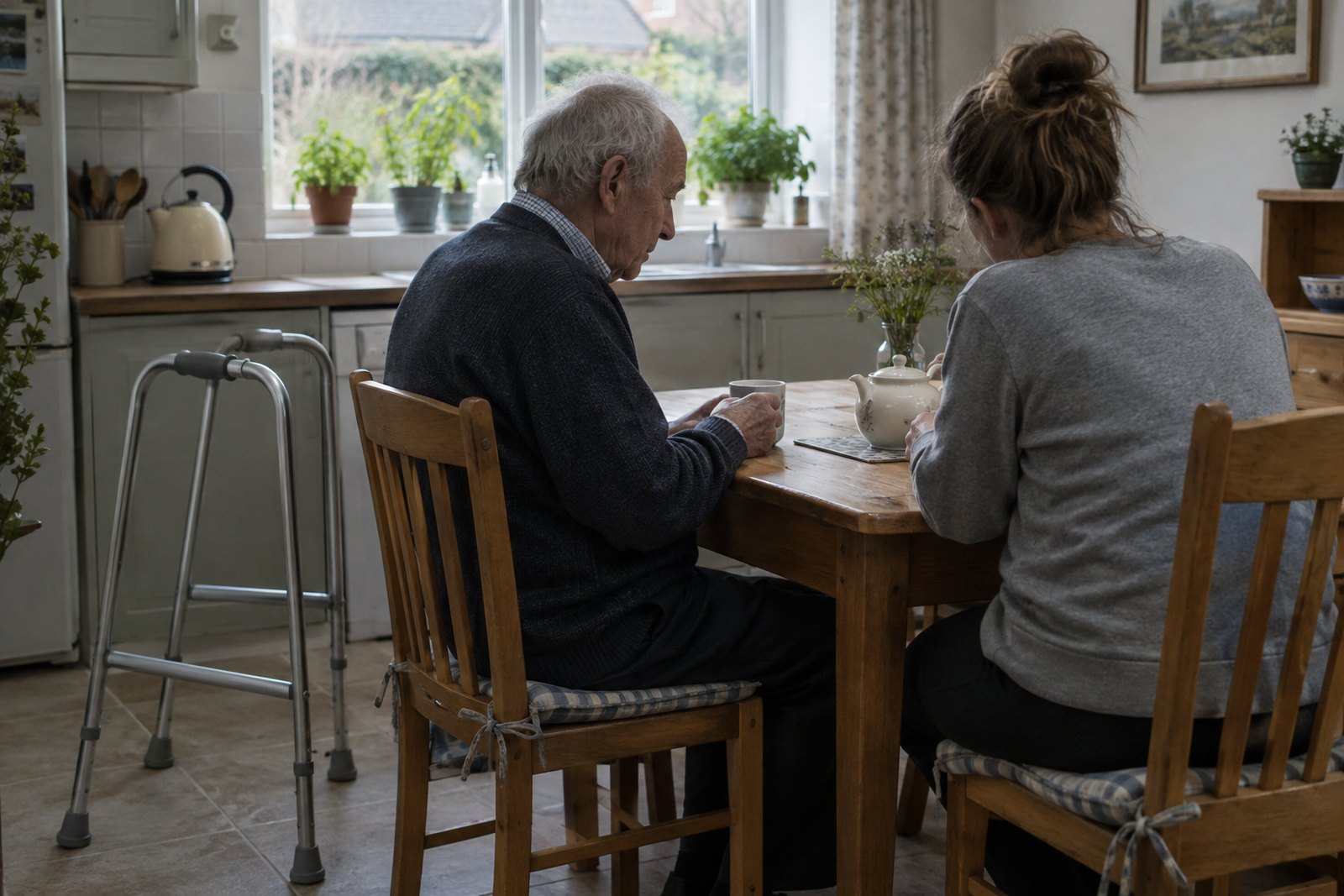
Live-in care means a paid carer moves into the person's home and stays there, usually for a block of days or weeks, before handing over to another carer. They help with the everyday things that have become hard: getting up and dressed, washing, meals, prompting medicines, company, getting out, and being there if something goes wrong. The person stays in their own home with their own routines, and does not have to move into a care home.
It suits some people very well and others not at all. It tends to work best for someone who needs help on and off through the day, sleeps reasonably well at night and can be helped by one person. It works less well when someone needs help many times a night, or needs two people every time they are moved. Costs vary widely depending on needs, location and how the care is arranged, so the only reliable figure is a written quote. This guide covers how to decide, what to check, how it is paid for, and how to make the home workable before the carer arrives.
What live-in care actually involves
A live-in carer lives alongside the person rather than visiting. They have their own bedroom in the house, share the kitchen and usually the bathroom, and fit their life around the person's day. Many work a rota of a few weeks on followed by a break, with another carer covering. Some families end up with two regular carers who swap, which gives everyone continuity and stops the person having to explain how they like their tea to a new face every fortnight.
What a carer does depends on the care plan, but commonly includes:
- personal care: washing, showering, dressing, toileting and continence care
- cooking, shopping, light housework and laundry
- prompting or helping with medicines, within what the care plan and the provider allow
- helping someone move around the house, using equipment they have been trained on
- company, conversation and getting out: appointments, the shops, church, the club
- noticing changes and telling the family, the GP or the provider
A live-in carer is not usually a nurse, unless you have specifically arranged for a registered nurse to provide the care. Wound care, injections and other clinical tasks are usually done by NHS clinicians such as district nurses or practice nurses, unless a suitably trained carer has been assessed as competent and the task is formally delegated and documented by the relevant healthcare professional. Ask early who does what, so nothing falls between the gaps.
Who live-in care tends to suit
- People who would be unsettled by a move. Someone with dementia who still knows their own home, their own chair and their own street often copes better staying put.
- Couples who want to stay together. One carer can sometimes support both, though the provider will need to assess both people and the price usually reflects that.
- People with pets, a garden or a strong local life they would lose in a care home.
- People whose needs are spread across the day rather than packed into a few predictable visits. Short home care visits work well for set tasks, but they do not help with the wobble at three in the afternoon or the confused hour before tea.
- People coming home from hospital who need more support for a while. Some families use live-in care as a bridge after a hospital stay, alongside any reablement the council offers.
When it may not be the right answer
Live-in care is often presented as the obvious alternative to a care home. Sometimes it is. Sometimes it is an expensive way of putting one tired person in an impossible position.
Very high night-time needs
A live-in carer needs to sleep. Most arrangements expect the carer to get a proper night's rest, with perhaps an occasional call for help. If the person is up several times every night, wandering, needing turning or needing help with the toilet again and again, one carer cannot also work all day. The usual answers are an extra waking night carer, a second live-in carer, or a different setting. All of these change the cost. Be honest with providers about nights from the start, including the bad ones.
Two-person moves
If someone needs two people to move safely, for example for some hoist transfers or turning in bed, one live-in carer cannot do it alone. That is not a matter of the carer trying harder. Options include visiting care workers coming in at set times to be the second person, two live-in carers, or checking whether different equipment and technique would let one person do it safely. That last option needs a proper assessment, not a hopeful guess.
Other situations to think hard about
- There is no spare bedroom and no realistic way to create one.
- The person genuinely does not want someone living with them, and has the capacity to make that choice.
- Needs are changing quickly and nursing care is likely to be needed soon.
- The person is lonely and wants the company of others their own age, which a lively care home may actually offer better.
Live-in carer vs care home
Neither is better in general. It depends on the person.
Live-in care gives one-to-one attention, the person's own routines, their own food, their own bed and the chance to keep doing ordinary things. The downsides: it relies heavily on two people getting on, the home has to be workable, and when a carer is off sick or leaves, cover has to be found quickly. Families also tend to stay more involved in the background, with bills, repairs, shopping budgets and sorting out problems.
A good care home has staff on shift around the clock, a team rather than one person, other people to talk to and, in a nursing home, nurses on site. The downsides: shared staff, less choice over timing, and a move that some people find very hard. Care homes are inspected by the same regulators as care agencies, and you can read their reports.
Comparing costs is less simple than it looks. A care home fee usually covers food, heating and accommodation. With live-in care, the person still pays their household bills, plus the carer's food in most arrangements. On the other hand, one live-in carer may support a couple. Put real quotes side by side rather than relying on general claims either way.
Agency or introductory service: what to check
There are broadly two ways live-in care is arranged, and the difference matters more than the brochure suggests.
Managed service
The provider employs or directly manages the carers, writes and reviews the care plan, supervises the carer and arranges cover. Because they are providing personal care, they should be registered with the care regulator for your part of the UK:
- England: Care Quality Commission (CQC)
- Wales: Care Inspectorate Wales (CIW)
- Scotland: Care Inspectorate
- Northern Ireland: Regulation and Quality Improvement Authority (RQIA)
Each regulator lets you search for a provider's registration and latest inspection report on its website. Read the report itself, not just the headline rating.
Introductory service
An introductory agency matches you with a carer and takes a fee, but does not manage the care day to day, and depending on the arrangement you may become the carer’s employer rather than using a genuinely self-employed worker. This can cost less, but more of the responsibility usually moves to you: checking the carer's background, agreeing duties, keeping an eye on standards, finding cover and making sure the working arrangement is lawful. Depending on how it is set up, the regulator may not inspect the care being delivered. Ask the service, in writing, exactly what they are responsible for and what you are.
Questions to ask either way
- Is this a managed or an introductory service? Who is responsible for the care?
- Who writes the care plan, and how often is it reviewed?
- What training do carers have in moving and handling, medicines and dementia, and who checks it?
- What happens if the carer is ill, needs to leave, or simply does not get on with my mum?
- What breaks and time off does the carer have, and who covers them?
- What exactly is included in the price, and what costs extra, such as carer travel, nights, a second person, couples or bank holidays?
- How much notice do we have to give, and how much do you give?
Space, privacy and breaks
This is where many arrangements quietly fail. A carer with nowhere to go, no rest and no privacy will not last, however kind they are.
- A bedroom of their own. Usually essential. A proper bed, somewhere to keep their things and a door that closes. Not the sofa, and not the box room still full of boxes.
- Somewhere to wash. Agree how the bathroom is shared and when.
- Food. Agree whether the household provides the carer's food and how shopping is managed.
- Breaks. Carers need time off during the day. If the person cannot safely be left, someone has to cover that time, whether family, a visiting care worker or a day centre. Put this in the agreement, not in a hopeful phone call later.
- Connection. Many carers are a long way from their own family. A phone signal and internet access make a real difference.
- The person's privacy too. It is still their home. Talk about which rooms are theirs, when visitors come and how they like things done.
How live-in care is paid for
Costs vary widely depending on how much help is needed, nights, couples, where you live and the type of service. Do not rely on headline figures online. Get written quotes from two or three providers, based on the same honest description of needs, and check what each one includes.
In general terms, the main routes are:
- Self-funding. Paying privately from income, savings or other assets.
- Council funding. Start by asking adult social care for a needs assessment. If the person has eligible needs, the council also does a financial assessment to work out what, if anything, they pay towards it. Our guide to the Care Act needs assessment explains how to prepare. Councils must meet eligible needs and can choose a cost-effective option, but it must be suitable, meet the assessed needs and properly take account of the person’s wishes and wellbeing, so be ready to explain why live-in care is the right answer for this person.
- Direct payments. If the council is funding care, you can usually ask to receive the money as a direct payment and arrange the support yourself, which can include live-in care. There are rules and responsibilities that come with it, so ask the council what applies.
- NHS continuing healthcare. If someone's needs are mainly health needs, the NHS may fund their care in full. Our guide to continuing healthcare explains who it is for and how the assessment works.
- Benefits. Attendance Allowance, or the daily living part of PIP for younger adults, is not means-tested and can go towards care costs. Check eligibility on GOV.UK.
The Care Act applies in England. Wales, Scotland and Northern Ireland have their own rules on assessment and charging, so check with your council or a national charity such as Age UK for what applies where you live.
Getting the home ready
A live-in carer can only work as well as the home lets them. Before the start date, look at the house through the eyes of someone helping another person all day and some of the night.
- The bed. If the person needs help in bed, a low divan pushed into a corner makes everything harder for both of them. A height-adjustable or profiling bed, with space on at least one side, may be needed.
- The bathroom. Can the person get washed safely with one helper? Bath boards, shower chairs, rails and toilet frames can make a big difference, but they need to fit the person and the room.
- Moving and handling. Anyone who needs help to stand, transfer or change position should have a written moving and handling plan. Slide sheets, stand aids or a hoist only help when they are the right type and the carer is trained on that equipment. Our pages on hoists at home and safe moving and handling explain the basics.
- Clear routes. Rugs, clutter and furniture in walkways get in the way of frames, wheelchairs and two people moving together.
- Night-time. Good lighting, a simple way to call the carer such as a pager or intercom, and a sensible distance between the two bedrooms.
Much everyday equipment can be borrowed through the council's community equipment service after an assessment. Do not buy expensive equipment in a hurry before someone has looked at the person and the room together.
Where an occupational therapist fits
An occupational therapist looks at the person, the tasks of their day and the home together, and works out what would make it workable. For live-in care, that can mean:
- assessing whether the home can realistically support live-in care, including the carer's room and the routes between rooms
- recommending equipment for the bed, bathroom, toilet and chair, and where it should go
- assessing transfers and writing a moving and handling plan, including whether a task can be done safely by one person with the right equipment, or genuinely needs two
- suggesting adaptations such as rails, a level-access shower or a stairlift, and supporting grant applications
- finding ways for the person to keep doing as much as possible themselves, so the carer supports rather than takes over
- writing a clear report that the family, the provider and the council can all use
Council occupational therapists do this work too, though waits vary between areas. A private occupational therapist visiting at home is an option if you want an assessment sooner or more detail; it is a choice, not a requirement.
An occupational therapist does not decide funding and is not the right person for everything. The GP should see anyone with new confusion, repeated falls, breathlessness or a sudden change. District nurses and tissue viability services usually lead on assessment and treatment of wounds and pressure ulcers, and any new or worsening skin damage should be reported straight away. A speech and language therapist assesses swallowing problems. For council funding and safeguarding concerns, contact your local council adult social care team (often led by social workers). If someone is unwell and you are not sure what to do, call NHS 111, and call 999 in an emergency.
Frequently asked questions
Can one live-in carer look after a couple?
Often, yes, as long as their combined needs, including at night, are manageable for one person. The provider should assess both people, and the price usually reflects the extra work.
Does the carer need their own bedroom?
In almost every case, yes. Most providers will not place a carer without one, and a carer without any private space is unlikely to stay. If space is tight, talk to providers before ruling it out, but be realistic.
What happens when the live-in carer has time off?
It depends on the arrangement. A managed service usually sends cover for longer breaks. Daily breaks often need family, visiting care workers or a day centre. Get the plan in writing before the carer starts.
Can the council pay for live-in care?
It can, if the needs assessment shows eligible needs and live-in care is a reasonable way of meeting them. The council will also carry out a financial assessment. If you are offered a different option, ask for the reasons in writing.
Is live-in care suitable for someone with advanced dementia?
It can be, particularly for someone who is calmer in familiar surroundings. The key questions are nights, whether they need two people to move, and whether the carer has dementia training and proper breaks. Review the arrangement as needs change.
Should we get an occupational therapy assessment before live-in care starts?
It is often worth it, especially if the person needs help with transfers, washing or getting in and out of bed. Getting the right equipment and plan in place from day one is far easier than fixing problems once the carer is already struggling.
Next steps
If you are weighing up live-in care, it helps to know first whether the home can work for the person and a carer. See our home assessment page, or current guide prices, and choose your area below.

Talk to an occupational therapist near you
This guide is general information. For advice about your own situation - or someone you look after - a local occupational therapist can visit you at home and see it for themselves.
Choose your area: