

Arthritis in Knees: Daily Life, Equipment and What Helps
By Mobile Occupational Therapist • 22 October 2026 • 15 min read
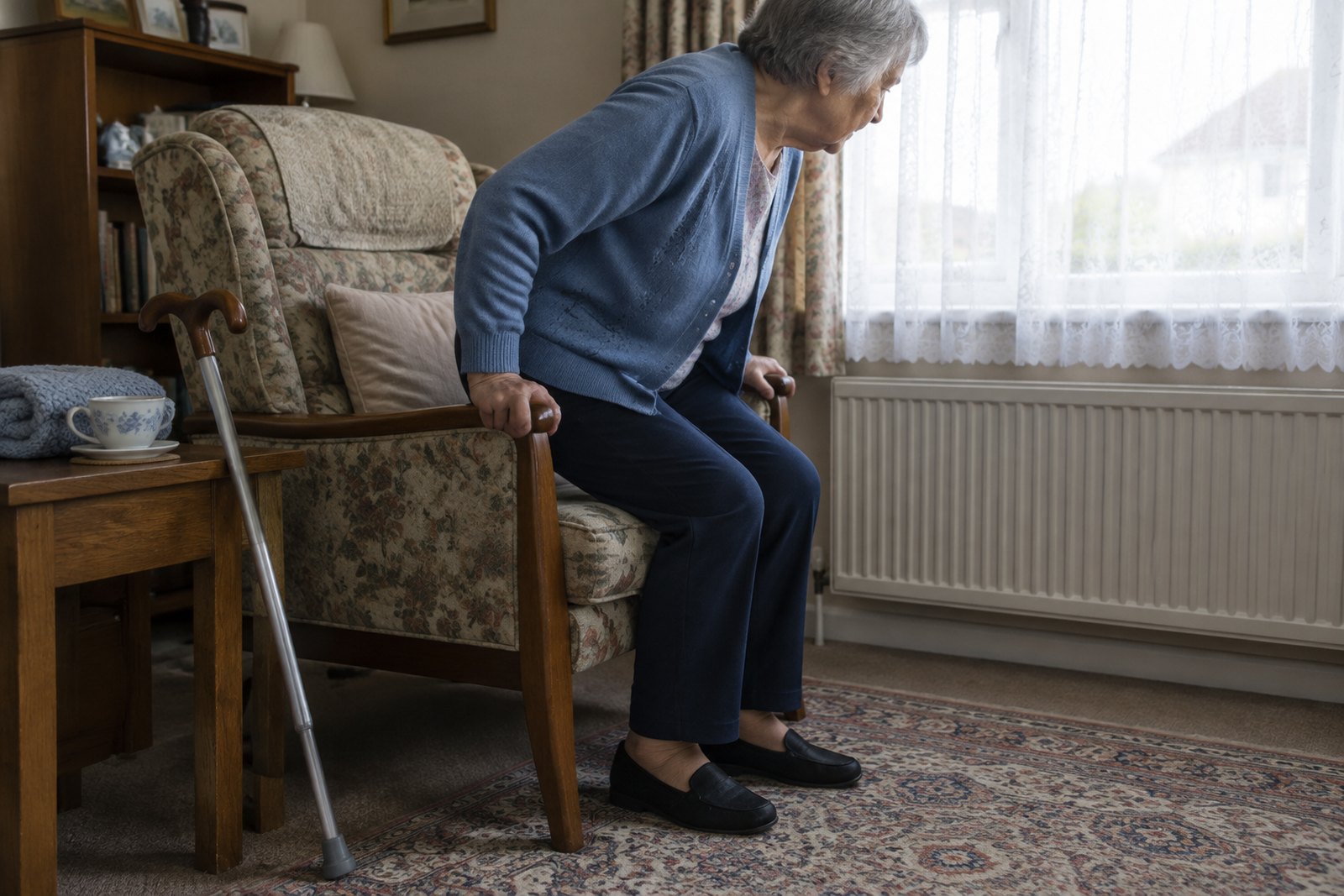
Arthritis in the knees, usually osteoarthritis, is one of the most common reasons people find stairs, low chairs, the bath and the car harder than they used to be. It is not simply a case of wearing out and waiting. The things that help most are surprisingly ordinary: keep moving, strengthen the muscles around the knee, manage your weight if that applies to you, get sensible pain relief advice from a pharmacist or GP, and change the parts of your day that put the most strain on the joint.
That last part is where most of this article sits. NICE, which sets guidance for the NHS in England, puts exercise and staying active at the centre of treatment for osteoarthritis. But exercise does not help much if you cannot get off the toilet without hauling yourself up on the sink. So below you will find specific, practical changes for stairs, chairs, toilets, bathing, the car, kneeling jobs, footwear, walking aids and bad days, plus when to see your GP and where an occupational therapist fits.
What actually helps knee arthritis, in plain terms
NICE guidance on osteoarthritis is fairly clear that the core treatments are not pills or gadgets. They are:
- Exercise that suits you. That usually means strengthening exercises for the thigh and hip muscles, which take load off the knee, plus general activity such as walking, cycling or swimming. A physiotherapist can set a programme. In many areas you can refer yourself to NHS physiotherapy; your GP practice or local NHS website will tell you how.
- Weight management, where relevant. Carrying less weight means less load through the knees with every step and every stair. Your GP can tell you about local NHS weight management support if you want it.
- Information and support, so you understand the condition and can manage it day to day.
Pain relief sits alongside these, not instead of them. A pharmacist is a good first stop, and your GP can review things if pain is getting in the way of sleep, walking or exercise. We cannot advise on medicines here. They can, and they will know about your other conditions and tablets.
One thing worth knowing: pain in an arthritic knee does not usually mean you are doing damage by moving it. Some ache during and after exercise is common, especially when you are starting out. If the pain is much worse and lasts well into the next day, do a bit less next time rather than stopping altogether. A physio can help you find the right level.
Stairs: up with the good, down with the bad
This is the one rule worth remembering. Going up, step up with your stronger or less painful leg first, then bring the sore leg up to join it on the same step. Going down, lead with the sore leg, then bring the good leg down to meet it. The good leg does the hard work of lifting and lowering you, and the bad knee goes along for the ride.
- Take one step at a time. It is slower, but much kinder to the knee.
- Use a rail, ideally on both sides. A second banister is often one of the most useful changes you can make. If you use a walking stick, hold the rail with one hand and the stick in the other. Going up, it is good leg, then bad leg and stick. Going down, stick and bad leg first, then good leg.
- Light the stairs well and keep them clear. Do not leave things on the bottom step to carry up later.
- Cut down trips. A second set of toiletries downstairs, a basket for things that need to go up, and planning your day so you climb once rather than five times.
If stairs are becoming a real struggle, a stairlift is not the only answer. Extra rails, a half step, or changing which rooms you use can make a big difference first.
Chairs and toilets: height is everything
Getting up from a low seat asks your knee to bend a long way and then push your whole weight up from that bent position. That is exactly what arthritic knees dislike. The fix is often simply a higher seat.
Chairs
A good chair for knee arthritis is firm, high enough that your hips are level with or slightly higher than your knees when you sit, and has solid arms you can push up from. Soft, low sofas are the usual culprit.
To get up, shuffle forward to the edge of the seat. Put your feet back, with the sore leg slightly further forward so it does not have to bend as much. Lean forward so your nose is over your toes, push down on the arms and stand. Pause for a moment before you walk.
If you love your existing chair, it can often be raised. Our guide to chair raisers, bed raisers and furniture raisers explains the types and the checks worth doing so a raised chair stays stable. A firm cushion can help a little, but a squashy one just makes the seat look higher without making it any easier to stand up.
Toilets
Toilets are lower than most chairs, and you use them several times a day whether your knee is having a good day or not. A raised toilet seat adds height. A toilet frame, or a grab rail beside the toilet, gives you something solid to push up from. Our guide to toilet aids: raised seats, frames and rails explains how each works and who it suits.
Never use the sink, a towel rail or a toilet roll holder to pull yourself up. They are not built to take your weight and can come away from the wall.
Bed height matters too. If you sink down into a low, soft bed every night, raising it or choosing a firmer mattress can make mornings a lot easier.
Getting in and out of the bath
Lowering yourself to the bottom of a bath and getting back up is one of the hardest things you can ask of a sore knee, and a wet surface makes it riskier. Many people with knee arthritis quietly stop having baths and strip wash instead. There are options before it gets to that:
- A bath board sits across the top of the bath. You sit on it from the side, swing your legs over and wash sitting up, usually with a shower attachment. You never have to get down into the bath.
- A bath lift lowers you into the water and raises you back up, so you can still have a proper soak.
- A shower, over the bath or separate, with a shower seat if standing for long is tiring.
- Grab rails, fixed securely to the wall in the right place for the way you move.
Which suits you depends on your bath, your other joints, your balance and how you prefer to wash. This is a good example of where an assessment helps, because the wrong bath equipment can be less safe than none at all.
Getting in and out of the car
Climbing into a car leg first means bending and twisting the knee in a tight space. Try it the other way round:
- Push the seat right back and recline it slightly before you start.
- Stand with your back to the seat and sit down onto it bottom first, holding something fixed such as the door frame rather than the door itself, which can swing.
- Shuffle back a little, then swing both legs in together, turning your whole body rather than twisting at the knee.
- To get out, reverse it: turn, swing both legs out, feet flat on the ground, then stand.
A swivel cushion, or a smooth plastic bag on a fabric seat, can help you turn. Take a bag away before the car moves so you are not sliding about. Higher cars are often easier than low ones, which is worth remembering if you are changing yours.
If your knee affects your ability to drive safely, for example to brake hard in an emergency, do not drive until you have spoken to your GP. GOV.UK explains which medical conditions you must tell the DVLA about.
Gardening, housework and anything that means kneeling
Kneeling puts direct pressure on the front of the knee, and getting back up asks for a deep bend. Plenty of people with knee arthritis find it painful or impossible. Some swaps that help:
- A padded kneeler with a handle on each side. Some flip over to become a low seat. The handles give you something to push on when you get up.
- Sit rather than kneel. A low stool or garden seat lets you weed at border level.
- Long-handled tools for weeding, trowelling and picking up, so you can work standing.
- Raised beds and containers bring the garden up to you.
- Indoors, a mop instead of scrubbing the floor on your knees, a long-handled dustpan and brush, and a grabber for things that fall on the floor.
- Move things up. Keep everyday items between waist and shoulder height so you are not crouching to the bottom shelf.
If you do need to get down to the floor, have a plan for getting back up: a sturdy chair close by, then come up onto your knees, bring your better leg forward with the foot flat, and push up through that leg with your hands on the chair. If you think you might not be able to get up at all, raise it with your GP or an occupational therapist.
Footwear
Shoes matter more than people expect. Look for:
- A cushioned, shock-absorbing sole
- A flat or low, broad heel
- A secure fastening such as laces or touch-close straps, so the shoe stays on your foot
- Enough room for your toes
Avoid backless slippers and worn-out shoes at home, which change the way you walk and are a trip risk. If bending to put shoes on is hard, a long-handled shoe horn and elastic laces help. Special insoles and knee braces are not a routine treatment for knee arthritis, but a physio or podiatrist may suggest one in particular situations, so ask before you buy.
Walking aids: useful, if they fit
A walking stick can take a surprising amount of load off a painful knee, but only if it is the right height and in the right hand. Hold it in the hand opposite the sore knee, and move it forward at the same time as the sore leg. With your arm hanging relaxed by your side, the top of the handle should come to roughly the crease of your wrist. Check the rubber tip regularly and replace it when it wears smooth.
Some people need more support than a stick can give, particularly if both knees are bad or balance is a problem too. Our guide to walking frames, sticks and wheeled walkers covers the options and how to get the fit right. Using a stick is not giving in. It is often what lets you keep walking further, which is the whole point.
Pacing on bad days
Knee arthritis tends to come and go. You may have weeks when it is manageable, then a flare when the knee is swollen, stiff and sore. The temptation is to do everything on the good days and nothing on the bad ones. That boom and bust pattern usually makes things worse.
- Break jobs up. Hoover one room, sit down, then do the next. Shop little and often.
- Change position. Long spells of standing or sitting both stiffen the knee. Move regularly.
- Sit for jobs you usually stand for. Peeling vegetables, ironing, washing up. A perching stool can help in the kitchen.
- Keep gently moving on bad days. Rest more, but do not stop completely. Gentle bending and straightening helps stop the knee seizing up.
- Try heat or cold. Many people find warmth eases stiffness and a cold pack helps a swollen flare. Wrap either in a towel, keep it on for no more than about 20 minutes, and take extra care if you have reduced feeling in your skin or poor circulation.
- Plan around big days. If there is a wedding on Saturday, keep Friday quiet.
When to see your GP
See your GP if knee pain is getting worse, stopping you sleeping or doing everyday things, or if what you have tried is not helping. A GP can often diagnose osteoarthritis from your symptoms and an examination without needing an X-ray, review your pain relief and refer you to physiotherapy. Also see them if the knee keeps giving way, locking or catching.
Get help more urgently if:
- The knee becomes suddenly hot, red and swollen, especially if you feel feverish or unwell. Contact your GP the same day or call NHS 111. This may be an infection or something other than arthritis.
- Your calf is painful, swollen, red or warm. Call NHS 111 or your GP urgently, as this can be a sign of a blood clot. If you also have chest pain or difficulty breathing, call 999.
- You cannot put weight on the leg after a fall or injury, or the knee looks out of shape. Go to A&E.
If daily life is badly affected despite trying the things in this article, your GP may talk to you about seeing an orthopaedic specialist about a knee replacement. If you do go on to have one, our guide to mistakes to avoid after a knee replacement covers the first weeks at home.
Where an occupational therapist fits
Occupational therapists look at the things you need and want to do in a day, and how to make them possible again. For knee arthritis that usually means:
- Watching how you actually manage the stairs, chairs, toilet, bath, bed and kitchen in your own home
- Recommending equipment, and the right height and position for it, such as raisers, rails, a bath board or a perching stool
- Suggesting different ways to do the jobs that hurt most, and how to pace your week
- Advising on bigger adaptations, such as a second stair rail or a level access shower, and writing reports to support council or grant applications
- Looking at work, if your job involves standing, kneeling or driving
What an occupational therapist is not is the lead on exercise. A physiotherapist is the right person for a strengthening programme and advice on knee supports. Your GP leads on diagnosis, pain relief and referral to a surgeon. A podiatrist can help with feet and footwear, and your pharmacist with over-the-counter pain relief.
You can get occupational therapy through the council, usually by contacting adult social care and asking for a needs assessment, and some equipment may be loaned free. Waits vary from area to area. A private occupational therapist visiting at home may be able to see you sooner and spend time on the things that matter most to you. Either way, check they are registered with the HCPC.
Frequently asked questions
Is walking good or bad for arthritis in the knees?
Generally good. Staying active is one of the core treatments in NICE guidance, and walking is one of the easiest ways to do it. Start with what you can manage, build up gradually, wear supportive shoes and use a stick if it helps. If walking is very painful, a physio can suggest alternatives such as cycling or swimming while you build strength.
Should I rest my knee when it hurts?
Rest a bit more during a flare, but avoid stopping altogether. Too much rest weakens the thigh muscles that protect the knee, which can make things harder in the long run. Short, gentle movement spread through the day is usually better than a day on the sofa.
Can I get equipment for knee arthritis free?
Possibly. In England, if your council assesses you as needing them, community equipment must be provided free of charge, as must minor adaptations costing £1,000 or less. Contact your council's adult social care team to ask for an assessment. If you buy equipment yourself, you may not have to pay VAT on items designed for disabled people if you are disabled or have a long-term illness; GOV.UK explains the rules.
Will I need a knee replacement?
Not necessarily. Many people manage knee arthritis for years with exercise, weight management, pain relief and changes at home. A replacement is usually considered when symptoms seriously affect your quality of life despite those things. It is a decision for you, your GP and a surgeon together.
Do knee supports or braces help?
They are not a routine treatment, and a soft support from a shop will not fix the underlying problem. Some people find one comforting, and a physio may recommend a specific type in certain situations. Ask before spending money.
Is it worth seeing an occupational therapist if I already see a physio?
Often, yes. The physio works on the knee itself; an occupational therapist works on your home and your day, so the two fit together well. If your main struggles are stairs, the bath, the toilet or getting out of chairs, that is exactly what an occupational therapist looks at.
Next steps
If knee arthritis is making everyday tasks hard at home, see our equipment and daily living aids page, or current guide prices, and choose your area below.

Talk to an occupational therapist near you
This guide is general information. For advice about your own situation - or someone you look after - a local occupational therapist can visit you at home and see it for themselves.
Choose your area: