

Keeping Warm in Winter: Older People and Cold Homes
By Mobile Occupational Therapist • 22 October 2026 • 13 min read
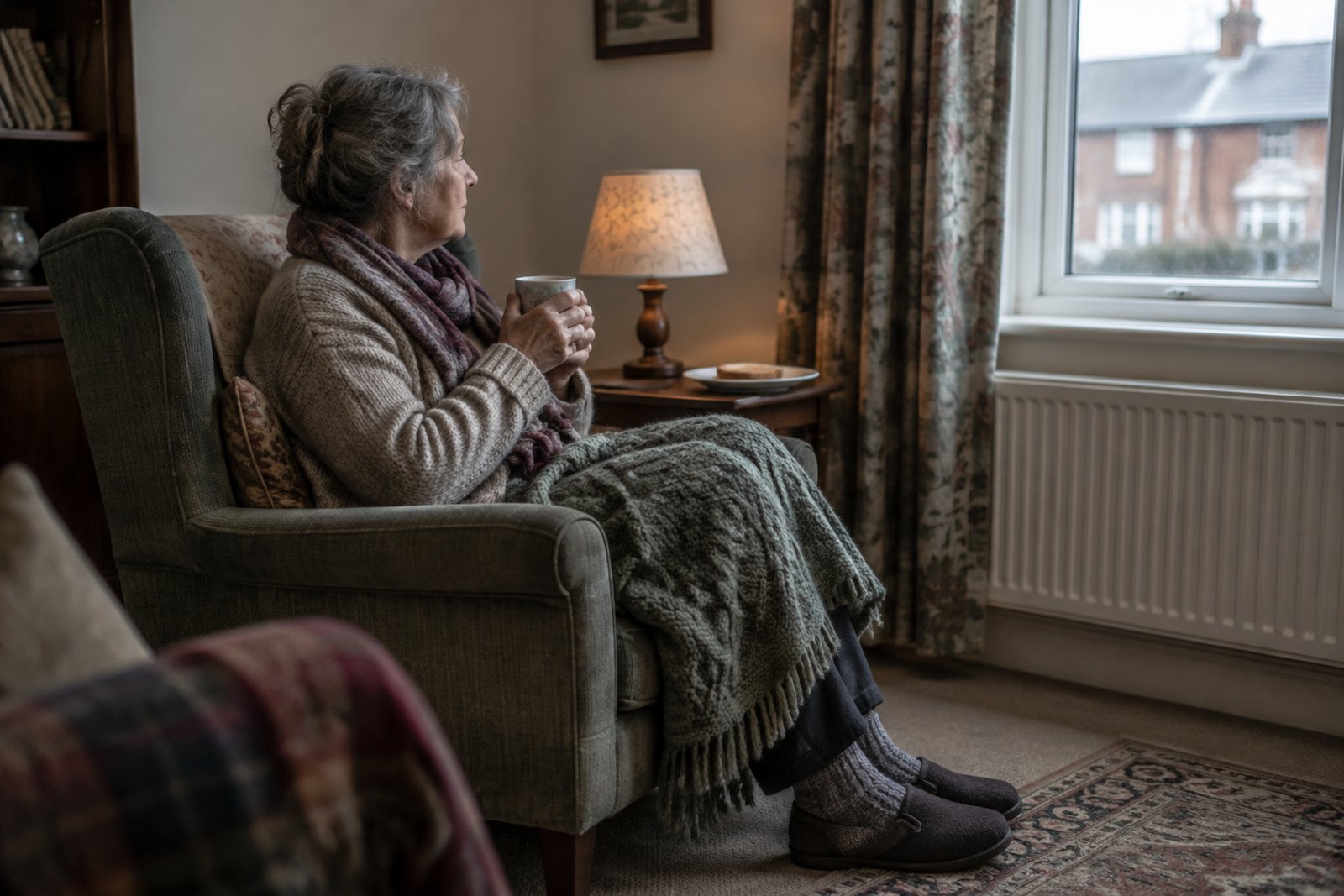
If you are older, or worried about someone who is, here is the short answer. Heat the room you spend most of the day in to at least 18°C if you can. Keep the bedroom warm overnight. Wear several thin layers, eat at least one hot meal a day, have warm drinks, and get up and move about at least once an hour. Then check every benefit and grant you might be entitled to, because the money side is often what stops people putting the heating on.
A cold home is not just uncomfortable. As we get older, our bodies are slower to notice cold and slower to warm back up. Cold air raises blood pressure and makes the heart work harder, it makes chest infections more likely, and it stiffens muscles and joints, which makes falls more likely. None of this means one chilly evening will do harm. It is the weeks of sitting in a cold room that wear people down. The rest of this page covers what actually helps, what to be careful with, and where to get help with the cost.
Why a cold home matters more as you get older
The NHS and the UK Health Security Agency both single out people over 65, and people with heart or lung conditions, as most at risk from cold weather. The reasons are fairly plain.
- Heart and circulation. When you get cold, blood vessels narrow and blood pressure rises. For someone with heart disease or high blood pressure, that extra strain matters, and it is one reason heart attacks and strokes are more common in winter.
- Lungs. Breathing cold air can tighten the airways and make conditions like COPD and asthma worse. Being cold also seems to make it harder to fight off chest infections.
- Falls. Cold muscles are weaker and slower to react. Cold hands fumble. Stiff knees and hips make getting out of a chair or climbing the stairs harder. Add darker evenings and a few layers of loose clothing and the risk goes up.
- Arthritis and pain. Many people with arthritis find their joints stiffer and more painful in the cold. Whether the weather itself causes it is debated, but sitting still in a cold room certainly does not help.
- Mood and eating. People in cold homes often go to bed early to keep warm, see fewer people and eat less. That combination can quietly lead to low mood, weight loss and weakness.
Older people also often feel the cold less sharply than they used to. So "I'm fine, I don't feel cold" is not always reliable, especially from someone with dementia, diabetes or poor circulation.
Getting the temperature right
Heat the room you actually use
Current NHS advice is to heat your home to at least 18°C if you can, particularly if you are over 65 or have a health condition. If you cannot afford to heat the whole house, heat the main living room during the day and the bedroom before bed. Shut the doors of rooms you are not using so the heat stays where you are.
A cheap room thermometer is genuinely useful. Thermostats are often in hallways, which can be warmer or colder than the living room. Put the thermometer where the person sits, not next to a radiator.
Keep it steady
Heating that swings between very hot and stone cold is harder on the body than a steady, reasonable warmth. If the heating has a timer, set it to come on before the person gets up and to stay on through the coldest part of the evening. If someone is at home all day, a steady background temperature usually makes more sense than heating only in the morning and evening.
Keep the heat in
- Close curtains at dusk and tuck them behind radiators rather than over them.
- Use draught excluders on doors and letterboxes, but do not block air bricks or vents, especially in rooms with a gas fire or boiler.
- Move furniture away from radiators so the heat can circulate.
- Open curtains in the day if the sun is out. It is free heat.
Layers, food, drink and moving about
Clothes
Several thin layers trap more warmth than one thick jumper. Thermal vests and long johns, a cardigan that is easy to take off if you warm up, warm socks and well-fitting slippers with a firm back and a grippy sole. Loose, floppy slippers are a common cause of trips. Hats, scarves and fingerless gloves indoors may feel odd but they work. If fastenings are a struggle, choose layers that pull on or have large buttons or zips.
Food and drink
Eating gives the body fuel to make heat. Aim for at least one hot meal a day and regular hot drinks. Soup, porridge, a baked potato or beans on toast all count. Keep some tins and frozen meals in so there is something warm even if getting to the shops is hard. Alcohol might feel warming but it actually makes you lose heat faster.
Moving
Sitting still for hours is one of the quickest ways to get cold. Try to get up at least once an hour: walk to the kitchen, make a drink, march on the spot holding a worktop. If standing is difficult, seated exercises such as ankle circles, lifting knees in turn and arm swings help blood flow. Our guide to preventing falls at home has more on moving about safely.
Night-time and the bathroom
The NHS suggests keeping bedroom windows closed on winter nights and keeping the bedroom warm, because breathing cold air while asleep can affect the chest. Have a warm drink before bed, wear bedsocks and keep a dressing gown and a torch or lamp within reach for night-time trips to the toilet. Cold, dark landings at 3am are where many falls happen.
Bathrooms are often the coldest room in the house, and people in cold homes start washing less because undressing is miserable. Warm the bathroom before use if it is safe to do so, have towels and clothes ready, and keep washing short. If someone has started skipping washes because of the cold, that is worth taking seriously rather than nagging about.
Staying safe with heaters, blankets and hot water bottles
Heaters
Portable heaters cause house fires every winter. Keep them well away from furniture, curtains, bedding and clothes, which fire services often put at about a metre. Never dry washing on them, never leave them on overnight unless they are designed for it, and plug them straight into a wall socket rather than an extension lead. Never use a gas cooker or oven to heat a room. Your local fire and rescue service may offer a free home safety visit. See our guide to fire safety at home for older and disabled people for more.
If you have any gas, oil or solid fuel appliance, have a carbon monoxide alarm fitted and test it. Get boilers and gas fires serviced by a registered engineer.
Electric blankets
Electric blankets can be a good way to warm a bed, but old or damaged ones are a fire risk. Check for worn patches, scorch marks, frayed wires and loose connections, and replace a blanket that is very old. Follow the instructions about whether it can stay on while you are in bed, never use one with a hot water bottle, and do not fold it or use it when it is damp. Most should not be used by someone with incontinence unless the blanket is designed for that.
Hot water bottles
Hot water bottles cause serious burns, particularly in older people with thin skin. Use hot, not boiling, water, always use a cover, and replace bottles that are perished or cracked. Do not use a hot water bottle, heat pad or electric blanket against the skin of anyone with numb feet or legs, for example from diabetes or nerve damage, because they will not feel a burn happening. Our guide to peripheral neuropathy and staying safe at home explains why. The same caution applies to people with dementia, or anyone who cannot move away from heat easily.
Signs someone is getting dangerously cold
Hypothermia is when the body gets too cold to work properly. Early signs include shivering, cold pale skin, tiredness and confusion. As it gets worse, people can stop shivering, become drowsy, slur their words and breathe slowly. Older people do not always shiver much, so confusion or unusual sleepiness in a cold house is a warning sign.
If you think someone has hypothermia, call 999. While you wait, move them somewhere warmer if you can, remove any wet clothing, wrap them in blankets and give a warm (not hot) drink if they are fully awake and can swallow. Do not put them in a hot bath or rub their arms and legs. If someone is just very cold and unwell but not confused, call NHS 111 or their GP for advice.
Help with heating bills and grants
The rules on winter payments change, sometimes from one year to the next, so treat this as a list of things to check rather than a promise of what you will get. GOV.UK has the current rules for each.
Pension Credit
Start here if you or your parent is over State Pension age and on a low income. Pension Credit tops up income, and receiving it can also open the door to other help with heating. Many people who could get it have never applied, often because they assume they would not qualify. Check on GOV.UK or ask Age UK or Citizens Advice for a benefits check.
Winter Fuel Payment
This is a yearly payment towards heating for people over State Pension age. Who gets it, whether it is paid automatically and whether people above a certain income have to pay it back have all changed in recent years. Check the Winter Fuel Payment page on GOV.UK each autumn. In Scotland and Northern Ireland the payment is run separately and may have a different name and rules.
Warm Home Discount
A one-off discount on your electricity bill over winter for eligible households, usually linked to receiving certain benefits. Many people get it automatically, but not everyone. Check eligibility on GOV.UK and ask your energy supplier if you think you have been missed.
Cold Weather Payments and other help
In England, Wales and Northern Ireland, some people on certain benefits get extra payments during spells of very cold weather. In Scotland this has been replaced by a yearly Winter Heating Payment, so check mygov.scot. Some councils also run hardship or crisis funds, and there are government and energy company schemes for insulation and more efficient heating. Our guide to grants for disabled people and older adults covers what actually exists.
Priority Services Register
Energy suppliers and network operators keep a free register for older people, disabled people and those with health conditions. Being on it can mean advance warning of power cuts, priority help if the supply goes off, and other support. Ask your supplier to add you.
Checking on a parent or neighbour
A quick knock or phone call in a cold snap can make a real difference. When you check in, look and ask, gently:
- Is the living room warm, or are they sitting in a coat?
- Is the heating working, and do they know how to use the timer and thermostat?
- Is there food in, and have they had something hot today?
- Are they going to bed very early or staying in bed to keep warm?
- Have they had a fall, or are they moving more stiffly than usual?
- Are they worried about money? People often are and do not say so.
If an older relative refuses to put the heating on because of cost, a benefits check is often more persuasive than an argument. If someone seems confused, unwell or unable to cope, contact their GP or the council's adult social care team.
Where an occupational therapist fits
An occupational therapist will not fix your boiler or sort out your energy bill. A gas engineer, your energy supplier and Citizens Advice or Age UK are the right people for those. Health worries such as breathlessness, chest pain or a worsening heart or lung condition belong with the GP, NHS 111 or, in an emergency, 999.
Where an occupational therapist helps is with the everyday reasons a cold winter becomes a dangerous one. A private occupational therapist visiting at home can look at how someone gets in and out of their chair and bed, whether the stairs, bathroom and kitchen are still manageable, and what would make it easier to stay active and fed. That might mean simple equipment for making hot drinks safely, a better chair height so getting up hourly is realistic, a perching stool in the kitchen, help with washing in a cold bathroom, or rearranging the home so the warmest room works as a daytime base. They can also write reports to support council or housing applications where the home itself is no longer suitable. See our older people's independence page for more on this.
Frequently asked questions
What temperature should an older person's home be?
The NHS currently suggests heating your home to at least 18°C if you can, particularly if you are over 65 or have a health condition. If you cannot heat every room, heat the one you spend the day in and the bedroom at night. Check the latest NHS advice, as guidance can be updated.
Is it cheaper to keep the heating on low all day?
It depends on your home, insulation and heating system, and there is no single answer. What matters most for health is that the rooms you use stay reasonably warm while you are in them. Your energy supplier or an energy advice service can help you work out the best settings for your home.
Can my mum use a hot water bottle if she has diabetes?
If she has any numbness in her feet or legs, it is safest not to use a hot water bottle, heat pad or electric blanket near them, because she may not feel a burn. Warm socks, bedsocks and warming the bed before she gets in are safer. Ask her GP or diabetes nurse if you are unsure.
Should an older person sleep with the window open in winter?
The NHS advises keeping bedroom windows closed on winter nights, as breathing cold air while asleep can affect the chest. Keep vents and air bricks clear for ventilation, especially if there is a gas appliance.
Who do I contact if an elderly neighbour has no heating?
If they seem unwell, confused or very cold, call 999. If they are well but the heating has broken, help them contact their energy supplier, landlord or a registered engineer, and the council's adult social care team if they cannot cope. Age UK and Citizens Advice can help with the money side.
Does staying in bed keep you warm enough?
It can feel like the answer, but long hours in bed lead to stiffness, weaker muscles, less food and drink, and a higher risk of falls and pressure sores. A warm living room, regular movement and hot meals are much better for health over a whole winter.
Next steps
If winter is making daily life harder at home, an occupational therapist can look at what would help you or your relative stay warm, active and safe. See our home assessment page, or current guide prices, and choose your area below.
Talk to an occupational therapist near you
This guide is general information. For advice about your own situation - or someone you look after - a local occupational therapist can visit you at home and see it for themselves.
Choose your area: