
Housing Adaptations and Rehousing Support in Derbyshire: When Your Home Stops Working
By Mobile Occupational Therapist • 8 September 2026 • 6 min read
Local Occupational Therapist -
Wendy Perry, Derbyshire
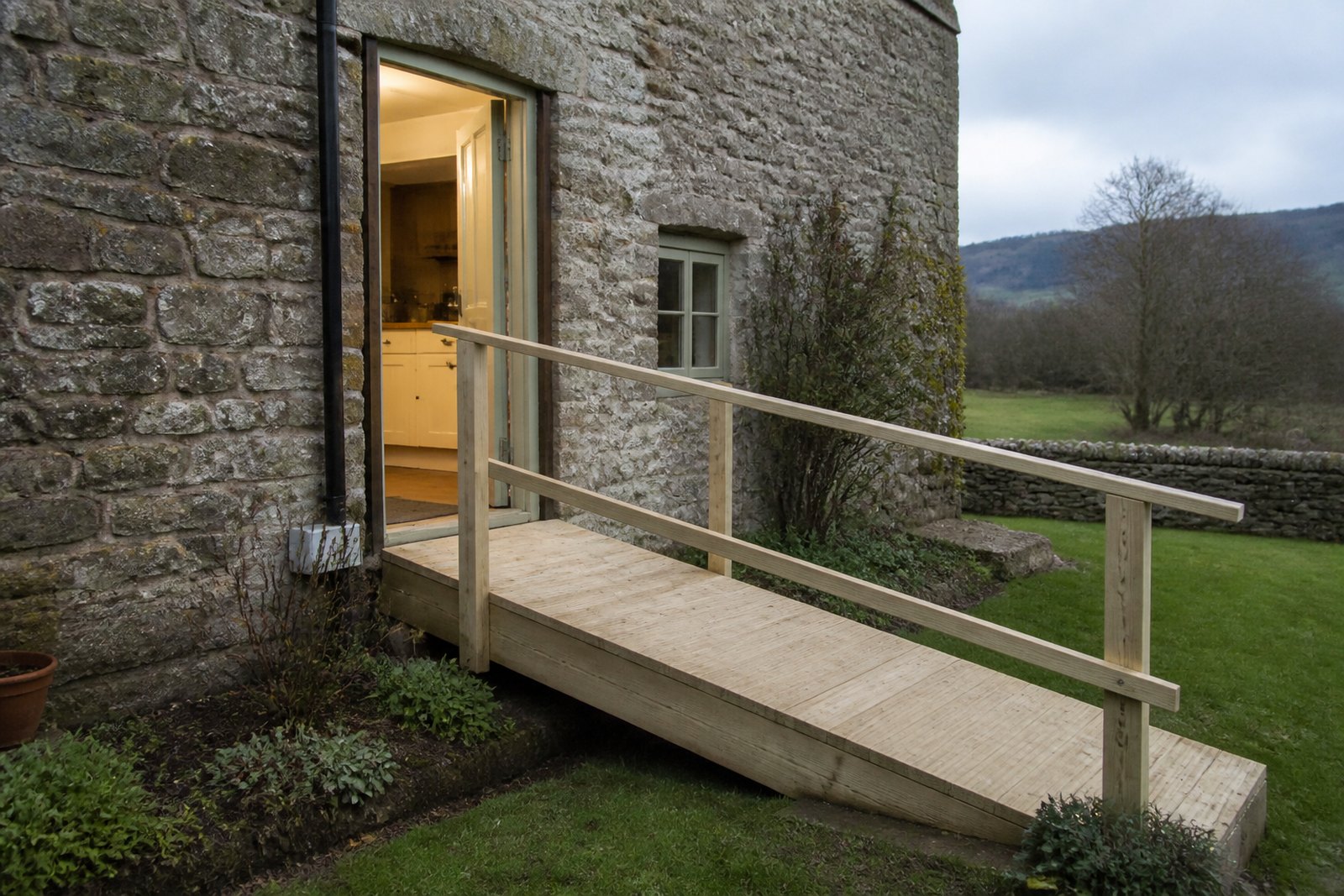
There usually comes a moment when working around the house stops working: the strip washes at the kitchen sink because the bath is impossible, the bedroom that has quietly moved into the dining room, the front steps that now decide whether you go out at all. In Derbyshire the moment often arrives early, because so much of the housing stock was built long before anyone thought about level access - stone cottages in Belper or Wirksworth with solid walls and narrow stairs, terraces with the bathroom upstairs and the yard below. When you reach that moment there are two honest paths: change the house, or change house. Wendy has specific training in complex bathroom adaptations and the housing approval process, and helps people across the county walk both paths with their eyes open. This post explains what each involves, in plain English.
Complex bathroom adaptations - and why "complex" is the right word
The bathroom is where most adaptations begin, because bathing is usually the first daily task a home makes genuinely unsafe. Sometimes the answer is simple equipment - our national guide to bathing aids and bathroom safety covers that ground. But when equipment is not enough, you are into building work: removing a bath in favour of a level-access shower or wet room, widening a doorway, moving fixtures, sometimes creating a downstairs facility where none exists. In an older Derbyshire property every one of those steps can surprise you - floors that are not level to begin with, joists that need protecting from a wet room's drainage, solid stone walls that resist the plumbing, septic drainage in some villages. "Complex" is not a scare word; it means the design must be worked out properly before anyone lifts a tool. An occupational therapist's job is to specify what the finished room must let you do - now and as your needs change - so the builder is working to your life rather than to a brochure. Our guide to wet rooms and level-access showers goes deeper on the options.
The approvals process, in plain English
Major adaptations usually involve more approvals than people expect, and this is where good help earns its keep. Depending on the work and who owns the home, you may need some combination of: your landlord's permission if you rent (housing associations and private landlords each have their own processes); building regulations sign-off for structural, drainage and electrical work; occasionally planning permission, for example for an external ramp or extension in some settings; and, if you are applying for grant funding, the funding body's own assessment and approval stages. Each layer has its own paperwork and timescales. None of it is designed to be hostile, but it is slow and unfamiliar, and applications stall most often because the case for the work was never clearly made in writing. That is precisely what an occupational therapy assessment provides: a professional statement of what you cannot safely do in the home as it stands, and what the proposed work will change. Wendy's training covers these housing approval processes, and our home adaptations service describes how the support works from first visit to finished room.
How an OT report supports a Disabled Facilities Grant application
The Disabled Facilities Grant (DFG) is the main public funding route for adaptations in England, paid through local councils and means-tested for adults. The full detail lives in our national guide to the Disabled Facilities Grant and how OT assessments support your application, but the heart of it is this: a DFG must fund work that is both necessary and appropriate for your needs and reasonable and practicable in your property, and those judgements lean heavily on occupational therapy evidence. A strong OT report describes your functional abilities in concrete terms - what you can and cannot do, where the risks lie - and links each recommended element of work to a specific need, so the decision-maker can see the reasoning rather than guess at it. A private report from an HCPC-registered OT can help you understand your needs early, get the design right and make a well-evidenced application; the council then runs its own process, and Wendy is careful to be straight with people about what a private report can and cannot shortcut. What it reliably does is stop you commissioning the wrong adaptation - the most expensive mistake in this whole field.
When rehousing is the better answer
Sometimes the bravest recommendation is that this house has reached its limit. A cottage on a steep lane above Matlock with three internal levels and no room for a downstairs bathroom can swallow money and still leave you trapped by the front steps and the hill beyond them. Weighing adaptation against rehousing is partly technical - what is feasible here, at what cost and disruption, and how long will it serve as needs change? - and partly personal: proximity to family, the village you belong to, what "home" means to you. An occupational therapist cannot make that choice for you, but can put real information under it: a clear-eyed view of what adapting would and would not achieve, what to look for in any new property so you do not trade one set of barriers for another, and functional evidence to support a housing application if you need priority for accessible or ground-floor housing. Wendy helps people navigate housing options and potential rehousing solutions as part of her housing and rehousing work, and some families conclude, with relief rather than defeat, that a move to a level-access home in Chesterfield or Long Eaton buys back the independence the old house was taking away.
Frequently asked questions
Should I start with the builder or the occupational therapist?
The therapist. A builder can tell you what is possible in the building; only a functional assessment tells you what the finished work must achieve for your body, today and in five years. Design from the assessment and the building work follows; design from a brochure and you risk paying twice.
I rent my home - is any of this open to me?
Yes. Tenants can be adapted for and can apply for DFG funding, though the landlord's permission is part of the process. An OT assessment also strengthens a case for transferring to a more suitable property if adaptation is refused or impractical.
How long does it all take?
Honestly: months rather than weeks for grant-funded major work, once assessments, approvals and building are added together. That is a reason to start early, not a reason to wait - and interim measures, from equipment to technique changes, can make the wait safer. If your needs have changed suddenly, speak to your GP too, so any health causes are looked at alongside the housing question.
Next steps
If your home has stopped working for you - or you can see the moment coming - a free, no-obligation phone call with Wendy is a sensible first move, whether the answer turns out to be a wet room, a grant application or a move. Her background and training in adaptations and housing are on Wendy's profile, and assessment costs are set out on the prices page.