

Hoarding Help: How to Support Someone and Where an OT Fits
By Mobile Occupational Therapist • 2 November 2026 • 13 min read
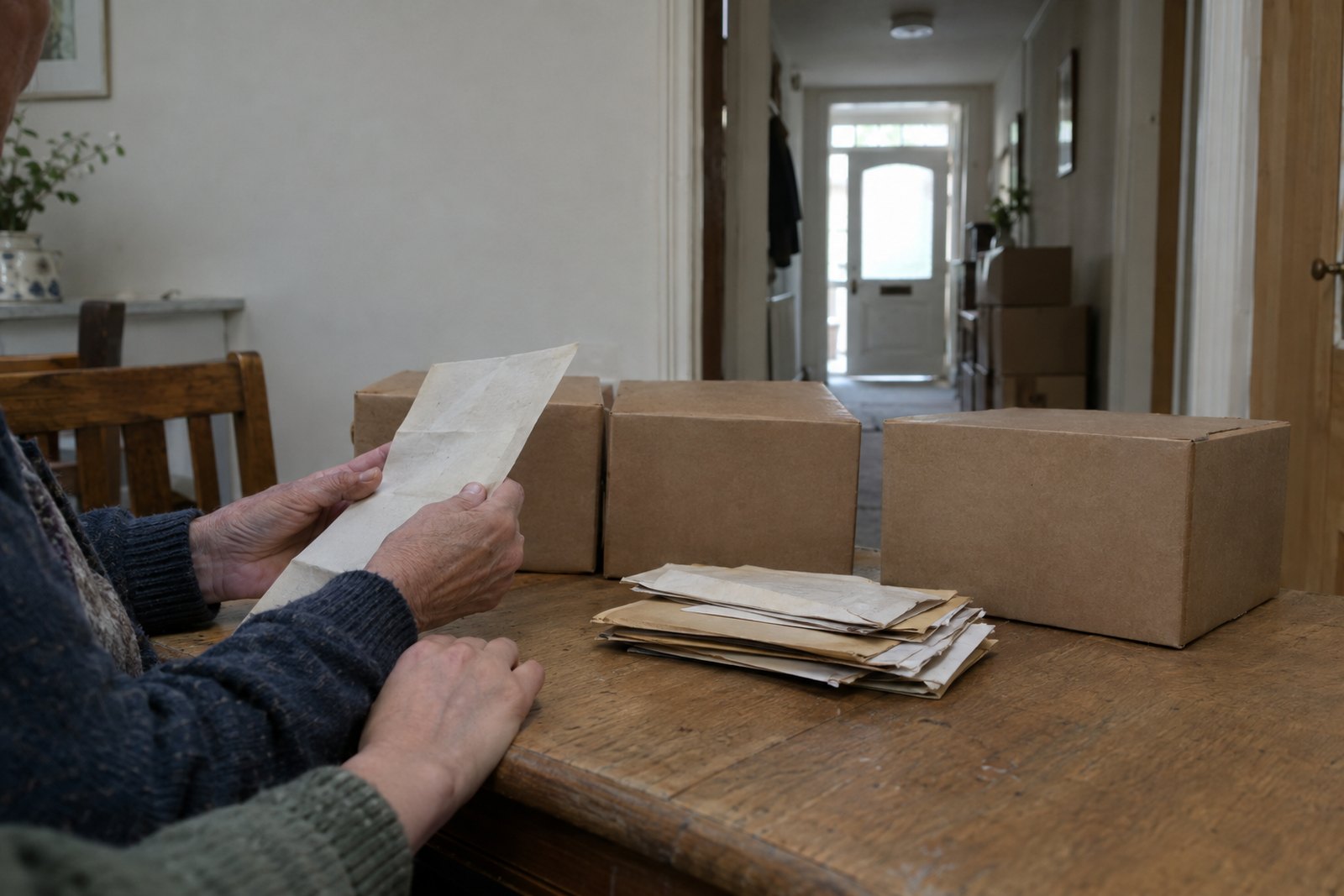
If someone you love is hoarding, the most useful thing to know first is this: a big clear-out usually backfires. That means the skip on the drive, the weekend of "sorting it" while they are away, or the van booked without asking. It tends to cause real distress, it costs you their trust, and the space often fills up again. What helps is slower and less dramatic. Make the home safe first, then work on small, agreed goals with the person, and help them get proper support for what is driving it.
Hoarding disorder is a recognised mental health condition, not laziness or bad housekeeping. The NHS treats it, mainly with a talking therapy called cognitive behavioural therapy (CBT), and the usual way in is through the GP. Alongside that, an occupational therapist can look at how the person actually manages day to day in their own home. Can they cook, wash, get to the toilet at night and get out quickly in a fire? An occupational therapist can then help them win back space a step at a time. This guide covers all of it, in a sensible order.
Hoarding or just clutter?
Plenty of homes have a spare room you cannot get into, or a loft full of things nobody has looked at in years. That is clutter, and it is not a disorder. The difference is not really about how much stuff there is. It is about what happens when the person tries to let go of it, and whether the home still works.
Signs that it may be hoarding rather than clutter:
- The person finds it very hard to throw things away, including things most people would see as rubbish, such as old newspapers, packaging or broken items.
- Even thinking about getting rid of things causes strong anxiety, anger or distress.
- Rooms can no longer be used for what they are for. The bath is full of bags, the cooker is covered, the bed has become storage and they sleep in a chair.
- Things keep coming in, through shopping, collecting free items or picking things up, faster than anything goes out.
- They avoid letting people into the house, including family, friends and repair engineers.
- It is affecting their health, their relationships, their money or their safety.
Hoarding can sit on its own, or alongside other things such as depression, anxiety, obsessive compulsive disorder, ADHD or a major loss like a bereavement. If an older person has started hoarding for the first time, or it has got much worse quite quickly, mention it to their GP. Changes like this can sometimes be linked to memory problems or other health issues, and that is worth checking rather than guessing.
Why forced clear-outs usually backfire
From the outside, a clear-out looks like kindness. You can see the problem, you have a free weekend, and you just want them to be safe. From the inside, it can feel like a break-in.
People who hoard often feel strongly attached to their things. An item might hold a memory, feel useful "one day", or feel like part of who they are. Having it taken without agreement can feel like a real loss. It also takes away control, which is often exactly what the person is clinging to. Common results are:
- Severe distress, sometimes with a sharp drop in mood.
- A breakdown in trust, so they stop letting you in at all.
- The space filling up again, sometimes quickly, because nothing has changed about the reasons behind it.
There are times when urgent action is needed, for example a fire risk, a blocked exit or a serious public health problem. Even then, the aim is to deal with the danger, involve the person as much as possible, and get support in place for afterwards.
How to approach someone who hoards
Start with the person, not the mess
Open with how they are, not with how the house looks. Avoid words like "junk", "rubbish" or "disgusting", even when you are frustrated. Many people who hoard already feel deep shame, and shame makes people defensive. If you mirror their own language, calling things "your things" or "your collection", conversations tend to go better.
Lead with safety and what matters to them
Most people will not agree they have too much stuff. Many will agree they would like to be able to have a bath again, cook a proper meal, have the grandchildren visit or not trip on the stairs. Find the thing they care about and work towards that. Safety is often the easiest shared goal: "I worry about you getting out if there's a fire" lands better than "this has to go".
Set small, agreed goals
Small and specific beats big and vague. Examples:
- Clear a path from the bed to the front door, wide enough to walk through without turning sideways.
- Clear the top of the cooker and the area in front of it.
- Clear the bath or shower so it can be used.
- Clear one chair so a visitor can sit down.
Let the person make every decision about their own things. Your job is to hold the bag, carry things out and keep them company, not to decide. Short sessions of half an hour or so are often more realistic than whole days. Stop before they are overwhelmed, and say clearly what you got done.
What not to do
- Do not move or throw away anything without asking, even things that look worthless.
- Do not bring in more storage boxes as a solution. They often just become more storage.
- Do not set ultimatums you cannot keep.
- Do not argue about the value of individual items. You will lose, and it will not matter.
If the person refuses to engage at all, you are not alone. Our guide to when a parent refuses help at home covers how to keep the door open without forcing it.
The real safety risks
Fire
This is the big one. Paper, fabric and cardboard burn fast, and cluttered homes are harder to escape from and harder for firefighters to get into. Watch especially for items close to heaters, cookers, open fires or candles, overloaded extension leads, and smoke alarms that are missing, buried or not working.
Most fire and rescue services across the UK offer free home fire safety visits, sometimes called Safe and Well visits. Someone comes to the home, checks the risks, gives practical advice and may fit smoke alarms. Fire services are used to cluttered homes and will not be shocked. Search for your local fire and rescue service to check how to book one. You can usually request it on someone else's behalf, ideally with their agreement.
Blocked exits and falls
Narrow paths, piles on stairs and things on the floor make falls far more likely, especially at night or for someone with poor balance or eyesight. A fall in a crowded home can also mean lying on the floor for longer, because nobody can reach them. Clear routes come first: bed to toilet, bed to front door, chair to kitchen. Our guide to preventing falls at home has more on lighting, routes and night-time safety.
Hygiene, food and pests
If the kitchen or bathroom cannot be used, washing, cooking and keeping food safely all get harder. Out-of-date food, rubbish, damp and pests can follow. These are health risks, not just unpleasant. If you notice signs of poor nutrition, infections, sores or someone unable to wash, involve their GP.
Repairs that cannot happen
Sometimes the heating has broken and nobody can get to the boiler, or a leak goes unreported. That matters a lot in winter, especially for older people. If the person rents, the landlord may eventually get involved too, which is another reason to start early and gently.
If there is an immediate danger, such as a fire or someone injured or unresponsive, call 999. If you smell gas, leave the property if you can and call the National Gas Emergency number on 0800 111 999 (in Northern Ireland, 0800 002 001).
Self-neglect, safeguarding and mental capacity
When hoarding gets serious enough to put someone's health or safety at risk, professionals may call it self-neglect. That is not an accusation. It simply means the person is not able to look after themselves or their home in a way that keeps them safe. Our guide to self-neglect in older adults explains the signs and who to contact.
In England, the statutory guidance under the Care Act 2014 recognises self-neglect, including hoarding, as something the council's safeguarding team can respond to. In practice, if you are worried that an adult with care and support needs is at serious risk and cannot protect themselves, you can contact the adult social care team at their local council and raise a concern. That does not mean anyone will be marched out of their home. The usual aim is to talk to the person, understand the risks and offer support. Wales and Scotland have their own adult protection laws, so check with the local council there. In Northern Ireland, adult safeguarding concerns are raised with the local Health and Social Care Trust.
On mental capacity, the key point is this: in England and Wales, under the Mental Capacity Act 2005, an adult is assumed to be able to make their own decisions, including ones that look unwise to everyone else, unless it is shown that, because of an impairment or disturbance in how their mind or brain works, they cannot understand, remember, use or weigh up the relevant information, or communicate that particular decision at that particular time. Scotland and Northern Ireland have their own capacity laws. Capacity is about one decision at a time, and a messy home on its own does not mean someone lacks it.
Getting help from the GP and mental health services
The GP is usually the right first stop. They can check for anything physical or memory-related, talk about mood and anxiety, and refer to mental health services. The main recommended treatment for hoarding disorder is CBT, ideally with a therapist who understands hoarding. Sessions often include practical work on sorting and deciding, sometimes in the home itself.
In England, adults can usually refer themselves to NHS Talking Therapies without seeing the GP first. Where hoarding is severe or linked to other mental health problems, a community mental health team may be involved. Our guide to getting mental health support in the UK explains the routes in plain terms.
The charity HoardingUK offers information and peer support for people who hoard and for their families. Support aimed at you, the family member, matters too. Watching someone you love live like this is exhausting.
Be honest with yourself about timescales. Change is usually slow and uneven, and the person has to want it. Your role is to support that, not to carry it.
Where an occupational therapist fits
Occupational therapists look at how people manage everyday life in their own surroundings. With hoarding, that means focusing on function and safety rather than on the stuff itself. An occupational therapist can:
- Assess daily tasks in the home. Can the person get in and out of bed, use the toilet, wash, prepare food and move between rooms safely? Where are the pinch points?
- Prioritise safety. Identify fire, fall and access risks and agree which areas to tackle first, such as escape routes, the cooker and the bathroom.
- Support graded decluttering. Break the work into small, manageable steps, help the person practise making decisions, and build routines that stop things piling up again. This is done with the person, at their pace.
- Look at equipment and layout. Once space is clearer, things like grab rails, bathing equipment or a more suitable bed may become possible. Equipment often cannot be delivered or used safely in a very cluttered home, which can hold up a hospital discharge.
- Write clear reports. A functional report can help social care, housing providers or the GP understand the real impact on daily life.
Some NHS occupational therapists working in mental health teams have specific experience with hoarding. A private occupational therapist visiting at home can do a home assessment focused on safety and daily function, and can work alongside the GP or mental health team.
Where an occupational therapist is not the right lead: the underlying hoarding disorder, depression or anxiety needs a GP and psychological therapy. Memory concerns need the GP and possibly a memory service. An immediate fire risk needs the fire service. An occupational therapist is also not a clearance company, and will not force anyone to get rid of things. A private assessment needs the person's agreement.
Frequently asked questions
Can the council force someone to clear their home?
In some circumstances councils do have powers, for example around public health problems, pests or risks to neighbours, and landlords may have rights under a tenancy. These are usually a last resort. Enforced clearances without support tend not to last, so most teams try to work with the person first. Contact the local council if you are worried about serious risks.
Should I clear the house while they are in hospital?
It is tempting, and families are sometimes told the home must be cleared before discharge. Do not do it without the person's agreement. Talk to the hospital team and the person about what is genuinely needed for a safe return, such as clear routes, a usable bed and access to the toilet, and do only that, with their say.
Is hoarding a sign of dementia?
Not on its own. Many people who hoard have no memory problems at all. But new hoarding later in life, or hoarding alongside forgetfulness, confusion or changes in personality, is worth raising with the GP so it can be checked properly.
Can I book a fire safety visit for someone else?
Usually yes. Most fire and rescue services accept requests from family, friends and professionals. Try to tell the person first and explain it as a safety check, not an inspection. Check your local fire and rescue service's website for how to request one.
Will they ever change?
Many people do improve, especially with the right therapy and patient, practical support. Progress tends to be gradual and may go backwards at stressful times. Measuring success by safety and usable rooms, rather than by an empty house, helps everyone.
What if they do not want any help at all?
If they have capacity, that is their right, even if it is hard to watch. Keep visiting, keep the relationship, and focus on the one or two safety changes they might accept. If you believe they are at serious risk and unable to protect themselves, raise a concern with council adult social care.
Next steps
If daily life at home has become unsafe or hard to manage, see our home assessment page, or current guide prices, and choose your area below.
Talk to an occupational therapist near you
This guide is general information. For advice about your own situation - or someone you look after - a local occupational therapist can visit you at home and see it for themselves.
Choose your area: