

Dementia and Dressing: How to Help Without Taking Over
By Mobile Occupational Therapist • 14 October 2026 • 11 min read
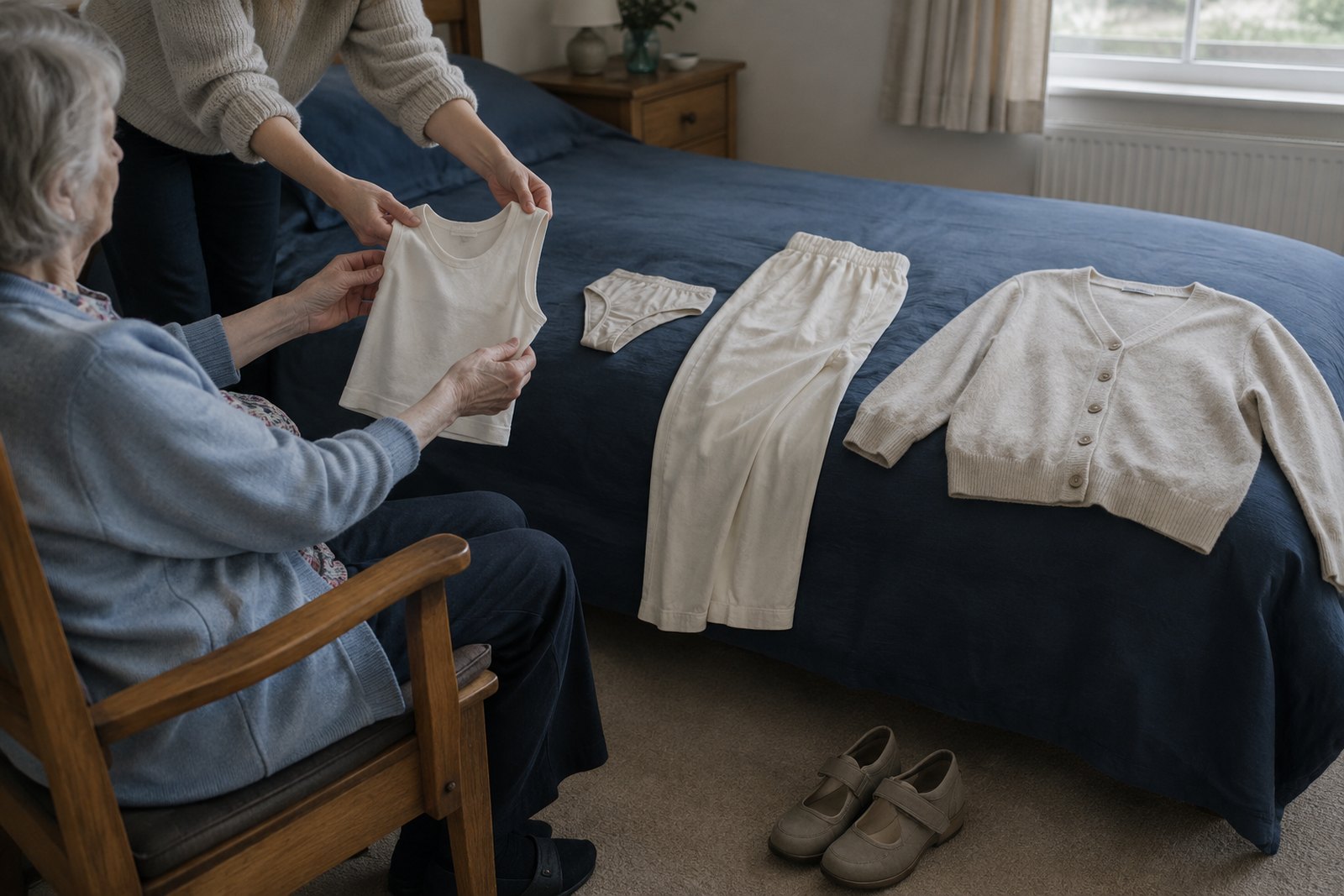
If someone you care for has dementia and getting dressed has become a daily struggle, you are not imagining it and you are not doing it wrong. Dressing is one of the more complicated things we do each day. It needs memory, planning, choosing, doing steps in the right order, recognising objects, balance and fine finger movements, all at once. Dementia can chip away at any of those. So the person may know perfectly well they want to get dressed and still be unable to work out how.
The short answer is to make the task smaller. Offer fewer choices, lay clothes out in the order they go on, give one simple prompt at a time, use easier fastenings and allow plenty of time. Let them do every part they still can, even slowly. When it is not working, stop and come back later rather than pushing through. The rest of this page goes through each of those, including the very common problem of someone who wants to wear the same clothes every day.
Why dressing gets so hard with dementia
It helps to know what is actually going wrong, because the fix depends on it. Usually it is a mixture.
Sequencing
Dressing has an order. Pants before trousers, vest before shirt, socks before shoes. When the brain struggles to hold a sequence, you see jumpers under shirts, or someone standing with a sock in their hand, stuck. It is not carelessness. The map of the task has gone missing.
Too many choices
A full wardrobe asks a lot of questions. Which top? Does it match? Is it warm enough? That can be overwhelming, and the easiest response is to grab whatever is nearest, or refuse.
Recognising clothes
As dementia progresses, some people stop recognising what an object is or how it goes on. A cardigan can look like a confusing heap of fabric, and arm holes and neck holes become hard to tell apart. Problems with vision and perception make it harder still, especially with dark clothes on a dark bedspread.
Coordination and the body
Buttons, zips and laces need fine finger control. Socks need balance and bending. Many people with dementia also have arthritis, stiffness, a tremor or weakness after a stroke, and those add up.
Temperature and comfort
Dementia can affect how someone notices and reports being hot or cold. They may wear three jumpers in July or a thin blouse in a frost, and not be able to tell you something feels wrong. Itchy labels and tight waistbands can matter more than before, too.
Approaches that make dressing easier
Lay clothes out in order
Put clothes out in a line or a pile in the order they go on, first item on top or nearest. Turn everything the right way round and the right way out. Plain clothes against a contrasting surface are easier to see: light clothes on a dark cover, or the other way round. Doing this the night before saves a rush. Put yesterday's clothes away, or they often go straight back on.
Offer two choices, not twenty
Choice is part of dignity, so keep some. Hold up two tops and ask 'the blue or the green?' rather than 'what would you like to wear?' If two is too many, offer one: 'shall we wear this today?' Keep the wardrobe pared back to current-season clothes that go together, so whatever they pick works.
One prompt at a time
Give short, single instructions, then wait. 'Here's your vest.' Pause. 'Arm in here.' Long explanations get lost. Handing each item over the right way up does much of the work. If words are not landing, show rather than tell: mime the action, or start the movement by gently guiding their hand into the sleeve and let them carry on.
Let them do what they can
It is nearly always faster to do it yourself. But skills you take over tend to fade sooner, and being dressed like a child can feel humiliating. If they can pull up their trousers but not do the button, let them pull and you do the button. If they can manage it all but slowly, the answer may be to start earlier, not to help more.
Dignity and privacy
Close the door and curtains. Keep them covered as much as possible, for example putting a top on before the nightie comes off, or keeping a dressing gown over their lap. Talk to them, not about them. If being helped by a particular person makes them uneasy, listen to that. Some people are far more comfortable with a spouse than with a son or daughter, or with someone of the same sex.
Time, place and routine
Choose the time of day when they are at their best, which for many people is not first thing. Keep the same place and order each day, so each step needs less thinking. A warm room, good light and a sturdy chair with arms make it safer. Sitting down for trousers, socks and shoes reduces the risk of a fall.
If dressing follows a wash, the same principles apply; see our guide to helping someone with dementia wash and shower.
Clothes that are easier to manage
You do not need specialist clothing to start with. Small swaps go a long way.
- Elasticated waists on trousers and skirts, so there is no button or zip.
- Front-opening tops if getting the head through is the sticking point. For others a loose pull-on top is easier than buttons. Watch which causes trouble.
- Larger buttons, poppers or touch-and-close fastenings instead of small buttons.
- Front-fastening or soft pull-on bras.
- Socks without tight tops, and shoes with touch-and-close straps or a secure slip-on fit. Backless slippers and loose shoes are a trip risk.
- Soft fabrics, with labels cut out if they irritate, and nothing so long or baggy that hems catch underfoot.
Simple equipment can help when fingers or balance are the problem: a button hook, zip puller, long-handled shoe horn or sock aid. See our guides to dressing aids and button hooks, zip pullers and easier fastenings. Be realistic, though. A new gadget needs learning, which is exactly what dementia makes hard. Aids tend to work best early on, or when the carer is the one using them.
When they want to wear the same clothes every day
This is one of the most common worries, and one of the most wearing. The same cardigan, day after day, sometimes slept in, and a fight whenever it needs washing.
There are usually reasons. Familiar clothes feel safe. They may not remember wearing it yesterday, so to them it is a fresh choice. It may be the one outfit they can still put on. Or it is simply on top.
- Buy duplicates. Get two or three identical versions of the favourite jumper or trousers and swap the worn one for a clean one overnight or during a wash. Many families find this alone ends the battle.
- Remove worn clothes quietly once they are in bed, and put clean ones in the same spot.
- Do not argue. Pointing out they have worn it for five days tends to cause distress, not agreement.
- Pick your battles. An odd combination is fine. Wet or soiled clothes, or clothes far too thin for the weather, are worth gently sorting.
Sometimes refusing to change is part of a wider picture of someone struggling with washing, eating and the house. If you are worried, contact their GP or the council's adult social care team.
Weather, overheating and getting cold
Because the person may not notice or say they are too hot or cold, you often have to judge for them.
- Keep only current-season clothes in the wardrobe. Box the rest away.
- Use thin layers that can be added or removed, rather than one thick jumper.
- Check the back of the neck, and look for flushed or sweaty skin, shivering or cold hands. Restlessness can be discomfort they cannot name.
- Keep the room warm while dressing in winter, and leave a hat, scarf and gloves by the door.
Very hot or very cold weather can be risky for older people. If someone becomes unusually drowsy, more confused than usual or unwell, call NHS 111 for advice, or 999 if they are seriously unwell.
Getting undressed at the wrong time
Someone undressing in the lounge or in front of visitors is upsetting for everyone. It is usually a message rather than a behaviour problem. Common reasons include needing the toilet or being wet, feeling too hot, itchy or tight clothes, thinking it is bedtime, boredom, or pain they cannot describe.
Respond calmly and without telling them off. Offer a dressing gown or blanket, guide them somewhere private, then check the likely causes: offer the toilet, check the temperature, look at the clothes. Regular toilet prompts often help. Clothes that are harder to remove, such as tops fastening at the back, are sometimes suggested, but think carefully. They can also stop someone using the toilet or cooling down. Talk it through with their GP, memory service or an occupational therapist first.
When they refuse or get upset
Refusal is common and it is not personal. They may not see why they need to change, or may feel cold, embarrassed, rushed or tired.
- Stop and come back later. Twenty minutes and a cup of tea often succeed where pushing fails.
- Change the reason. 'Let's get warm' or 'your sister is coming' can land better than 'you need to get dressed'.
- Change the person helping, if you can.
- Lower the bar. A clean nightie and dressing gown for the morning is not a disaster.
- Never force it. Holding someone or pulling clothes on against resistance is frightening, can injure you both and usually makes tomorrow harder.
A sudden change matters. If someone who could dress last week suddenly cannot, or becomes much more confused or agitated over hours or days, it may be infection, delirium, pain or another illness rather than dementia progressing. Contact their GP the same day or call NHS 111. If you see signs of a stroke, such as a drooping face, arm weakness or slurred speech, call 999.
Where an occupational therapist fits
An occupational therapist looks at how someone does everyday tasks and what gets in the way, then adapts the task, the environment or the equipment. For dressing, an occupational therapist can:
- Watch the routine, with consent, to see exactly where it breaks down: sequencing, recognition, balance, reach or grip.
- Suggest a step-by-step approach and prompts that every carer can use the same way.
- Recommend clothing changes and, where they genuinely help, dressing aids.
- Check safety: a stable chair, bedroom layout, lighting and rails.
- Look at washing, toileting and getting in and out of bed too, since problems rarely come singly.
You can ask the GP, memory service or council adult social care for an NHS or council assessment; waits vary by area. A private occupational therapist visiting at home is another option if you want help sooner or more time spent on it. Our dementia page explains how occupational therapy fits alongside other support.
An occupational therapist does not diagnose dementia or manage medicines; that is the GP and memory service. If pain, continence, swallowing or mood is part of the picture, the GP, continence service, a speech and language therapist or the older people's mental health team may lead, often with an occupational therapist alongside.
Frequently asked questions
Why does someone with dementia put clothes on in the wrong order?
Dementia often affects planning, sequencing and recognising how clothes work. Laying clothes out in order and handing them over one at a time usually helps.
Should I just dress them myself to save time?
Only for the parts they genuinely cannot do. Letting them do what they can helps keep those skills and protects their dignity. If time is tight, start earlier or pick a calmer time of day.
Is it a problem if they wear the same clothes every day?
Not if the clothes are clean and suit the weather. Buying identical duplicates and swapping them quietly overnight is one of the simplest fixes.
What clothes are easiest for someone with dementia?
Elasticated waists, few or large fastenings, soft loose fabrics and well-fitting shoes with touch-and-close straps. Watch what causes trouble for that person rather than replacing everything.
What should I do if they undress in the living room?
Stay calm, cover them and look for a cause such as needing the toilet, being too hot or thinking it is bedtime. If it keeps happening, talk to their GP, memory service or an occupational therapist.
Can an occupational therapist help with dressing in dementia?
Yes. They can work out where the routine breaks down and suggest an approach, clothing changes, equipment and safety measures. You can ask for an NHS or council assessment or arrange a private one.
Next steps
If dressing has become a daily struggle, an assessment at home can help you find an approach that works for both of you. See our older people's independence page, or current guide prices, and choose your area below.
Talk to an occupational therapist near you
This guide is general information. For advice about your own situation - or someone you look after - a local occupational therapist can visit you at home and see it for themselves.
Choose your area: