

Frailty in Older People: What It Is and What Helps at Home
By Mobile Occupational Therapist • 16 October 2026 • 12 min read
Frailty is not the same as being old. It describes a body that has less in reserve than it used to. A fit 85-year-old can shrug off a heavy cold. Someone living with frailty might catch the same cold, stop eating properly, spend three days in a chair, and then find they can no longer manage the stairs. The illness was small. The drop afterwards was not.
That is the heart of it: frailty makes people vulnerable to sudden, out-of-proportion decline after minor illnesses, a new tablet, a fall or a hospital stay. The good news is that it is not inevitable, it is not a fixed label, and it often improves. Strength, food, fluids, medicines, company and a safer home all make a real difference, and most of that starts in the home rather than a clinic.
What frailty actually means
Think of reserve as a buffer. Muscles, heart, lungs, appetite, balance and mood all have some spare capacity when we are well. Over years, and especially with long-term conditions, inactivity and poor nutrition, that spare capacity can wear thin. Nothing dramatic happens. Life simply runs closer to the edge.
When reserve is low, the body cannot absorb a knock and bounce back. A urine infection might bring on confusion. A short spell in bed might cost weeks of walking ability. A fall that would leave a bruise on one person leaves another too frightened to go out.
Frailty also comes in degrees. Doctors talk about mild, moderate and severe frailty, and people can move between them in both directions. Someone who is mildly frail and becomes more active and eats better can become less frail. Someone who has a bad winter can slide the other way. It is a picture of how things are now, not a sentence.
Signs of frailty to look out for
Frailty tends to creep up, so families often notice it in hindsight. The common signs are:
- Slow walking. Taking noticeably longer to cross a room or the road, shuffling, or needing to hold furniture to get about.
- Weight loss without trying. Clothes looser, rings slipping, a face that looks thinner. Unplanned weight loss always deserves a GP appointment.
- Exhaustion. Feeling worn out by ordinary things, napping more, saying everything is an effort.
- Weakness. Struggling to open jars, get out of a low chair, or carry shopping.
- Low activity. Going out less, giving up hobbies, spending most of the day sitting.
- Falls or near misses. Trips, stumbles, grabbing for support, or a fall that is played down.
- Being knocked flat by small illnesses. Taking a long time to recover from a cold or a minor operation, or becoming confused when unwell.
None of these on its own means someone is frail. Several together, especially if they have crept in over months, are worth taking seriously and raising with the GP.
When a change needs a doctor quickly
Gradual change can wait for a routine appointment. Sudden change cannot. If someone becomes newly confused or drowsy, stops eating and drinking, cannot get up when they could yesterday, or seems suddenly much weaker, treat it as a change in health and not just age. Ring the GP the same day or call NHS 111. Call 999 if they are hard to wake, struggling to breathe, have chest pain, show signs of a stroke such as a drooping face or weak arm, or have fallen and may be badly hurt.
Is frailty just part of getting old?
No, although it becomes more common with age. Plenty of people in their nineties are not frail, and some people in their sixties are, often because of long-term illness. Age is a risk factor, not a cause.
This matters because it changes what people do. If a family believes Mum is simply "getting old", they may take over tasks, encourage her to rest, and quietly accept each new limit. Kind, but it can speed things up. If they see frailty as something that responds to effort, they look for what can be rebuilt.
What helps at home
There is no single fix. What works is a handful of ordinary things done consistently. You do not need to do all of them at once.
Keep moving, and build strength and balance
Muscle strength and balance are the two things most worth protecting. The NHS physical activity guidelines for older adults recommend activities that improve strength, balance and flexibility on at least two days a week, alongside generally moving more and sitting less. Check the current guidance on the NHS website.
For someone who is already frail, that does not mean the gym. It can look like:
- Standing up from a firm chair and sitting down again slowly, several times, a few times a day, with hands on the armrests if needed.
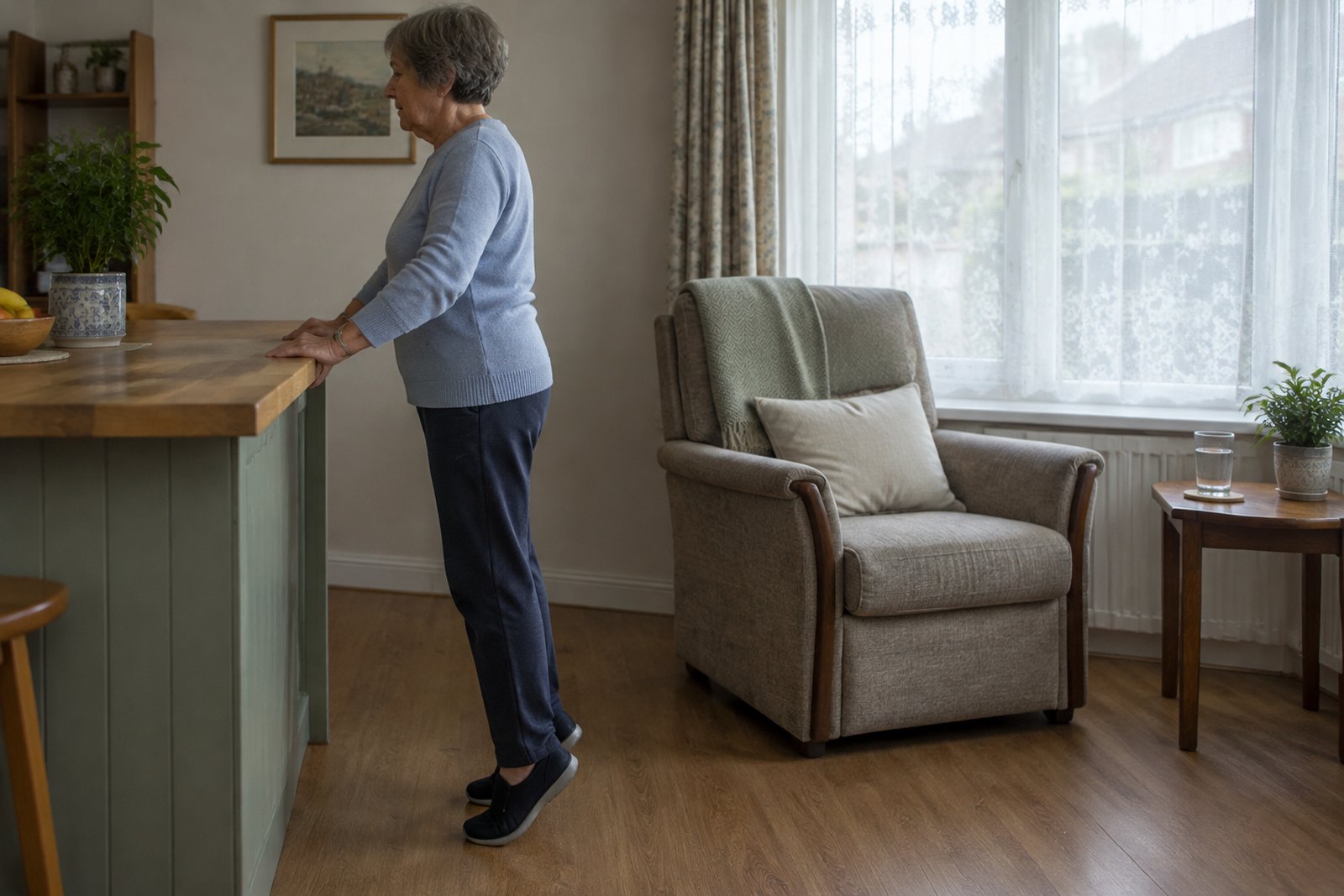
- Holding the kitchen worktop and rising up onto the toes, then back down.
- Standing at the worktop and marching on the spot, or shifting weight from foot to foot.
- Walking to the end of the garden or the street, and a little further each week.
- Getting up and moving during every advert break, rather than sitting through an evening.
Start where the person is, not where you wish they were. If they are unsteady, have had falls, or have heart or breathing problems, ask the GP for a referral to a physiotherapist or a local falls or strength and balance programme first. Many areas run these through the NHS or the council. Our page on falls and frailty covers this in more depth.
Eat and drink enough
Weight loss and poor appetite feed frailty directly, because the body breaks down muscle when it is short of fuel. A few practical points:
- Little and often tends to work better than three big meals for small appetites.
- Include protein at each meal: eggs, milk, yoghurt, cheese, fish, meat, beans or lentils.
- Do not cut out full-fat foods for someone who is losing weight unless their doctor has advised it.
- Keep easy snacks within reach of their usual chair.
- Keep drinks visible and handy. Many older people drink less to avoid trips to the toilet, which can lead to dehydration, constipation, confusion and falls. If a doctor has advised limiting fluids, for example because of heart or kidney problems, follow that advice and ask the GP if you are unsure.
If weight is dropping, chewing or swallowing is difficult, or someone coughs or splutters when eating, see the GP. A dietitian or a speech and language therapist may be the right person, not an occupational therapist.
Ask for a medication review
Many older people take several medicines, prescribed by different people at different times. Some can cause dizziness, drowsiness or low blood pressure on standing, all of which make falls and fatigue more likely. Ask the GP practice or community pharmacist for a review of everything being taken, including anything bought over the counter. Never stop or change a prescribed medicine without talking to them first.
Stay connected
Loneliness and low mood sap motivation to eat, move and go out, and frailty can make going out harder, so the two feed each other. Regular contact, a reason to leave the house, a lunch club, a faith group or a phone call at a set time each day all count. Age UK and local councils can point you to befriending services and groups nearby.
Make the home safer
A frail body has less margin for error, so the home needs to do some of the work. The basics:
- Clear trip hazards: loose rugs, trailing cables, clutter on the stairs.
- Good lighting, especially on stairs and the route from bed to toilet at night.
- Firm, supportive footwear rather than worn slippers.
- Rails by steps and in the bathroom, fitted properly into solid walls.
- A chair and bed at a height that makes standing up easier, not harder.
- A way to call for help after a fall, such as a personal alarm worn at all times.
Our guide to falls at home goes room by room.
After an illness or a hospital stay
This is where frailty does its worst damage. Days spent in bed or a chair can cost a frail person a surprising amount of strength, and it does not come back on its own. Getting up, dressed and moving as soon as it is safe is part of recovery, not an optional extra. Ask whether short-term support is available. Many areas offer free reablement and intermediate care to help people regain everyday skills after hospital or illness.
How the NHS assesses frailty
You may not realise it has happened. GP practices in England use information already in medical records to flag people who may be living with frailty, often with a tool called the electronic frailty index, which looks at things like long-term conditions, falls and the number of medicines someone takes. People flagged as moderately or severely frail may be offered a review.
Hospitals and community teams often use a simple scale that runs from very fit to severely frail, based on how someone manages day to day. Clinicians may also time how long it takes to walk a short distance, or to stand up from a chair, walk a few metres, turn and sit down again.
For people with more complex needs, a fuller review sometimes called a comprehensive geriatric assessment looks at physical health, medicines, mood, memory, mobility, nutrition and home circumstances together, often involving several professionals. If you are worried, it is perfectly reasonable to ask the GP directly: "Is Dad living with frailty, and what are we doing about it?"
Planning ahead
Because frailty raises the chance of a sudden setback, it is wise to plan while things are calm rather than in a hospital corridor. Useful steps include:
- Lasting power of attorney. Separate ones cover property and financial affairs, and health and welfare. They must be set up while the person can still make the decision. See GOV.UK for how to make one.
- An advance care plan. A conversation, ideally written down, about what matters to the person and what they would and would not want if they became more unwell. The GP can help.
- A grab sheet. A single page listing medicines, conditions, GP details and key contacts, kept by the door for paramedics.
- Thinking about housing early. Whether the current home will still work if mobility gets worse, before a crisis forces the decision.
If you are caring for someone who is frail
Caring for a frail parent or partner often involves a quiet tug of war between keeping them safe and keeping them independent. Doing everything for them feels kind, but it removes the everyday movement that keeps them strong. Where you can, do things with them rather than for them, even if it is slower.
You are also allowed to need help yourself. Anyone who provides unpaid care is entitled to ask the council for a carer's assessment, and the person you care for can ask for a needs assessment of their own. Carers UK and Age UK both have advice lines.
Where an occupational therapist fits
Frailty is managed by several people. The GP leads on health, medicines and referrals. A physiotherapist leads on exercise programmes, walking and balance. A dietitian advises on weight loss and nutrition. A speech and language therapist assesses swallowing. Pharmacists review medicines.
An occupational therapist looks at how someone actually manages daily life in their own home: getting out of bed, washing, dressing, using the toilet, making a drink, managing the stairs, getting out of the front door. A home visit can pick up why a particular task has become hard and what would make it easier and safer. That might mean a different way of doing it, a piece of equipment, a rail, raising a chair, rearranging a kitchen so heavy items are within reach, or a routine that spreads energy across the day. An occupational therapist can also help rebuild confidence after a fall, plan for adaptations, and write reports that support applications for help.
Council adult social care and NHS community teams employ occupational therapists, though waits vary. A private occupational therapist visiting at home is another option if you want an assessment sooner or a more detailed look at the home.
Frequently asked questions
Can frailty be reversed?
Often it can be improved, especially when caught early. Building strength and balance, eating enough, sorting out medicines and treating underlying conditions can all move someone from more frail to less frail. Severe frailty is harder to shift, but quality of life can still improve.
What is the difference between frailty and disability?
Disability describes difficulty with particular activities, which can happen at any age and may be stable for life. Frailty describes low reserve and vulnerability to sudden decline. They overlap, and someone can have one without the other.
Is frailty a medical diagnosis?
It is a recognised clinical condition and may be recorded in someone's GP notes, but it is not a disease with a single cause. It is a way of describing overall vulnerability that helps professionals plan care.
Should a frail person rest more?
Rest when genuinely unwell or tired, yes. But too much sitting and lying down weakens muscles quickly, which makes frailty worse. Short, regular bursts of movement through the day usually help more than long rests.
My mum keeps saying she is fine. What can I do?
Many people play down changes because they fear losing independence. Talk about what she wants to keep doing, rather than what she can no longer do, and frame help as a way of protecting that. If you have specific worries, write them down and share them with her GP.
Who do I contact first if I am worried?
Start with the GP, who can review health and medicines and refer to physiotherapy, falls services or community teams. For help with daily living and the home, contact council adult social care or a private occupational therapist.
Next steps
If daily tasks or the home are getting harder, see our older people's independence page, or current guide prices, and choose your area below.

Talk to an occupational therapist near you
This guide is general information. For advice about your own situation - or someone you look after - a local occupational therapist can visit you at home and see it for themselves.
Choose your area: