

Cerebral Palsy Occupational Therapy: Everyday Skills for Children
By Mobile Occupational Therapist • 24 October 2026 • 14 min read
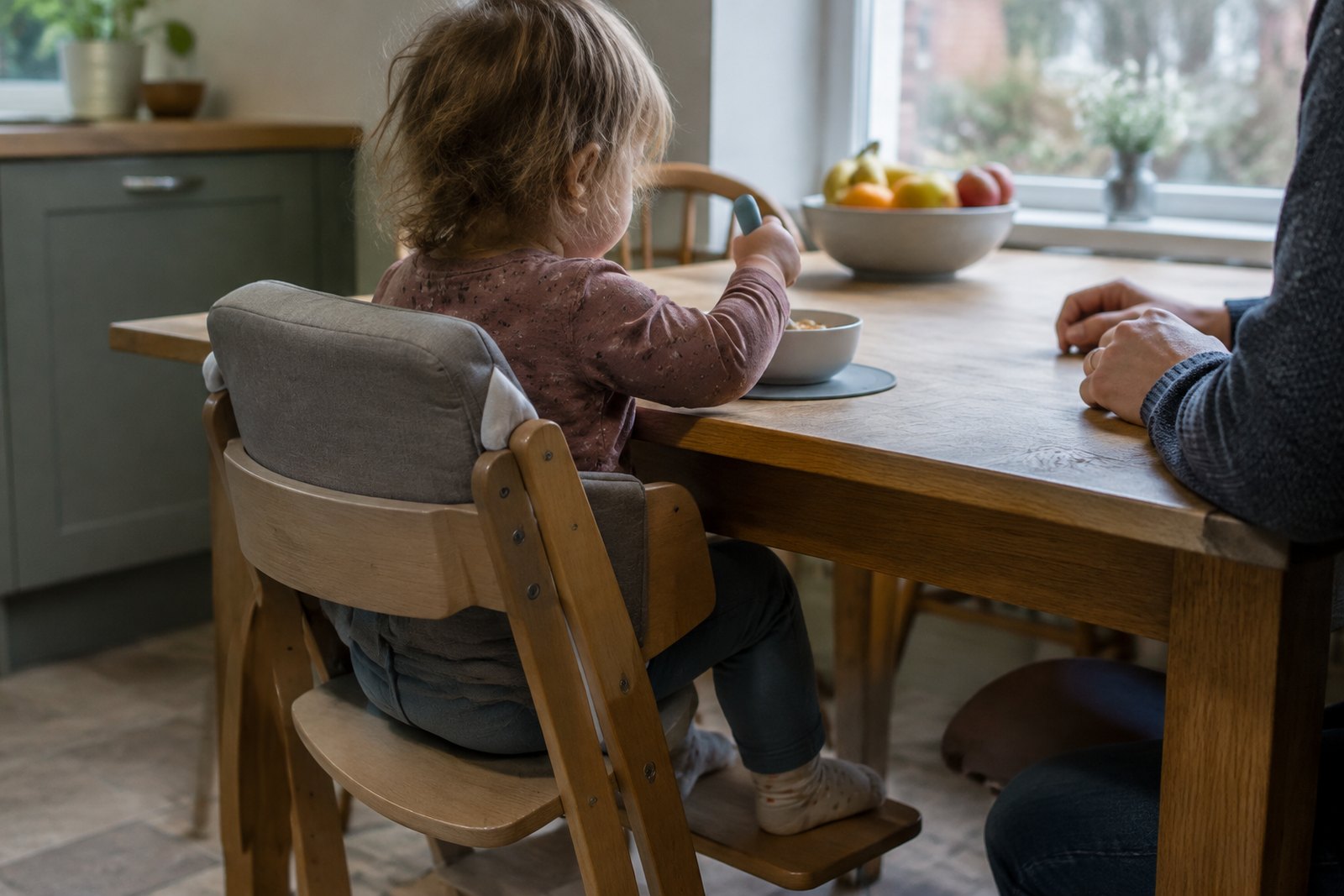
Occupational therapy for a child with cerebral palsy is about the ordinary things in their day: sitting well enough to eat and play, using their hands, getting dressed, using the toilet, washing, and taking part at nursery or school. An occupational therapist (OT) looks at what your child wants and needs to do, what gets in the way, and then changes the task, the equipment or the environment, and helps your child build the skills to do as much as they can for themselves.
The OT works alongside other people. A physiotherapist usually leads on movement, muscle tone, walking and stretches. A speech and language therapist leads on communication, and on eating, drinking and swallowing safety. Your child's paediatrician or neurology team leads on medical treatment. If you have ever sat in a clinic wondering who is responsible for what, you are not alone. This guide sets out how cerebral palsy can affect daily living, what helps at home, and where each professional fits.
How cerebral palsy affects everyday life
Cerebral palsy is a group of conditions affecting movement and posture, caused by differences in how the brain developed or by damage around birth or early childhood. It looks very different from one child to the next. Some children walk and run with a slight limp. Others need full support to sit. Most fall somewhere in between, and the same child can have good days and harder days.
For daily living, the main things that tend to matter are:
- Posture and sitting. If a child is working hard just to stay upright, there is less left over for using their hands, eating or concentrating. Poor sitting position is one of the most common hidden reasons a task goes badly.
- Hand use. Muscle stiffness, involuntary movements or weakness can make gripping, releasing, reaching and using two hands together difficult. Some children have one hand much more affected than the other (often called hemiplegia or unilateral cerebral palsy).
- Movement and balance. Standing to pull up trousers, stepping into a bath or getting on and off the toilet all need balance that many children with cerebral palsy find tricky.
- Fatigue. Moving with cerebral palsy often takes more energy than it does for other children. A child who manages beautifully at breakfast may be exhausted and clumsy by teatime. That is not laziness, it is physics.
- Other factors. Some children also have sight, hearing, learning, sensory or communication differences, epilepsy, or pain. All of these change how everyday tasks go.
Therapists may describe your child using classification systems that grade gross motor function and hand ability in levels. These are useful shorthand between professionals, but they describe what your child can do now, not who they are or what they will enjoy.
Seating and positioning: start here
If there is one thing to get right first, it is position. A stable, well supported child can do far more with their hands, mouth and eyes.
Some practical checks you can do today:
- Feet supported. Feet should rest flat on the floor or on a firm box or footrest, not dangling. Dangling feet make the whole body less stable.
- Hips back in the seat. Hips should sit right at the back of the chair with the pelvis level, not slumped or tipped to one side.
- Table height. The table should be roughly at elbow height when seated, so your child can rest their forearms and use their hands without hunching or lifting their shoulders.
- Head and trunk. If your child leans heavily to one side or slides down, rolled towels can help in the short term, but persistent difficulty is a sign they need a proper seating assessment.
- Change position. No single position is right all day. Lying on the tummy, side lying, sitting on the floor with support and standing (if a physio has advised a standing frame) all have their place.
Supportive seating for children ranges from simple chairs with footrests and side supports to specialist seating systems with adjustable trunk and head supports. Children grow quickly, so seating needs reviewing regularly. Our guide to choosing the right chair and seating explains the general principles of seat height, depth and support that apply at any age.
Hips are worth a mention. Some children with cerebral palsy are at risk of hip problems, and many areas run regular hip checks with X-rays. That is led by the physio, paediatrician or orthopaedic team, not the OT. If your child has new pain, especially when sitting or being changed, see your GP or contact their medical team.
Eating and drinking
Mealtimes can be hard work for everyone. The first and most important point: swallowing safety is the job of a speech and language therapist. If your child coughs or chokes during meals, has a wet or gurgly voice after drinking, takes a very long time to eat, is losing weight, or has repeated chest infections, ask your GP or paediatrician for a referral to speech and language therapy. Do not thicken drinks or change food textures unless an SLT has advised it. If your child is choking and cannot breathe, call 999.
Where the OT helps is with position and the practical side of getting food from plate to mouth:
- Upright and stable. Hips at the back of the seat, feet supported, head in a neutral or slightly forward position rather than tipped back.
- Non-slip matting under the plate or bowl so it does not slide away.
- Plates and bowls with a high rim or plate guard to push food against.
- Adapted cutlery with thicker, lighter or angled handles, or spoons that can be bent to suit how your child brings their hand to their mouth.
- Cups with two handles, a lid, or a cut-out rim that lets a child drink without tipping their head back. Your SLT may have a view on which cup is safest, so check with them.
Let your child do the parts they can, even if it is messy and slower. Taking over every mouthful is quicker today but costs independence later. If a meal is turning into a long battle, it is fine to split it into the part they do and the part you help with.
Dressing
Dressing combines balance, hand use, planning and stamina, so it is often one of the last self-care skills to come together. Some approaches that help:
- Sit down to dress. Sitting on the floor against a wall, in a corner, or on a low, stable chair removes the balance problem so your child can concentrate on their hands.
- Weaker arm or leg first. Put clothes on the more affected side first and take them off that side last.
- Easier clothes. Looser tops, stretchy waistbands, wide necks, front opening cardigans, hook and loop fastenings and elastic or no-tie laces all reduce the fiddly parts.
- Backward chaining. You do most of the task and your child finishes it, such as pulling the jumper down the last bit. Once they can, they do the last two steps, and so on. Finishing a task feels better than failing at the start.
- Morning energy. If mornings are a rush, practise dressing skills at a calmer time, such as after school at the weekend, and help more on school days.
Splints and ankle foot orthoses also need to fit into the routine. Work out with your therapists which goes on first, socks or splints, and whether shoes need to be a size wider or deeper to fit over them.
Toileting and washing
Toilet training may take longer for children with cerebral palsy, for physical reasons and sometimes because of bladder or bowel differences. If you have concerns about wetting, soiling or constipation, your GP, health visitor or school nurse can refer you to a children's continence service.
Feeling physically secure on the toilet makes a big difference. Children who feel they might fall cannot relax enough to go. Equipment an OT might suggest includes:
- a toilet seat reducer so the opening is smaller;
- a supportive toilet seat with a backrest, side supports and sometimes a chest strap;
- a footstool or footrest so knees are slightly higher than hips;
- grab rails or a toilet frame for older children who can stand and turn;
- a supportive potty chair for younger children.
For washing, supportive bath seats and bath chairs can hold a child reclined or upright in the water, freeing your hands. As children get bigger and heavier, lifting them in and out of the bath becomes a real risk to your back. That is the point to ask about bath lifts, hoists, shower chairs on wheels or adapting the bathroom. A supportive bath seat is not a safety device, so never leave your child alone in the bath, even for a moment.
Hand use, splints and therapy approaches
Splints
Some children use hand or wrist splints. Broadly there are two kinds: resting splints, often worn at night or during rest to hold the hand and wrist in a comfortable, stretched position, and functional splints, worn during the day to hold the thumb or wrist so the hand works better. Hand splints may be made by an OT or an orthotist. Lower leg splints (ankle foot orthoses) are usually arranged through the physio and orthotist.
Whoever provides the splint should tell you how long to wear it, how to put it on and how to check the skin. As a general rule, look for red marks that do not fade soon after taking it off, blisters, swelling or your child refusing it because it hurts, and contact the person who made it. Splints need refitting as children grow.
Constraint-induced movement therapy
For children who have one hand much more affected than the other, a therapist may suggest constraint-induced movement therapy. The stronger hand is gently restricted, usually with a mitt, for set periods while the child practises lots of fun, well chosen activities with the less used hand. The idea is to break the habit of ignoring that hand and build skill through intensive practice. It is planned carefully around the child's age and tolerance and is not suitable for everyone. It should be set up and supervised by a therapist, not improvised at home.
Bimanual therapy
Bimanual therapy focuses on using two hands together, because most real life tasks need both: opening a packet, holding paper while drawing, pulling up trousers. The child practises enjoyable two-handed activities, with the therapist grading them so the more affected hand plays a useful role, such as holding or stabilising. Some therapists combine the two approaches. Both rely on lots of practice, so expect to be given activities that fit into play at home.
Everyday hand practice at home
- Choose two-handed play: threading large beads, pulling apart construction bricks, rolling dough, opening containers to find a toy.
- Place things so your child has to reach with the more affected hand.
- Thicker crayons, chunky handled brushes and spring loaded scissors make early tasks more achievable.
- Little and often beats one long session that ends in tears.
Play, nursery and school
Play is how children learn, and for a child with cerebral palsy it is also therapy in disguise. An OT can suggest positions that free the hands for play, toys that can be activated with a large switch rather than small buttons, and ways to adapt games so your child joins in rather than watches.
At nursery and school, an OT may advise on:
- classroom seating and table height;
- writing slopes, pencil grips, adapted scissors, or a laptop or tablet when handwriting is too slow or tiring;
- getting around the building, lunchtime and PE;
- a toileting and personal care plan, including equipment and space;
- rest breaks and managing fatigue across the day;
- training for staff who support your child.
Most children start with support through the school's own resources. Our guide to SEN support in school explains how that works in England. If your child needs more than the school can normally provide, an Education, Health and Care Plan may be the next step, and our article on EHCPs and what an occupational therapy report adds walks you through it. Wales, Scotland and Northern Ireland have their own systems, so check with your local authority if you live there.
Equipment: how to get it
Much of the equipment children with cerebral palsy use can be provided through the NHS or council, though the routes vary by area:
- Children's community therapy teams (OT and physio) usually assess for and supply seating, toileting, bathing and positioning equipment, often on loan.
- Wheelchair services assess for wheelchairs and buggies with postural support, usually after a referral from a therapist or doctor.
- Orthotics departments make and fit splints and orthoses.
- Council children's social care or housing teams deal with larger home adaptations, such as ground floor bathrooms or ceiling hoists. In England, Wales and Northern Ireland these may be funded through a Disabled Facilities Grant; Scotland has its own council scheme. Contact your council to ask how to apply.
Before buying anything expensive yourself, ask your child's therapist. Specialist children's equipment can cost a lot, and the wrong chair or bath seat may be worse than none.
Where an occupational therapist fits
Most children with cerebral palsy in the UK are known to an NHS children's therapy team, with an OT, physio and SLT involved at different times depending on need. Referral is usually through your paediatrician, GP, health visitor or school. NHS input is often in blocks focused on specific goals, with gaps in between.
A private occupational therapist visiting at home can add to that, for example by:
- assessing everyday tasks in your actual home rather than a clinic;
- advising on equipment and adaptations, including what to ask the NHS or council for;
- working on specific goals such as dressing, eating or handwriting;
- visiting school to advise staff;
- writing reports for an EHCP or other applications.
Private OT should work alongside the NHS team, not replace it. Share reports both ways. And be clear about who leads on what: the physio for movement, stretches and walking; the SLT for communication and swallowing; the orthotist for orthoses; the paediatrician or neurologist for medical treatment of muscle stiffness, seizures, pain and other health issues. You can read more in our children's occupational therapy service page.
Frequently asked questions
At what age should a child with cerebral palsy see an occupational therapist?
There is no fixed age. Many babies and toddlers see a physio first, with an OT becoming involved when hand use, feeding position, play, seating, toileting or starting nursery come into focus. If daily tasks are a struggle, ask your paediatrician or GP about a referral at any age.
Will my child need splints?
Not necessarily. Some children use hand splints, ankle foot orthoses, both or neither. It depends on muscle tone, joint range and what your child is trying to do. Your therapists and orthotist will advise, and splints should be reviewed as your child grows.
Can we get equipment free on the NHS?
Often, yes. Children's community therapy teams, wheelchair services and orthotics departments provide much of what children need, usually on loan. What is available and how long it takes varies by area, so ask your child's therapist what can be provided locally before buying.
Is constraint-induced therapy unkind to a child?
It is a fair question. When done properly it is planned around play, for limited periods, with the child's tolerance in mind, and it is only used for children with one hand much more affected than the other. If your child is distressed, tell the therapist. It should not be done at home without a therapist setting it up.
Can an occupational therapist help with an EHCP?
Yes. An OT report can describe your child's needs at school in practical terms and set out the support and provision they need. In England, therapy that supports a child's education can be written into the plan. Check the current rules with your local authority or an independent SEND advice service.
What happens when my child becomes an adult?
Children's services usually hand over to adult services in the late teens, which can feel like a cliff edge. Planning early helps. Our guide to adults with cerebral palsy covers what changes and how to stay independent.
Next steps
See our children's occupational therapy and equipment and aids pages, or current guide prices, and choose your area below.

Talk to an occupational therapist near you
This guide is general information. For advice about your own situation - or someone you look after - a local occupational therapist can visit you at home and see it for themselves.
Choose your area: