

Downsizing in Later Life: What to Check Before You Move
By Mobile Occupational Therapist • 13 October 2026 • 13 min read
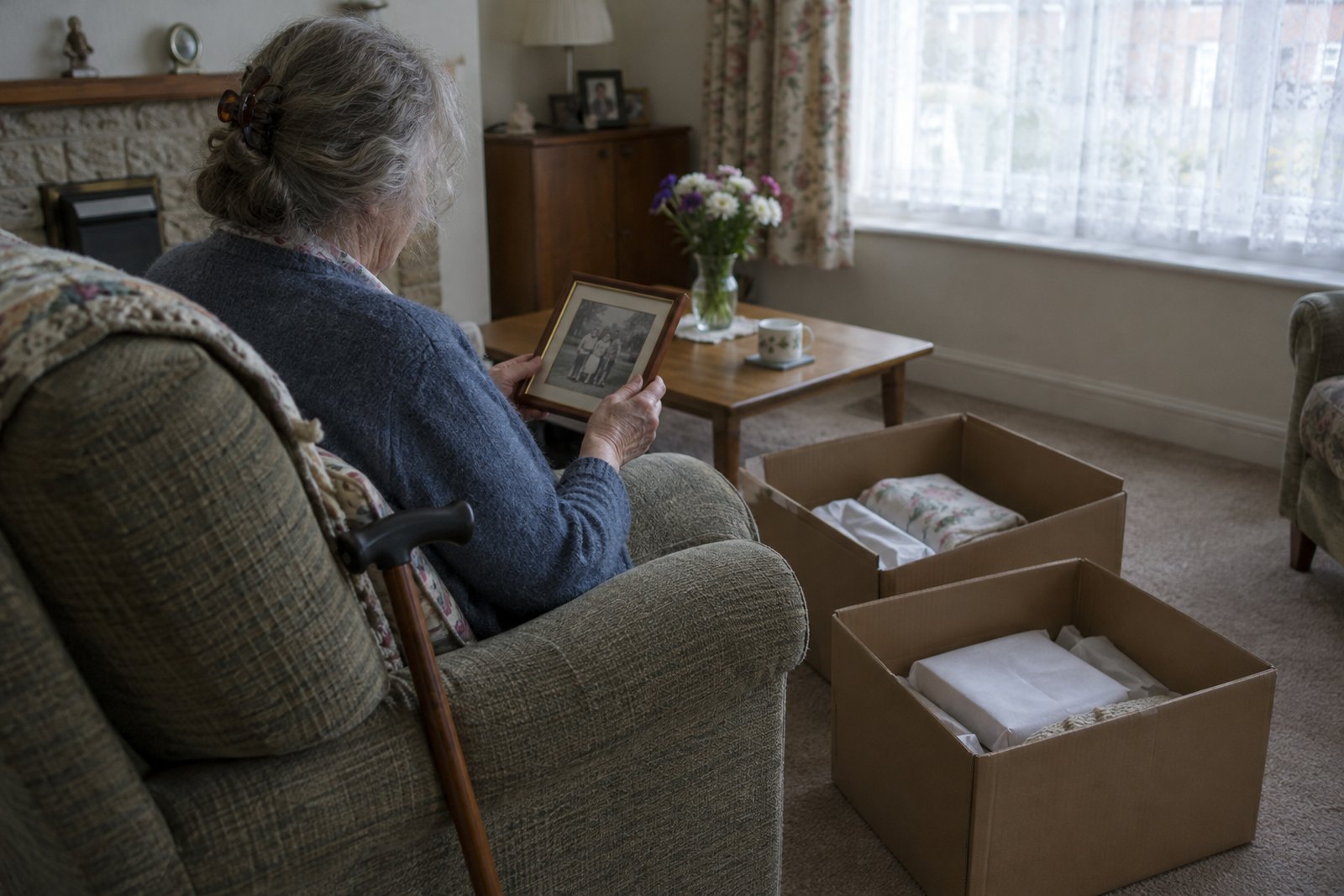
Downsizing in later life usually means moving somewhere smaller, easier to look after and easier to get around. Done well, it can mean no more stairs to dread, a bathroom you can actually use, a garden that no longer runs your life, and shops or a bus stop you can reach on foot. Done in a hurry, it can mean swapping one set of problems for another: a bungalow with three steps at the front door, a flat where the only lift keeps breaking down, or a lovely new place two bus rides from everyone you know.
So the honest answer to "should we downsize?" is: maybe, but check two things first. Could the home you are in now be made to work with adaptations, for less money and less upheaval? And if you do move, will the new place still suit you if your health changes in five or ten years? This guide goes through both questions, what to look for at viewings, the real pros and cons of bungalows, flats and retirement housing, and the parts that never appear in the estate agent's brochure.
Why people downsize, and why the reason matters
People think about moving for all sorts of reasons. The common ones are:
- The stairs have become hard work, or frightening.
- The house is too big to heat, clean and maintain.
- The garden has gone from pleasure to burden.
- Wanting to release money from the house (this is a financial decision, and you should take independent advice before acting on it).
- Wanting to be nearer family, or nearer a GP, shops and buses.
- A partner has died and the house feels too big and too quiet.
- A fall or a hospital stay has shown up problems that were easy to ignore before.
The reason matters because it tells you what the new home has to fix. If the problem is stairs, a smaller house with stairs solves nothing. If the problem is loneliness, a perfect bungalow in a quiet cul-de-sac with no bus service might make things worse. Write the reason down and take it to every viewing. It is surprisingly easy to fall for a nice kitchen and forget why you started looking.
The questions to ask before you decide to move
Could adaptations make your current home work?
Plenty of people move because of the stairs or the bath without ever finding out what could be changed. Depending on the house, the options might include a stairlift or a through-floor lift, swapping the bath for a level-access shower, grab rails and stair rails, a ramp to the front door, or turning a downstairs room into a bedroom near a downstairs toilet. Some of these are big building jobs. Some take an afternoon.
If you are disabled or have a long-term health condition, your council may be able to help pay for adaptations. In England this is through a Disabled Facilities Grant, which is available to owners and tenants and, for adults, is means tested. Wales, Scotland and Northern Ireland have their own schemes and rules, so check with your council or housing authority. Our guide to the Disabled Facilities Grant explains how it works, and GOV.UK has the current rules. You can also ask your council's adult social care team for a needs assessment, which is free.
Adapting is not always the right answer, though. If the house sits on a steep hill, the bathroom cannot be reached or enlarged, the area has lost its shops and buses, or the whole house has simply become too much, adaptations may fix one problem and leave the real one untouched.
What will moving really cost?
Moving costs more than the price difference between two houses. There are estate agent and legal fees, stamp duty or its equivalent in Scotland and Wales, removals, and often new furniture because the old pieces do not fit. Then there are ongoing costs that a house may not have had: service charges, ground rent, management fees, and in some retirement properties a fee when you sell, sometimes called an event fee or exit fee.
A smaller home is not automatically cheaper to live in. Moving can also affect benefits, care funding and what you leave to family. We do not give financial advice. Before you commit, speak to a solicitor and a regulated independent financial adviser, and ask for every charge in writing.
What about the disruption?
Moving is exhausting at any age. For someone with memory problems or dementia it can be particularly unsettling, because so much of daily life runs on familiar routes: where the light switch is, which door is the toilet. That does not mean never move. It means plan carefully, and ideally move while the person can still take part in choosing and learning the new place.
What if your health changes?
This is the question people skip because it feels gloomy. Ask it anyway. If you needed a walking frame, a wheelchair, or carers visiting twice a day, would this home still work? Moving is a lot of effort to put into a place that only suits you for two years.
What to check in a new home
Take this list to viewings, along with a tape measure and someone who will notice things you miss.
Getting in and out
- Is there a step-free route from where the car or taxi stops to the front door? Watch for gravel, slopes and kerbs.
- Is there a step or raised threshold at the door itself?
- Are the doors wide enough for a walking frame or wheelchair, just in case?
- In a block, are the communal doors heavy, and is the door entry system at a reachable height?
- Is the outside well lit, and where do the bins go?
The bathroom
- Is there a shower you can walk into, or only a bath?
- Is there room for a shower chair, and for someone to help you if needed?
- Is the toilet a sensible height, with space either side for a frame or rails?
- Are the walls solid enough to fix rails to?
- Does the door open outwards, or could it be changed? An inward-opening door can trap someone who falls behind it.
Stairs and levels
Look for the steps people stop noticing: a step down into the lounge, a split-level hall, a step out to the garden or into a conservatory. If there are stairs, are they straight? A straight staircase is usually simpler for a stairlift than a curved one.
Space for equipment and carers
The most common downsizing mistake is going too small. Check the bedroom would fit a bed with space on both sides if you ever needed a profiling bed or help from carers. Check there is room to turn a walking frame in the kitchen and hall, somewhere to store and charge a mobility scooter if you might need one, and ideally a second bedroom for family or an overnight carer.
Parking, transport and local services
- Is parking close to the door, and is it allocated or a free-for-all?
- Walk to the nearest bus stop yourself. Distances on listings are often optimistic.
- How far are the GP, pharmacy, a food shop and the post office?
- Are the things that keep you going nearby: a church, a club, a decent café, friends?
- How easy is it for family to visit?
- Visit at different times. A quiet street on a Sunday may be a rat run on a Monday.
Warmth and running costs
Ask to see the Energy Performance Certificate and ask what the heating costs. A cold home is a health risk in later life, not just an expense.
Bungalows, flats with lifts and retirement housing
Bungalows
Moving to a bungalow is the classic choice, and for good reason: everything on one level and often a garden. But a bungalow is not automatically accessible. Many have steps to the front and back doors, small bathrooms with baths, and some have had loft conversions that bring the stairs straight back. Gardens can be large. Some people feel less secure sleeping on the ground floor. In many areas bungalows are also sought after, so you may be competing with plenty of other buyers.
Flats with lifts
A flat with a lift means no stairs, less maintenance and neighbours close by. The questions to ask are about the lift: is there more than one, how often does it break down, and how quickly is it fixed? Ask the managing agent what the fire evacuation plan is for residents who cannot use the stairs. Check the distance from the car park, the rules on storing scooters, and the leasehold charges.
Retirement and sheltered housing
Retirement or sheltered housing is usually a block or group of flats or bungalows for people over a minimum age, often with a scheme manager, an emergency alarm and a communal lounge. It suits people who are mostly independent but want company and a bit of back-up. It is not a care service. Our guide to sheltered housing covers what to check, including charges and any restrictions on who you can sell to.
Extra care housing
Extra care housing gives you your own front door with care staff on site, so it can carry on working as needs increase. Our guide to extra care housing explains how it differs from sheltered housing and from care homes, which are a different step again for when needs are higher.
The emotional side
A house holds a life. The children's heights on the kitchen door frame, the chair by the window, the garden someone planted. Leaving it can feel like grief, even when the move is the sensible choice and even when the person chose it. That is normal, and it is worth saying out loud.
If you are an adult child, notice whose idea the move is. A parent who feels pushed will often dig in, and a move made under pressure rarely settles well. Talk with them, not at them, and start with what they want their days to look like rather than with property listings. If a parent is refusing to consider any change, our guide on when a parent refuses help at home may help.
After a bereavement, many people find it wiser not to rush. Big decisions made in the first raw months are sometimes ones people would not have made later.
Sorting belongings without falling out
- Start early. Months, not weeks. One drawer or cupboard at a time is far less overwhelming than one room.
- Measure the new rooms first. Then decide which furniture fits, rather than discovering it on moving day.
- Ask family early what they would like, and be clear about what is not wanted so things do not sit in a garage for years.
- Keep the familiar. Especially for someone with dementia, the same chair, bedding, clock and photographs can make a new place feel like home.
- Let the owner decide. It is their life being sorted. Helpers should help, not clear.
- Photograph things that cannot come but carry memories.
- Keep sessions short. Sorting is physically and emotionally tiring.
- Get help with the heavy and high. Lofts, ladders and heavy boxes are jobs for someone else.
Getting the timing right
The best time to downsize is usually before you have to. After a fall or a hospital stay, decisions get made quickly, often by other people, and the options narrow. Moving while you are well enough to choose, settle in, learn the new routes and make new friends gives the move the best chance of working.
If a hospital discharge is forcing the question, it is often better to come home with temporary support and equipment, recover, and then decide, rather than buy a house from a hospital bed. Once you have a moving date, plan the first week: bed made up, kettle out, medicines to hand, and registration with a new GP if you are changing practice.
Where an occupational therapist fits
An occupational therapist looks at how you manage everyday tasks, such as washing, dressing, cooking, getting in and out, and how your home helps or gets in the way. In a downsizing decision, an occupational therapist can:
- Assess your current home and tell you which adaptations might realistically make it work.
- Look at a property you are considering, with you or from plans, photos and measurements, and point out problems before you commit.
- Work out what equipment you might need now and later, and whether it would fit.
- Think ahead about how a condition such as Parkinson's, MS, arthritis or dementia might affect your needs over time.
- Write a report that can support a council housing application on medical grounds or a Disabled Facilities Grant.
- Help you settle and practise daily tasks in the new home after the move.
What an occupational therapist does not do: value a property, survey its structure (that is a chartered surveyor), give financial or legal advice, or decide whether you qualify for council housing. If your health has changed recently, see your GP. If walking or balance is the main issue, a physiotherapist may lead. Council occupational therapy through adult social care is free but can involve a wait. A private occupational therapist visiting at home can often be arranged sooner, and can give an independent view on housing and rehousing decisions.
Frequently asked questions
Is a bungalow always the best choice for older people?
No. A bungalow removes internal stairs, but many have steps outside, small bathrooms and big gardens. A flat with a reliable lift or a good retirement scheme can be easier. Judge each property on access, bathroom, space and location, not on the label.
Should we adapt the house or move?
It depends on whether adaptations would fix the real problem. If stairs and the bath are the issue in an otherwise good home, adapting may be cheaper and less disruptive. If the location, size or upkeep is the problem, moving may make more sense. An occupational therapist's assessment can help you compare.
Can an occupational therapist look at a property before we buy it?
Yes, many private occupational therapists will visit a prospective home with you or review plans and measurements. It is far easier to walk away from a house than to adapt one you have already bought.
Will my equipment and adaptations come with me?
Fixed adaptations such as level-access showers stay with the house. Equipment lent by the NHS or council usually belongs to the equipment service, so tell them you are moving, especially if you are changing council area, and ask about arranging what you need at the new address.
Can the council help us move?
You can apply to join your council's housing register, and some councils give priority on medical or disability grounds. Rules vary, so check with your council. GOV.UK explains how to apply, and an occupational therapy report can support an application.
How do I talk to mum about downsizing without upsetting her?
Start with her days, not houses: what is hard, what she would miss, what she would like more of. Offer choices and time. If she says no, it may help to look at adaptations first, which can feel less drastic.
Next steps
If you are weighing up whether to adapt or move, an independent view can save a costly mistake. See our housing and rehousing and home assessment pages, or current guide prices, and choose your area below.

Talk to an occupational therapist near you
This guide is general information. For advice about your own situation - or someone you look after - a local occupational therapist can visit you at home and see it for themselves.
Choose your area: