

Sheltered Housing: What It Is, Who It Suits and What to Check
By Mobile Occupational Therapist • 25 September 2026 • 14 min read
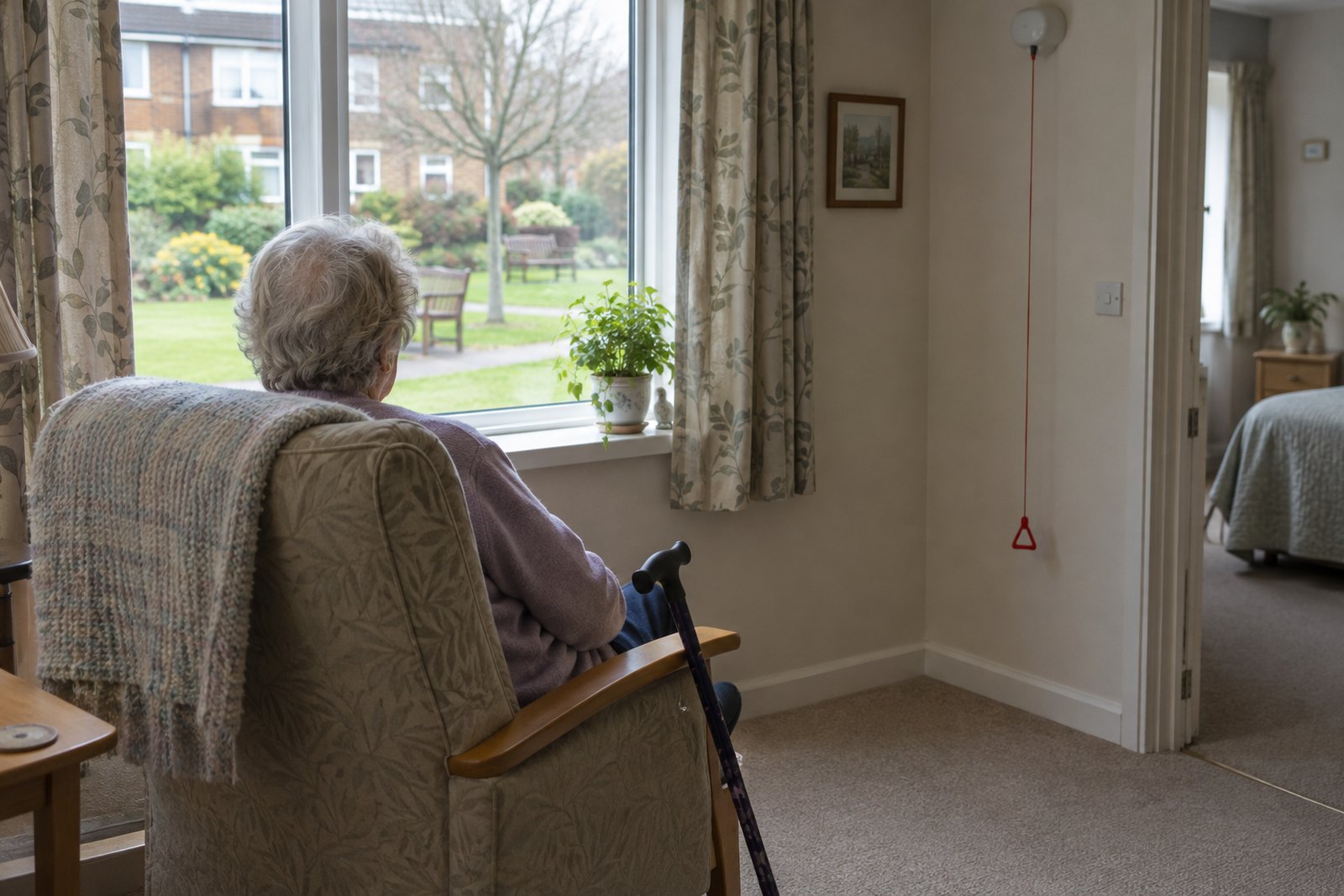
Sheltered housing is a block or small estate of flats or bungalows for older people, usually aged over 55 or 60, where everyone has their own front door and their own tenancy or lease, with some support in the background. That support is normally a scheme manager (often still called a warden), an emergency alarm in every flat and shared spaces such as a lounge, laundry and garden. You live independently. Someone notices if you do not.
What it does not include is personal care. Nobody in a standard sheltered scheme will help you wash, dress or take your tablets. If you need that, it is arranged separately, exactly as it would be in any other home. So whether sheltered housing is right for you, or for your mum or dad, comes down to two questions. Will the new flat actually work for the body and the routine you have now? And would adapting the home you already have do the job just as well? This guide covers both.
What sheltered housing actually gives you
Schemes vary a lot, but most offer some version of the following:
- Your own self-contained home. Usually a one or two bedroom flat or bungalow with its own kitchen and bathroom. You furnish it, you lock the door, you come and go as you please.
- A scheme manager. Their job is to keep an eye on the building and the residents, help you sort out problems, check in if you have not been seen, and point you towards other services. They are not carers or nurses.
- An emergency alarm. Normally pull cords in the main rooms and often a pendant you wear, linked to the scheme manager during their hours and to a 24-hour monitoring centre the rest of the time.
- Communal areas. A residents' lounge, a shared laundry, gardens, and sometimes a guest room your family can book.
- Some social life. Coffee mornings, quizzes or trips in some schemes. Nothing in others. Ask, because this varies more than anything else.
One thing to check early: the old picture of a warden who lives on site and knocks on every door each morning is less common than it was. In many schemes the manager works office hours, or covers several schemes and visits a few times a week. Outside those times, the alarm is answered by a call centre that rings a named contact or an ambulance. That can work perfectly well, but it is not the same thing, and families are sometimes surprised.
What it does not give you
Standard sheltered housing does not include:
- help with washing, dressing, toileting or getting in and out of bed
- meals, unless the scheme happens to have a restaurant (some private schemes do)
- nursing or medical care
- cleaning your flat or doing your shopping
If you already need, or are likely to need, help with these, there are three routes. You can live in sheltered housing and have home carers visit, arranged privately or through the council after a needs assessment (in England this is a Care Act needs assessment; Wales, Scotland and Northern Ireland have their own versions). You can look at extra care housing (sometimes called assisted living or housing with care), which is similar but has a care team based on site. Or, if needs are high, especially at night, a care home may be the safer option.
A rough rule: sheltered housing suits people who can manage most of their day themselves but want less upkeep, a safety net and people nearby. It suits people less well if they need help several times a day and overnight, or if they are likely to leave the building at night and get lost.
Council and housing association schemes or private retirement flats
Renting from the council or a housing association
Most sheltered housing in the UK is rented from councils and housing associations. You pay rent plus a service charge, which covers things like the scheme manager, the alarm, cleaning and heating of communal areas, the gardens and the lift. You still pay council tax and your own bills, although in some schemes heating is included in the service charge.
If you are on a low income and over State Pension age, you may be able to get help with the rent and some eligible service charges through Housing Benefit. Not every part of a service charge counts. Check with the council's housing benefit team or on GOV.UK before you sign, so you know what you will actually be paying each week.
Waiting times for rented sheltered housing vary enormously between areas and between schemes. Some are hard to get into. Others, particularly older schemes with small bedsits or no lift, can have vacancies.
Buying a private retirement flat
Private retirement flats are usually sold on a long lease. You own the flat, but the building is owned and managed by someone else, and you pay ongoing charges. These typically include:
- Service charges, which can be considerably higher than in an ordinary block of flats because they pay for the manager, alarm system, lounge and lift. They can rise year on year.
- A contribution to a reserve or sinking fund for big repairs like roofs and lifts.
- Ground rent on some leases, depending on when the lease was granted.
- Event fees on some leases, also called exit, transfer or deferred management fees. These are a charge, often worked out as a percentage of the sale price, that becomes payable when the flat is sold, sublet or sometimes when it changes hands after a death. They can be a large sum and they are easy to miss.
Resale is the other thing people underestimate. Because buyers usually have to be over a certain age, the pool of buyers is smaller, and some retirement flats take a long time to sell or sell for less than the original price. Service charges usually keep running until the flat is sold, which matters to families dealing with an estate.
None of this means private retirement flats are a bad choice. Many people are very happy in them. It means you should read the lease, ask for the last few years of service charge accounts, and use a solicitor who is used to retirement leasehold before you commit. Some housing associations also offer shared ownership for older people, where you buy part of the flat and pay rent on the rest, which is worth asking about if a full purchase does not add up.
How to apply
For rented sheltered housing, the usual starting point is your local council's housing team. Most councils run a housing register, and sheltered housing is often allocated through it, sometimes by bidding for advertised properties. Some housing associations also take applications directly, so it is worth contacting the ones that run schemes near you. GOV.UK has a general guide to applying for council housing.
Things that commonly come up:
- Age. Many schemes take people over 60, some over 55, and some younger people with a disability.
- Owning a home. Some councils accept homeowners for sheltered housing and some do not, or only in certain circumstances. Ask your council directly.
- Local connection. Many councils require you to have lived or have family in the area. If you want to move nearer to a son or daughter in another area, ask that council how it treats applicants with family there.
- Medical or welfare priority. If your current home is making your health or safety worse, for example stairs you can no longer manage or a bathroom you cannot use, the council may give you more priority. They will usually want evidence, which might come from your GP, a hospital team or an occupational therapist.
For private retirement flats, you buy through estate agents in the usual way, or rent privately where the lease allows it. Age UK has general guidance on housing options in later life if you want to compare routes before deciding.
Questions to ask on a viewing
Go with a list. It is very easy to be charmed by a sunny lounge and forget to ask the boring questions that decide whether it works.
Support and safety
- What hours is the scheme manager on site, and who covers when they are off?
- What happens if I pull the alarm cord at three in the morning? Who answers, and who comes?
- Is there a daily check-in, and is it a visit, a phone call or a button I press?
- What is the fire procedure? Is it a stay-put policy, and what happens for residents who cannot use stairs?
- Can home carers and district nurses get in easily, including at night?
Money
- What is the current service charge, what does it cover, and how much has it gone up in recent years?
- Is there a reserve fund, and is it healthy, or is a big bill coming for a new roof or lift?
- For a purchase: is there ground rent, and is there an event fee on sale or sublet? How is it calculated?
- For a rental: which parts of the charge are eligible for Housing Benefit?
- What happens to the charges if I go into hospital for a long stay or move into a care home?
Everyday life
- Are pets allowed?
- Can family stay overnight, and is there a guest room?
- Where can a mobility scooter be stored and charged? Many schemes do not allow them in corridors or flats for fire safety reasons.
- How far is it to the bins, the laundry, the car park and the bus stop?
- What is the residents' lounge actually used for, and when?
What to check about access and bathrooms
This is where moves go wrong. A flat can look ideal and still be harder to live in than the house you left. Take a tape measure, and ideally take the person who will live there, using whatever walking aid they use now.
Getting in and out
- Walk the whole route from the car park or bus stop to the flat door, carrying a bag of shopping. Count the steps, slopes and heavy doors.
- Fire doors in corridors can be very heavy. Check whether they are held open automatically or whether you will be pushing them with a frame in one hand.
- Is there a lift, and what happens when it breaks down? A first-floor flat with no working lift is a first-floor flat with stairs.
- Can you reach and use the door entry system from a seated position if you need to?
- Measure doorways if you use, or may soon use, a wheeled walker or wheelchair.
The bathroom
Many older sheltered schemes still have a bath with a shower over it, which is the single most common reason people struggle after moving in. Check:
- Is it a bath, a shower tray with a step, or a level-access shower?
- Is the toilet a comfortable height, with space beside it for a rail or frame?
- Are there grab rails already, and are they where you would need them?
- Is there room for a shower chair, and for a second person to help if that is ever needed?
- Does the door open outwards or slide? An inward-opening door can be blocked by someone who has fallen behind it.
- Will the landlord or freeholder allow adaptations, and how long does that usually take?
Kitchen, bedroom and alarm cords
- Can you reach the cupboards, the oven and the sockets without stretching up or bending right down?
- Is there space for a bed with room to get in and out on at least one side, and room for a larger bed if one is ever needed?
- Are the radiators and heating controls easy to use?
- Are the alarm pull cords hanging down to near floor level? They should be. A cord tied up out of the way cannot be reached by someone lying on the floor.
Moving or adapting: where an occupational therapist fits
Many people look at sheltered housing because one thing in the current home has become difficult. Usually it is the stairs, the bath or getting in and out of the front door. Sometimes moving is exactly the right answer. Sometimes the house could be made to work with a stair rail, a level-access shower and a couple of grab rails, and the person would rather stay where they are.
An occupational therapist can help you work that out. On a home visit they look at what you are actually finding hard and why, watch how you manage the stairs, bathroom, kitchen and getting in and out, and suggest what would fix it, whether that is equipment, a different way of doing things, or adaptations. Our guide to how a home adaptations assessment works explains what that looks like, and larger works may be eligible for a Disabled Facilities Grant.
If moving looks like the better option, an occupational therapist can help make sure the new place really is better. That can include looking at floor plans or visiting a proposed flat, flagging problems before you commit, and writing a report that sets out your needs to support a housing application. Our housing and rehousing page covers this in more detail.
To be honest about the limits: an occupational therapist does not decide your priority on the housing register - the council does. They cannot advise on a lease, event fees or whether a flat is good value; that is a job for a solicitor and, for bigger financial decisions, an independent financial adviser. And if what is driving the move is a health change such as new falls, breathlessness or confusion, see your GP first, because the cause may be treatable. Council occupational therapists through adult social care are free but can have waiting lists; a private occupational therapist visiting at home is an option if you need an answer sooner.
Frequently asked questions
Is sheltered housing the same as a care home?
No. In sheltered housing you have your own home and live independently, with a scheme manager and alarm in the background. A care home provides personal care, and often nursing, around the clock. Extra care housing sits in between.
What age do you have to be for sheltered housing?
It depends on the scheme. Many take people over 60, some over 55, and some accept younger people with a disability or health condition. The landlord or council will tell you their rules.
Can I get sheltered housing if I own my home?
You can buy or sometimes rent a private retirement flat. For council or housing association sheltered housing, some councils accept homeowners and others do not, or only in certain situations. Ask your council's housing team.
Can I have carers coming in if I live in sheltered housing?
Yes. You can arrange home care privately or through the council after a needs assessment, just as you could anywhere else. Check that carers can get into the building easily, including early mornings and evenings.
Can a sheltered housing flat be adapted?
Often, yes, with the landlord's or freeholder's permission. Rails and small changes are usually straightforward. Bigger works, such as replacing a bath with a level-access shower, take longer and may need a grant, so it is better to check before you move than after.
What happens to a retirement flat if the owner moves into a care home or dies?
The flat is usually sold, sometimes through the management company. Service charges normally continue until it is sold, and any event fee in the lease becomes payable. Families should read the lease early rather than at the point of sale.
Next steps
If you are weighing up whether to adapt your current home or move, an occupational therapy assessment can give you a clear picture first. See our home assessment page, or current guide prices, and choose your area below.

Talk to an occupational therapist near you
This guide is general information. For advice about your own situation - or someone you look after - a local occupational therapist can visit you at home and see it for themselves.
Choose your area: