

Dementia and Aggression: Why It Happens and What Helps
By Mobile Occupational Therapist • 1 November 2026 • 13 min read
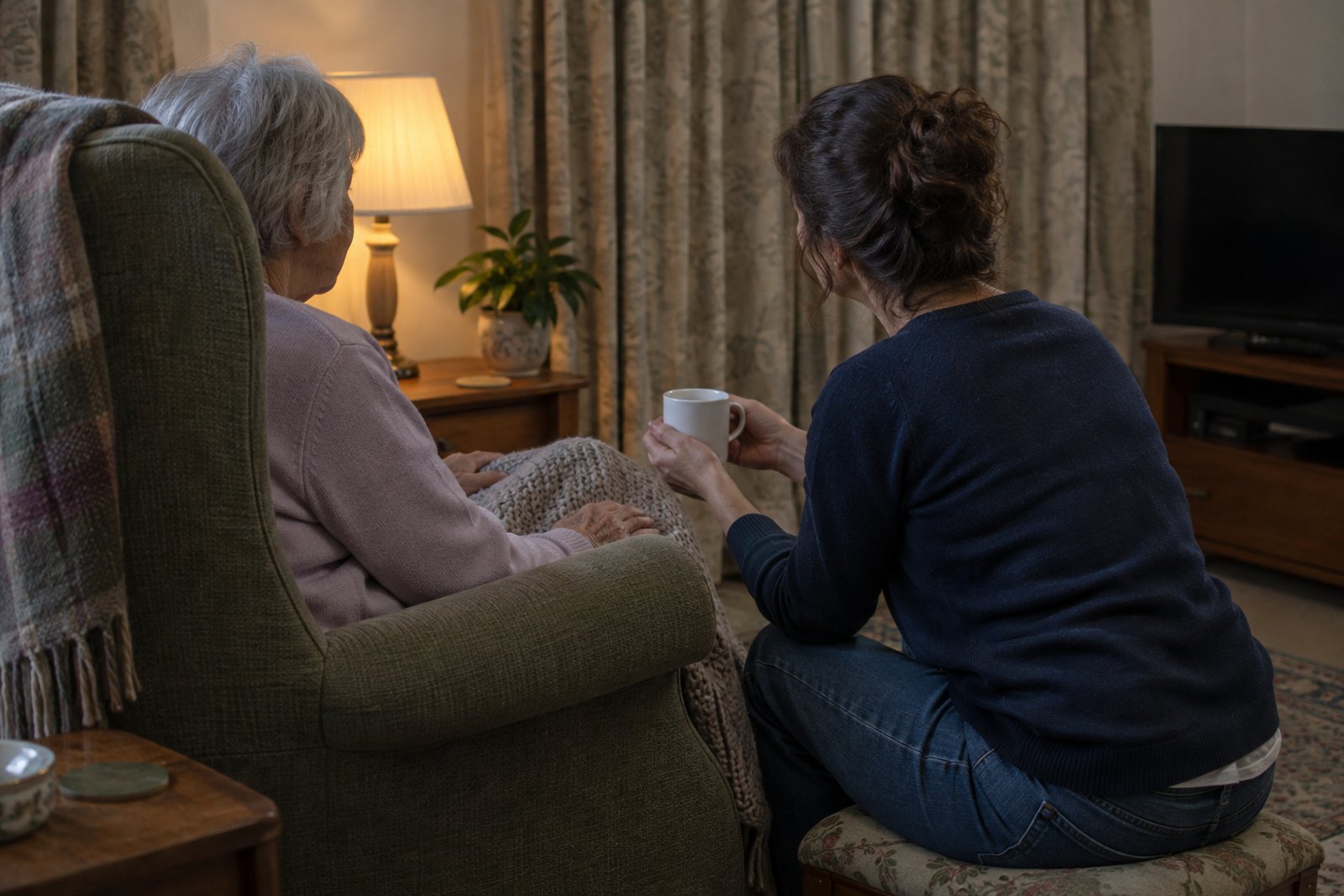
If someone you love has dementia and has started shouting, lashing out or saying cruel things they would never have said before, you are not imagining it and you are not alone. Aggression is a recognised part of dementia for many people, especially as the illness progresses. It is rarely a sign that the person has turned nasty, and it is not a sign that you are doing something wrong. Most of the time it is the illness making it hard for them to tell you that something is wrong. They may be in pain, frightened, constipated, overwhelmed, or being hurried through something they no longer understand.
So the short answer is this: look for the need behind the behaviour, keep yourself safe in the moment, and talk to the GP if it is new or getting worse. A sudden change over hours or days can be an infection or delirium and needs checking the same day. The rest of this page explains why it happens, what to do when it flares up, and how to make it happen less often.
Why dementia can make someone aggressive
Dementia damages the parts of the brain that handle memory, understanding, language and self-control. Put those together and the picture becomes clearer. The person may not know where they are, who is touching them or why. They may not have the words for pain or fear. And the brakes that once stopped them snapping at people have worn thin.
It helps to treat aggression as communication. When your dad pushes your hand away during a wash, he may be saying "I am cold", "you are hurting my shoulder" or "I do not know who you are". The question that tends to help most is not "why is he being like this?" but "what is this trying to tell me?"
Common causes worth checking
- Pain. Arthritis, toothache, sore feet, a pressure sore, a headache. People with dementia often cannot say "it hurts". They show it instead. Watch for wincing, guarding one part of the body, or being worse when they are moved.
- Infection. Urine and chest infections can cause sudden confusion, agitation and aggression (delirium), sometimes with few other obvious signs.
- Constipation. Very common, very uncomfortable and easy to miss. Keep a rough note of bowel movements.
- Fear and confusion. Not recognising home, not recognising you, believing a stranger is in the house or that their belongings have been stolen.
- Overstimulation. Too much noise, too many people, a busy shop, the television on all day.
- Being rushed or cornered. Especially during personal care, when someone is undressing them, standing close and asking them to do things quickly.
- Basic needs. Hunger, thirst, tiredness, needing the toilet, being too hot or too cold.
- Hearing and sight. Missing glasses, a flat hearing aid battery or poor lighting can make the world much more confusing and threatening.
- Medicines. New tablets, changed doses or side effects can affect mood and behaviour. Do not stop or change anything yourself. Ask the GP or pharmacist.
- Boredom and loss of purpose. Long empty days, and the frustration of not being able to do things they used to, can build up into anger.
Why it is often aimed at you
Many families search for some version of "why is my mum being so mean to me?" It hurts most when the anger lands on the person doing the most. There are some plain reasons. You are there most often, so you see more of it. You are probably the one helping with washing, dressing and toileting, which are the most intimate and most confusing tasks. You may feel safe to them, so they let go with you in a way they hold back with visitors. And at times they may not recognise you at all. None of that makes it fair, and none of it means you deserve it. It is the illness, not a verdict on you.
Keeping yourself safe in the moment
Your safety matters as much as theirs. When things start to escalate:
- Step back. Move out of arm's reach and give them space. Being close and standing over someone can feel threatening.
- Do not block the doorway. Make sure you both have a way out. Someone who feels trapped is more likely to lash out.
- Do not argue or try to hold them. Avoid grabbing arms or physically restraining someone as it can make things worse and can injure either of you. If you have to use physical contact to prevent immediate serious harm, use the minimum force for the shortest time and call 999.
- Leave the room if you need to. If they are safe on their own for a few minutes, walking away is often the quickest way to calm things. Come back when you both feel steadier.
- Move anything that could be thrown or cause harm if you can do so calmly, without a struggle.
- Call 999 if anyone is in danger. That includes you, the person with dementia, or anyone else in the house. Tell the call handler the person has dementia.
If you are being hurt more than once, or you feel frightened in your own home, tell the GP and contact your council's adult social care team. This is a sign the situation needs more support, not a sign that you have failed.
Calming things down
There is no script that works every time, but these tend to help more than they hinder:
- Speak slowly and quietly, in short sentences. One idea at a time.
- Keep your body relaxed. Lower yourself to their eye level if it is safe to do so, rather than standing over them.
- Respond to the feeling, not the facts. If they say "I want to go home" while sitting in their own living room, arguing that they are home rarely works. "You sound worried. Tell me about home" often goes further.
- Do not correct or test them. "You know who I am, I am your daughter" can feel like an accusation.
- Offer something simple: a cup of tea, a snack, a favourite song, a short walk, a look out of the window.
- Drop the task. Whatever you were trying to do can almost always wait twenty minutes.
Afterwards, there is usually no point going over what happened with them. They may not remember, and raising it can restart the upset. Instead, take a moment for yourself, then quietly note what happened (more on that below).
Personal care without the battle
Washing, dressing and toileting are the most common flashpoints. To someone with dementia, being undressed by a person they may not fully recognise, in a cold bathroom, with water coming at them, can feel genuinely alarming. Small changes make a real difference:
- Choose the time of day when they are usually calmest, not the time that suits the routine.
- Warm the room first and keep them covered with a towel, uncovering one part at a time.
- Explain each step just before you do it, and let them do as much as they can. Handing them the flannel is often better than washing them.
- If they say no, accept it, leave it and try again later. A strip wash at the sink is a perfectly good alternative to a shower.
- Lay clothes out in the order they go on, and keep choices to two.
- Keep the same person doing personal care where possible.
There is much more detail in our guides to helping someone with dementia wash and shower and helping someone with dementia get dressed.
Spotting patterns with a diary
When you are in the middle of it, every outburst feels random. Written down, patterns often appear. Keep a simple diary for a week or two. For each incident note:
- The day and time.
- Where it happened and who was there.
- What was happening just before (a wash, a visitor, the TV, being asked a question).
- What the person said or did.
- What you did, and what helped or made it worse.
Alongside that, jot down sleep, bowel movements, how much they ate and drank, and any signs of pain. You may find it always happens at bath time, or after a poor night, or when a particular programme is on. Late afternoon and evening are often harder for people with dementia, which is covered in our guide to sundowning. Take the diary to the GP. It is far more useful than trying to remember under pressure in a ten-minute appointment.
Triggers around the home
The home itself can quietly add to distress. Things worth checking:
- Noise. Television and radio on in the background, several people talking at once, the doorbell, a busy kitchen.
- Television content. News, dramas and loud programmes can be taken as real events happening in the room.
- Crowds and visitors. Several visitors at once can be too much. One or two at a time, for shorter visits, is often better.
- Mirrors. Some people do not recognise their reflection and think a stranger is watching them. Covering or removing a mirror can stop this.
- Dark windows. At night, a window can become a black mirror with a "stranger" in it. Close the curtains before dusk.
- Shadows and poor lighting. Dim corners and shadows can be misread as people or objects. Even, bright lighting helps.
- Busy patterns and clutter. Strong patterns on rugs and furniture can be confusing, and clutter makes it harder to find things.
- Change. Moving furniture, new carers or a change of routine can unsettle someone for days.
A medicines review with the GP
If aggression is new, getting worse or putting anyone at risk, book a GP appointment. Ask the GP to check for infection, pain and constipation, and to review all current medicines, including any bought over the counter. You can also ask whether a referral to the local memory service or older people's mental health team would help.
You may wonder about medication to calm things down. NICE guidance on dementia says that non-drug approaches should come first, starting with looking for and treating causes such as pain, infection and distress. Antipsychotic medicines are only meant to be considered when someone is at risk of harming themselves or others, or is severely distressed, and only after the benefits and risks have been discussed with the person and their family. These medicines carry serious risks for people with dementia, so when they are used it should be at the lowest dose for the shortest time, with regular reviews. You can read the guidance yourself on the NICE website. Never start, stop or change any medicine without talking to the GP or pharmacist.
Get help the same day by calling the GP or NHS 111 if the change is sudden, if they are suddenly much more confused, drowsy or seeing things that are not there, or if they seem unwell. Call 999 if anyone is in danger or the person is seriously ill.
Looking after yourself as well
Being on the receiving end of anger from someone you love is exhausting in a way that is hard to explain to people who have not done it. You can know it is the illness and still feel hurt, angry or quietly dreading the next wash. That is normal. It also wears you down, and a worn-down carer has less patience, which can feed the cycle. Our guide to carer burnout is written for exactly this.
A few practical places to turn:
- Dementia UK's Admiral Nurse Dementia Helpline. Free, and staffed by specialist dementia nurses who can talk through aggression and other changes with you. Details are on the Dementia UK website.
- A carer's assessment from your council. This looks at what you need to keep caring, which might include breaks or extra help at home.
- Alzheimer's Society. Information, local support and an online community of people in the same position.
- Your own GP. Tell them you are a carer and how it is affecting you.
Where an occupational therapist fits
An occupational therapist looks at the everyday tasks that are causing difficulty and the home where they happen. For aggression in dementia, that often means the flashpoints: washing, dressing, toileting, mealtimes and long empty afternoons.
A private occupational therapist visiting at home can watch how a task actually goes, then suggest changes to the routine, the order of steps, the way you prompt and the room itself. They may suggest equipment that removes a source of fear or discomfort, such as a shower chair so the person does not have to stand, a perching stool for washing at the sink, grab rails, or easier clothing. They can help you build meaningful activity into the day, which can reduce boredom and frustration, and they can write recommendations that support a council needs assessment or a care package. NHS occupational therapy is also available through the GP, community teams or adult social care, though waits vary.
An occupational therapist does not diagnose infections, prescribe or review medicines, or manage serious mental health problems. The GP leads on physical causes and medicines. The memory service or older people's mental health team leads on complex behaviour and psychiatric symptoms. A speech and language therapist helps with communication and swallowing. An Admiral Nurse can support the whole family. And if anyone is in danger, the answer is 999, not a therapist.
Frequently asked questions
Is aggression a normal part of dementia?
It is common and recognised, but it is not something you just have to put up with. It usually has a cause, and finding that cause often reduces it. Any new or worsening aggression is worth discussing with the GP.
Why is my mum lovely to everyone else but horrible to me?
Usually because you are the one doing the hardest, most personal tasks, and because she may feel safe enough with you to let her distress out. Visitors also see short, well-rested snapshots. It does not mean she has stopped loving you.
Should I correct them when they say something that is not true?
Generally, no. Arguing about facts tends to raise the temperature. Respond to the feeling behind what they say, reassure them, and gently change the subject if you can.
When should I call 999?
Call 999 if you, the person with dementia or anyone else is in danger, or if they seem seriously unwell. For a sudden change in behaviour or confusion that is not an emergency, call the GP or NHS 111 the same day.
Will they need medication to calm them down?
Not necessarily. NICE guidance says non-drug approaches should come first. Medication is a decision for the GP or specialist with you and the person, weighing benefits against real risks, and it should be reviewed regularly.
Does aggression mean they will have to go into a care home?
Not automatically. Many families reduce aggression a great deal by treating causes, changing routines and getting more support at home. But if you cannot keep yourself or them safe, it is right to look at other options, and that is not a failure.
Next steps
If washing, dressing or daily routines have become a battle, an occupational therapist can look at what is happening at home and what might ease it. See our home assessment page, or current guide prices, and choose your area below.

Talk to an occupational therapist near you
This guide is general information. For advice about your own situation - or someone you look after - a local occupational therapist can visit you at home and see it for themselves.
Choose your area: