

Mastectomy Recovery at Home: Dressing, Sleeping and Arm Movement
By Mobile Occupational Therapist • 7 October 2026 • 13 min read
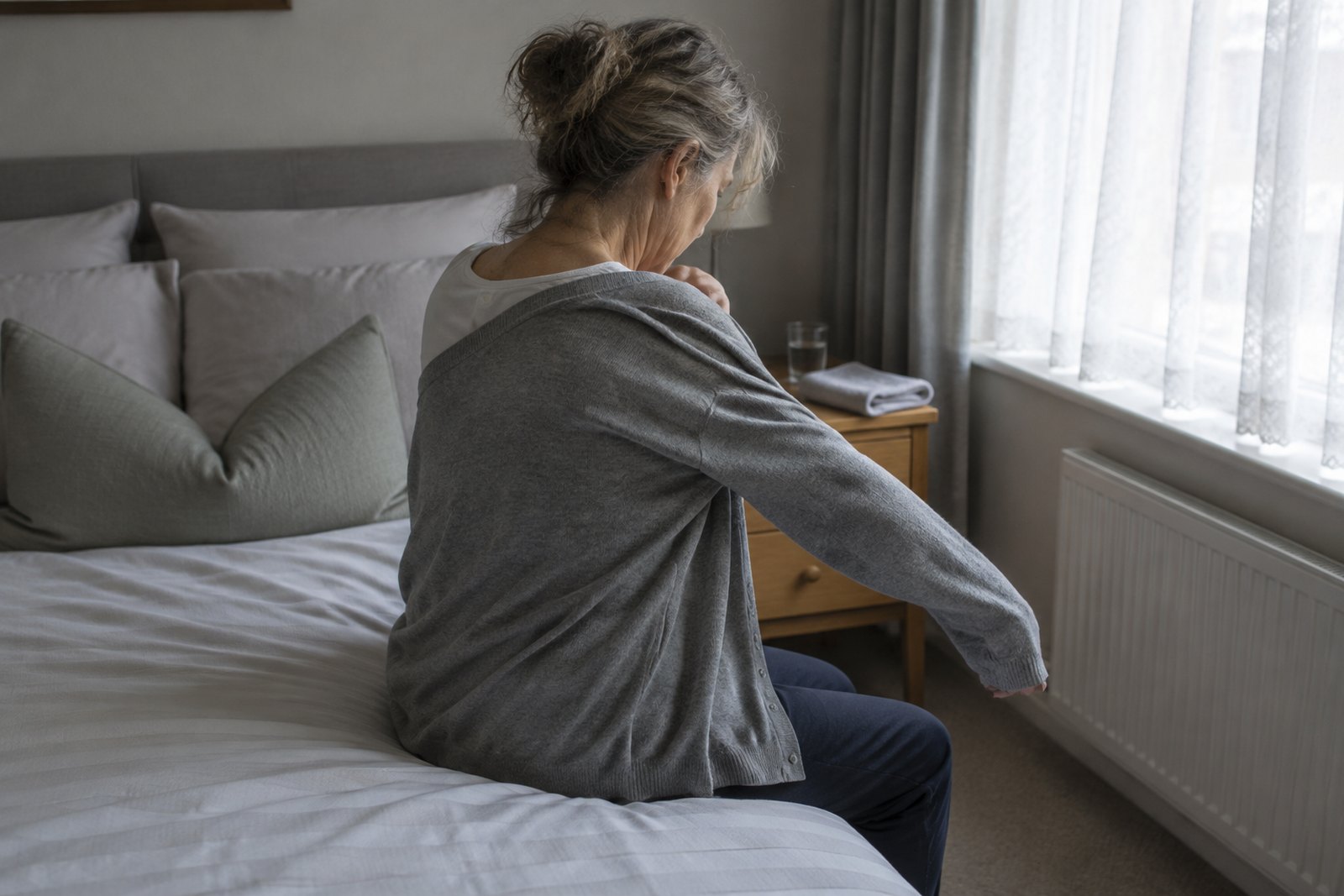
Most people go home within a day or two of breast cancer surgery, and some go home the same day. You will usually leave with a wound, a leaflet of arm exercises and sometimes a drain. The first few weeks come down to a handful of things: keeping the wound clean and comfortable, getting dressed and sleeping without pulling on the sore side, and gently getting your shoulder moving so it does not stiffen. Recovery tends to be quicker after a lumpectomy than after a mastectomy or surgery to the lymph nodes, and everyone heals at their own pace.
One rule sits above everything on this page: your breast care nurse and surgical team know your operation, and their instructions win. If anything here differs from what they told you, do what they said. What follows is the practical, at-home side of recovery that leaflets often rush: how to set up the house, what to wear, how to sleep, how to get the arm going again and how to look after your head as well as your body.
Before surgery: set the house up for one good arm
For a while after surgery, reaching up, reaching behind you and carrying anything heavy on the operated side will be uncomfortable or off limits. An hour of preparation beforehand saves a lot of awkward moments later.
- Bring everyday things down to between waist and shoulder height. Mugs, plates, the kettle, cereal, toiletries, the clothes you will actually wear. Top shelves and low cupboards can wait.
- Fill the freezer. Batch-cooked meals in small portions mean nobody has to cook properly for the first week or two.
- Swap heavy for light. Decant milk, washing liquid and similar into smaller containers. Pump-action bottles for shampoo and soap are easier than squeezing and twisting.
- Sort the bed. Gather four or five pillows, or a V-shaped or wedge pillow, so you can sleep propped up. More on this below.
- Plan help. Changing the bed, hoovering, carrying shopping, lifting small children and walking a strong dog are all jobs to hand over for a while. Ask now, while you have the energy to organise it.
- Pack sensibly for hospital. A soft, front-opening top to come home in, slip-on shoes and a small cushion to put between your chest and the seatbelt in the car.
Dressing after breast surgery
Clothes that make life easier
Front-opening is the key phrase. Pulling a jumper over your head means lifting both arms, which is exactly what your chest and shoulder will not want to do in the early days. Things that work well:
- Button-up or zip-up tops, shirts and cardigans, ideally a size looser than usual
- Button-through pyjamas or a soft nightdress that opens at the front
- Soft, stretchy fabrics that do not rub the wound or the drain site
- Elasticated waists, so you are not fiddling with buttons and zips at your middle
- Slip-on shoes, so you do not have to bend and tie laces
If fiddly buttons are a struggle because your arm is stiff, simple aids such as button hooks and long-handled shoehorns can help. Our guide to dressing aids and easier ways to get dressed describes the common ones in plain English.
Bras and post-surgery bras
Your breast care team will tell you what to wear and when. Many people are advised to wear a soft, supportive post-surgery bra, often front-fastening, with no underwire and wide, comfortable straps. Some teams ask you to wear it day and night for a period to support the area and reduce swelling. Others say go without if that is more comfortable. Follow your own team's advice.
Do not rush out to buy several bras in advance. Swelling changes your size in the early weeks, and the breast care nurse can advise on sizing and timing. After a mastectomy, many people are offered a soft, lightweight temporary prosthesis that sits inside a bra while the wound heals. A fitting for a longer-term prosthesis usually comes later, once healing is complete. Your breast care nurse arranges this.
Getting dressed step by step
The old physiotherapy rule is a good one: sore arm in first, sore arm out last.
- Sit down on the edge of the bed or a firm chair. Standing and balancing while you dress is harder than it needs to be.
- Put the top on the operated side first, sliding the sleeve up past the elbow with your good hand.
- Bring the top round behind you and slip the good arm in.
- Fasten from the bottom up, which is easier to line up.
- To undress, take the good arm out first, then ease the sleeve off the sore side.
A front-fastening bra can be done up at waist height and slid round if needed, rather than reaching behind your back.
Drains, wounds and when to get help quickly
If you go home with a drain, a nurse will show you how to look after it and how it will be removed. A small fabric bag on a strap, or a pocket in a loose top or dressing gown, stops the bottle dangling and tugging. Keep the wound dry and dressed exactly as you were shown, and ask the ward or breast care nurse when you can shower.
Some fluid collecting under the scar after the drain comes out (called a seroma) is common and often settles. Tell your breast care nurse if the area becomes swollen, tight or sloshy, as it sometimes needs draining.
Contact your breast care team or ward promptly if you notice:
- Redness spreading around the wound, or the area becoming hot, swollen or more painful
- Pus or a smelly discharge, or the wound opening
- A high temperature, shivering or feeling generally unwell
- Bleeding that does not stop with gentle pressure
Out of hours, call NHS 111. If you feel very unwell, confused, are breathing fast or have a fast heartbeat, call 999. If you are having chemotherapy, use the 24-hour chemotherapy helpline you were given for any temperature or sign of infection.
Sleeping comfortably
Sleep is often the hardest part of the first week. Lying flat on your back pulls on the chest, lying on the operated side is usually too sore, and lying on the good side lets the sore arm and breast flop forward. A few things help:
- Sleep propped up on your back. A wedge pillow, a V-shaped pillow or a stack of ordinary pillows makes this more comfortable and easier to get out of.
- Support the operated arm. A pillow under the arm on the sore side stops it dragging and takes pressure off the shoulder and armpit.
- If you sleep on your good side, hug a pillow in front of you so the sore side rests on it rather than rolling forward.
- Get out of bed the gentle way. Bend your knees, roll towards your good side, swing your legs off the edge and push up with your good arm and your legs. Avoid hauling yourself up with the operated arm.
Most people find they can return to their usual position gradually as the wound heals. If pain is stopping you sleeping, talk to your team or GP about pain relief rather than just putting up with it.
Getting arm movement back
Arm and shoulder exercises matter, especially after a mastectomy or lymph node surgery. Without them the shoulder can stiffen, and a stiff shoulder makes washing your hair, reaching a shelf and fastening a bra much harder for much longer. Your hospital will give you an exercise leaflet, and you may see a physiotherapist. Follow that leaflet and its timings, not a general list from the internet. Some teams ask you to keep the arm below shoulder height until drains are out or for the first week; others have you doing fuller movements sooner.
What the exercises usually look like
To give you an idea of what to expect, exercises usually start with gentle movements and build up over the following weeks, once your team says you can raise the arm higher:
- Shoulder shrugs and slow shoulder circles
- Lifting the arm forwards, to the height your team allows
- Walking your fingers slowly up a wall, a little higher each day
- Clasping your hands behind your head and gently easing the elbows out
- Reaching a hand behind your back, as if to tuck in a shirt
Expect stretching, tightness and some discomfort. Expect it to feel odd. Do not push into sharp pain. Little and often, several times a day, works better than one big session. Many people find it helps to do them after a warm shower, when things feel looser, and to build them into ordinary tasks like brushing hair or putting a mug back on a shelf once that is allowed.
Tightness, cording and when to ask
Some people develop a tight, rope-like cord running from the armpit down the inside of the arm, sometimes as far as the hand. It is often called cording or axillary web syndrome. It can be uncomfortable and limit how far you can reach. Tell your breast care nurse or physiotherapist; it usually improves with the right exercises and advice. Also ask for help if movement is not improving after a few weeks, or if the shoulder is getting stiffer rather than looser. If radiotherapy is coming, keeping the arm moving matters even more, because you may need to lie with your arm raised during treatment.
Housework, lifting and driving
Your team will tell you when to go back to lifting and heavier jobs, so ask them directly if they do not say. In the meantime, a sensible approach is:
- Light tasks are usually fine and good for you once you feel up to them: making a cup of tea, folding washing, light dusting at waist height.
- Heavier tasks wait: carrying full shopping bags, hoovering, changing a duvet, carrying laundry baskets up stairs, digging the garden, lifting toddlers.
- Split loads. Two light bags rather than one heavy one, or a shopping trolley on wheels.
- Use the good arm for reaching, and a long-handled grabber for things on the floor.
On driving, there is no fixed rule for everyone. Drive only when your team says you can, and when you can wear a seatbelt comfortably, turn the steering wheel fully, look over your shoulder and do an emergency stop without hesitation. Check with your insurer too, as policies vary. Some pain relief can make you drowsy, so take that into account.
Lymphoedema: what to watch for
If lymph nodes were removed from your armpit, or you have radiotherapy to that area, there is a risk of lymphoedema: swelling caused by lymph fluid not draining properly. It can appear in the arm, hand, breast or chest, and it can develop months or even years after surgery. Early signs include swelling, a feeling of heaviness, tightness or aching, or rings, watches and sleeves feeling tighter on one side.
Tell your breast care nurse or GP early if you notice any of these, as it is easier to manage when caught early. Looking after the skin on the affected side, treating cuts and scratches promptly and keeping active all help. If the arm, hand or chest on that side becomes red, hot, painful or more swollen, or you feel feverish, contact your GP or NHS 111 the same day, as you may need antibiotics for an infection called cellulitis. Our guide to lymphoedema, skin care and practical adjustments covers day-to-day life in more detail.
The emotional side of recovery
Leaflets cover wounds well and feelings less so. It is common to feel relief, shock, anger, tearfulness and flatness, sometimes all in one afternoon. Looking at the scar for the first time can be hard. Some people want to do it alone, some with a partner or a nurse there. Neither is wrong.
Many people also find a dip comes later, when the appointments thin out and everyone around them assumes things are back to normal. Fear of the cancer coming back, worries about body image and changes to intimacy are all common and worth talking about. Your breast care nurse is a good first person to tell. Breast Cancer Now runs a free helpline and peer support. Your GP can help with low mood or anxiety, and in England you can refer yourself to NHS Talking Therapies.
Tiredness is real too, especially if chemotherapy or radiotherapy follows. Our guide to fatigue management and pacing explains how to spread your energy across the day.
Where an occupational therapist fits
To be clear about roles: your surgical team and breast care nurse lead your recovery, and a physiotherapist leads on shoulder exercises and movement. Lymphoedema is managed by specialist lymphoedema services. An occupational therapist does not replace any of them.
Where an occupational therapist can help is with the everyday tasks that stay difficult. That might be a stiff shoulder that still makes washing your hair, dressing or reaching the kitchen cupboards a struggle; fatigue during further treatment that makes running a home or caring for children hard to manage; or getting back to work with a plan that fits your energy. They can suggest different ways of doing things, practical equipment and aids, and changes around the home. For most people having straightforward surgery with good family support, the hospital's advice is enough. An OT tends to be useful when recovery is slower, when other health problems are in the mix, or when you live alone.
Frequently asked questions
How long does it take to get full arm movement back after a mastectomy?
It varies a lot, depending on the type of surgery, whether lymph nodes were removed and whether you have radiotherapy. Many people regain most of their movement within weeks if they keep up the exercises, but some take longer. If your shoulder is not improving, ask your breast care nurse about seeing a physiotherapist.
When can I shower after breast surgery?
This depends on your dressings and whether you have a drain. Your ward or breast care nurse will tell you. Until then, a strip wash at the sink keeps you fresh without wetting the wound.
Can I sleep on my side after breast surgery?
Most people sleep propped on their back at first, then move to their good side with a pillow hugged in front, and back to their usual position as the wound heals. Go by comfort and your team's advice.
When can I drive after a mastectomy?
Only when your team says so and you can wear a seatbelt, steer, check over your shoulder and do an emergency stop comfortably. Check your insurer's position before you drive.
When can I go back to work?
It depends on your surgery, any further treatment and the work you do. A desk job may be possible sooner than a physical one. Talk to your team and GP, ask about a fit note if you need one, and consider asking your employer about a phased return.
Will I definitely get lymphoedema?
No. Many people never develop it. The risk is higher if lymph nodes were removed or treated with radiotherapy. Knowing the early signs and reporting them quickly is the most useful thing you can do.
Next steps
If everyday tasks are still hard weeks after surgery, see our home assessment page, or current guide prices, and choose your area below.
Talk to an occupational therapist near you
This guide is general information. For advice about your own situation - or someone you look after - a local occupational therapist can visit you at home and see it for themselves.
Choose your area: