

Hip Fracture Recovery: Coming Home and Getting Back to Daily Life
By Mobile Occupational Therapist • 4 October 2026 • 13 min read
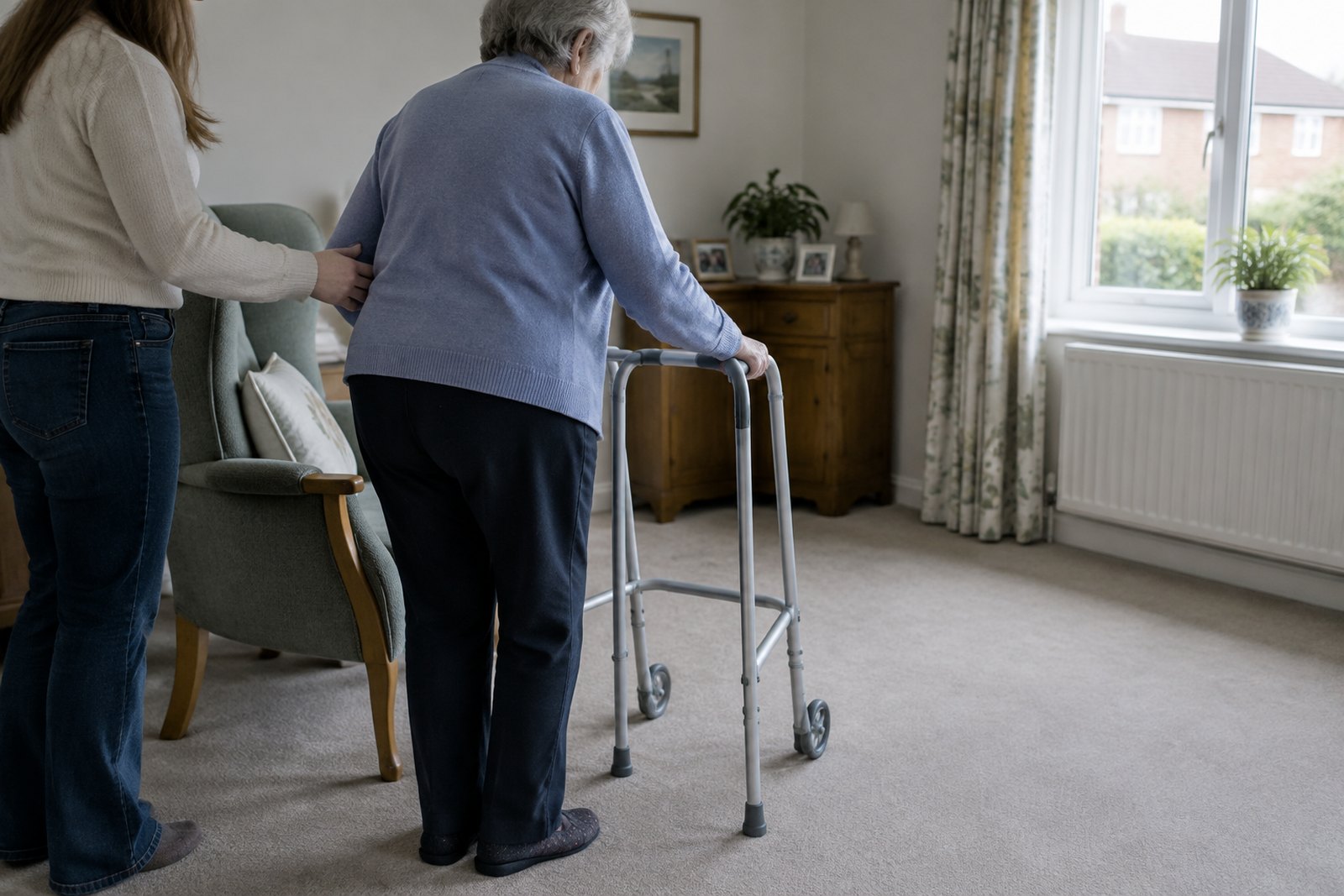
Recovery from a hip fracture is usually measured in months, not weeks. Most older people have an operation within a day or two of reaching hospital and are helped out of bed very soon afterwards. They come home, or go somewhere in between, once they can move safely enough. The first weeks back are the hardest. A well set-up house, short-term help and knowing a few warning signs make a real difference to how those weeks go.
If your mum or dad has just broken a hip, you are probably asking two things. Will they get back to how they were? And what do we need to do now? The honest answer to the first is that it varies. Some people return to their old routine. Others need more help than before, at least for a while, and a few need a lot more. The second question has practical answers, and that is what most of this page is about.
What usually happens in hospital
Most hip fractures in older people are repaired surgically. National guidance from NICE says the operation should ideally happen on the day of admission or the day after, so things move quickly. The type of operation depends on where the bone has broken. It might be screws, a plate or a metal nail to hold the bone together, half of the joint replaced (a hemiarthroplasty), or a total hip replacement.
After surgery, a physiotherapist will usually try to get your parent sitting out and standing within a day or so. It can look brutal when they are clearly sore, but early movement helps prevent chest infections, clots and stiffness. A hospital occupational therapist will look at how they manage the toilet, washing, dressing and getting in and out of bed and a chair, and will ask a lot of questions about home. Many hospitals also have a doctor who specialises in older people's care working alongside the surgeons.
Two things are worth doing early. First, ask the ward which operation was done and write it down. Second, ask whether there are any limits on how much weight they can put through the leg, or on how they can move. You will need this information at home, and it is easy to forget in a stressful week.
Hip precautions: who decides
This is where families get confused. You may read about strict rules after a hip replacement, such as not bending past a right angle or not crossing the legs. Some of that may apply to your parent and some may not. Fracture surgery is not the same as a planned replacement, and the rules depend on the operation, the approach the surgeon used and the person's bones.
The surgical team sets the precautions, and the ward physio and occupational therapist explain them. If nobody has told you, ask before discharge. Our guide after a hip replacement covers equipment and daily routines that are often useful after a fracture too, but treat any movement rules in it as background only. Your parent's own team has the final word.
Planning discharge
Hospitals are under pressure to free up beds, and discharge can arrive with less notice than you expect. It helps to start asking questions in the first few days rather than the day before.
- Where is the plan for them to go: home, a short-term rehab bed, or a care home for a while?
- What equipment will they need at home, who is arranging it, and will it arrive before they do?
- Will there be visits from carers, a reablement team or community therapists, and when do they start?
- How will they get up the stairs, or will they need to live downstairs for now?
- What medicines are they going home with, and has the bone health plan been written down?
- Who do you ring if things go wrong in the first few days?
If you are worried the plan is not safe, say so clearly to the nurse in charge or the discharge team, and put it in an email if you can. Our family guide to discharge planning goes through this in more detail, and our hospital discharge page explains how a private occupational therapist can help get the home ready.
Reablement and intermediate care
Many people go home with a reablement or intermediate care service. This is short-term help, often carers and therapists visiting at home, aimed at getting the person doing things for themselves again rather than doing things for them. In England it is usually free for up to six weeks, but how it works varies between councils and NHS areas, so check with the hospital team or your council. Our guide to reablement and intermediate care explains what to expect and what happens when it ends.
Setting up the home
The aim is simple: fewer awkward movements, fewer reasons to rush, and nothing to trip over. Most of it can be done in an afternoon.
The bed
When your parent sits on the edge of the bed, their feet should rest flat on the floor with their knees roughly level with or a little below their hips. A very low bed makes standing hard work; a very high one is a struggle to get onto. Clear a path from the bed to the toilet, put a lamp or touch light within reach, and keep a phone, water and glasses on a bedside table on the side they get out. If the stairs are a problem, a bed downstairs for a few weeks is often the sensible choice, not a defeat.
The chair
Low, soft sofas are the enemy. A firm chair with arms and a seat high enough to stand from without a struggle is far better. Pick one chair, put it where they can see the room and reach a side table, and make it the main seat. Furniture raisers can lift a chair, but they need to fit the chair's legs properly and be stable, which is why they are often supplied and fitted by the community equipment service.
The toilet
Toilets are low, and getting off one is one of the hardest movements after hip surgery. A raised toilet seat, a frame that stands around the toilet or a fixed rail can all help. Which one suits depends on the person and the bathroom, so this is worth getting assessed rather than guessed. A commode by the bed at night can stop risky trips in the dark, especially in the first weeks.
The walking aid
Use the walking aid the hospital gave them, set at the height the physio chose. Do not swap it for an old stick from the cupboard because it looks less clinical. A frame means both hands are busy, so carrying a cup of tea becomes a hazard. A kitchen trolley, a bag that clips to the frame or a flask by the chair solves that. Make sure there is room for the frame through doorways and between furniture.
Stairs
If they need to use stairs, the physio will usually practise them on the ward and teach a method. A common rule is leading with the stronger leg going up and the operated leg going down, one step at a time, holding the rail, but follow what they were actually taught. A second banister rail is often worth fitting. If stairs are not safe yet, plan to live on one floor for now.
Clutter, rugs and lighting
- Take up loose rugs and mats, or at least the ones on main walking routes.
- Move trailing cables, footstools, piles of post and the dog's bed out of the path.
- Put night lights on the route from bedroom to toilet.
- Move everyday kitchen items to between waist and shoulder height so there is no bending or reaching up.
- Check that slippers and shoes fit, have a back and a grippy sole.
Washing and dressing
Early on, a seated strip wash at the basin is often safer than a shower. Getting in and out of a bath, or stepping over a bath to use an overhead shower, is usually a bad idea in the first weeks, and some people are told to avoid it altogether. A shower stool, a long-handled sponge and a non-slip mat can help once they are ready, and the occupational therapist can advise what fits your bathroom.
For dressing, the basics make it much easier:
- Sit down to dress, on a firm chair or the edge of the bed.
- Dress the operated leg first and undress it last.
- Lay clothes out within reach the night before.
- Choose loose trousers with elastic waists and slip-on shoes with a closed back.
- Equipment such as a sock aid, a long-handled shoe horn and a helping hand grabber can save bending, particularly if movement limits apply.
Let them do as much as they safely can, even when it takes twenty minutes. Doing it for them is quicker today and slower in the long run.
Preventing another fall
Most hip fractures in older people happen after a fall. Unless you work out why the fall happened, the same thing can happen again. Ask yourself and them some plain questions. Were they dizzy? Did they trip? Were they rushing to the toilet in the night? Had their eyesight changed? Were they on a new medicine?
Ask the GP or pharmacist for a review of all their medicines, as some can cause dizziness or drowsiness. Book an eye test. Ask whether there is a local falls service. Think about a personal alarm they will actually wear, because lying on the floor for hours after a fall is dangerous in its own right. Our guide to preventing falls at home covers this in depth.
Confidence matters too. Many people become frightened of moving after a fracture, then move less, lose strength and become more likely to fall. Gentle, regular activity, doing the exercises the physio set, is part of the answer.
Bone health: ask the GP
A hip broken in an ordinary fall is often a sign that the bones have become weaker, for example through osteoporosis. The hospital should look at bone health, and many areas have a fracture liaison service that follows this up. Even so, plans get lost between hospital and home.
Once your parent is settled, ask the GP whether bone health has been assessed, whether any treatment has been recommended, and whether a scan is planned. Do not start or stop any medicine without talking to the GP or pharmacist first.
Warning signs: when to get help
Some problems after a hip fracture need fast action. Keep this list somewhere visible.
Call 999 if they have:
- chest pain, sudden breathlessness or coughing up blood
- collapsed or cannot be woken properly, or seem very unwell with signs of sepsis such as very fast breathing, mottled, blue or very pale skin, or a rash that does not fade when a glass is pressed on it
- fallen again and have new hip or groin pain, cannot put weight on the leg, or the leg looks shorter or turned outwards
Contact the GP urgently or call NHS 111 the same day if there is:
- pain, swelling, warmth or redness in one calf or leg, which can be a sign of a blood clot
- new or worse confusion, unusual drowsiness or agitation, or seeing things that are not there; this sudden confusion, called delirium, is common after a hip fracture and is often caused by infection, dehydration, pain, constipation or medicines
- a wound that is getting redder, hotter or more painful, is oozing or opening, or a high temperature
- pain that is getting worse rather than better
- not eating or drinking, or passing very little urine
If you are unsure, ring 111. Nobody minds a call that turns out to be nothing.
Looking after the carer
When a parent breaks a hip, someone in the family often becomes the coordinator overnight: chasing the ward, waiting in for equipment, sleeping on the sofa. It is not sustainable for long. Share the jobs between relatives if you can, keep one notebook with names, numbers and dates, and ask the council for a carer's assessment if you are doing a lot of the caring. Say out loud to professionals what you can and cannot do. The plan has to work for you too.
Where an occupational therapist fits
Occupational therapists focus on everyday tasks: getting up, washing, dressing, using the toilet, making a drink, getting round the house. In hospital, an occupational therapist helps plan discharge and arrange basic equipment. After discharge, NHS or council occupational therapists may be part of reablement or community services.
A private occupational therapist visiting at home can assess the house as it really is, check bed, chair and toilet heights, recommend equipment and where it should go, look at falls risks, and work through routines with your parent and with you. This can be useful before discharge, when the NHS service has finished, or when you simply want someone to look at the whole picture.
Other professionals lead on other things. The surgical team sets movement and weight-bearing rules. The physiotherapist leads on exercise, walking and stairs. The GP leads on medical problems, bone health and medicines, with the pharmacist. If your parent has trouble swallowing, a speech and language therapist is the right person. An occupational therapist works alongside all of them, not instead of them.
Frequently asked questions
How long does hip fracture recovery take for an older person?
It varies a great deal. Many people improve steadily over the first few months, and some keep improving for longer. Their health, strength and independence before the fall usually influence how far and how fast they recover. The hospital team can give a better idea for your parent.
Will they walk again after a broken hip?
Most people are helped to walk again, usually with a frame at first, then perhaps a stick. Some get back to walking as they did before; others need a walking aid for good. Doing the physio exercises regularly gives them the best chance.
Who provides equipment such as a raised toilet seat?
Equipment needed for discharge is often supplied on loan by the local community equipment service after an assessment by the hospital or community team. Ask the ward what has been ordered. You can buy some items yourself, but it is worth getting heights and fit checked first.
Can they sleep on their side?
That depends on the operation and the advice given by the surgical team. Some people are asked to sleep on their back for a while, sometimes with a pillow between the knees. Ask the ward before discharge rather than guessing.
Does a broken hip mean they will need a care home?
Not necessarily. Many people go home, often with short-term help. Some spend a few weeks in a rehab or care home bed before going home. A permanent move is a big decision that should not be rushed while they are still recovering.
When can they go back to the shops or out in the car?
Getting out matters for mood and confidence. Start small, with short trips once they can manage steps and a car seat safely. If they drive, they should check with the surgical team and GP when they are fit to drive and with their insurer, and check GOV.UK for whether they need to tell the DVLA.
Next steps
See our home assessment page, or current guide prices, and choose your area below.

Talk to an occupational therapist near you
This guide is general information. For advice about your own situation - or someone you look after - a local occupational therapist can visit you at home and see it for themselves.
Choose your area: