

Adaptations for Council Tenants: Who Pays and How to Ask
By Mobile Occupational Therapist • 13 October 2026 • 12 min read
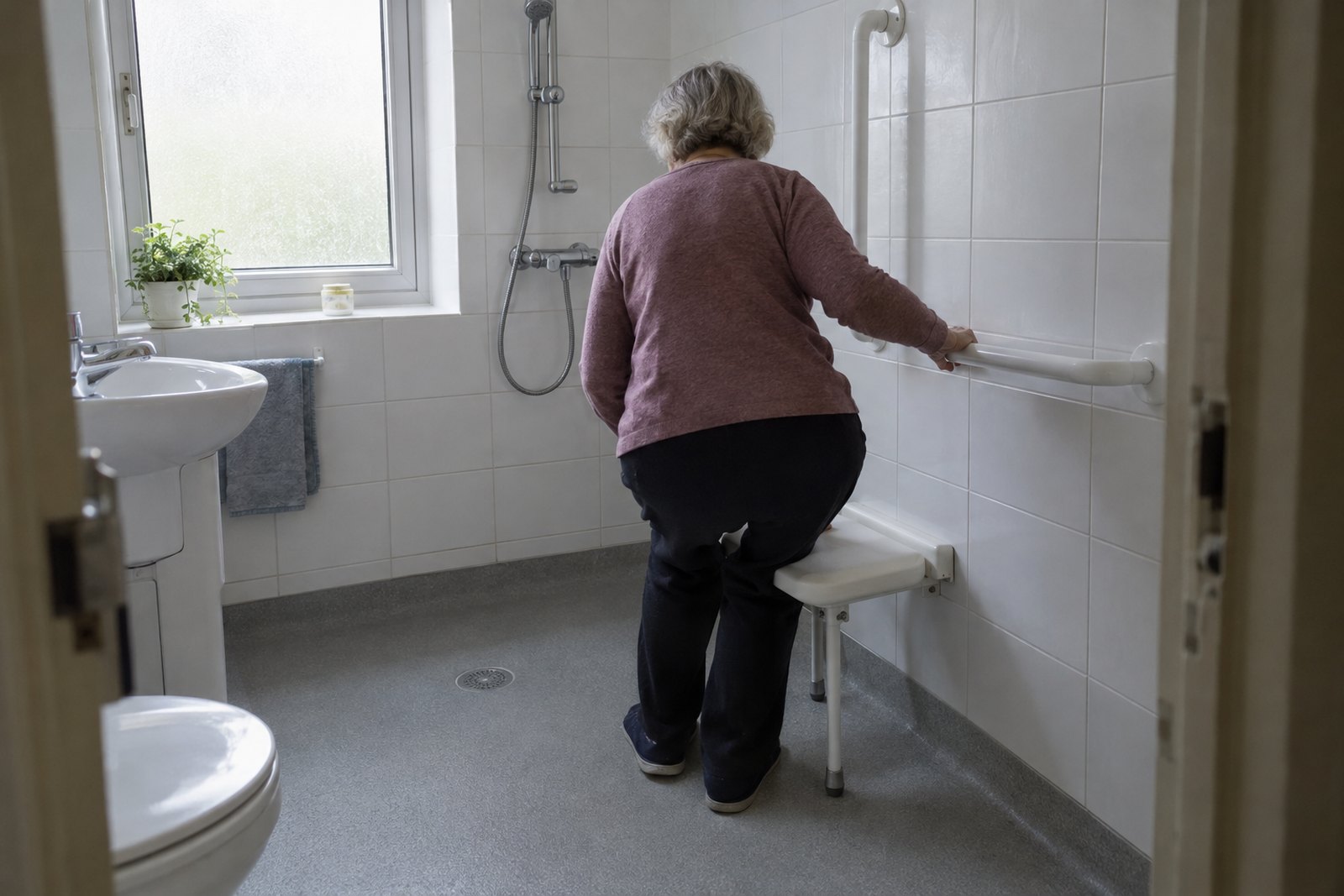
If you rent from the council and need changes to your home because of a disability, illness or age, the council as your landlord will usually arrange and pay for them from its own housing budget. Housing association tenants are in a similar position, but each association has its own adaptations policy, and for bigger jobs you may be pointed towards the Disabled Facilities Grant. Private renters can apply for that grant too, as long as the landlord agrees to the work.
Whoever your landlord is, the route nearly always starts in the same place: an occupational therapy assessment that sets out what you need and why. Small jobs like a grab rail or a second stair rail can happen fairly quickly. Big ones like a level-access shower or a stairlift take longer, need your landlord's written permission, and sometimes end with a suggestion that you move to a home that is already adapted. This guide walks through who pays, how to ask, what the law says in general terms, and what to do if you are refused or stuck.
Who pays depends on who your landlord is
Council tenants
The council wears two hats. It is your landlord, and it is also the body that runs disability grants for everyone in the area. For their own tenants, most councils pay for adaptations directly out of the housing budget rather than asking you to apply for a grant. Some run this through a dedicated adaptations team in housing, others through the same team that handles grants. Either way, you normally still need an occupational therapy assessment before anything major is agreed.
Housing association tenants
Housing associations decide their own approach. Many pay for minor adaptations themselves, and some have a budget for larger work too. Others will agree to the work as your landlord but expect you to apply to the local council for a Disabled Facilities Grant to cover the cost. Ask your housing officer for the association's adaptations policy in writing. It tells you what they pay for, what they do not, and how decisions are made, which is useful if you need to challenge one later.
Private renters
Private tenants can apply for a Disabled Facilities Grant through their local council. The landlord has to give consent for the work, and you will usually be asked to confirm that you intend to keep living in the property. Your landlord is not generally expected to pay for structural adaptations themselves, but they should not refuse permission without good reason (more on that below).
The Disabled Facilities Grant in brief
In England, the grant can cover up to £30,000 of work. It is means-tested for adults, but not when the adaptation is for a disabled child. Once you have made a full application, the council should give you a decision within six months. Check the current rules on the Disabled Facilities Grants page on GOV.UK, because councils can also have their own discretionary policies on top.
Separately, if adult social care assesses you under the Care Act and decides you need a minor adaptation, in England small adaptations costing up to £1,000 should be provided free of charge. Our guide to the Care Act needs assessment explains how to get one and how to prepare.
Scotland, Wales and Northern Ireland
The details differ across the UK. Scotland does not use the Disabled Facilities Grant and has its own system run by councils, Wales has its own grant rules and limits, and in Northern Ireland the Housing Executive runs adaptations for its own tenants and grants for others. The principles in this guide still apply, but check with your council or housing body for the local rules.
Minor and major adaptations: why the difference matters
Landlords and councils sort adaptations into two piles, and which pile yours lands in decides how fast it happens and how much paperwork is involved.
Minor adaptations
These are small, quick jobs that do not change the structure of the home. Typical examples:
- Grab rails by the toilet, bath, shower or front door
- A second stair rail so you can hold on with both hands
- Half steps to break up a high step at the front or back door
- Lever taps instead of round ones
- Outdoor rails along a path or by steps
- Better lighting on stairs or in hallways
- A key safe so carers can get in
Many landlords fit these themselves, sometimes after a quick check by a trained assessor rather than a full occupational therapy visit. If you are having trouble with steps and stairs in particular, our guide to stair rails, second banisters and half steps covers what tends to help.
Major adaptations
These involve building work, specialist installation or a big change to how a room works:
- Taking out a bath and putting in a level-access shower or wet room
- A stairlift or through-floor lift
- Ramps that need groundwork, or widening doorways for a wheelchair
- Lowering kitchen worktops or changing the layout
- A downstairs bathroom or bedroom, sometimes as an extension
Major work almost always needs an occupational therapist's recommendation, a survey by the landlord or the council's technical team, written landlord consent, and sometimes building regulations approval. It is also where landlords start asking a frank question: is it better to adapt this home, or to help you move to one that already suits you? In social housing, a large extension to a family-sized home may be weighed against a transfer to an adapted flat. That is not always the wrong answer, but you are entitled to have your reasons for staying heard.
How to ask for an occupational therapy assessment
- Find the right front door. Council tenants can usually ask through their housing office or adult social care. Housing association tenants should call the association first, as some have their own occupational therapist or trusted assessor. Private renters go through adult social care. For a child, ask the council's children's disability service.
- Be specific about what is hard. "I cannot get my leg over the bath" or "I have to crawl up the stairs" is more useful than "I struggle with the bathroom". Mention anything you have stopped doing, such as washing properly or going upstairs to bed.
- Mention falls and near misses. Say if you have fallen, nearly fallen, or rely on someone else to get you out of the bath. Say if a carer is being hurt helping you.
- Keep a short diary for a week. Note what was difficult, when, and what you did instead. It helps on the day, when people tend to underplay things.
- Ask about equipment in the meantime. A bath board, shower stool, toilet frame or perching stool can often be loaned while a bigger adaptation is being sorted.
- Get the outcome in writing. Ask for a copy of the recommendation and what happens next.
If anything has changed suddenly, such as new weakness, confusion or a fall that has left you hurt, that is a health problem first. See your GP, call NHS 111, or call 999 in an emergency.
Landlord permission and the Equality Act
Whoever pays, you need your landlord's written permission before any change is made to the building. That includes screwing a rail into a wall. Most social housing tenancy agreements say you can make improvements with consent, and that consent should not be unreasonably withheld. Read your own agreement to see exactly what it says.
The Equality Act 2010 also applies to landlords, social and private. In general terms, landlords must make reasonable adjustments for disabled tenants. That usually means things like changing a policy or a term of the tenancy, or providing an aid or a service, for example sending letters in large print or changing a tenancy term that would otherwise stop you making a disability-related alteration. It does not usually require a landlord to pay for structural changes inside your home. Separately, landlords should not unreasonably refuse consent for disability-related improvements that you or a grant are paying for.
A landlord can attach sensible conditions, such as using a qualified contractor, getting the work inspected, or putting things back at the end of the tenancy. What counts as reasonable depends on the circumstances. Shelter, Citizens Advice and GOV.UK all have guidance, and the Equality Advisory and Support Service can help if you think you are being treated unfairly.
Practical tips for private renters
- Ask for consent in writing and keep a copy.
- Agree in writing whether the adaptation stays when you leave, or whether you must remove it and make good.
- Agree who maintains and services anything mechanical, such as a stairlift.
- Take dated photos of the area before and after the work.
- If your landlord seems worried, a short letter from the occupational therapist explaining what is proposed and why often helps.
How long it takes
Honestly, it varies a great deal by area and by job. In some places the longest wait is for the occupational therapy assessment itself. Minor adaptations are usually the quickest part. Major adaptations go through several stages: assessment, recommendation, survey, design, landlord consent, means test if there is a grant, approval, finding a contractor, and the work itself. Each stage can add time.
Some things help:
- Ask at each stage what happens next and roughly how long it usually takes.
- Say clearly if there is urgency, such as coming out of hospital, a carer who can no longer manage safely, or someone whose condition is getting worse quickly.
- Chase politely in writing, and keep a note of who you spoke to and when.
- For a Disabled Facilities Grant in England, remember the six-month decision clock runs from a complete application, so return forms promptly.
What to do if you are refused or stuck
- Ask for the reasons in writing, along with the policy the decision was based on.
- Ask what would change the decision. Sometimes it is a missing piece of evidence, or a different, cheaper option that still meets your needs.
- Add evidence. A letter from your GP or consultant, or a detailed occupational therapy report, can make a real difference.
- Use the landlord's complaints procedure. Council and housing association landlords must have one.
- Go to the ombudsman if needed. In England, the Housing Ombudsman deals with complaints about social landlords once you have been through their complaints process. The Local Government and Social Care Ombudsman deals with council decisions on grants and social care.
- Get advice. Citizens Advice, Shelter or a local disability advice service can help, and you may need legal advice if you think the refusal is discrimination.
If adapting your current home really is not workable, ask about moving to an adapted property. Many councils keep a register of accessible homes and can give priority on medical grounds.
Where an occupational therapist fits
An occupational therapist assesses how you manage everyday tasks in your own home and recommends what would make them safer and easier. That might be equipment, a different way of doing something, a minor adaptation, or a major one. They write the recommendation that landlords and grant teams rely on. They do not fund the work, build it, or decide whether your landlord gives consent.
For funded adaptations, the usual route is the council's own occupational therapist, or one working for your housing association. A private occupational therapist visiting at home can help if you are facing a long wait, want a second opinion, or are paying for the work yourself. Check first whether your landlord or council will accept a private report. Some will, some insist on their own assessment, and it is worth knowing before you spend money. Our home adaptations page explains what a private assessment covers.
Other people lead on other parts. Your GP deals with new or worsening symptoms. A physiotherapist works on strength, balance and walking. A surveyor or architect designs structural work. Your housing officer handles transfers and tenancy questions, and an advice agency is the right place for disputes.
Frequently asked questions
Can my council refuse to adapt my home?
Yes, it can refuse, but it should give you reasons and follow its own published policy. Common reasons include the home not being suitable for the work, or the council believing a move would better meet your needs. Ask for the decision in writing and use the complaints process if you disagree.
Do housing association tenants have to pay for adaptations?
Usually not for minor ones, which many associations fund themselves. For major work, some associations pay and others ask you to apply for a Disabled Facilities Grant, which is means-tested for adults. Ask for the association's adaptations policy.
Will my landlord accept a private occupational therapist's report?
Some do and some do not. Ask your landlord or the council's grants team before booking, and if they will accept it, ask what they need the report to include.
Can a private landlord make me remove adaptations when I leave?
They can make that a condition of agreeing to the work, so it is important to agree this in writing before anything is fitted. Many landlords are happy to keep useful features such as rails or a level-access shower.
Is the Disabled Facilities Grant means-tested for children?
Not in England. Adaptations for a disabled child are not subject to the parental means test, although the child will still need an assessment showing the work is needed.
What if my home simply cannot be adapted?
Ask your council or housing association about a transfer or priority on the housing register on medical grounds. An occupational therapist can set out what a suitable home would need, which helps the housing team find the right one.
Next steps
If you want help understanding what changes would make the biggest difference, or need support thinking about a move, see our home adaptations and housing and rehousing pages, or current guide prices, and choose your area below.

Talk to an occupational therapist near you
This guide is general information. For advice about your own situation - or someone you look after - a local occupational therapist can visit you at home and see it for themselves.
Choose your area: