

Wash and Dry Toilets: Who They Help and How to Get One
By Mobile Occupational Therapist • 21 September 2026 • 11 min read
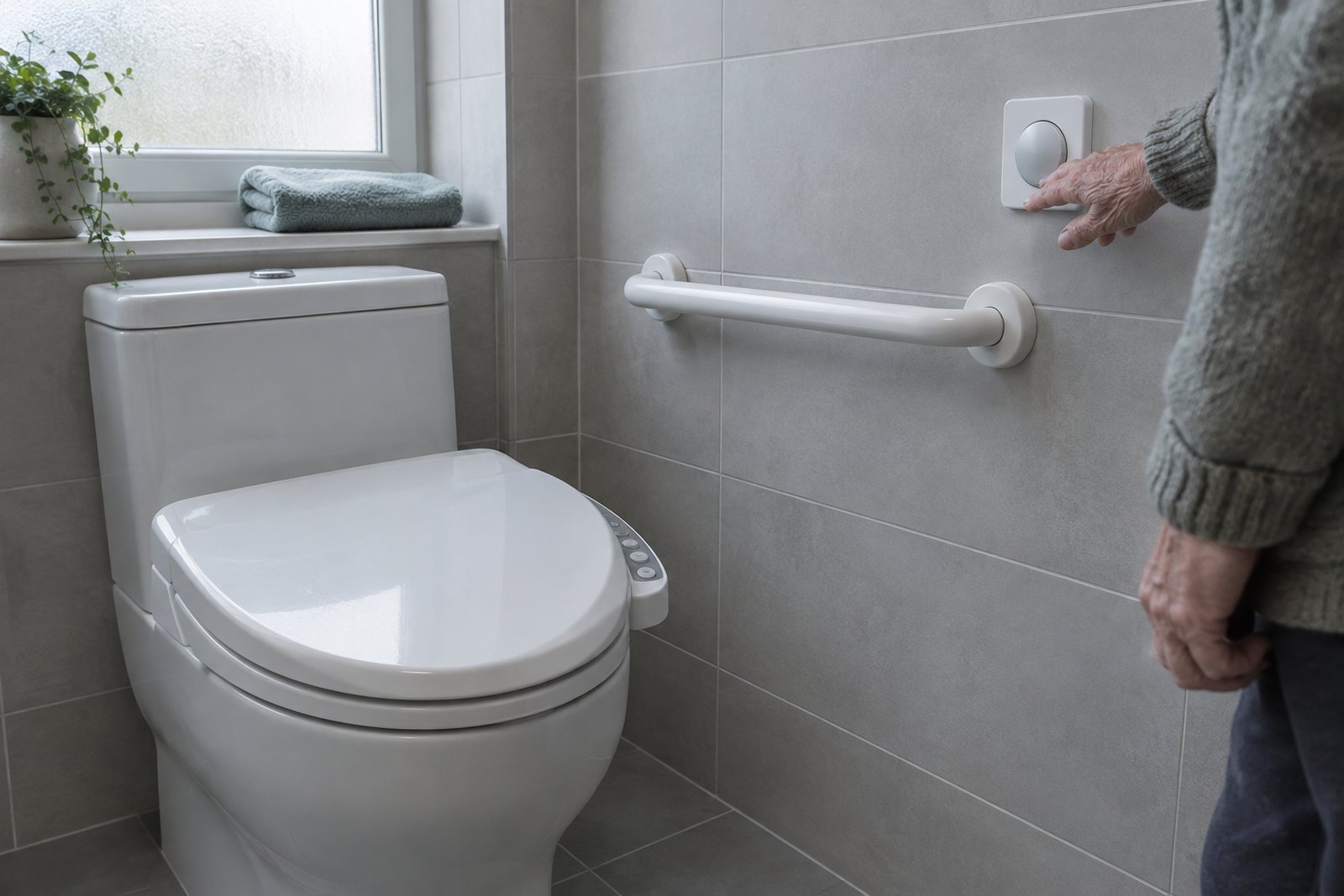
A wash-and-dry toilet cleans you with a gentle jet of warm water after you have used the toilet, then dries you with warm air, all at the press of a button or switch. You do not need to reach round, twist or grip toilet paper. For someone who cannot clean themselves after the toilet, it can be the difference between needing another person for one of the most private jobs of the day and managing alone.
They come in two broad forms: a seat that replaces the seat on an existing toilet, and a complete toilet with the washing and drying built in. Both need water and electricity, so they need fitting by qualified people. In the UK they are often funded as a home adaptation through the Disabled Facilities Grant or its equivalent, usually after an occupational therapy assessment. Below is what they do, who they suit, who they do not, and how to get one without wasting money.
What a wash-and-dry toilet actually does
You sit on the toilet as normal. When you have finished, you press a button or switch. A small nozzle extends from under the back of the seat and sprays warm water to wash you. When the wash stops, a fan blows warm air to dry you. The nozzle then retracts and usually rinses itself.
Most models let you or a carer adjust the water temperature and pressure, the position of the spray (forwards or backwards, which matters for women and for anyone who sits slightly off centre), a separate front wash, and the drying time. Some add a heated seat, a night light or automatic flushing.
Some full toilets can also be combined with a powered lifting or tilting frame that helps you sit down and stand up. That is separate equipment with its own assessment, but worth knowing about if getting on and off the toilet is part of the problem.
Who a wash-and-dry toilet helps
The simple test is this: can the person sit on the toilet safely, but cannot clean themselves well afterwards? If yes, it is worth considering. That includes people with:
- Limited reach, because of stiff hips, shoulders or back.
- Weak or painful hands, for example from arthritis, nerve damage or a hand injury.
- The use of only one arm, for example after a stroke.
- Progressive conditions such as MS, motor neurone disease or Parkinson's, where hand function and balance change over time.
- Spinal cord injury, cerebral palsy or a tremor that makes wiping unreliable.
- A larger body size, where reaching round is physically hard.
The benefit is not only practical. Many people say that needing help to wipe is the part of being cared for they mind most. Getting that privacy back can matter more than any grab rail. It also reduces the intimate care a partner, adult child or paid carer has to give, which helps relationships as well as care hours. For some people it means they can be left alone for longer.
A wash with water can also be gentler than paper on fragile skin. It is not a medical treatment, though, and sore skin still needs looking at by a GP or nurse.
Who it may not suit
These toilets are expensive and fairly permanent, so be honest about where they fall short.
- Poor sitting balance. You need to sit steadily for the whole cycle, which takes longer than wiping. If someone slumps or slides, the spray misses and there is a fall risk. Rails or a toilet frame may need sorting first.
- Difficulty using the controls. The controls must be in reach and understood at the right moment. Switch options help, but not for everyone.
- Some people with dementia. An unexpected spray of water can be alarming to someone who does not remember what it is. Some people take to it well, especially if it is introduced early. Others become distressed and avoid the toilet. Trying one first matters most here.
- Reduced sensation. People who cannot feel temperature well need the water set carefully and their skin checked, because they may not notice soreness.
- Loose stools or heavy soiling. The wash may not clean everything, and some people still need a final wipe or check.
- Short-term needs. If you only need help for a few weeks after an operation, simpler aids usually make more sense.
Our guide to toileting aids for limited reach covers cheaper options, such as long-handled wiping aids, which are worth trying first if the problem is mild.
Seat add-on or full toilet?
Wash-and-dry seats
A wash-and-dry seat replaces the ordinary seat on your existing toilet. It connects to the water supply near the cistern and needs a power supply close by. Seats are generally cheaper and quicker to fit, and you keep your pan.
The catches: the seat must suit the shape and size of your pan, and some pans are not compatible. The seat is usually bulkier than an ordinary one, which can change the toilet height and stop a raised seat or frame fitting. Many seats are designed for general household use, so the controls can be small and fiddly.
Full wash-and-dry toilets
A full toilet has the system built into the pan. These are usually designed with disabled users in mind, with larger controls, a choice of switches, sturdier parts and sometimes a choice of heights. They cost more and mean replacing the toilet.
As a rough rule, a seat can suit someone with a stable condition who can manage small buttons. A full toilet is often better where needs are complex or likely to change, or where special switches are needed. The person, the pan and the room all matter, which is why an assessment helps.
Switches and controls for different abilities
This is the part people most often get wrong when buying one themselves. A toilet that works perfectly is no use if the person cannot operate it. Options include:
- Buttons on an armrest or side panel, close to the hand, sometimes with large symbols.
- A handheld or wall-mounted remote, placed on whichever side suits.
- A large push-pad switch that can be pressed with a fist, elbow or the side of the hand.
- A foot switch for people with limited hand use but reliable leg movement.
- Specialist switches for people with very limited movement.
Think about which side the controls go on (usually the stronger hand, and not where a carer stands), whether the person can see and understand them, whether settings can be locked so they are not changed by accident, and whether a carer needs a separate control. A single press that runs wash then dry automatically is often easier than separate buttons.
Fitting: plumbing and electrics
A bathroom is a room with strict rules about water and electricity. This is not a DIY job, and never something to run off an extension lead.
- Electrics. A suitable fused, RCD-protected connection needs installing in the right place. Bathroom electrical work is covered by building regulations, and in England and Wales some of it must be done by a registered electrician or notified to building control. Use a qualified electrician who will certify the work.
- Plumbing. The water connection must meet water supply regulations, including protection against dirty water flowing back into the drinking supply. Check the installer is doing this properly.
- Layout. Think about room for a carer, rails, and whether a wheelchair needs to get alongside. If the bathroom is being adapted anyway, plan the toilet as part of the whole room.
Ask the supplier who installs it, who services it, how long the warranty lasts and how quickly someone comes out if it breaks. A broken one is a real problem for someone who relies on it.
Funding a wash-and-dry toilet
In England, Wales and Northern Ireland, a wash-and-dry toilet can be funded through a Disabled Facilities Grant (DFG) when it is needed to meet a disabled person's needs. Councils run it in England and Wales, and the Housing Executive in Northern Ireland. There is an upper limit and, for adults, a means test. The rules differ between the nations and can change, so check GOV.UK or nidirect and ask your council.
The usual route is an occupational therapy assessment, often by the council's own occupational therapist, who recommends the adaptation as necessary and appropriate. The council then checks whether it is reasonable and practicable in your home. Our guide to the Disabled Facilities Grant and OT assessments explains each step.
Scotland has no DFG. Councils help with adaptations through their own schemes, often with grants towards essential work, so contact your council's social work or housing department.
Also worth asking about:
- Council and housing association tenants usually go through their landlord, who may have its own adaptations budget.
- Extra council help such as discretionary grants or loans in some areas.
- VAT relief. Equipment designed for disabled people and bought for a disabled person's own use may be zero-rated, and so may fitting it. See our guide to VAT relief on disability equipment.
- Condition-specific charities, which sometimes contribute.
Many people pay privately. If you do, get an assessment first so you buy the right type with the right controls.
Hygiene, cleaning and maintenance
- Clean the seat and pan with products the manufacturer says are safe. Harsh cleaners can damage plastics and electronics.
- Follow the instructions for cleaning the nozzle. Most rinse themselves after each use and have a manual clean setting too.
- In hard water areas, descale as advised, as limescale can block nozzles.
- Replace any filters when the instructions say, and book servicing. If the toilet was grant funded, ask the council who pays for repairs, because this varies.
- Keep toilet paper in reach for power cuts or breakdowns.
- Check skin regularly at first. If the dryer leaves skin damp, pat dry, as damp skin can become sore.
Try before you commit
Where possible, try one. Some areas have independent or disabled living centres with toilets on display, some suppliers offer home demonstrations, and an occupational therapist may be able to arrange a trial. Sitting on one fully clothed will not tell you everything, but you can test the height and the controls and feel the water and air on your hand.
Be wary of a sales visit described as an assessment. A supplier can tell you about its products. That is not the same as an independent view on whether you need one at all.
Where an occupational therapist fits
An occupational therapist looks at the whole toileting routine: getting to the bathroom, managing clothes, getting on and off, sitting balance, cleaning and getting back. Sometimes a wash-and-dry toilet is exactly right. Sometimes a different height, a rail or a simpler aid solves the problem for far less.
An occupational therapist can advise on seat versus full toilet, controls and switch position, height, rails and carer space, and write recommendations for a grant or a private purchase. A private occupational therapist visiting at home may be able to see you sooner than a council list, but ask your council whether it will accept a private report for a DFG, as practice varies. Our home adaptations page explains more.
An occupational therapist is not the right person for everything. See your GP about changes in bowel habit, blood in your stool, ongoing constipation or diarrhoea, or new leaking of urine or faeces. NHS continence services help with bladder and bowel problems, and a GP or district nurse should look at sore or broken skin.
Frequently asked questions
Can I get a wash-and-dry toilet on the NHS?
Not usually. They are generally treated as a home adaptation, funded through a Disabled Facilities Grant or council scheme, a housing provider, or privately.
Is it the same as a bidet?
Same idea, different practice. A separate bidet means moving to another fixture and washing with your hands. A wash-and-dry toilet washes and dries you where you sit, with no hand use beyond pressing a control. Bidet seats sold for general use do a similar job but often have controls not designed for disabled people.
Will I never need toilet paper again?
Many people manage without it most of the time. Others use a little to check or pat dry. It depends on the person, the settings and stool consistency.
Can I fit one myself?
Not safely, unless you are qualified. It involves water and electrics in a bathroom. Use a qualified installer and electrician and keep the certificates.
Will it work with my raised toilet seat or toilet frame?
Not always. A wash-and-dry seat replaces your toilet seat, so a raised seat that sits on top usually cannot be used with it, and frames may not fit around some toilets. Height may need sorting another way, such as a taller pan or a plinth. Check before buying.
Next steps
If cleaning after the toilet has become the hardest part of the day, an assessment is the sensible first step before spending money. See our equipment and aids page, or current guide prices, and choose your area below.
Talk to an occupational therapist near you
This guide is general information. For advice about your own situation - or someone you look after - a local occupational therapist can visit you at home and see it for themselves.
Choose your area: