

Rehousing on Medical Grounds: How Housing Priority Works
By Mobile Occupational Therapist • 12 October 2026 • 12 min read
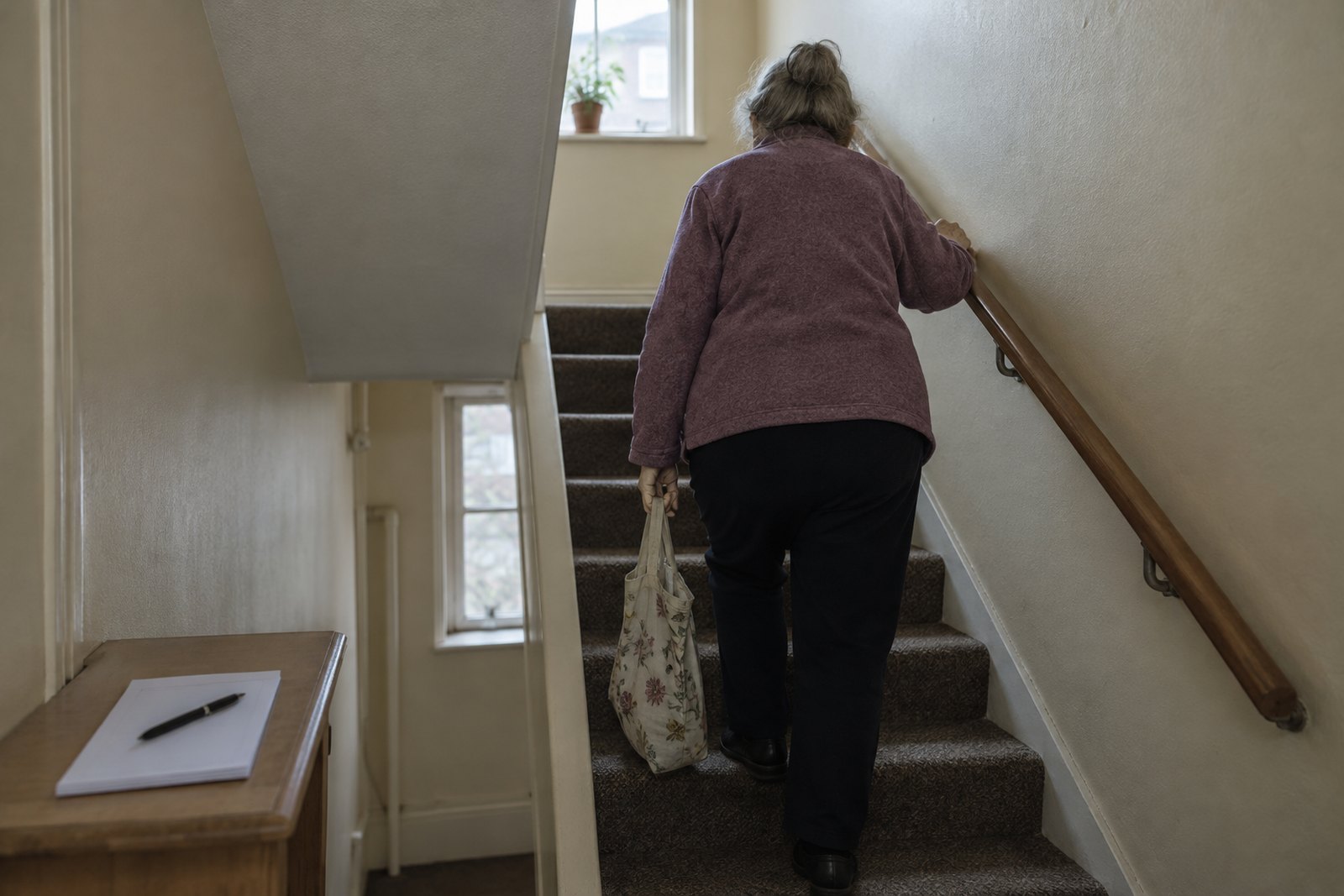
If your stairs, bathroom or front step are making your health or disability worse, you can ask your council for priority to move on medical grounds. In England, councils must give "reasonable preference" in their housing allocation scheme to people who need to move on medical or welfare grounds, including grounds relating to disability. What that means in practice varies a great deal. Each council writes its own scheme, sets its own bands or points, and assesses applications its own way.
The short version is this. Medical priority is usually not about how ill you are. It is about how much your current home affects your health, and how much a different home would help. The applications that do best are the ones that spell this out plainly: what you cannot do in this home, why, and what would change if you moved. Nobody can promise you an outcome, and in many areas the wait for a suitable home is long even with priority. A clear, specific application gives you the best chance of being placed in the right band and matched to the right kind of property.
Who this applies to
This guide is for:
- Council tenants who want a transfer to a more suitable home.
- Housing association tenants, who usually apply through their landlord's own transfer policy and may also be able to join the council's housing register.
- People applying to the housing register, including some private renters and homeowners, if they meet the council's local qualification rules.
The rules here are for England. Wales, Scotland and Northern Ireland have their own housing laws. The principles are similar, but the names and processes differ, so check your council's website or, in Northern Ireland, the Housing Executive.
When your home is the problem
Councils see the same situations again and again. You might recognise yours:
- You live in an upstairs flat with no lift and the stairs leave you breathless, in pain or at risk of falling.
- There is only a bath, you can no longer get in and out of it, and there is no room for a shower.
- Steps at the front or back door mean you rarely leave the house.
- Your wheelchair or walking frame will not fit through doorways, or you cannot turn it in the kitchen or bathroom.
- There is no room for equipment you now need, such as a hospital bed or a hoist.
- You need a carer overnight and there is nowhere for them to sleep.
- Your mental health is badly affected by where you live, for example because of harassment, isolation, or being far from the people who support you.
The last one is often called welfare priority rather than medical priority, and many schemes treat them together. Needing to move closer to give or receive care can also count in some schemes.
Damp and mould are slightly different. If they are affecting your health, report them to your landlord in writing first, because that is a repair issue. If nothing happens, private renters can contact the council's environmental health or private housing team, and council and housing association tenants can use their landlord's complaints process and then contact the Housing Ombudsman. It can still be mentioned in a housing application, but fixing it is usually the quicker route.
How medical and welfare priority works
Start by reading your council's allocation scheme
Every council in England has to publish its allocation scheme. Search for your council's name and "housing allocation scheme". It is often a long document, but you only need a few parts of it. Look for:
- The section on medical, health, disability or welfare priority.
- What each band or points level means, and examples of who fits each one.
- Who makes the medical decision.
- Whether they want GP or consultant letters, or whether they will ask for them themselves.
- How many offers you can refuse before your priority is affected.
- How adapted or accessible homes are allocated.
Reading this before you fill in the form means you can describe your situation in the terms the council actually uses. That is not gaming the system. It is making sure they can see where you fit.
Who makes the decision
It is usually not your GP. Decisions are made by the council's housing team, sometimes with advice from an independent medical adviser who reads the paperwork, or from an occupational therapist employed by the council or its housing service. Some councils phone or visit. Many decide on paper alone, which is why the form matters so much.
What priority actually gets you
Priority moves you up the list. It does not create homes. In areas using choice-based lettings, you still have to bid on properties as they are advertised, and the wait depends on how many suitable homes become available. If you need a ground floor flat with level access, you are competing for a smaller pool than someone who can manage any flat. It is worth asking your council how bidding works for your band, and whether you need to bid every week.
Filling in the medical form
Many councils have a separate medical or health and disability form alongside the main application. This is where most applications are won or lost, and the commonest mistake is listing diagnoses rather than describing daily life.
Compare these two:
- "I have COPD, arthritis and high blood pressure."
- "My flat is on the second floor with no lift. There are 30 stairs. I have to stop four times on the way up and it takes me around ten minutes. I have fallen on the stairs twice since January. Because of this I only go out once a week when my son can come with me. I cannot carry shopping up, so I rely on deliveries. A ground floor or lift-access flat would mean I could go out on my own."
The second gives the assessor everything: the feature of the home, what it stops you doing, what has happened as a result, and what would fix it. Some practical points:
- Name the feature of the home. Count the stairs. Say there is only a bath. Describe the steps outside. Measure the door if your wheelchair will not fit.
- Describe what happens. Falls, near misses, breathlessness, pain, being unable to wash properly, staying indoors, relying on someone else.
- Give dates and frequency. "Most days" or "three falls since March" is far more useful than "often".
- Describe usual days and bad days. Do not write as if every day is your best day. Do not exaggerate either. Assessors read a lot of forms and accuracy is persuasive.
- Say what you need instead. Ground floor, a lift, a level-access shower, step-free entrance, room to turn a wheelchair, a spare room for an overnight carer.
- Link it to your health. If the stairs make your heart condition worse or your home leaves you isolated and low, say so plainly.
Keep a simple diary for two weeks before you apply if you can. Note every time the home stops you doing something. It makes the form much easier to write and gives you dates to quote.
Evidence that helps, and what does not
Occupational therapy assessments and letters
Because medical priority is about how you manage in your home, an occupational therapy assessment is often the most relevant evidence there is. An occupational therapist looks at how you get in and out, use the stairs, wash, use the toilet, cook and move around, and records what you can and cannot do safely and why. They can also say whether adaptations would solve the problem or whether the home is unsuitable, and describe the type of property you would need.
If you have already seen a council occupational therapist through adult social care, ask for a copy of their assessment or a letter. Some councils will request it directly.
GP and consultant letters
Check the allocation scheme before asking. Some councils say not to send GP letters unless they ask, and some will contact your GP themselves. GPs are allowed to charge for letters that are not part of NHS care, and many do, so ask about any fee first.
If you do ask, help your GP write something useful. Give them a short note with the facts about your home and what it stops you doing. A letter that says "my patient would benefit from rehousing" with no reason rarely carries much weight. A letter that explains how the stairs affect a specific condition is far more helpful. Consultant letters can help where a condition is progressive and your needs will increase.
Other useful evidence
- Letters from a physiotherapist, community nurse, mental health team, social worker or falls service.
- Hospital discharge summaries that mention your home as a problem.
- Your own diary of falls and difficulties.
What does not help is a thick folder of every letter you have ever received. Choose the pieces that show how your home affects you, and leave the rest out.
Adapt or move?
Before awarding medical priority, many councils will ask whether your current home could be adapted instead. A stairlift, a level-access shower, a ramp or grab rails can sometimes solve the problem for far less disruption and cost than a move. Our guides to how an OT assessment for home adaptations works and the Disabled Facilities Grant explain that route. Council tenants often have adaptations funded through the council's own housing budget rather than a grant, and housing associations have their own arrangements, so ask your landlord.
Moving is often the better answer when:
- The stairs are too narrow, steep or curved for a stairlift, or you could not transfer on and off one safely.
- There is no physical space for a level-access shower or for equipment.
- The entrance cannot be made step-free.
- Your condition is progressive and the home will not work even with adaptations in a year or two.
- The home is already overcrowded and adaptations would make it worse.
If you are offered adaptations but believe a move is the right answer, say why, with evidence. Ask how the council would view your application if you turned adaptations down, because schemes differ.
Accessible housing registers and adapted homes
Some councils keep an accessible housing register, or label homes on their list by level of access, for example step-free, suitable for limited mobility, or fully wheelchair accessible. If yours does, make sure your application records the right category. If you use a wheelchair indoors, being listed as needing a ground floor home may not be enough.
Ask what happens to adapted homes when they become empty and whether they are kept for people who need those adaptations. When an offer comes, view it with your needs in mind. Measure doorways, check the bathroom, and think about where equipment would go before you accept.
If you are refused or the decision seems wrong
Ask for the decision and the reasons in writing. You can usually request a review of decisions about your housing application, and the letter should tell you how and by when. Send any new or better evidence with your request and explain clearly what you think was missed.
Free advice is available from Shelter, Citizens Advice and local housing advice services. If your health changes, tell the council and ask for your priority to be reassessed.
If your home is unsafe right now, or a hospital cannot discharge you because you cannot manage at home, tell the council's housing team and the hospital discharge team straight away. If you are at risk of losing your home, contact the council's housing options or homelessness team, as different duties apply.
Where an occupational therapist fits
An occupational therapist is often the right person to describe, in practical terms, why your home does not work for you. Council occupational therapists can assess you for free through adult social care, though waits vary. Some councils use housing occupational therapists to assess medical priority or match people to adapted homes.
A private occupational therapist visiting at home can carry out a functional assessment and write a report covering how you manage each part of your home, the risks, whether adaptations are feasible, and what type of property would meet your needs. See our housing and rehousing page, and what happens in a private OT assessment for what to expect.
Be clear about the limits. An occupational therapist does not make the housing decision, and a council may weigh a private report differently from its own assessment. They cannot diagnose conditions or advise on medication, which is your GP's role. For legal advice about reviews or challenges, Shelter, Citizens Advice or a housing solicitor is the right place to go.
Frequently asked questions
Will a GP letter get me rehoused?
Not on its own. It can support your application, especially if it explains how your home affects a specific condition. The decision rests on the council's scheme and how your evidence fits it.
Do I have to pay for a GP letter?
You might. GPs can charge for letters that are not part of NHS care. Check whether your council wants one before asking, and ask the surgery about any fee.
Can a private occupational therapy report help?
It can, because it describes exactly what you cannot do in your home and why, which is what assessors look for. It does not guarantee priority, and the council may also want its own assessment.
How long will I wait once I have medical priority?
It depends entirely on your area, your band and the kind of home you need. Ask your council how long people in your band typically wait for your property type.
Can I turn down an offer?
Usually, but many schemes limit how many offers you can refuse before your priority changes. Check your scheme and ask the housing officer before refusing.
I am a housing association tenant. Who do I apply to?
Start with your housing association's transfer policy. Many housing association tenants can also join the council register, so ask both.
Next steps
See our housing and rehousing and functional assessments and reports pages, or current guide prices, and choose your area below.

Talk to an occupational therapist near you
This guide is general information. For advice about your own situation - or someone you look after - a local occupational therapist can visit you at home and see it for themselves.
Choose your area: