

Ramps, Rails and Thresholds: Getting In and Out of Your Home
By Mobile Occupational Therapist • 17 September 2026 • 8 min read
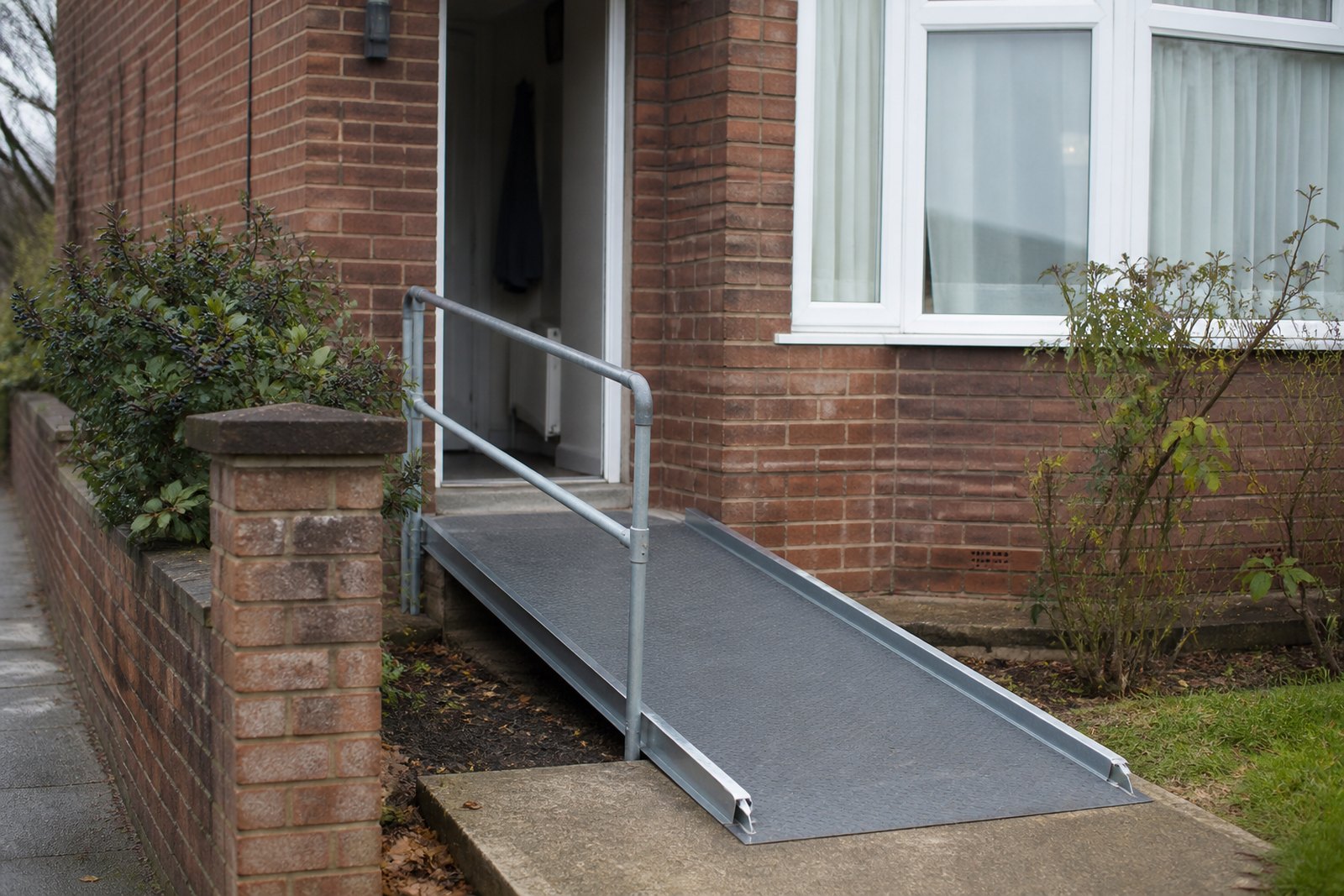
Getting in and out of your home usually means solving three separate problems: the door threshold (the raised sill you step or wheel over), the steps outside it, and having something solid to hold while you manage either. A small rubber or aluminium threshold ramp deals with the sill. Steps need a properly fixed grab rail, a modular ramp at a safe gradient, or both. The rule of thumb for ramps is that gentler is always safer - a wheelchair ramp for a home should rise no more than one unit for every twelve units of length, and less than that if anyone is pushing or self-propelling. This guide explains each piece in plain English.
A safety warning before anything else
A ramp that is too steep is more dangerous than the steps it replaces. A wheelchair can tip backwards going up and run away going down, and a person on foot loses the level footing a step at least offered. The most common mistake is buying a short portable ramp and laying it over a rise it was never long enough for. If a ramp is a struggle to push up, or you are braking hard on the way down, it is too steep - stop and get the length looked at. The same caution applies to rails: an outdoor rail must be fixed into sound masonry with the right fixings, never a fence post or soft render. Our guide to grab rails - where they go and what they hold covers fixings in detail.
Start with the threshold, not the steps
Plenty of people who manage the path and steps perfectly well are defeated by the last two inches: the raised sill of the door frame. It catches wheelchair castors, walking frame legs and trailing feet, and it causes more trips than its size suggests. A threshold ramp is the fix - a small wedge of rubber or aluminium that turns the abrupt lip into a short slope.
- Rubber threshold ramps are heavy enough to stay put without fixing and can often be trimmed to width. They suit most doorways.
- Aluminium threshold ramps handle larger rises but usually need fixing down, and want a textured surface so they are not slippery when wet.
- Measure the rise, not the guess. They are sold by height, and the two sides of one door often differ - measure the side you approach from.
- Check the door still opens - an outward-opening door can sweep straight into a badly placed ramp.
The gradient rule of thumb, explained plainly
Ramp guidance is written as a ratio, and it is less mysterious than it looks. A gradient of 1:12 means the ramp rises one unit for every twelve units it runs along the ground. So a single step 15cm high needs a ramp at least 1.8 metres long; two steps totalling 30cm need at least 3.6 metres. That is the steepest gradient generally considered acceptable, and only over a short rise - it is a maximum, not a target. 1:15 is noticeably easier, and 1:20 is gentle enough that most people barely register the slope, which makes it the right ambition for a ramp used daily.
This is why so many front doors cannot take a straight ramp: a typical pair of steps needs three to four metres of run, and most paths do not have it. The answers are a ramp with a turn or switchback, or accepting that a different door - side or back - is the better entrance to adapt. Judging that well is exactly what a home assessment is for.
Modular ramps: the middle option most people have not heard of
People assume the choice is between a cheap portable ramp and a permanent concrete one. There is a third option that is often the right answer: modular ramps - sectional aluminium or steel systems assembled on site, with handrails and level platforms where needed. They install in hours rather than weeks, need no groundworks, can be reconfigured if needs change, and can be removed without trace, which matters in rented and housing association homes. They cost more than a portable ramp and less than building work - typically a four-figure job for a full stepped entrance - and some councils and community equipment services loan them for short-term needs.
Portable ramps: useful, within limits
A portable ramp - folding suitcase ramps, telescopic channel ramps - earns its keep for occasional use: a relative's doorstep at the weekend, or covering a single low step while a permanent solution is arranged. The limits matter, though. Channel ramps demand accurate lining-up every time, folding ramps are heavier than people expect, and because portable ramps are bought short enough to fit a car boot, they routinely end up far steeper than 1:12 in daily use. For an entrance used every day, a portable ramp is the stopgap, not the solution.
Rails at the steps
Not everyone needs a ramp. For many people who walk, with or without a stick, steps remain the safer option provided there is something solid to hold. A grab rail at the front door should extend beyond both the top and bottom step, so it can be gripped before the first step and after the last; outdoors, a textured or coated finish grips better than bare metal, which turns cold and slippery in winter. Rails and ramps also work together - a ramp used on foot needs a handrail once it is anything more than a threshold wedge. And where steps have become frightening rather than just effortful, that fear is worth taking seriously: see our guide to preventing falls at home.
Lighting, key safes and the door itself
Getting in and out fails at the little things as often as at the steps. Three cheap fixes solve a surprising amount:
- Lighting. A dusk-to-dawn or motion-sensor light over the door keeps the steps, the ramp edge and the keyhole visible on a December afternoon - eyes adjust more slowly with age, and the move between daylight and a dark hallway is a genuine risk point.
- A key safe. A police-approved key safe lets carers, family and paramedics get in without you hurrying to the door - for some people the most dangerous journey they make all day.
- The door furniture. A lever handle instead of a knob, or an easier-turning key adapter, can be the difference between managing the door and not, especially with cold or arthritic hands.
Who pays for what
Minor items - threshold ramps, grab rails, key safes - are often supplied and fitted free by local authority adult social care after a needs assessment, which is itself free and which you can request without a GP referral. Permanent works, including a properly built ramp with handrails, usually go through the Disabled Facilities Grant, which is means-tested for adults; the amounts and rules change, so check the current figures on GOV.UK. Our guide to the Disabled Facilities Grant explains how an OT assessment supports an application. Buying privately is perfectly reasonable when speed matters - but for anything beyond a threshold wedge, have the gradient and layout assessed before money is spent.
Who benefits most from sorting the front door
- Wheelchair users whose entrance currently depends on being tipped or lifted
- Anyone whose walking frame or wheeled walker catches on the threshold
- Older people who have started avoiding going out because the steps feel unsafe - a pattern that shrinks lives quickly, and one we see often in falls and frailty work
- People coming home from hospital who could be discharged sooner if the entrance were usable
- Family carers who currently take someone's full weight on the steps, at real risk to both people
Frequently asked questions
What gradient does a wheelchair ramp for a home need?
No steeper than 1:12 - one unit of rise for every twelve of length - and gentler wherever possible. A 15cm step therefore needs at least 1.8 metres of ramp. Aim for 1:15 or 1:20 for a ramp used daily, especially if anyone will self-propel or push.
Can I get a ramp from the council?
Often, yes. Threshold ramps and other small items are commonly supplied free after a needs assessment, some areas loan modular ramps through community equipment services, and permanent ramps are usually funded through the Disabled Facilities Grant, which is means-tested for adults. Start by asking your council's adult social care team for a needs assessment.
Are portable ramps safe for everyday use?
They are safe when long enough for the rise and laid correctly, which is exactly what daily use tends to erode. Because portable ramps are bought short enough to carry, they usually end up steeper than 1:12 on a real doorstep. For an entrance used every day, a modular or permanent ramp at a proper gradient is the safer answer, with the portable ramp kept for travel.
Next steps
If getting in and out of your home has become a struggle, an occupational therapist can look at the whole journey - path, steps, threshold, door and lighting - and recommend the combination that actually fits your entrance and your budget, before anything is bought or built. Find your local therapist through the areas we cover, or see current guide pricing.
Talk to an occupational therapist near you
This guide is general information. For advice about your own situation - or someone you look after - a local occupational therapist can visit you at home and see it for themselves.
Choose your area: