Occupational Therapy Reports for Personal Injury in Staffordshire
By Mobile Occupational Therapist • 29 September 2026 • 10 min read
Local Occupational Therapist -
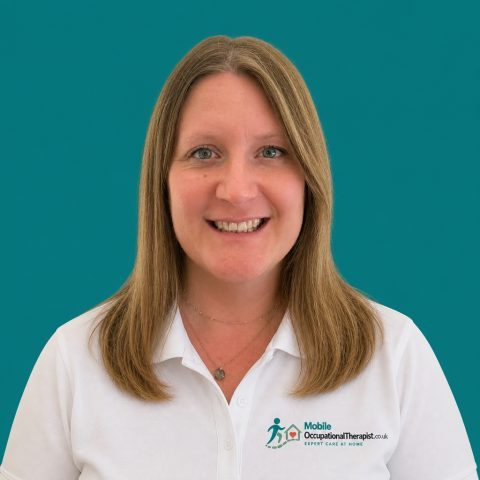
Helen Harrison, Staffordshire
If you or someone you represent has been seriously injured in Staffordshire, an occupational therapy report sets out how the injury has changed everyday life and what it will take to make that life workable again. It covers washing, dressing, cooking, getting about the home and out of it, work, the care someone needs and who is giving it, and the equipment, adaptations and rehabilitation that would help. Solicitors use it to understand the claim. Case managers use it to plan. Families mostly use it to see everything written down in one place, often for the first time.
There are two quite different kinds of report, and it matters which one you are asking for. A treating occupational therapist assesses, treats and reports on progress. An independent expert witness is instructed for the claim itself and writes for the court. Our occupational therapist for Staffordshire, Helen Harrison, is based in Stafford and works as a rehabilitation occupational therapist in medico-legal cases, writing reports for solicitors and case managers. This guide explains what each kind of report covers, what happens at the home visit, how to prepare, and where the NHS and council routes in Staffordshire fit alongside a claim.
What an occupational therapy report can cover after a serious injury
Occupational therapy is about what someone can actually do, day to day, in their own home. So the report is less about the injury and more about its consequences. A thorough one usually looks at:
- Personal care - washing, toileting, dressing, eating and drinking, and how long each now takes.
- Household tasks - cooking, cleaning, shopping, laundry, money and paperwork.
- Moving about - getting in and out of bed, on and off the toilet, up the stairs, in and out of a car.
- Thinking skills - memory, concentration, planning, problem-solving and getting started on a task.
- Fatigue - how much someone can do before they run out, and what it costs them the next day.
- Care needs - what help is needed, how often, from whom, and what family are already doing.
- Equipment and adaptations - what would make things safer or more independent now, and whether the house can work in the long term.
- Rehabilitation and work - realistic goals, what therapy might achieve, and whether a return to work is possible with adjustments.
After a brain injury
Brain injury is where an occupational therapy report often earns its keep, because so much of the difficulty is invisible. Someone may walk, talk and make a cup of tea perfectly well in front of a visitor, and still be unable to plan a meal, remember an appointment or cope with a busy shop. Fatigue can be crushing. Some people are not fully aware of their own difficulties, which is not stubbornness but part of the injury. A good assessment watches real tasks rather than relying on answers to questions, and listens to the people who live alongside the person. Our guide to brain injury rehabilitation at home goes into this further.
After a spinal cord injury
Here the questions tend to be more physical and more about the building. Can the house be adapted, or is a move needed? What wheelchair, seating, hoisting, bathing and bed equipment is required, and how often will it need replacing? How many carers, for how many hours, and is help needed at night? These are big, expensive questions, and the report should show its reasoning rather than just giving answers.
Treating therapist or expert witness: not the same job
This is the point that causes most confusion, so it is worth being clear.
A treating occupational therapist is there to help the injured person recover. They are often brought in by a case manager, sometimes early on under the Rehabilitation Code, a voluntary code used in personal injury claims that encourages early rehabilitation. They assess, set goals with the person, deliver therapy and write reports on progress and recommendations. Their focus is the person and their rehabilitation.
An independent expert witness is instructed for the claim. In England and Wales, experts in civil cases work under Part 35 of the Civil Procedure Rules, which says their overriding duty is to the court, not to whoever is paying them. A care and needs report from an expert usually looks both backwards and forwards: the care given since the accident, and the care, equipment, adaptations and therapy needed in future, often with costings. The expert does not normally treat the person.
The two roles are generally kept apart, because it is hard to be someone's therapist and a neutral witness about them at the same time. If you are a solicitor or case manager, say exactly which you need when you enquire. If you are the injured person or family, ask your solicitor which kind of report has been requested and who will see it. Our guide to immediate needs assessments and case managers explains how the rehabilitation side usually starts.
What happens at the home visit
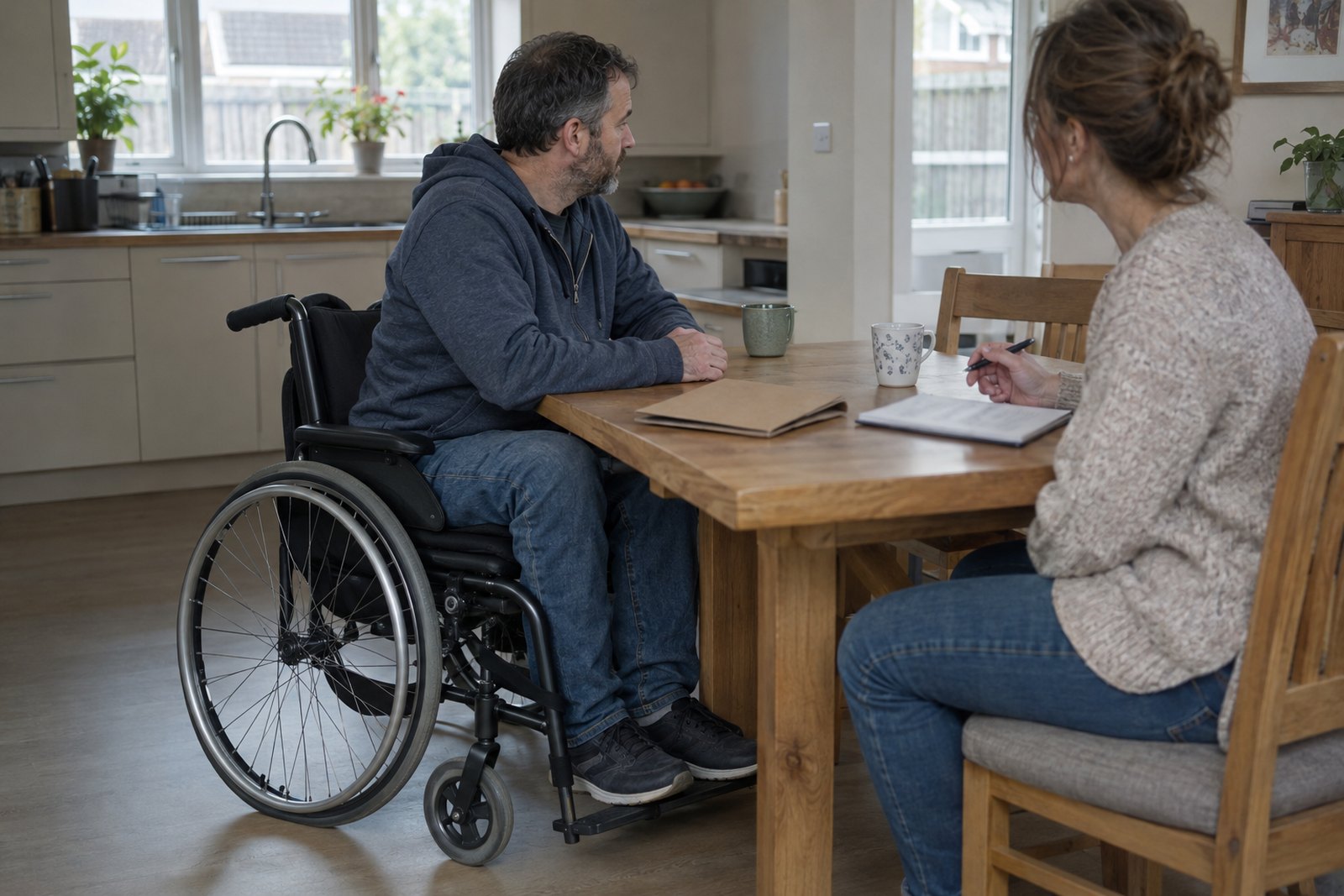
Most of the assessment happens at home, because that is where the injury actually shows. Expect it to begin as a conversation: what a normal day looks like now, what it looked like before, what is hardest, and what the person most wants to be able to do again.
Then it gets practical. The therapist may ask to watch some everyday tasks, such as making a drink, getting out of a chair or showing how the bathroom is managed. They will look at steps, doorways, the stairs, the bathroom and where the person sleeps. They will usually want to talk to whoever provides the care, sometimes separately, because carers often say things they would not say in front of the person they look after.
It can be a long and tiring visit, especially after a brain injury. It is fine to ask for breaks. A good therapist will notice fatigue and plan around it, and the fact that someone tired out partway through is useful information in itself.
How to prepare
You do not need to tidy, rehearse or put on a show. You do need to make it easy for the therapist to see the real picture.
- Keep a short diary for a week or two beforehand. What went wrong, what took a long time, what help was needed, and how tired the person was afterwards. Bad days matter as much as good ones.
- Write down who helps and how much. Family, friends and paid carers, with rough hours. People almost always underestimate this until they write it down.
- Gather the paperwork. Discharge letters, therapy reports, equipment lists and receipts for anything you have bought.
- Have the main carer there, if the injured person agrees.
- Be honest about the range. Do not push through a task to prove a point, and do not exaggerate. The most useful thing you can say is "on a good day this, on a bad day that".
- Plan a quiet afternoon afterwards.
One safety point. If someone with a recent head injury develops a worsening headache, repeated vomiting, increasing drowsiness, confusion, a fit or new weakness, do not wait for an assessment: call 999. For new symptoms that are not urgent, contact the GP or NHS 111.
NHS and council help in Staffordshire alongside a claim
A claim can take a long time, and daily life cannot wait for it. The public routes still exist while it runs.
For an adult anywhere in Staffordshire outside Stoke-on-Trent, the starting point for social care and home adaptations is Staffordshire Cares. They talk through what is needed, arrange an occupational therapy visit if required, and pass a recommendation to your district council, which runs the Disabled Facilities Grant. For a child, contact the county council's Children and Families Services. Stoke-on-Trent is a separate council, and there you start with the city council's own occupational therapy service.
Some councils have grants aimed at people leaving hospital. Stafford Borough and South Staffordshire's policies include a hospital discharge grant of up to £10,000 that is not means tested, covering towns such as Stafford, Stone, Penkridge and Codsall. Cannock Chase's published policy includes a hospital prevention and discharge grant of up to £12,000 for Cannock, Hednesford and Rugeley, though that policy is past its review date. These are the councils' own policies and they can change, so check before relying on them. Our Disabled Facilities Grant guide for Staffordshire sets out what each district offers.
How council funding and a compensation claim affect each other is a question for your solicitor. Ask before you apply.
Your local occupational therapist in Staffordshire
Helen is the occupational therapist we list for Staffordshire. She is based in Stafford and covers the county through her own practice, working with associate occupational therapists. If an enquiry would suit one of her colleagues better, she will say so.
She has specialised in neurological rehabilitation since qualifying. In the NHS she worked in neurological inpatient units, including a Level 1 rehabilitation unit for people with complex brain injuries and polytrauma, and in community neurology teams supporting people back at home. She has been in independent practice since 2018. Her work is with adults after traumatic brain injury, spinal cord injury, hypoxic brain injury, stroke, brain tumours and post-concussion syndrome, as well as progressive neurological conditions.
In medico-legal cases, Helen works as the rehabilitation occupational therapist within a private multidisciplinary team, providing intensive rehabilitation and writing reports for solicitors and case managers, who are a regular part of her week. Her profile does not describe her as an expert witness, so if you need an independent expert report for court, make that clear when you get in touch.
Her therapy is built around the person rather than a set programme. Depending on the assessment, that might mean cognitive rehabilitation, arm and hand work, bespoke splints, seating and equipment advice, fatigue management, or getting back to washing, dressing, cooking and going out. Her services include functional assessments and reports, neurological rehabilitation, home adaptations, equipment and work assessments. She visits homes across the county, from Stafford and Stone to Lichfield, Cannock, Burton upon Trent and Tamworth. See our Staffordshire page or Helen's profile for more.
Frequently asked questions
Can I arrange an occupational therapy assessment without a solicitor?
Yes. You can book a private occupational therapist directly, and you do not need a GP referral. If a claim is running, though, tell your solicitor first, so the assessment fits with what is already planned.
Is a care and needs report the same as an occupational therapy report?
Not always. A care and needs report is usually an expert report for the claim, setting out past and future care and its cost, and may be written by an occupational therapist or another care expert. A treating therapist's report focuses on rehabilitation. Check which one you are being asked for.
Who pays for the assessment?
It depends on the case. Rehabilitation in a personal injury claim is sometimes funded through the claim and arranged by a case manager, while expert reports are usually commissioned through the solicitor. If you are paying privately, the therapist's prices page sets out the costs. Your solicitor can tell you what applies to you.
What if my relative insists they are managing fine?
That is very common after a brain injury. Keep the diary, have the main carer at the visit, and ask for a few minutes to talk to the therapist separately. Watching real tasks usually shows far more than a yes or no answer.
Next steps
If you need an occupational therapy assessment or report after a serious injury in Staffordshire, read Helen's profile and her prices page, then send her an enquiry setting out the injury, where the person lives, who is involved and which kind of report you need.