

Brain Injury Rehabilitation at Home: What Happens After Hospital
By Mobile Occupational Therapist • 24 September 2026 • 13 min read
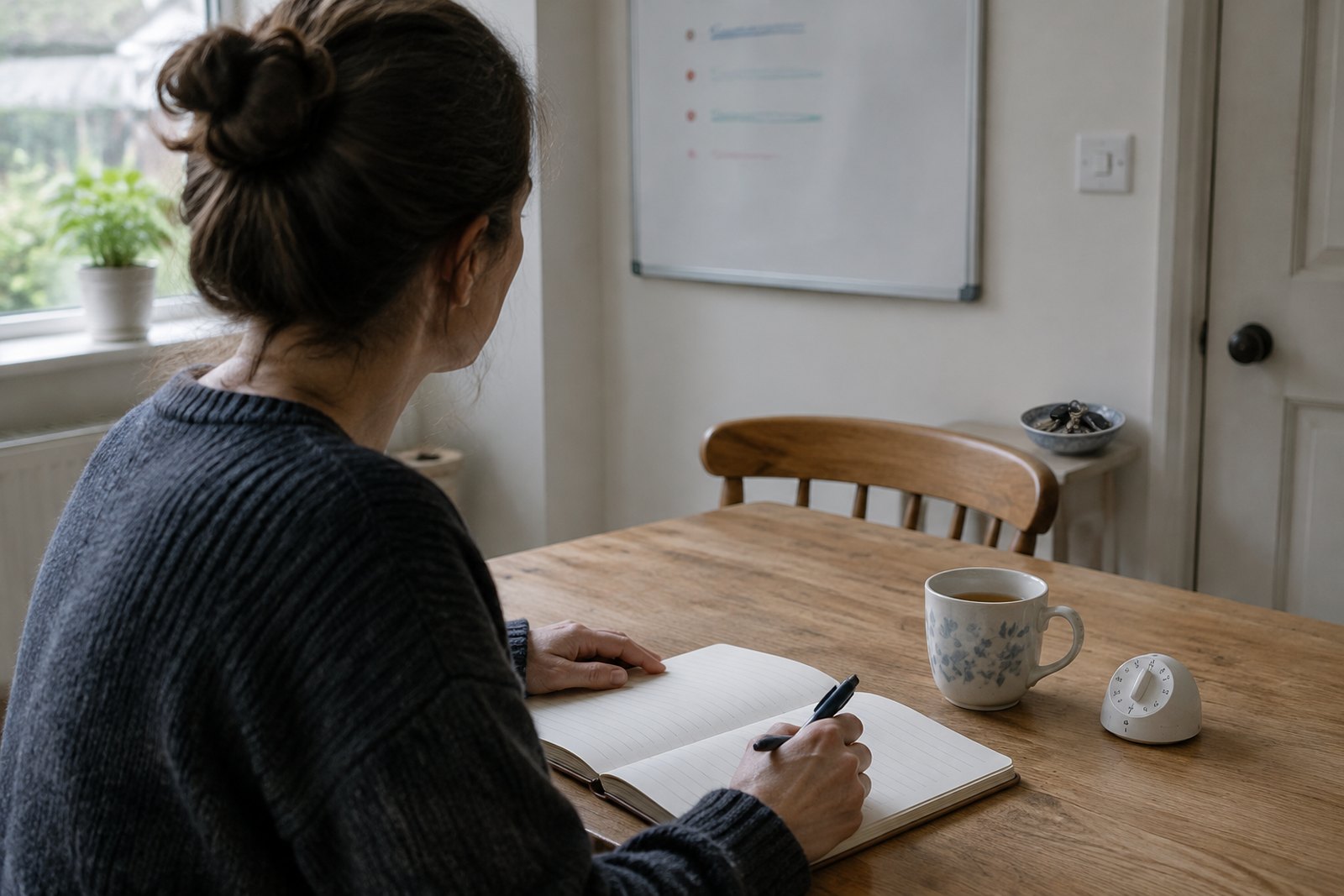
When someone comes home from hospital after a brain injury, rehabilitation does not stop. It moves into the kitchen, the diary and the daily routine. Depending on where you live and how the injury has affected them, that may mean visits from an NHS community neurological rehabilitation team, outpatient therapy, private therapy, or, too often, a gap where the family is left to work it out. Most of the real recovery happens in ordinary life: getting up, making a drink, remembering an appointment, coping with a noisy room.
The changes that cause most trouble at home are usually the ones nobody can see. Fatigue, memory problems, difficulty planning, irritability and low mood are common after an acquired brain injury, whether it came from a fall, a road accident, a stroke, an infection or a lack of oxygen. This guide explains those changes, what you can do about them today, and who can help, including where an occupational therapist fits and where someone else should lead.
What changes after a brain injury, and why nobody can see it
A broken leg comes with a cast. A brain injury often comes with nothing visible at all. Your husband may look exactly as he did before, chat happily to the neighbour for five minutes, then be in bed for the afternoon. Friends say he seems fine. You know he is not. This mismatch is one of the most draining parts of living with brain injury, for the person and the family.
Fatigue
Brain injury fatigue is not ordinary tiredness. Thinking, concentrating, listening in a busy room and making decisions all use up energy that used to be there without effort. It can come on suddenly, and pushing through it usually makes everything else worse: memory, temper, speech, balance.
Memory
Short term memory is often affected. The person may forget what they were told this morning, repeat questions, lose track of a conversation or forget whether they have taken their tablets. Older memories are often much better preserved, which can confuse families.
Planning and organising
Clinicians call these executive functions. In practice it looks like difficulty starting a task, doing steps in the right order, switching between jobs, solving a problem when something goes wrong, or judging time. Someone may be perfectly able to cook a meal, but unable to work out how to begin one.
Behaviour and personality
Some people become more irritable, impulsive or blunt. Some say things they would never have said before. Others become flat and unmotivated, which can look like laziness but is often a direct effect of the injury on the parts of the brain that drive initiation. Insight may be reduced, so the person genuinely may not see the changes that are obvious to you.
Emotion and mood
Anxiety, low mood, tearfulness and frustration are common, both as a direct result of the injury and as an understandable reaction to a life that has changed. Some people laugh or cry with little warning. These deserve attention in their own right, not just patience.
When to get urgent help
Some symptoms are not part of normal recovery. Call 999 or go to A&E if there is a seizure, a sudden severe headache, repeated vomiting, increasing drowsiness or difficulty waking, new confusion, new weakness or numbness, slurred speech, or clear fluid from the nose or ears. For new or worsening symptoms that are not an emergency, contact the GP or call NHS 111. If the person talks about harming themselves or not wanting to be alive, take it seriously and get help the same day through the GP, NHS 111 or, in an emergency, 999.
Structuring the day
Structure is not about being strict. It takes away the constant small decisions that eat up energy, and it makes the day predictable enough to feel safe. Many families find a simple routine does more than anything else in the early months.
- Keep the same wake and bed times, including weekends. Sleep is often disturbed after brain injury, and a regular rhythm helps.
- Plan one or two main activities a day, not five. A shower and a short walk may be a full morning at first.
- Put the hardest task when energy is best. For most people that is the morning, but watch and see.
- Schedule rest before it is needed, not after the crash. Rest means quiet: lying down in a dim room, not scrolling a phone or watching a loud programme.
- Write the day down in one place everyone can see, and tick things off. Ticking off is surprisingly motivating.
- Break tasks into steps. A short written list for making a cup of tea or getting dressed can be the difference between asking for help and doing it alone.
Build in things that matter to the person, not just therapy exercises and chores. A routine that is only appointments and rest is miserable, and motivation drops fast.
Memory aids that actually get used
The best memory aid is the one the person will use every day. Plenty of well meaning families fill the house with gadgets and sticky notes, and none of them stick. A few principles help.
- Choose one main system. One diary, one notebook or one phone calendar, not three. Everything goes in it.
- Make it a habit, not a memory test. Check the diary at the same moments each day, for example after breakfast and after lunch. Practise when the person is fresh, not exhausted.
- Use reminders that interrupt. Phone alarms with a clear label, a talking reminder device, or a simple kitchen timer for cooking. Waiting for someone to remember to look is not enough.
- Give things a home. A bowl by the door for keys, wallet and phone. A charging spot that never moves.
- Label the environment. Simple labels or photos on cupboards can reduce searching and frustration.
- Keep a whiteboard for today. Day, date, who is visiting, what is happening. Wipe it clean each night.
Introduce one change at a time and give it a couple of weeks before deciding it does not work. For medicines, ask the pharmacist about options for making them easier to manage, and follow their advice.
Managing fatigue
Many people describe the first year after a brain injury as a cycle of good days spent overdoing it, followed by days in bed. Breaking that cycle is one of the most useful things you can do.
- Keep an energy diary for two weeks. Note activities, rest, sleep and how tired the person felt. Patterns usually appear: the supermarket wipes out the afternoon, visitors in the evening ruin the next morning.
- Plan, prioritise and pace. Decide what genuinely matters today, drop or delegate the rest, and split big jobs into chunks with breaks between.
- Stop before you have to. The aim is to finish an activity with a little energy left.
- Cut the hidden drains. Noise, bright light, busy rooms, several people talking at once and screens all cost energy. Shorter visits, quieter shops at off peak times and one conversation at a time all help.
- Increase slowly. Once a level of activity is steady for a week or two, add a little more.
If fatigue is severe, getting worse, or comes with new symptoms, tell the GP. Other causes such as poor sleep, low mood, side effects or hormonal problems can need checking, and that is a medical question.
Behaviour, emotion and the family
The person you love may be shorter tempered, more self focused or less affectionate than before. It is very hard not to take it personally. It helps to remember that these changes are often caused by the injury, and that they tend to be worse when the person is tired, hungry, overwhelmed or in pain.
Practical things that often help:
- Notice triggers and adjust the day, rather than arguing in the moment.
- Keep instructions short and give one at a time.
- Agree a calm phrase or signal that means time to step away.
- Talk about what happened later, when everyone is rested.
- Ask the GP or rehab team about psychological support, including clinical neuropsychology if it is available locally.
Families carry a lot after brain injury, often for a long time. If you are the main carer, you are entitled to ask the council for a carer's assessment, and you may find our guide to carer burnout and what helps worth reading before you reach empty.
Getting back to roles, driving and work
Recovery is not only about tasks. It is about roles: being a parent, a partner, a friend, a colleague, the one who does the garden. Losing these can hit harder than any symptom. Small steps back count. Reading to a child for ten minutes. Making one meal a week. Choosing the family film.
Driving
Do not assume driving is fine because the person feels fine. Brain injury can affect attention, reaction time, vision and judgement, and seizures are a risk after some injuries. Ask the hospital doctor or GP whether it is safe, and check GOV.UK guidance on health conditions and driving to see whether the DVLA must be told. Specialist driving assessment centres can assess driving ability and advise when the time comes, but where the DVLA must be told, it is the DVLA that decides whether the person can hold a licence.
Work
Going back too soon, at full hours, is one of the most common setbacks. A phased return with reduced hours, quieter tasks and regular breaks usually works far better. Talk to the GP about fit notes, and to the employer about reasonable adjustments. The government's Access to Work scheme may help with support and equipment; check current eligibility on GOV.UK. Our guide to vocational rehabilitation and getting back to work goes into this in more detail.
Who provides rehabilitation: NHS, private and case-managed
NHS community neuro rehabilitation
In many areas there is a community neurological rehabilitation team or acquired brain injury team, which may include occupational therapists, physiotherapists, speech and language therapists and psychologists. Referral usually comes from the hospital at discharge, but the GP can refer too. What exists, how much therapy is offered and how long people wait all vary a great deal by area. If you came home without any follow up arranged, ask the GP directly what local services exist and request a referral. It is reasonable to ask.
Private rehabilitation
Some families pay for private therapy, either to fill a gap while waiting, to add more input, or because the NHS service has finished but needs remain. A private occupational therapist, physiotherapist or neuropsychologist can work alongside NHS teams, and it is sensible to keep everyone informed. Our guide on NHS or private occupational therapy sets out the trade offs honestly.
Case-managed rehabilitation
Where a brain injury was caused by an accident that someone else may be responsible for, there may be a personal injury claim. In some claims, the insurer agrees to fund rehabilitation before the case is settled, usually coordinated by a case manager who arranges therapists and support. This can be very valuable, but it is not automatic, and decisions about claims belong with your solicitor. Treatment should still be led by what the person needs.
Headway and other support
Headway is the UK's brain injury charity. It runs a helpline, publishes clear information on almost every aspect of life after brain injury, and has local groups and branches offering peer support and activities. Many families say talking to others who just get it was the turning point. It also offers a brain injury identity card, which some people find useful when the hidden nature of their injury causes problems out and about.
Where an occupational therapist fits
Occupational therapy is about everyday life, so it fits naturally into brain injury rehabilitation at home. An occupational therapist can:
- Assess how the person manages real tasks in their own home, such as cooking, washing, dressing, shopping and managing money, and see exactly where things break down.
- Carry out cognitive rehabilitation in practical form: building routines, setting up memory and planning systems, and teaching strategies the person can use without prompting.
- Set up a fatigue management plan and help the family pace the week.
- Look at safety, from kitchen risks to bathing, and advise on equipment or adaptations if needed.
- Support a graded return to roles, hobbies and work, including liaison with employers.
- Write a clear functional report for a care assessment, benefits claim or legal case where that is needed.
Other professionals lead in other areas. A GP or neurologist deals with medical issues, seizures and medication. A physiotherapist leads on movement, balance and walking. A speech and language therapist helps with communication and swallowing. A clinical neuropsychologist assesses thinking in depth and helps with mood and behaviour. Good rehabilitation usually involves several of these working together. You can read more on our neurological occupational therapy page.
Frequently asked questions
How long does recovery from a brain injury take?
There is no reliable timetable. Recovery is often quickest in the early months, but many people keep improving for years, especially with good support and practice. Some changes may be lasting, and rehabilitation then shifts towards finding ways round them.
Is cognitive rehabilitation the same as brain training apps?
Not really. Cognitive rehabilitation focuses on the skills and strategies a person needs in their actual life, such as remembering appointments or planning a meal. Getting better at a puzzle game does not always carry over into daily tasks.
We were sent home with no rehab. What can we do?
Ask the GP what community neuro rehabilitation is available locally and request a referral. Contact the council's adult social care team if daily care needs are not being met, and get in touch with Headway for advice and local support.
Why is he so much worse in the evening?
Fatigue builds through the day, and a tired brain copes less well with memory, emotion and noise. Keeping evenings quiet and planning demanding activities earlier often helps. If evening changes are sudden or severe, speak to the GP.
Does the person have to tell their employer?
That is usually their choice, but if the job involves driving, machinery or other safety-critical work there may be a duty to report it, and telling the employer makes it much easier to agree adjustments and a phased return. Acas and GOV.UK have guidance on rights at work for people with health conditions.
Can an occupational therapist help years after the injury?
Yes. Many people benefit from occupational therapy long after hospital, for example when a role changes, a carer becomes unwell, or they want to try returning to work or study.
Next steps
If daily life after a brain injury is harder than it should be, a home visit can help you see what to change first. See our neurological occupational therapy page, or current guide prices, and choose your area below.

Talk to an occupational therapist near you
This guide is general information. For advice about your own situation - or someone you look after - a local occupational therapist can visit you at home and see it for themselves.
Choose your area: