

Living With Huntington's Disease: Daily Life and Safety at Home
By Mobile Occupational Therapist • 25 October 2026 • 13 min read
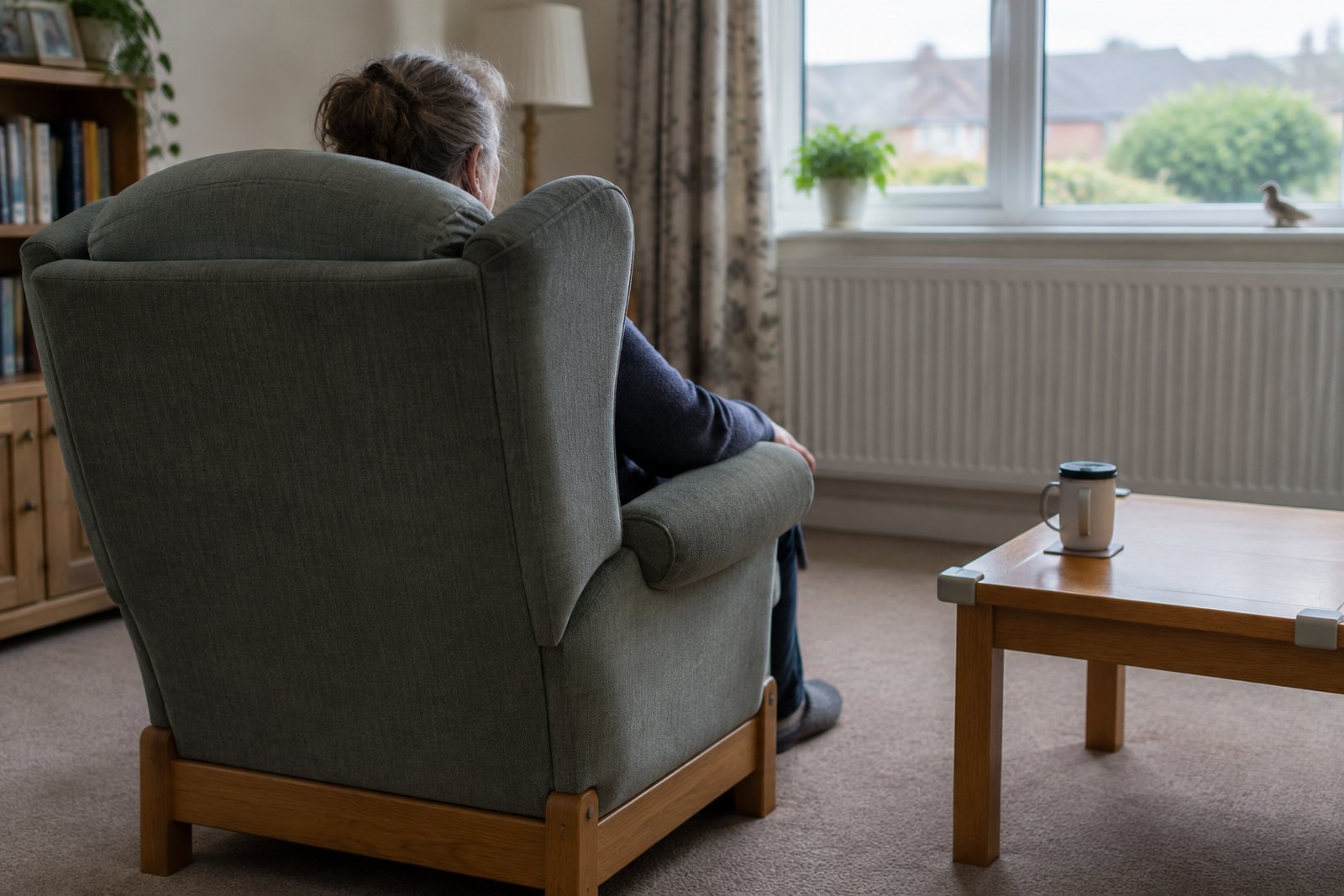
If you or someone you love has Huntington's disease, the questions that keep you awake are usually practical ones. Why does she keep catching her shins on the coffee table? Is it still safe for him to make a cup of tea? Why does every meal take an hour and end with half of it on the floor?
The short answer is that Huntington's disease affects three things at once: movement, thinking and mood. Daily life gets harder because of the way those three combine. A lot can be done at home to make things safer and calmer: steadier seating, padded edges, a kitchen set up differently, simpler routines, food that gives more energy, and the right professionals involved early. This guide goes through it task by task. It does not try to predict how the condition will change for any one person, because that varies a great deal from person to person and family to family.
How Huntington's changes everyday tasks
Movement
Many people develop involuntary movements, often called chorea: jerks, twists or restless movements that the person does not choose and often does not notice. Others become stiff or slow. Balance can be affected. In everyday terms that means spilled drinks, bruises from furniture, sliding out of chairs, dropping things and falls. Fine hand control can change too, so buttons, cutlery, writing and phones get harder.
Thinking
The thinking changes are often the hardest to explain to other people. Memory may hold up reasonably well while planning, organising and getting started become difficult. Someone may struggle to do two things at once, to switch from one task to another, or to work out the steps of something they have done for years. Thinking slows, so answers take longer. Some people lose awareness of their own difficulties. That is part of the condition, not stubbornness, even when it feels exactly like stubbornness at eight in the morning.
Mood and behaviour
Depression, anxiety, irritability and apathy are common. Apathy is easily mistaken for laziness: the person is not refusing to get dressed, they genuinely find it hard to begin. Some people get stuck on one thought or request and return to it again and again. Temper can flare quickly, especially when someone is rushed, hungry, tired or in a noisy room.
Put those together and you get a familiar picture. A task that used to take five minutes now takes thirty, goes wrong halfway through and ends in frustration on both sides. Most of the practical help below works by taking the pressure off one of those three areas.
Making the home safer
Furniture and padding
Watch where the bruises appear, and pad there. It is usually the same few places.
- Fit foam corner guards and edge padding to coffee tables, sideboards, worktop corners and door frames that get knocked.
- Remove glass-topped tables and anything low and hard sitting in a walkway.
- Cover radiators or pad the edges, as they are hard and can be hot.
- Take out some furniture altogether so routes through rooms are wide and clear.
- Get rid of loose rugs and trailing cables. Tape down or reroute anything you cannot remove.
- Put ornaments, glass and anything breakable out of reach of flailing arms.
Seating that stays put
Ordinary chairs often fail. Light dining chairs tip over, swivel chairs spin, chairs on castors roll away, and soft sofas let someone slide down or sink so low they cannot get up. What generally helps is a heavy, stable chair with a wide base, firm and well-padded arms and sides, no wheels and no swivel, and a seat height that lets feet rest flat on the floor. A seat that angles slightly backwards can help someone sit deep rather than slide forward.
For people with strong involuntary movements, specialist padded chairs exist that are built for exactly this, often with tilt and extra padding at the sides. They are worth getting assessed for properly rather than bought from a brochure, because a poorly matched chair can cause sliding, pressure problems or make standing up harder. Think carefully about riser recliners: hand controls can be pressed by accident. Our guide to choosing the right chair goes into seating in more detail.
Falls
- Keep floors clear and lighting good, with plug-in night lights on the route to the toilet.
- Fit grab rails by the toilet, in the shower and at any step where someone steadies themselves on furniture.
- Put a rail on both sides of the stairs if possible.
- Choose supportive, well-fitting shoes with a back, rather than slippers, socks or bare feet.
- Dress sitting down, in a stable chair or on the edge of the bed.
- Have a plan for when a fall happens: whether the person can get up safely, who to call, and whether a personal alarm makes sense.
If falls are becoming frequent, tell the GP or specialist team. A physiotherapist can look at walking and balance and whether a walking aid is safe, since some aids are harder to use with involuntary movements.
Bedroom
Movements at night can carry someone out of bed. A lower bed, a wider bed and a soft mat on the floor beside it can reduce the risk of injury. Bed rails are not automatically the safe option. With involuntary movements, arms, legs or even the head can become trapped, so get professional advice before fitting any. Padded bumpers designed for bed rails are sometimes used, but again, ask first.
Bathroom
A shower is often easier and safer than a bath. A stable shower seat with a backrest and arms, non-slip flooring in and outside the shower, and a thermostatic control so the water cannot become scalding all help. An electric razor is safer than a wet razor, and an electric toothbrush can make teeth cleaning easier when hand control is unreliable.
The kitchen
The kitchen combines heat, sharp edges and multi-step tasks, so it is where movement and thinking changes collide. Many of the problems are similar to those people with dementia face, such as losing track of a pan or doing the steps in the wrong order, and our article on cooking with dementia has ideas that transfer well.
- Use insulated mugs with a secure lid for hot drinks, and fill them only part way.
- A kettle tipper, which holds the kettle in a cradle so it tilts rather than being lifted, or a small hot water dispenser, takes the riskiest part out of making tea.
- A microwave is often safer than the hob for heating food.
- Prepare food sitting at the table in a stable chair rather than standing at the counter.
- Put non-slip matting under bowls and chopping boards.
- Buy ready-chopped vegetables rather than using sharp knives when hands are unpredictable.
- Make sure there are working smoke alarms, and consider a heat alarm in the kitchen. Many fire and rescue services offer free home fire safety visits.
If the person smokes, that is a serious fire risk when cigarettes can be dropped without noticing. Talk to the fire service about it honestly.
Eating, drinking and keeping weight on
There are two separate issues here, and they need different people.
Energy
Many people with Huntington's lose weight even when they seem to be eating normally, partly because constant movement uses a lot of energy. Ask the GP for a referral to a dietitian, who can advise on how much extra is needed and whether supplements make sense. In general terms, little and often works better than three big meals, and nourishing snacks and drinks between meals help.
Swallowing
Swallowing can become harder. Signs to take seriously include coughing or spluttering during meals, a wet or gurgly voice after eating or drinking, food staying in the mouth, meals taking much longer, and repeated chest infections. Tell the GP or specialist team and ask for a referral to a speech and language therapist, who leads on swallowing. They may suggest different food textures, positions or techniques. Do not change textures or thicken drinks on your own without their advice. If someone is choking and cannot cough, speak or breathe, call 999.
Making mealtimes easier
- Sit upright in a stable, supportive chair with feet on the floor.
- Turn the television off and keep conversation light, without questions that need answering while chewing.
- Serve one thing at a time rather than a crowded plate.
- Use a non-slip mat, and a plate with a raised edge or a plate guard to push food against.
- Heavier cutlery or cutlery with larger handles steadies some people's hands.
- Ask the speech and language therapist which cup suits, as some lidded and spouted cups change how drinks flow.
- Allow plenty of time, and protect clothing in a way that feels adult rather than childish.
Communication
Speech may become slower, slurred or quieter, and it can take longer to process what someone has said. Understanding is often better than speech suggests, so talk to the person, not about them.
- Give time. Wait longer than feels comfortable before repeating or rephrasing.
- Ask one question at a time, and offer a choice of two or a yes or no question when things are hard.
- Reduce background noise and face each other.
- Do not finish sentences unless the person has said they want you to.
- Write down key information such as appointment times.
A speech and language therapist can assess communication and suggest aids such as alphabet or picture boards, or electronic devices. It is worth involving them early, while there is time to practise.
Routines and getting things done
When planning and starting tasks are hard, routine does a lot of the work. The same things in the same order each day need far less thinking than a fresh plan every morning.
- Break tasks into small steps and prompt one step at a time.
- Lay out clothes in the order they go on.
- Cut down choices: two jumpers rather than a full wardrobe.
- Use a simple written or picture checklist for regular tasks.
- Build rest into the day, and leave extra time before appointments so nobody is rushed.
- Give warning before changes to the plan.
- For apathy, start the task together. Getting going is often the hardest bit.
- Keep a note of what triggers irritability, such as hunger, noise or tiredness, and plan around it.
Low mood needs taking seriously, not just managing. If the person seems persistently down or talks about not wanting to live, contact the GP. If someone is in immediate danger, call 999. Samaritans can be reached any time on 116 123.
Support for carers
Caring for someone with Huntington's has its own weight. It can go on for a long time, behaviour changes can be painful to live with, and because the condition is inherited, families often carry worry about other relatives too. You are entitled to support in your own right. A carer's assessment from your council can look at breaks and practical help. The Huntington's Disease Association, which covers England and Wales, has specialist advisers and support groups, and the Scottish Huntington's Association does similar work in Scotland. Check their websites for what is available near you.
Planning ahead
Some decisions are much easier while the person with Huntington's can take a full part in them.
- Power of attorney for health and welfare, and for property and financial affairs. In England and Wales this is a lasting power of attorney, and GOV.UK explains how to set one up. Scotland and Northern Ireland have their own systems, so check the official guidance where you live.
- Wishes about future care, written down as an advance statement, and possibly an advance decision to refuse treatment. The GP or specialist team can talk this through.
- Driving. You are likely to need to tell the DVLA. Check the current rules on GOV.UK.
- Work. Employers may need to make reasonable adjustments, and Access to Work may help.
- Housing. If stairs or the bathroom are likely to become a problem, start thinking about adaptations or a move early, as council processes can take time.
- Benefits. Disability benefits may apply. A local advice service or the Huntington's Disease Association can help you check.
Where an occupational therapist fits
An occupational therapist looks at the whole day: getting up, washing, dressing, eating, cooking, moving around, work and leisure, and what is getting in the way. For Huntington's, that often means assessing seating properly, deciding where padding and rails are needed, setting up the bathroom and kitchen, recommending equipment, and building routines and strategies that fit the thinking changes. They can show carers safer ways to help, write reports supporting adaptations or funding, and review things as needs change, which they will.
NHS occupational therapy may come through a community neurology team, a specialist Huntington's service or the council. A private occupational therapist visiting at home can be useful when you want help sooner or want time spent on a particular problem. See our page on neurological occupational therapy for more.
Other professionals lead on other things. The neurologist or specialist Huntington's clinic oversees the condition. The GP handles mood, medicines and referrals. Speech and language therapists lead on swallowing and speech, dietitians on weight, and physiotherapists on walking and balance. Mental health teams support severe low mood or distress, and genetic services offer counselling for relatives thinking about testing.
Frequently asked questions
Is there equipment made specifically for Huntington's disease?
Some, yes. Specialist padded chairs designed for people with strong involuntary movements are the main example. Much of the rest is everyday equipment chosen with Huntington's in mind: padding, rails, stable shower seats, lidded cups and non-slip matting. Getting it assessed matters, because the wrong item can add risk.
What sort of chair is safest?
Usually a heavy, stable chair with a wide base, well-padded sides and arms, no wheels or swivel, and a height that keeps feet on the floor. If someone slides out or gets bruised in an ordinary chair, ask for a seating assessment.
How do we get help with swallowing?
Ask the GP or specialist team for a referral to a speech and language therapist. Mention specific signs such as coughing at meals or chest infections. In the meantime, sit upright, slow down and reduce distractions at mealtimes.
Do we need to tell the DVLA?
You are likely to need to. The rules can change, so check the guidance on GOV.UK and talk to the specialist team about driving safety.
Can we get help paying for adaptations?
Larger adaptations such as a level access shower may be funded through a Disabled Facilities Grant from your council, which is usually means-tested for adults. Scotland has a different scheme run by councils. Contact your council's adult social care team to ask about an assessment.
Is it worth seeing an occupational therapist in the early stages?
Often, yes. Early advice on routines, work, driving, kitchen safety and planning the home can prevent problems rather than react to them, and gives everyone a professional who already knows the situation when things change.
Next steps
See our neurological occupational therapy and home adaptations pages, or current guide prices, and choose your area below.
Talk to an occupational therapist near you
This guide is general information. For advice about your own situation - or someone you look after - a local occupational therapist can visit you at home and see it for themselves.
Choose your area: