

Heel Protectors and Pressure Relief Boots: Protecting Heels in Bed
By Mobile Occupational Therapist • 7 October 2026 • 13 min read
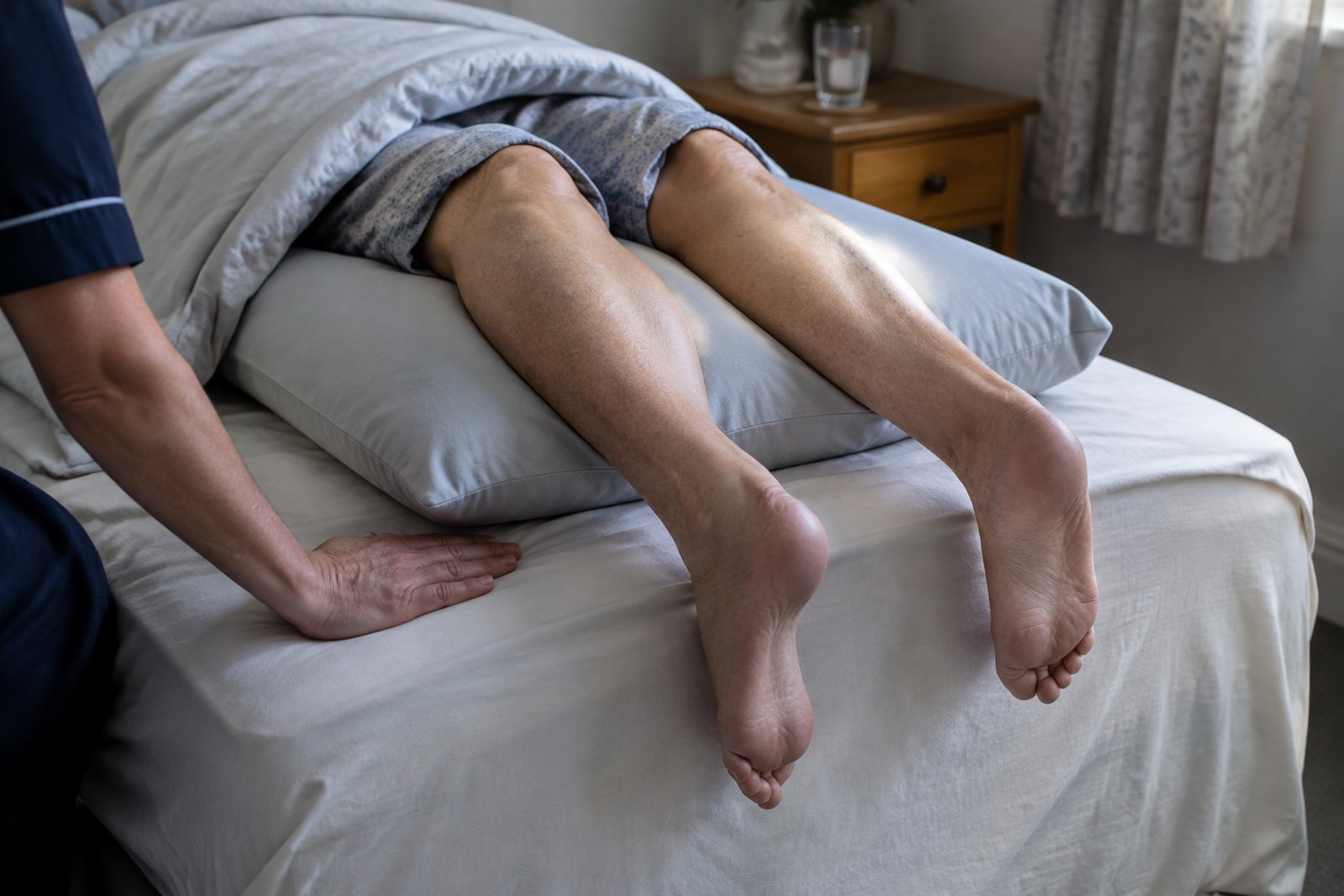
Heel protectors are padded supports that take pressure off the back of the heel when someone spends long periods in bed or sitting with their legs up. The best ones do not cushion the heel so much as lift it clear, so it floats just above the mattress with the weight of the leg resting on the calf instead. Pressure relief boots (often called offloading boots) are the more structured version of the same idea.
If you are reading this because a parent or partner is spending more time in bed, or a nurse has mentioned that their heels look red, the short answer is this: check the heels twice a day, get the heels off the mattress, and talk to the district nurse or GP practice about whether a proper heel device is needed. In the UK these are often supplied free through community nursing or the local equipment service. The rest of this page explains how to do each of those things properly, and what to watch for.
Why heels are so easy to damage
A pressure ulcer (also called a pressure sore or bedsore) happens when skin and the tissue underneath are squashed for long enough that blood cannot get through. Heels are one of the most common places for this, and there are plain physical reasons why.
- Small area, a lot of weight. When someone lies on their back, a good share of the weight of the lower leg rests on a patch of heel not much bigger than a coin. That concentrates the pressure.
- Very little padding. There is not much fat or muscle between the skin and the heel bone. There is nothing to spread the load.
- Dragging. Every time someone slides down the bed, or is pulled back up it, the heels scrape along the sheet. That dragging (called shear) damages tissue under the skin even when the surface looks fine.
- Legs up on a stool. People who sit in a recliner or with their feet on a footstool can get heel damage too, because the heel takes the leg's weight in exactly the same way.
Some people are at much higher risk: anyone who cannot easily move their legs themselves, people with diabetes, poor circulation or numb feet, people who are very frail, unwell or near the end of life, and anyone recovering from a hip fracture or major surgery. Heel damage can develop surprisingly fast in someone who is ill, and it can be slow to heal.
What heel protectors actually do
The key word is offloading. A soft layer under the heel helps a little, but it still leaves the heel carrying weight. What protects heels best is moving that weight somewhere better padded, usually the calf.
A well positioned heel has a small gap underneath it. You should be able to slide your flat hand between the heel and the mattress without lifting the leg. If you cannot, the heel is still bearing weight, however soft the thing under it is.
The main types of heel protector
Pillows under the calves
The simplest method, and often the first thing a nurse will suggest. A pillow placed lengthways under the lower legs, from just below the knee to just above the ankle, lets the heels hang free over the end of it.
It works well for people who stay fairly still. It works less well for people who move about, kick in their sleep or slide down the bed, because the pillow shifts and the heels end up back on the mattress. Two things to avoid: do not put the pillow directly under the heels (that just raises the pressure point), and do not push it hard into the back of the knee. The knee should be slightly bent and comfortable, not jammed straight or propped on a ridge.
Foam heel protectors and booties
These are soft padded sleeves or booties that wrap around the heel and ankle, usually fastened with a hook-and-loop strap. Some are a simple foam pad; others are a softer sheepskin-style or fibre-filled boot.
They are useful for reducing rubbing and friction, and for people at lower risk. Many of them do not lift the heel clear, though, so on their own they may not be enough for someone at high risk or with skin that is already marked. Check whether the heel is floating or simply sitting on extra padding.
Offloading boots that float the heel
These are more structured boots, usually a padded shell that wraps the lower leg with an opening or hollow at the heel. The calf and lower leg rest on the boot, and the heel sits in a space with nothing touching it. Some have a wider base or a bar to stop the foot rolling outwards, which helps people who lie with their legs turned out.
These are what most people mean by pressure relief boots. They stay in place better than a pillow when someone moves, and they are the type nurses tend to use for people at high risk or with early heel damage. They need fitting properly, and the straps need checking, which is covered below.
Mattresses with heel sections
Some pressure relieving mattresses, both foam and air, have a softer or lower zone at the foot end designed to reduce heel pressure. These help, but they do not always float the heel completely, so nurses may still use a boot or pillow on top. Our guide to pressure relief cushions and mattresses explains how the different mattress types compare.
How to use heel protectors properly
The equipment is only part of it. How it is used matters just as much.
- Check the heel floats. Slide your flat hand under the heel. There should be a gap and no contact.
- Keep the knee slightly bent. Not locked straight, not propped on a hard edge.
- Fasten straps snugly, not tightly. You should be able to slip a finger under each strap. A strap that leaves a deep line is too tight.
- Check the skin at least twice a day. Morning and evening is a good routine. Take the boot or bootie off, look at the whole heel, the back of the ankle, the sides of the foot and the calf where the device rests.
- Take them off for washing. Wash and dry the feet gently, paying attention to between the toes, and let the skin breathe for a while before putting the device back on. Do not rub hard or massage red areas.
- Keep the inside clean and dry. Follow the washing instructions that come with it. A damp or crumb-filled boot rubs.
- Keep moving the person. Heel protectors do not replace changing position. Turning or shifting someone regularly, as the nurse advises, still matters for the hips, base of the spine and shoulders.
- Move without dragging. When helping someone up the bed, avoid hauling them by the arms so the heels scrape. A slide sheet, used as you have been shown, reduces this.
If bedclothes press down on sore toes or feet, a bed cradle can lift the weight of the duvet off the feet. It does not replace a heel device but works well alongside one.
Checking heels: what to look for
On lighter skin, early pressure damage usually shows as a red patch. Press it gently with a fingertip for a few seconds. If it goes pale and then pinks up again, that is normal response to pressure. If it stays red and does not fade when pressed, that is an early sign of damage and needs attention.
On darker skin, redness may not show at all. Look instead for an area that looks darker, purplish, bluish or shiny compared with the skin around it, and feel for a patch that is warmer, cooler, harder or softer (sometimes described as boggy) than the rest of the heel. Ask the person if it feels painful, itchy or burning, if they can tell you.
Red flags: contact the district nurse or GP the same day
- A red patch that does not fade when you press it
- A dark, purple, maroon or black area on the heel, even if the skin is not broken
- A blister, whether filled with clear fluid or blood
- Broken skin, a raw patch or an open wound
- A heel that feels hot, hard or squashy compared with the other one
- New pain in the heel
If the person is already under the district nurses, ring the team. If not, ring the GP practice and say it is a possible pressure ulcer. Do not pop blisters. Do not put the heel back on the mattress while you wait - get it floating with a pillow under the calf.
Call NHS 111 or the GP urgently if there is spreading redness, swelling, a bad smell or pus from the wound. If the person also has a high or very low temperature, is confused, breathing fast, very drowsy or seems seriously unwell, call 999, as this can be a sign of sepsis.
Risks and mistakes to avoid
Walking in them
Most heel protectors and offloading boots are designed for lying or sitting only. They are bulky, they change the shape of the foot and many have slippery soles or none at all. Standing or walking in them is a real falls risk, especially at night when someone gets up for the toilet half asleep. Take them off before the person stands, or keep proper footwear by the bed. Some boots are made to be walked in short distances; only treat them that way if the nurse has said so.
Rubbing straps and edges
A strap or the edge of a boot can create its own pressure mark, particularly on the front of the ankle, the top of the foot or the side of the shin. Check those spots as carefully as the heel itself.
Poor circulation, diabetes and numb feet
People with peripheral arterial disease, diabetes or nerve damage in the feet are at higher risk of heel damage and slower healing, and they may not feel a device rubbing. They should get advice from a nurse, GP or podiatrist before using any boot with straps, and their feet need especially careful daily checks.
Doughnut rings
Ring-shaped cushions with a hole in the middle are not recommended for pressure relief. They can squeeze the tissue around the edge of the hole and reduce blood flow.
Thinking the boot is doing all the work
Food and drink, keeping skin clean and dry, managing continence and changing position all matter. A heel protector is one part of pressure care, not the whole of it.
How to get heel protectors in the UK
For many people, heel protectors and offloading boots come through the NHS rather than being bought.
- District or community nurses assess pressure ulcer risk and can supply or order heel devices. If someone is mostly in bed at home, ask the GP practice to refer them.
- Hospital discharge. If heels were at risk in hospital, ask before discharge whether a heel device and suitable mattress will be arranged for home.
- Community equipment services. Equipment such as pressure relieving mattresses and some heel devices is usually loaned through the local service after a professional referral. Our guide to borrowing equipment from community equipment services explains how that works.
- Care homes should have their own pressure care arrangements and access to community nursing.
You can buy foam heel protectors and offloading boots privately. That can make sense for someone at low risk, but if skin is already marked, or the person has diabetes or circulation problems, get a nurse's view first so you buy the right type and size, or get it supplied.
Where an occupational therapist fits
To be honest about it: pressure ulcer prevention and wound care at home are led by community nurses, with specialist tissue viability nurses involved for complex wounds. If there is already a sore, or you are worried about a mark, the nurse or GP is your first call, not an occupational therapist.
Where an occupational therapist helps is with the bigger picture of why someone is in bed or in a chair so much, and how to make that safer. That might include:
- Looking at the bed, chair and recliner set-up so legs and heels are positioned well, including footstool height and seating
- Advising on profiling beds, mattress and seating choices alongside the nurse's pressure care plan
- Showing family carers how to move someone up the bed or turn them without dragging, and when equipment such as slide sheets helps
- Working on getting someone out of bed and moving more, where that is realistic, which is the best pressure relief of all
- Planning night-time routines so heel devices come off safely before getting up
A private occupational therapist visiting at home can do this as part of a wider look at equipment and daily living aids, working with whatever the district nurses have already put in place. A podiatrist is the right person for foot problems linked to diabetes, nail care and calluses.
Frequently asked questions
Should heel protectors be worn all night?
Usually yes, for someone at risk who spends the night in bed, but they should come off at least twice a day for skin checks and washing. Follow the specific plan from the nurse, as some people need them only at certain times.
Can I just use a pillow instead of a heel protector?
For many people a pillow lengthways under the calves works well, as long as the heels float and the pillow stays in place. If the person moves a lot, slides down the bed or already has heel marks, a proper offloading boot is often more reliable.
Are heel protectors free on the NHS?
They are often supplied by district nurses or loaned through community equipment services when someone is assessed as at risk. What is available varies by area, so ask the GP practice or community nursing team.
Can someone sit in a chair wearing heel protectors?
Yes, if their feet are up on a stool, heel protection can help. But they should not stand or walk in most boots. Take them off or put proper footwear on before standing.
What does a pressure sore on the heel look like at first?
On lighter skin, a red patch that stays red when pressed. On darker skin, it may look darker, purple or bluish rather than red, and may feel warmer, harder or softer than the skin around it. Any of these signs means calling the nurse or GP the same day.
My mum's heel has a blister. Should I pop it?
No. Leave it intact, keep the heel off the mattress with a pillow under the calf, and ring the district nurse or GP practice the same day. A blister on the heel can be a sign of pressure damage that needs proper assessment.
Next steps
If your relative is spending more time in bed or in a chair and you want help with positioning, equipment and safer moving at home, see our equipment and aids page or home assessment page, or check current guide prices, and choose your area below.

Talk to an occupational therapist near you
This guide is general information. For advice about your own situation - or someone you look after - a local occupational therapist can visit you at home and see it for themselves.
Choose your area: