

Doll Therapy in Dementia: When It Helps and the Ethical Questions
By Mobile Occupational Therapist • 9 October 2026 • 14 min read
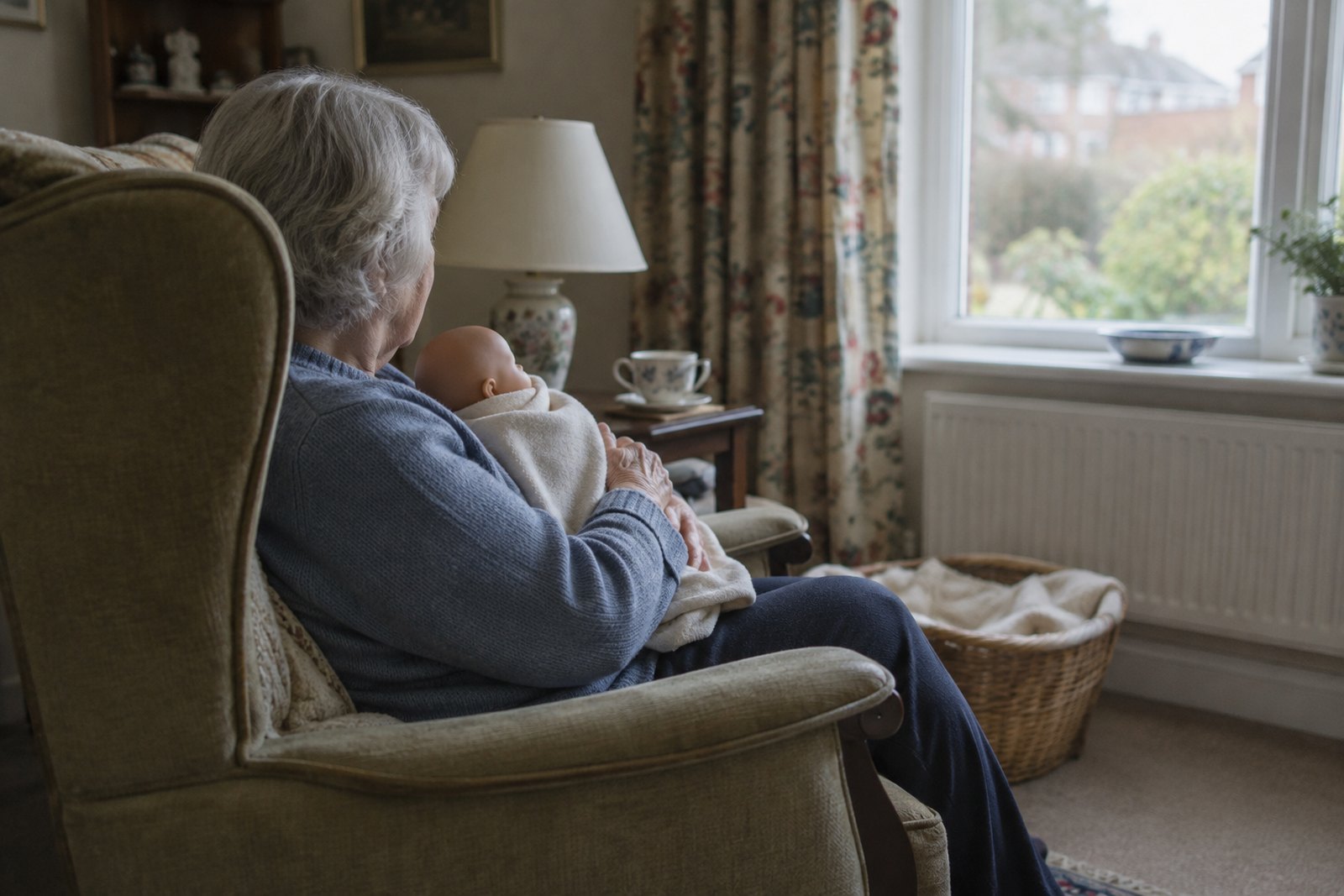
Doll therapy, sometimes called empathy doll therapy, means offering a person living with dementia a lifelike baby doll to hold, look after or simply have nearby. For some people, usually in the middle or later stages, it brings real comfort: less pacing, fewer tearful afternoons, something to do with their hands and someone to care for. For others it does nothing at all, or feels insulting. Both responses are valid.
So does it work? Sometimes, for some people. The research is small and mixed, but it suggests a doll may reduce distress and agitation for a proportion of people with dementia. The ethical worries, mainly about dignity and deception, are real too. Most of them can be handled with one principle: offer, never impose, and let the person decide what the doll means to them.
What doll therapy actually is
Despite the name, it is not a therapy in the sense of sessions with a professional. It is a comfort object used thoughtfully. The doll is usually roughly the size and weight of a young baby, with a soft body that is pleasant to cradle. It is introduced quietly, and the person chooses whether to engage with it.
What happens next varies enormously. Some people cradle the doll, sing to it, rock it and talk to it as if it were a baby. Some clearly know it is a doll and enjoy it the way you might enjoy a well-made toy or a photograph. Some treat it as a reminder of their own children. Some glance at it and never touch it again. There is no right response, and the doll is not there to produce one.
You will find dolls used in care homes, on hospital wards and in ordinary family homes. In each setting the aim is the same: comfort, occupation and a sense of being needed, on the person's own terms.
Why some people find comfort in a doll
It can look odd from the outside, especially to a son or daughter who remembers a sharp, independent parent. It helps to understand what the doll may be giving the person.
- A role and a purpose. For many people, looking after others was at the centre of their life. Dementia gradually takes roles away: cooking, working, running a home, being the one others rely on. A doll can bring back the feeling of being needed, and of being good at something.
- Something to hold. Restless hands are common in dementia. A soft, weighty object to hold, stroke and rock can be soothing in itself, in much the same way that stroking a cat is.
- Connection to the past. As recent memories fade, older ones often remain. Someone who no longer knows what year it is may still remember exactly how to hold a baby. That is a skill they still own, and it can feel good to use it.
- Feeling safe. When someone is frightened or disorientated, they tend to look for something that makes them feel secure. A familiar, comforting object can provide some of that, particularly in an unfamiliar place such as a care home or hospital.
- A way to communicate. Some people talk to the doll more freely than they talk to anyone else. What they say can tell you a lot about how they are feeling: worried, lonely, content, tired.
What the research says, in measured terms
Most of the studies on doll therapy are small, mostly carried out in care homes, and many rely on staff observation rather than rigorous comparison groups. Some report less agitation, less walking about in distress, better mood, more engagement with others, and easier personal care or mealtimes for some residents. Reviews of this research tend to describe it as promising but limited. The groups studied are small, it is hard to compare fairly with people who did not have a doll, and few studies follow people for long.
A few things are reasonably clear. A doll does not slow dementia, and it is not a substitute for proper care, company or treatment. It seems to help some people a great deal and others not at all, and there is no reliable way to predict which in advance. The only way to find out is to offer it carefully and watch.
NICE's dementia guideline does not set out doll therapy as a specific recommendation. It does, however, stress offering activities tailored to the person's own interests and preferences, and looking carefully for the reasons behind distress, such as pain, illness or something in the environment, before turning to medication. A doll can sit comfortably within that approach, as one option among several.
The ethical questions
People who are uneasy about doll therapy are not being squeamish. These are serious questions and they deserve straight answers.
Is it infantilising?
It can be, if it is done badly. Handing an adult a doll as if they were a child, talking to them in a sing-song voice, or using the doll to keep them quiet strips away dignity. Done well, it is the opposite: the person is not treated as a child but as a parent or carer, someone with a responsible, adult role. Whether the doll diminishes or dignifies the person depends almost entirely on how the people around them behave.
Is it deceptive?
This is the hardest question. If someone believes the doll is a real baby, is it wrong to go along with it? There is no single answer that everyone agrees on. A widely used middle path is not to tell the person it is a real baby, not to call it "your baby", and to let them decide for themselves what it is. If they treat it as a baby, you respond to the feeling rather than arguing about facts. If they ask directly whether it is real, a gentle, honest answer is usually better than a lie, delivered with warmth rather than as a correction.
Is it their choice?
It must be. A doll should be offered, never pushed. If the person ignores it, rejects it or seems embarrassed by it, that is a clear answer. Some people who would have hated the idea earlier in life find comfort in a doll later on, and some never do. Their reaction now, not anyone's assumptions, should guide what happens.
How will others react?
Visitors, other residents and sometimes staff can laugh, stare or make comments. That can be humiliating if the person notices, and they often do. Part of offering a doll well is protecting the person from ridicule: briefing visitors, and never taking photos or videos for amusement or sharing them online.
What the dementia charities say
The UK's main dementia charities, including Alzheimer's Society and Dementia UK, broadly take a person-centred line. They recognise that dolls can bring comfort to some people, while urging care around dignity, choice and how the doll is introduced. Both run support lines, and Dementia UK's Admiral Nurses (specialist dementia nurses) can talk through situations like this with families. Their websites are worth reading if you want a fuller picture.
How to introduce a doll well
- Start with the person, not the doll. Think about their life story. Did they raise children, work with babies, love being a grandparent? Or did they find small children a trial? Did they lose a baby? A doll can stir grief as well as comfort, so go gently if there is a painful history.
- Choose the doll carefully. Look for a soft, washable doll with no small detachable parts, buttons or loose eyes. Avoid dolls that cry or make noises unless you know the person enjoys that, as sounds can cause worry. Neutral clothes let the person decide whether it is a boy or a girl. Some people prefer closed eyes, which can look like a sleeping baby and feel calmer.
- Leave it, do not present it. Rather than handing it over with a fanfare, leave the doll somewhere the person will see it, such as on a chair or in a basket nearby. See whether they pick it up. If they do not, try again another day, or let it go.
- Let them lead. Let the person name the doll, decide what it is and decide how much attention it gets. Follow their language. If they call it a baby, you can too. If they call it a doll, so do you.
- Never correct, tease or mock. Arguing that "it is only a doll" usually causes distress and achieves nothing. Laughing about it, even kindly, can wound.
- Do not use it as a tool. The doll should never be a reward, a bribe or something withdrawn as a consequence. It belongs to the person.
- Never take it away abruptly. If the doll matters to someone, removing it suddenly can feel like losing a child. If it needs washing or a break, do it gently, ideally while the person is asleep or occupied, and bring it back.
- Give the doll a place. A small cot, basket or chair gives the person somewhere to put the doll down safely, so they are not anxious when their hands are busy or they go to bed.
- Involve the family. Explain the reasons to relatives before they see it, so they are not shocked. Listen to their views too: they know the person's history and values.
- Write it down. In a care home or with paid carers, record in the care plan what the doll is called, how the person refers to it, what helps, what to say if they worry about it, and where it lives. Consistency matters when several people are involved.
Handling the tricky moments
A few situations come up again and again.
- "Who will look after the baby?" Before a bath, appointment or bedtime, the person may worry about leaving the doll. A simple "I will keep an eye on her for you" usually settles it.
- Another person picks it up. In care homes this can cause real upset. Staff should know whose doll is whose and step in calmly.
- The doll becomes a source of worry. If the person frets constantly that the baby is hungry, ill or missing, the doll may be adding anxiety rather than easing it. Reassure, and if the pattern continues, think about gently reducing its presence.
Signs it is helping, and signs it is not
Watch over days and weeks rather than judging from one afternoon.
Signs it may be helping:
- The person seems calmer, smiles more or settles more easily
- Less restless walking, calling out or tearfulness, particularly at difficult times of day
- More talking, singing or engagement with others
- Personal care, mealtimes or transitions go a little more smoothly
- They seek the doll out themselves
Signs it is not helping:
- They ignore it, push it away or seem embarrassed
- They become anxious about the doll's welfare or upset when it is out of sight
- It triggers grief, distressing memories or arguments with others
- Family or the person themselves feel it undermines their dignity
If someone's behaviour changes suddenly, with new confusion, agitation, drowsiness or distress, do not assume it is the dementia or the doll. Infection, pain, constipation or delirium can all cause this. Contact their GP the same day or call NHS 111, and call 999 if they seem seriously unwell.
Alternatives if a doll is not right
The needs a doll can meet, such as touch, comfort, purpose and something to care for, can be met in other ways.
- Animals. A calm family pet, or visits from a trained therapy animal, can bring the same warmth. Caring for a real animal does need someone else to take responsibility for its welfare.
- Robotic pets. These are soft, animal-shaped toys, often a cat or dog, that purr, move their heads or respond to stroking. Some people love them; some find them unsettling. The same rules apply: offer, do not impose.
- Twiddle muffs and fidget items. A knitted muff with ribbons, buttons and textures attached gives restless hands something to do. Our guide to activities for people with dementia at home covers these and more.
- Purposeful tasks. Folding towels, sorting buttons, polishing, laying the table or watering plants can restore that sense of being useful.
- Music and memories. Favourite songs, old photographs and familiar objects can soothe and connect.
If distress tends to build in the late afternoon and evening, our article on sundowning may help you work out why and what to try.
Where an occupational therapist fits
An occupational therapist does not hand out dolls as a fix. What they can do is help you understand what the person's distress or restlessness may be telling you, and what might meet that need. That might be a doll, but it might equally be a change of routine, a different chair, better lighting, a meaningful job to do, or fewer demands at a tired time of day.
A private occupational therapist visiting at home or in a care home can look at the person's daily routine, sensory needs, environment and remaining abilities, and suggest practical changes. They can help families and staff agree an approach, including whether and how to offer a doll, and write it up clearly for a care plan. Find out more on our dementia page or our care homes service page.
Other people lead on other things. The GP should be the first call for sudden changes, possible infection, pain or questions about medication. The memory clinic or community mental health team for older people can advise on diagnosis and ongoing support. An Admiral Nurse or a dementia charity support line can be a good sounding board for families wrestling with the ethics.
Frequently asked questions
Is doll therapy patronising to people with dementia?
It can be if it is forced on someone or done with a childish tone. Offered respectfully, and left to the person to accept or ignore, many people experience it as a chance to care for someone again rather than being treated as a child.
Should I tell Mum it is only a doll?
Usually there is no need to raise it. Let her decide what the doll is, follow her language, and respond to her feelings. If she asks you directly, a gentle and warm honest answer is generally better than a lie.
Can doll therapy make dementia worse?
There is no evidence it speeds up dementia. It can cause distress for some people, for example if they worry about the doll or it stirs painful memories. If that happens, reduce or stop it gently rather than removing it suddenly.
What kind of doll works best?
A soft, washable doll about the size and weight of a small baby, with no small detachable parts. Many people prefer neutral clothes and no sounds. Above all, choose with the person's history and preferences in mind.
Is doll therapy only for women?
No. Men who were involved fathers or grandfathers sometimes respond warmly. Others prefer a robotic pet, a tool to handle or a practical task. Offer options and watch the response.
The care home has suggested a doll and I am not comfortable. What should I do?
Ask to talk it through with staff: why they suggested it, what they have noticed and how they would introduce it. Share what you know about your relative's values and history. A good home will listen, agree a trial with clear signs of success, and record the decision in the care plan.
Next steps
If you would like help understanding distress or finding meaningful activity for someone with dementia, see our older people's independence page, or current guide prices, and choose your area below.

Talk to an occupational therapist near you
This guide is general information. For advice about your own situation - or someone you look after - a local occupational therapist can visit you at home and see it for themselves.
Choose your area: