

CRPS (Complex Regional Pain Syndrome): Daily Life and What Helps
By Mobile Occupational Therapist • 2 October 2026 • 13 min read
Complex regional pain syndrome, usually shortened to CRPS, is a condition where pain in a limb (most often an arm, hand, leg or foot) becomes severe, persistent and far worse than the original injury would explain. It usually starts after something like a fracture, a sprain, surgery or a spell in a cast, though sometimes the trigger is surprisingly minor. Alongside the pain there are often changes you can see or feel. The limb may swell. The skin may look red, purple or blotchy. It may feel hotter or colder than the other side, sweat differently, stiffen up, or become so sensitive that a sleeve or a bedsheet hurts.
If that sounds like you or someone you care for, the short answer is this: see your GP, or go back to the team who treated the injury, and ask directly whether it could be CRPS. It is diagnosed by a doctor, it can be treated, and the earlier the right support starts, the better things tend to go. Treatment usually brings together a pain team, physiotherapy, occupational therapy and psychological support. The thread running through all of it is gentle, regular use of the affected limb. Many people do improve over time. The rest of this page explains what is going on, what you can do at home now, and what to avoid.
What CRPS actually is
After any injury, the body produces pain and swelling to protect the area while it heals. Normally that response settles as the tissues recover. In CRPS it does not. The nervous system, the immune response and the blood flow to the limb stay switched on, as if the alarm has jammed. The result is pain that carries on long after the injury should have healed, and often spreads beyond the area that was hurt.
It is worth saying plainly: CRPS is a real, physical condition. It is not imagined, it is not exaggeration, and it is not a sign of a weak character. People with CRPS are sometimes made to feel otherwise, which adds insult to a very real injury.
Doctors sometimes describe two types. Type 1 is the more common and happens without a confirmed nerve injury. Type 2 follows damage to a specific nerve. Day to day, they are managed in much the same way.
Common signs
- Burning, stabbing, aching or throbbing pain that feels out of proportion to the injury.
- Extreme sensitivity, so that light touch, a draught or cool air causes pain.
- Swelling that comes and goes or stays.
- Colour changes, with the skin looking red, blue, pale or mottled.
- Temperature differences between the affected limb and the other side.
- More or less sweating than usual on the affected limb.
- Changes in hair or nail growth, or shiny, thin-looking skin.
- Stiffness, weakness, tremor or difficulty moving the limb.
- A strange sense that the limb does not feel like yours, or feels bigger or smaller than it is.
How CRPS is diagnosed
There is no single test for CRPS. A doctor diagnoses it from your history and an examination, usually using what are called the Budapest criteria: ongoing pain out of proportion to the original injury, with symptoms and visible signs across several groups (sensation, colour and temperature, swelling and sweating, and movement or skin and nail changes), and no other condition that better explains them. Scans or blood tests may be used to rule other things out rather than to prove CRPS.
Some people are told to wait and see. If pain, swelling and sensitivity are getting worse rather than better weeks after an injury, it is reasonable to go back and ask for a review or a referral to a pain clinic. The Royal College of Physicians publishes UK guidelines on CRPS in adults, and you can mention them to your GP.
When to get help urgently
- If you are in a cast and it feels too tight, or your fingers or toes go numb, pale, blue or very swollen, contact the fracture clinic straight away or go to A&E.
- If the limb becomes hot, red and swollen and you feel feverish or unwell, call NHS 111 or speak to your GP the same day, as this could be infection.
- If you have a swollen, painful calf, call NHS 111 or your GP the same day, as this could be a blood clot. If it comes with breathlessness or chest pain, call 999.
- If pain is leaving you feeling hopeless or thinking about harming yourself, call 999, go to A&E, or call Samaritans free on 116 123 at any time.
How CRPS is treated in the UK
Treatment depends on how long you have had it and how severe it is. Mild or early CRPS may be managed through your GP and the fracture clinic or physiotherapy department. More persistent CRPS is usually managed by a hospital pain team, and complex cases may be referred to a specialist centre.
The usual ingredients are:
- Education - understanding what is happening, which on its own reduces fear and helps people keep moving.
- Physiotherapy - gradually restoring movement, strength and walking.
- Occupational therapy - getting the limb back into everyday tasks, managing sensitivity, pacing, and keeping life going at home and work.
- Psychological support - for the stress, low mood and sleep problems that so often come with persistent pain.
- Medical treatment - medicines and sometimes specialist procedures, decided by your doctors. Any questions about medicines belong with your GP, pharmacist or pain consultant.
Why gentle use matters more than rest
When something hurts this much, the instinct is to protect it: hold it still, keep it covered, let the other hand do everything. It makes complete sense, and it is exactly what tends to make CRPS worse.
An unused limb stiffens. Muscles weaken. Swelling has less help draining away. And the brain's internal map of that limb seems to become blurred, which can make the pain and the odd feelings stronger. Gentle, frequent use tells the nervous system the limb is safe and still part of you.
Gentle is the key word. This is not about pushing through agony. It is little and often, at a level you can manage, building up slowly. Your physiotherapist or occupational therapist can help you find that level.
What you can do at home now
Keep the limb part of your day
Look for small, ordinary ways to involve the affected hand or foot. Rest your hand on the table while you eat. Use it to steady a cup with your good hand doing the lifting. Let your affected foot take a little weight when standing at the sink, if your team has said that is fine. Look at it, wash it, and touch it. Hiding it away under a towel all day tends to feed the problem.
Pace, rather than boom and bust
Many people with CRPS do too much on good days and pay for it for the next three. Pacing means finding an amount of activity you can do on a bad day without a big flare, starting there, and increasing slowly. Break tasks into chunks, plan rests before you need them, and spread demanding jobs across the week. Our guide to living with chronic pain and pacing goes into this in more detail.
Dressing and washing
- Choose soft, loose clothing and fabrics that feel tolerable. Seams and tight cuffs are often the worst offenders.
- Put the affected arm or leg into clothing first, and take it out last.
- Sit down to dress, so you are not balancing while dealing with pain.
- Use lukewarm water rather than hot or cold, and pat skin dry gently.
- Some people find a gentle, steady pressure more bearable than a light, tickly touch, so press rather than brush when drying.
Sleep and bedclothes
If your foot or leg is affected, even the weight of a duvet can be unbearable at night. A frame that lifts the covers off the limb can make a real difference. See our guide to bed cradles. A regular wind-down routine, a comfortable position supported by pillows, and a cool but not cold room all help. If sleep is badly disrupted, tell your GP or pain team.
Temperature
Many people with CRPS find heat or cold makes symptoms worse. Keep the limb comfortably warm in winter, avoid draughts, and be careful around ovens, kettles and radiators if sensation is altered. Check with your team before using heat packs or ice.
The rest of you
Regular gentle activity for the whole body, eating reasonably, staying connected with people and doing things you enjoy are not extras. They help the nervous system settle and make the hard days more bearable.
What to avoid
- Long periods of immobility. Resting a limb completely for weeks usually makes CRPS worse.
- Splints, slings or supports without advice. Some people are given a splint for a specific reason, such as night positioning, by a therapist. Wearing one all day because it feels protective can lead to stiffness and disuse. Ask before you use one.
- Wrapping or compressing the limb unless your team has recommended it.
- Extremes of heat and cold, including hot baths or ice on the affected area.
- Forcing painful stretches or exercises found online. Gentle and guided beats heroic and harmful.
- Trying every cure you read about. Treatments sold with big promises are rarely the answer, and they can be expensive.
Specialist approaches you may be taught
Some treatments are best learned from a therapist with CRPS experience, because done the wrong way they can trigger flares.
Desensitisation
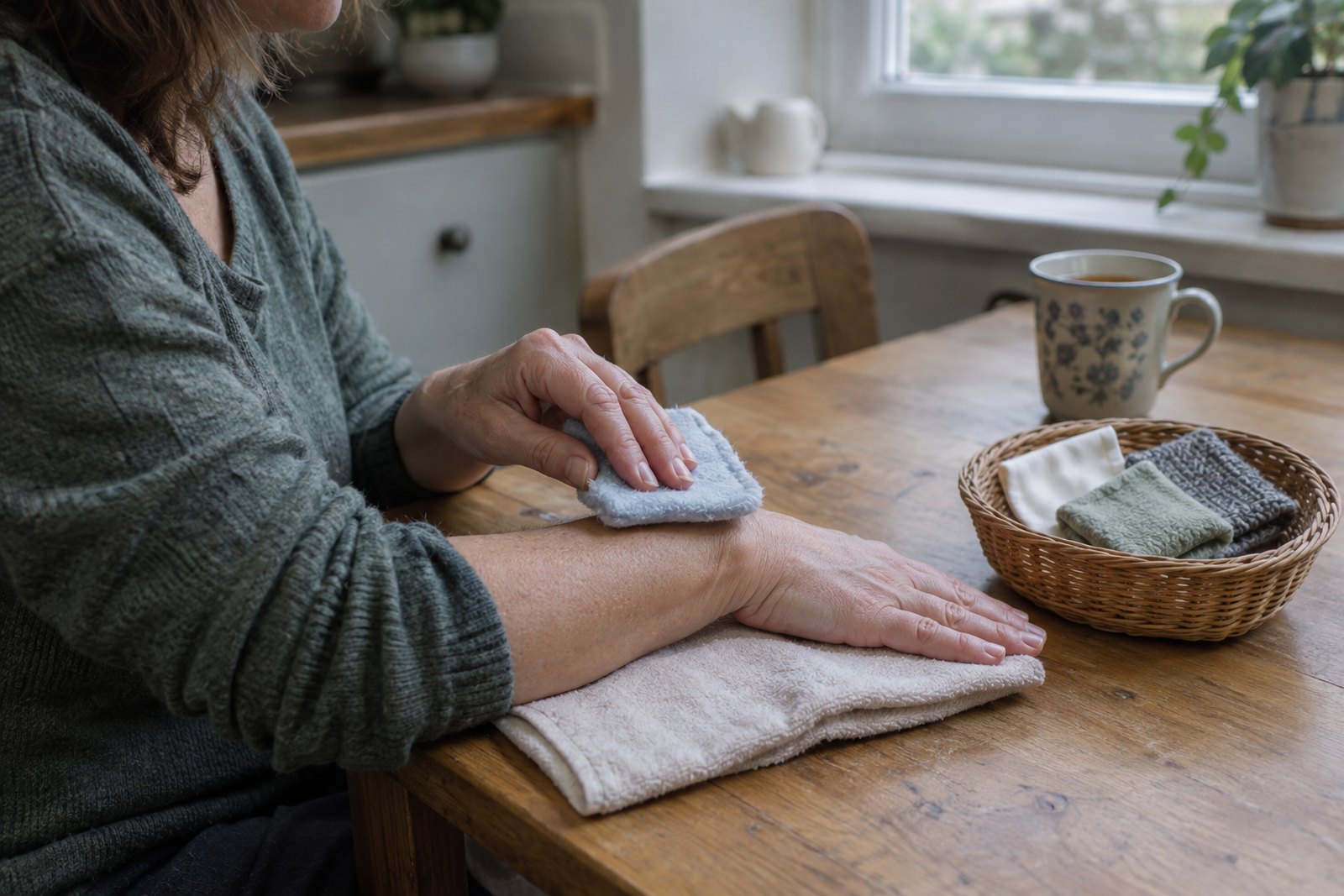
This means gradually getting the skin used to touch again. It often starts with something the skin can just about tolerate, such as a soft cloth, and works slowly towards firmer pressure or rougher textures. Sessions are short and regular. A therapist will set the starting point and pace with you.
Graded motor imagery and mirror therapy
Graded motor imagery is a staged programme that works on the brain's map of the body. It usually starts with recognising whether pictures show a left or right hand or foot, then moves to imagining movements, and then to mirror therapy. In mirror therapy, you hide the affected limb behind a mirror and watch the reflection of your good limb moving, so it looks as if the painful limb is moving comfortably. It sounds simple, but it can stir up strong pain or odd sensations, so learn it with a trained physiotherapist or occupational therapist rather than on your own.
Mood, stress and psychological support
Living with CRPS is exhausting. Pain, poor sleep, not being believed, losing work or hobbies, and worry about the future all take a toll. Feeling low, anxious or angry is common and understandable.
Psychological support is a standard part of CRPS care, not a suggestion that the pain is imaginary. It can help with coping strategies, fear of movement, sleep and the knock-on effects on family life. Pain teams often include a psychologist. You can also ask your GP about NHS Talking Therapies, which in England you can usually refer yourself to. The charity Burning Nights CRPS Support offers information and peer support from people who understand.
Work and CRPS
Staying in work, or getting back to it gradually, is often good for recovery, but the job may need to change for a while. Options might include a phased return, different hours, more breaks, swapping some tasks, adjusting the workstation, or working from home some days. If CRPS has a substantial and long-term effect on your daily life, you may be protected under the Equality Act 2010 (or the Disability Discrimination Act 1995 in Northern Ireland), which means your employer has a duty to make reasonable adjustments. Our guide to reasonable adjustments at work explains how to ask. GOV.UK and Acas have current guidance.
Where an occupational therapist fits
Occupational therapy is one of the main therapies recommended for CRPS, alongside physiotherapy. The occupational therapist's focus is your daily life: getting the affected limb back into real tasks and keeping the things that matter to you going.
An occupational therapist can:
- Teach and guide desensitisation and, where trained, graded motor imagery.
- Help you set up pacing and a realistic daily routine.
- Find easier ways to dress, wash, cook and look after yourself, while still involving the affected limb.
- Suggest equipment carefully. The aim is to make life manageable without letting the good limb take over completely, which is a balance worth getting right.
- Advise on returning to work, hobbies and driving, and write reports when needed.
- Look at your home with a home assessment if getting around or managing tasks has become hard.
What an occupational therapist does not do is diagnose CRPS or manage medicines. That is for your GP and pain team. Physiotherapists lead on movement, strength and walking, and psychologists on the emotional side. If you were injured in the hand or wrist, see our page on hand and upper limb injuries. If you have NHS treatment already, a private occupational therapist should work alongside it, not replace it.
Frequently asked questions
Does CRPS ever go away?
For many people it improves over time, particularly when treatment starts early and the limb is kept moving. For others it lasts longer and becomes something to manage. Your pain team can give you a better sense of your own situation.
Can CRPS spread to other parts of the body?
The pain can spread beyond the original injury within the same limb, and occasionally to other limbs. If you notice new areas affected, tell your GP or pain team.
Should I keep my arm in a sling to protect it?
Not unless a doctor or therapist has told you to for a specific reason and time. Keeping the limb still for long periods tends to make CRPS worse. Gentle, regular use is usually advised.
Can I get occupational therapy for CRPS on the NHS?
Often, yes, usually through a pain team, hospital therapy department or GP referral. Availability varies by area, so ask your GP what is offered locally. Some people also see a private occupational therapist for extra help at home or with work.
Is it normal to feel the limb is not mine?
Yes. Many people with CRPS describe the limb feeling foreign, the wrong size or disconnected. It is a recognised part of the condition and worth mentioning to your team, as graded motor imagery and other approaches may help.
Can children get CRPS?
It can happen in children and teenagers, more often after a minor injury. If your child has pain and sensitivity that seem out of proportion, see your GP, who can refer to a paediatric team.
Next steps
If daily tasks have become hard with CRPS, see our home assessment and equipment and aids pages, or current guide prices, and choose your area below.

Talk to an occupational therapist near you
This guide is general information. For advice about your own situation - or someone you look after - a local occupational therapist can visit you at home and see it for themselves.
Choose your area: