

Occupational Therapy Masters: The Pre-Registration MSc Explained
By Mobile Occupational Therapist • 31 October 2026 • 12 min read
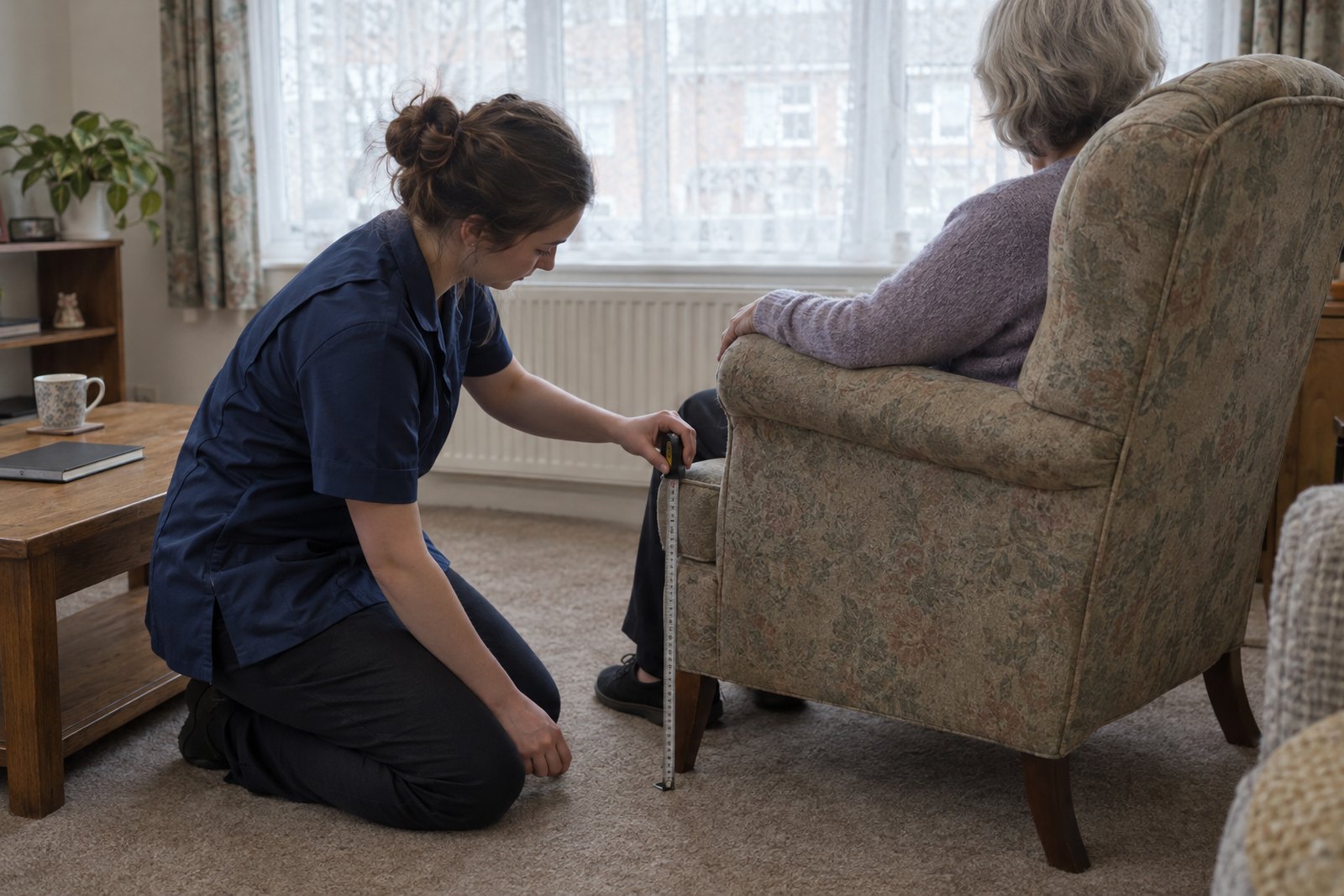
A pre-registration MSc in occupational therapy is a master's degree that qualifies you to practise as an occupational therapist. It is designed for people who already have a degree, and it normally takes two years full time. If the course is approved by the Health and Care Professions Council (HCPC), finishing it makes you eligible to apply for registration. Once you are on the register you can work under the protected title "occupational therapist" in the NHS, social care, schools, charities or private practice.
It is often called the accelerated route, because it fits roughly what an undergraduate does in three years into two. That is accurate. It is also a polite way of saying it is hard work. Terms are long, placements are full time, and the long summer most graduates remember tends to shrink or disappear. If you already have a degree and want a recognised, direct way into the profession, though, it is usually the quickest one there is.
Pre-registration or post-registration: the first thing to check
Search for "occupational therapy masters" and you will find two very different kinds of course with confusingly similar names.
- A pre-registration MSc is for people who are not yet occupational therapists. It teaches the profession from the ground up, includes assessed placements, and leads to eligibility to apply for HCPC registration.
- A post-registration MSc is for people who are already qualified and registered. It deepens knowledge in an area such as advanced practice, research, leadership, neurology or hand therapy. It does not qualify you to practise, because you are expected to be qualified already.
The quickest test is the entry requirements. If a course asks you to be HCPC-registered before you start, it is post-registration. A pre-registration course will say, somewhere on the page, that successful graduates are eligible to apply for HCPC registration. If you cannot find that sentence, ask the admissions team before you go any further.
How the two years are usually structured
Every university designs its own programme, but most share a similar shape. You can expect a mix of:
- Foundations such as anatomy, physiology, psychology and how conditions affect everyday life.
- Occupational therapy theory and practice, including occupational science, activity analysis, models of practice and how to assess and plan with people.
- Practice across the lifespan, from children's development to physical health, mental health, learning disability, neurological conditions and older age.
- Research, usually ending in a dissertation or research project. This is what makes it a master's rather than a shorter postgraduate award.
Many courses use problem-based or enquiry-based learning, where you work through case scenarios in small groups and do a lot of the reading yourself. If you are used to lectures and exams, that can feel uncomfortable for the first term. It is also quite a good rehearsal for the job, where nobody hands you a reading list for the person in front of you.
Terms are typically much longer than an ordinary master's. Some programmes run for most of the calendar year. Check the term dates on the course page before you plan anything else around them.
Placements and the 1,000 hours
Placements are the heart of the course. The Royal College of Occupational Therapists (RCOT) sets learning and development standards for pre-registration education, and its standard is a minimum of 1,000 hours of practice-based learning. Programmes accredited by RCOT build this into their timetable, usually as several full-time blocks spread across the two years.
You can expect to work in a range of settings. That might include hospital wards, community teams visiting people at home, mental health services, social care, schools or voluntary organisations. Some courses offer role-emerging placements, where you work somewhere without an established occupational therapist and help shape what the role could be there. Those placements can be daunting and are often where students learn the most.
Practical points worth thinking about early:
- Travel. Placements can be a long way from the university. Ask how far students typically travel and whether a car is expected.
- Choice. You may have little say in where you go. Universities have to share placements between many students and professions.
- Hours. Placements usually follow the working hours of the service, which may include early starts or, occasionally, weekends.
- Caring responsibilities and paid work. Full-time placement weeks leave very little room for either. If you have children, care for someone, or need to keep a job, talk to the course team before you apply, not after.
How you are assessed
Expect a mixture of essays, case studies, presentations, practical assessments and sometimes exams, plus the dissertation. On placement, a practice educator (an experienced occupational therapist) assesses your performance against set standards. Placements are usually pass or fail, and they matter: you cannot qualify without passing them.
Entry requirements in general terms
Each university sets its own requirements, so the course page is always the final word. That said, the common themes are fairly consistent.
- An honours degree. Many courses ask for a 2:1, and some will consider a 2:2 alongside strong relevant experience. Psychology, sport and exercise science, biology, social sciences and health-related subjects are common backgrounds, but some programmes accept a degree in any subject.
- Evidence that you understand the profession. This does not always have to be time with an occupational therapist, which can be hard to arrange. Care work, support work, being a teaching assistant, volunteering with disabled people or in mental health services all count for something, as long as you can explain what you learned.
- Recent study. If your degree was a long time ago, some universities like to see evidence of recent academic work.
- An interview. Often values-based, sometimes with group tasks. Admissions teams want to see how you think about people, not just what you know.
- Checks. An enhanced DBS check and occupational health clearance are standard because you will work with vulnerable people on placement.
- English language. If English is not your first language, expect a formal language requirement. Check both the university's requirement and the HCPC's standard for registration.
The most common weakness in personal statements is describing occupational therapy as if it were physiotherapy, or as if it were mainly about equipment. It is about occupation: the everyday activities that matter to a person, and what gets in the way of doing them. Show you understand that, with real examples from your own experience, and you are ahead of a lot of applicants.
Funding: where to look, and why to check carefully
Funding for pre-registration healthcare courses is different in each UK nation, and it changes. Forum posts from a few years ago are often out of date, so treat them with caution.
In general terms:
- England. Pre-registration postgraduate healthcare courses, including occupational therapy, have been treated differently from most master's degrees. Eligible students may be able to apply for tuition fee and maintenance support through Student Finance England, even if they already have a degree. Eligible students may also be able to apply to the NHS Learning Support Fund, run by the NHS Business Services Authority. Check current details on GOV.UK and the NHS Business Services Authority website.
- Scotland, Wales and Northern Ireland. Each has its own arrangements, and some support schemes come with a commitment to work in that nation for a period after qualifying. Check with the relevant student funding body and the university.
- International students. Usually not eligible for UK government student support. The university's international office is the place to ask.
Whatever your situation, speak to the university's funding or student money team early. Ask specifically about placement travel and accommodation costs, what can be claimed back and how, and whether there is any hardship support. Placement costs are the part people most often underestimate.
Choosing a course
Once you have a shortlist, these are the things that make a real difference.
- HCPC approval. Essential. Without it you cannot register. The HCPC publishes a searchable list of approved programmes.
- RCOT accreditation. This shows the course meets the professional body's standards, including the 1,000 placement hours. Ask directly if it is not clear on the course page.
- Placement arrangements. How are placements allocated, how far do students travel, and what range of settings is offered?
- Teaching style. Lecture-based, problem-based or blended. Think honestly about how you learn.
- Timetable. Term dates, contact days and how much flexibility exists, if any.
- Support. What happens if you struggle on placement, become unwell or need to pause your studies? A good course will have a clear answer.
- Exit awards. Some programmes allow you to leave with a postgraduate diploma. Check whether that award also leads to eligibility for registration, as arrangements vary.
- Location. You will be there for two intense years, with placements nearby. Cost of living and distance from your support network matter more than people expect.
At open days, ask to speak to current students. They will tell you how the placements really work.
How it compares with other routes
The MSc is not the only way in. A three-year BSc (usually four in Scotland) is the traditional route. Degree apprenticeships let you train while employed and paid, which suits some people very well, especially those already working in health or social care; our guide to occupational therapy degree apprenticeships explains how they work. Some universities also offer part-time pre-registration programmes over a longer period.
For the full picture, including how the routes compare and what the job involves day to day, see how to become an occupational therapist in the UK.
HCPC registration after you qualify
Finishing an approved programme makes you eligible to apply for HCPC registration. It does not register you automatically. You apply, the HCPC processes your application, and only once you appear on the register can you call yourself an occupational therapist or practise as one.
Registration is renewed every two years. To stay on it you need to meet the HCPC's standards of proficiency and standards of conduct, keep up continuing professional development, and have appropriate professional indemnity arrangements. Many occupational therapists also join RCOT for professional support and resources. Our article on HCPC registration for occupational therapists covers this in more detail.
Careers after the MSc
Most newly qualified occupational therapists start in entry-level posts in the NHS or local authority social care, often on rotational schemes that move you between different teams. Good first posts usually come with preceptorship, a structured period of support and supervision as you find your feet. It is worth asking about this at interview.
From there, the profession is wide. Occupational therapists work in acute hospitals, community rehabilitation, mental health, paediatrics, schools, learning disability services, housing and adaptations, vocational rehabilitation, prisons, hospices and research. In the NHS, pay is generally set by the role and its banding rather than by whether your qualifying degree was a BSc or an MSc. Our guide to occupational therapist salaries in the UK sets out how bands and private earnings work.
The research element of the MSc can also be a stepping stone. Some graduates go on to clinical academic roles or a PhD later in their careers.
Where independent, home-visiting occupational therapists fit
This site is a directory of independent, HCPC-registered occupational therapists who visit people at home. Their work includes home assessments, equipment and adaptations advice, falls prevention, children's sensory and motor needs, and reports for funding, housing or legal purposes.
Very few occupational therapists start in private practice. Most build several years of experience in supervised NHS or social care posts first, developing the clinical judgement, risk assessment skills and breadth of knowledge that working alone in someone's home demands. If independent practice appeals to you, the MSc is the beginning of that road, not the end of it.
It is also worth being honest about fit. If what draws you most is exercise and movement, physiotherapy may suit you better. If it is communication or swallowing, look at speech and language therapy. Talk to people in each profession before committing two years and a great deal of energy.
Frequently asked questions
Can I do an occupational therapy masters with any degree?
Sometimes. Many courses prefer a related subject, such as psychology, biology or sport science, but some accept a degree in any discipline if you can show relevant experience and a clear understanding of the profession. Check each university's entry requirements individually.
Is the accelerated MSc harder than the BSc?
It covers the same professional ground, including the same minimum placement hours, in less time and at master's level. Most students find the pace the hardest part. It suits people who are organised, motivated and comfortable studying independently.
Can I keep a part-time job while studying?
Some students manage a few hours, but full-time placements and long terms make it difficult. Do not build your budget on the assumption that you can work alongside the course. Speak to the university about funding and hardship support instead.
Is there a part-time or distance learning option?
Some universities offer part-time pre-registration programmes over a longer period, and some use blended learning. Placements still have to be completed in person, so no pre-registration course can be done entirely at a distance.
Will I earn more with an MSc than with a BSc?
Not in itself, in most NHS roles. Pay depends on the post and its band. The MSc can help later with research, academic or advanced practice roles, but it does not usually change your starting salary.
Is a postgraduate diploma enough to register?
It depends on the programme. Some approved courses allow a postgraduate diploma exit award that still leads to eligibility for registration; others do not. Check the course documentation and the HCPC list of approved programmes.
Next steps
If you are already qualified and HCPC-registered and want to work independently with people in their own homes, you can join the directory, and see what this kind of work involves on our home assessments page. You can also choose an area below to see where independent occupational therapists already practise.
Talk to an occupational therapist near you
This guide is general information. For advice about your own situation - or someone you look after - a local occupational therapist can visit you at home and see it for themselves.
Choose your area: