Occupational Therapy in Stoke-on-Trent: NHS, Council and Private
By Mobile Occupational Therapist • 22 September 2026 • 11 min read
Local Occupational Therapist -
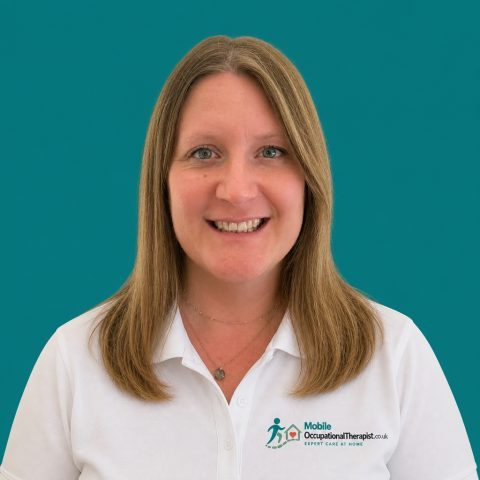
Helen Harrison, Staffordshire

If you are looking for occupational therapy in Stoke-on-Trent, you have two main routes. The free one starts with Stoke-on-Trent City Council's own occupational therapy service, which you reach through the council's online adult social care portal, or by phone if you cannot get online. The other is to pay a private occupational therapist to visit you at home. That usually means you can approach someone directly, have a longer visit, and work on things the council service is not set up to cover.
The detail that catches people out is that Stoke-on-Trent is its own council. It is not run by Staffordshire County Council, so the county's front door, Staffordshire Cares, is not where city residents begin. Live a few miles out, in Newcastle-under-Lyme or Stone, and it is the other way round. Below is who to ask, what a private visit involves, the problems people most often bring to an OT, and the local therapist who covers the city. There is more on our Stoke-on-Trent page.
What people in Stoke-on-Trent ask an OT for
Occupational therapy is about the ordinary business of a day. Getting washed and dressed. Making a cup of tea without it becoming a risk. Getting up the stairs, out of the front door and back to work. An occupational therapist looks at what you want to do, what is stopping you, and what would change that: a different way of doing it, a piece of equipment, an alteration to the house, or practice to rebuild a skill that has slipped away.
Most enquiries fall into a handful of groups:
- Managing at home after a stroke or brain injury. Hospital gets you well enough to leave. Home is where you find out what is still hard: losing track halfway through making a meal, an arm that will not do what it used to, or a tiredness that flattens you by lunchtime.
- Equipment. Rails, shower seats, raised toilet seats, perching stools, bed levers and much else. The right item in the right place helps. The wrong one ends up in the shed or, worse, gets leaned on when it was never meant to take weight.
- Adaptations. Bigger changes such as a level-access shower, a stairlift, a ramp or wider doors, often paid for at least in part by a Disabled Facilities Grant.
- Getting back to work. Working out what a job actually demands, what has changed since an illness or injury, and what adjustments would make a return realistic rather than a setback waiting to happen.
The NHS and council route in Stoke-on-Trent
Start with the city council
For an adult living in the city, the starting point is Stoke-on-Trent City Council's occupational therapy service. You contact it through the council's online adult social care portal. If you cannot go online, there is a phone line, which you will find on the council's website and on our Staffordshire grant page. You can usually get in touch yourself, or a family member can do it with your agreement.
Tell them plainly what is going wrong, rather than what equipment you think you need. 'Mum has fallen twice getting out of the bath' gets a more useful response than 'we need a bath seat'. If someone is in hospital, ask the ward who is assessing them for going home, and whether any equipment will be in place on the day they arrive.
If it is a child who needs help, ask the city council where to start rather than the county.
Paying for adaptations: the grant in the city
Bigger adaptations are usually funded through a Disabled Facilities Grant. In Stoke-on-Trent the city council runs the grant through its own Home Improvement Agency and adaptations team, after an assessment by the city's occupational therapy service. That assessment is the gateway: the council decides what is needed with its own OT team.
The council's published policy, which covers 2021 to 2026, has some useful features:
- grants for works up to £7,000 are not means tested
- the means test can be waived, up to £30,000, where someone urgently needs to come home from hospital
- a loan is available to cover any contribution the means test asks you to make
- relocation help of up to £10,000, for when moving makes more sense than adapting
- a major equipment grant
These are the council's policy, and policies change. This one was written to run until 2026, so ask the council what currently applies before you plan around any figure.
If you live just outside the city
Cross the boundary and the route changes. In Newcastle-under-Lyme, an adult starts with Staffordshire Cares, the county's adult social care front door. It talks through what you need, arranges an occupational therapy visit if one is needed, and passes a recommendation to the borough council, which runs the grant itself. The borough's 2023 policy offers a top-up of up to £15,000 and puts urgent cases, such as someone at risk coming out of hospital, first. A new policy is out for consultation, so check what applies.
In Stone, you also start with Staffordshire Cares, and the grant is run by Stafford Borough Council's Housing Assistance Service, which covers both Stafford and South Staffordshire. Again, these are council policies and they can change. The details for each council are on our Staffordshire grant page, linked above.
How a private home visit is different
A private occupational therapist works for you, not to a council's criteria. In practice that tends to mean:
- You approach them directly. No referral is needed.
- More time and a wider view. A private visit can take in memory, concentration and fatigue, not only the immediate safety question.
- Ongoing work, not a single visit. Rehabilitation, practice and follow-up can carry on for as long as they are useful and you want them.
- Written evidence. A detailed report for a solicitor, case manager or employer.
Now the honest bit. The council route is free and a private one is not. And for a grant in Stoke-on-Trent, the council decides what is needed with its own occupational therapy team, so do not expect a private report to replace theirs. If a grant is your main goal, contact the city council first, and ask how it would use a private report before you pay for one.
Where private visits earn their keep is everything around that: getting clear on what you need while you wait, rehabilitation the council service does not provide, help with work and fatigue, and the detailed reporting that legal cases rely on. If you are weighing it up, our guide to NHS or private occupational therapy sets out the trade-offs.
Your local occupational therapist: Helen Harrison
The occupational therapist listed for Stoke-on-Trent on this site is Helen Harrison. Helen is based in Stafford and covers Staffordshire through her own practice, working alongside associate occupational therapists, and visits people at home in and around the city, including Newcastle-under-Lyme and Stone. If an enquiry would suit one of her colleagues better, she will say so.
Her background is neurological, which fits the kinds of requests above closely. Helen qualified in 2010 and has worked in neurological rehabilitation ever since, first in the NHS and, since 2018, in independent practice. Her NHS years took in both ends of recovery: inpatient neurological units, including a Level 1 rehabilitation unit for people with complex brain injuries and multiple traumatic injuries, and community neuro teams helping people once they were home. She has seen what people are actually left to manage once the front door closes.
She works with adults after traumatic brain injury, stroke, spinal cord injury, brain tumours, hypoxic brain injury and post-concussion syndrome, and with people living with Parkinson's, multiple sclerosis, Huntington's disease and motor neurone disease.
The first visit is an assessment, and it starts as a conversation: what is hard at the moment, what a typical day looks like, and what you most want to get back to. From there, Helen builds the work around your goals rather than a standard programme. Depending on what you need, that might include:
- practical strategies for memory, concentration, planning, problem-solving and getting started on tasks
- assessing an arm or hand for strength, movement, co-ordination and sensation, then building a programme from what she finds
- everyday tasks such as washing, dressing, cooking and getting out into the local community
- managing fatigue, which comes up constantly and is often where the real gains are
- made-to-measure splints, including ones that help with tasks such as writing or eating
- advice on seating, posture, equipment and home adaptations
For people aiming to return to work, she assesses the workplace, recommends reasonable adjustments and assistive technology, and talks directly with employers about how to support the return. She also has considerable medico-legal experience, working as the rehabilitation occupational therapist alongside private multidisciplinary teams and writing reports for solicitors and case managers. You can read more on Helen's profile, or about neurological occupational therapy and work and ergonomics.
Things worth doing before anyone visits
Whichever route you take, a little preparation makes the first visit far more useful.
- Write down a normal day. Hour by hour, roughly. Where does it go wrong? That tells an OT more than a list of diagnoses.
- Keep a simple energy diary for a week if tiredness is a problem. Note what you did and how you felt afterwards. Patterns show up quickly.
- Hold off on big purchases. Stairlifts, riser recliners and expensive bathing equipment are easy to get wrong. Get advice on what suits you and your house first.
- Ask about equipment before discharge. If someone is in hospital, ask what they will need at home, who is arranging it, and whether it will be there when they arrive.
- Gather the paperwork. Discharge letters, clinic letters and any earlier OT reports save time.
- Make your goals specific. Not 'be independent' but 'make my own breakfast' or 'walk to the shop at the end of the road'.
A word about urgency. An occupational therapist is not an emergency service. If someone has sudden face drooping, arm weakness or slurred speech, call 999: these can be signs of a stroke. After a head injury, call 999 if someone loses consciousness, has a seizure, or is very drowsy or confused, and call NHS 111 or speak to a GP about symptoms that worry you but feel less urgent. New or worsening symptoms in a long-term neurological condition should go to the GP or specialist team first.
Frequently asked questions
Do I need a referral to see an occupational therapist in Stoke-on-Trent?
For the city council's service, you can usually get in touch yourself through its online adult social care portal, or a family member can do it with your agreement. For a private occupational therapist, you do not need a GP referral; you contact them directly.
Does Staffordshire Cares cover Stoke-on-Trent?
No. Staffordshire Cares is the county council's front door for adults in Staffordshire outside the city. Stoke-on-Trent is a separate council, so city residents start with the city council's occupational therapy service.
Will the city council use a private OT report for a Disabled Facilities Grant?
Stoke-on-Trent decides what is needed with its own occupational therapy team, so plan on their assessment being the one that counts. Ask the council how it would treat a private report before you commission one for grant purposes. Some councils elsewhere in the county take a different approach, which our Staffordshire grant page explains.
Can an occupational therapist help someone get back to work after a brain injury or stroke?
Yes, and it is a common goal. An OT can look at what the job involves, what has changed, and which adjustments, equipment or gradual return would help. Helen offers workplace assessments and liaises with employers. The government's Access to Work scheme may also help with some costs; check whether you qualify on GOV.UK.
I am a solicitor or case manager. Can Helen take on medico-legal work in the area?
Helen's profile describes considerable medico-legal experience, as the rehabilitation occupational therapist alongside private multidisciplinary teams, and writing reports for solicitors and case managers. Send an enquiry through her profile with an outline of the case.
Next steps
If you live in Stoke-on-Trent or nearby and want help at home, have a look at Helen's profile and her prices page, then send her an enquiry with a few lines about who needs help, what is getting harder and what you would most like to change. If the council route suits you better, start with the city council's occupational therapy service.