Home Occupational Therapy in Staffordshire: What to Expect from the First Call to the Follow-Up
By Mobile Occupational Therapist • 24 August 2026 • 6 min read
Local Occupational Therapist -
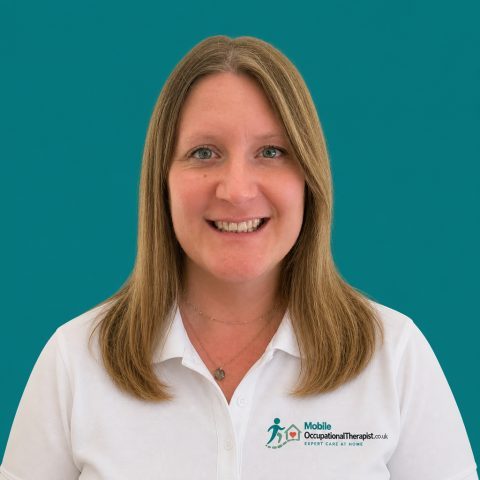
Helen Harrison, Staffordshire
If you have never had an occupational therapist visit you at home, it is hard to picture what actually happens. Is it a medical examination? A sales visit for equipment? An hour of being watched while you make a cup of tea? In Staffordshire, home occupational therapy is provided by Helen Harrison, who has spent fifteen years specialising in neurological rehabilitation, and the honest answer is that a visit is mostly a structured, unhurried conversation - one that takes place in the rooms where daily life actually unfolds. This post walks through the whole process in order, from the first phone call to the follow-up, so you know what is coming at every stage.
It starts with a free phone call
The first contact is a phone call, and it costs nothing and commits you to nothing. You do not need a GP referral, and you do not need to have your story polished. People ring about themselves, about a parent in Lichfield or a partner in Stoke-on-Trent, sometimes about a client if they are a case manager or solicitor. Helen uses this call to understand what has happened, what is getting harder, and what you are hoping might change.
The call also works as a filter, in your favour. Helen's practice, Helen Harrison Occupational Therapy Ltd, works with associate occupational therapists, and if your situation would be better served by a colleague - or by a different service altogether - she will say so on the phone rather than book a visit that is not right for you. If a home visit does make sense, you will agree a time and Helen will travel to you, whether that is Stafford itself, Cannock, Uttoxeter or a village like Abbots Bromley.
The first visit: a conversation before anything else
The first visit is an assessment, but it does not start with forms or tests. It starts as a conversation, usually at your kitchen table or in your sitting room, about how a normal day goes. What time do you get up, and how does getting up actually happen? Who makes breakfast? What did you used to do that you have stopped doing? Where does the day get difficult - and where does it still go well?
This matters because occupational therapy is built around your goals, not a standard programme. Two people recovering from a stroke can have completely different priorities: one wants to walk to the shops in Stone again, the other wants to get back to gardening, or driving, or work. The plan Helen builds afterwards is shaped by what you say here, so the conversation is the most important part of the visit, not a preamble to it. If you would like a fuller general picture of this stage, our national guide to what an occupational therapist does on a home visit covers it in detail.
What Helen looks at while she is with you
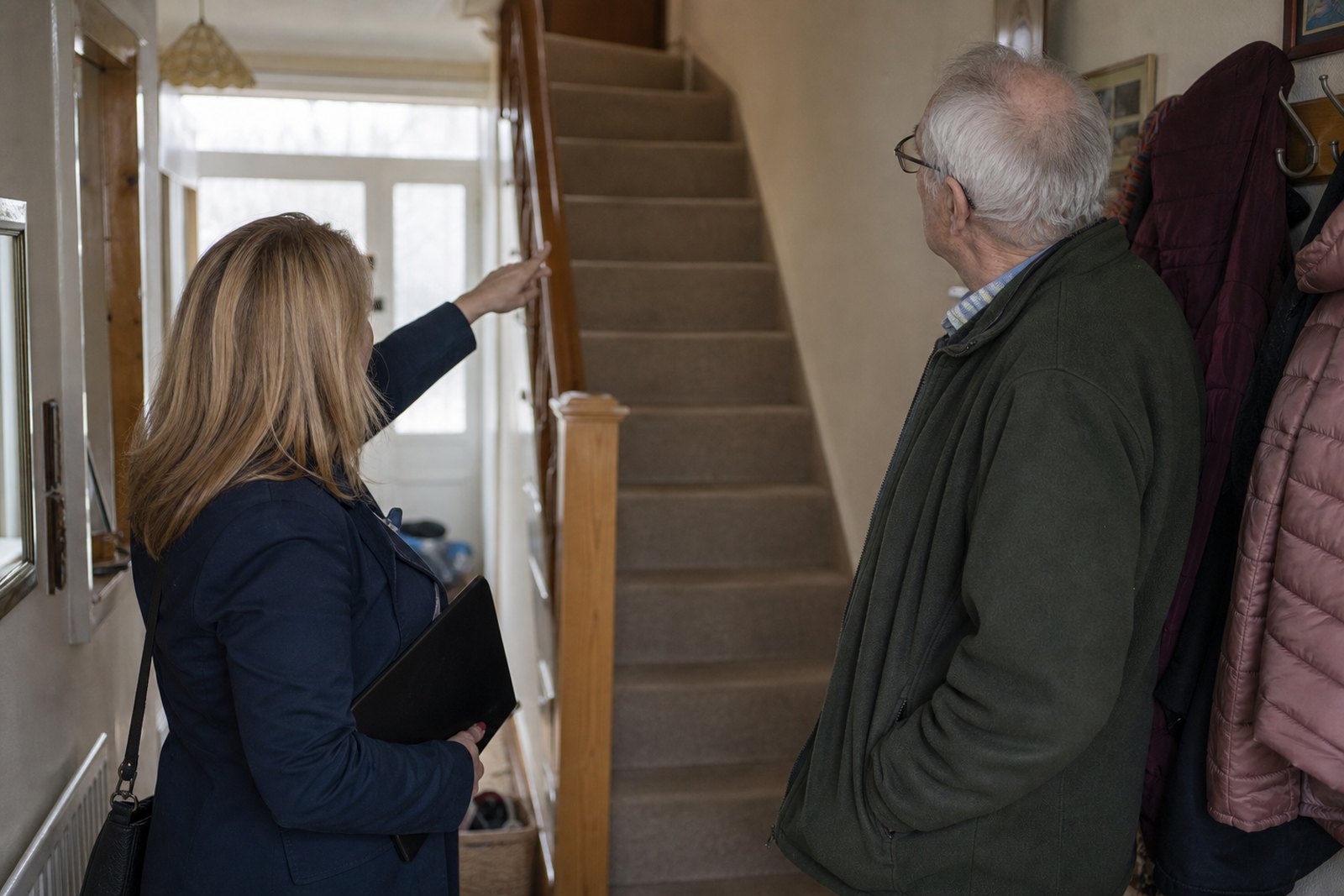
Alongside the conversation, Helen will usually want to see some everyday activities in the places they really happen. That might mean watching how you get out of your armchair, manage the stairs, move around the kitchen or get in and out of the bathroom. It is not a test you can fail; it is how she works out precisely where the difficulty sits, because "I can't cook any more" can mean weak grip, poor balance, fatigue, low confidence or trouble planning the steps of a meal - and each of those leads to a different plan.
Because Helen's background is neurological rehabilitation, she is also paying attention to things a generalist might not:
- Movement and the upper limb. How your arm and hand work during real tasks, not just on request - there is more on this side of her work on our hand and upper limb page.
- Thinking skills. Memory, concentration, processing speed and planning, which often affect daily life more than physical changes do after a brain injury or stroke.
- Fatigue. How your energy behaves across a day and a week, which shapes when and how any rehabilitation should happen.
- Seating, posture and equipment. Whether the chair, bed or wheelchair you already have is helping you or working against you.
The home itself is part of the assessment too - steps, thresholds, lighting, where the bathroom is in relation to the bedroom. If adaptations or equipment come into it, they come after the assessment, as answers to specific problems; you can read more about that side of the work on our home assessments page.
The written plan
After the visit, Helen writes up what she found and what she recommends. This is a plain-English document, not a sheaf of jargon: your goals, what is getting in the way of them, and the steps proposed - which might be a course of rehabilitation sessions, specific changes at home, equipment worth considering, a splint, or onward suggestions such as speaking to your GP about something she noticed. The written plan is yours. Some people take it forward with Helen; others use it to inform family decisions, an application, or work with other professionals. Where a formal report is needed for a solicitor or case manager, that is a distinct service, described on our functional assessments and reports page.
Follow-up: where the change actually happens
For many people the assessment leads into a series of home sessions, because rehabilitation is rarely a single-visit event. Follow-up visits are practical and goal-driven: practising real tasks, progressing a rehabilitation programme, adjusting techniques that are not working, reviewing a splint, building stamina towards something specific like a return to work or getting confident in town again. Progress is reviewed against your goals, and the plan changes as you do. There is no obligation to book a set number of sessions, and the pace is set around your life - and, often, around your fatigue, which Helen treats as a symptom to be managed in its own right rather than an inconvenience to push through.
Frequently asked questions
Do I need a GP referral for a home visit?
No. You can contact Helen directly and the first phone call is free. If anything comes up during assessment that your GP should know about, Helen will encourage you to speak to them, and can explain what to raise.
How long does the first visit take?
Long enough not to be rushed - a first assessment is typically over an hour, because the conversation and the practical observation both take time to do properly. If fatigue is an issue, the visit is paced around you.
Should family be there?
If you would like them there, yes. Family often fill in useful detail and are usually part of carrying the plan forward. But it is your assessment and your goals that lead it.
Next steps
If a home visit sounds like it might help you or someone you care about, the easiest way to find out is the free phone call - get in touch and describe what is going on. You can read more about Helen's background and specialisms on Helen's profile, and see exactly how visits are charged on our prices page.