

Disabled Students' Allowance and the Needs Assessment Explained
By Mobile Occupational Therapist • 27 October 2026 • 11 min read
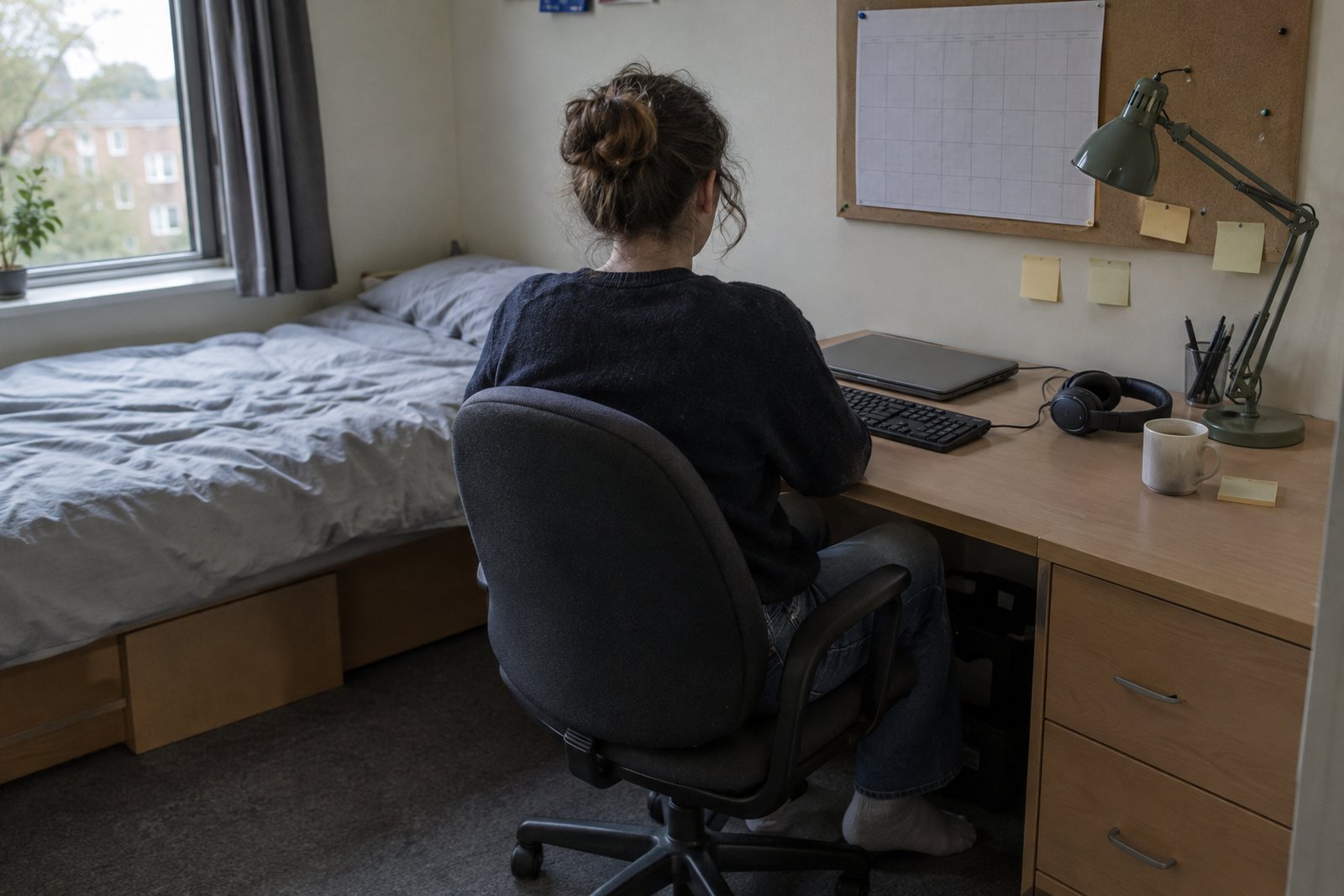
Disabled Students' Allowance (DSA) is extra help for UK students in higher education who have a disability, a long-term health condition, a mental health condition or a specific learning difficulty such as dyslexia or dyspraxia. It pays for support you need because of how your condition affects your studies. That can include specialist equipment and software, one-to-one study support, and extra travel costs. It is not a loan, so you do not pay it back, and it does not depend on your household income.
You apply to the student finance body for the part of the UK where you normally live and send evidence of your condition. You are then usually invited to a needs assessment. Despite the name, this is a conversation, not a test. An assessor talks through how your condition affects studying and recommends support, and the funding body decides what it will pay for. The rules change from time to time, so check GOV.UK (or SAAS if you live in Scotland) for the current position for your year of study.
Who can get Disabled Students' Allowance
DSA is for students on higher education courses, such as degrees, foundation degrees, HNDs and postgraduate courses. Full-time and part-time students can both be eligible, though part-time and distance learning courses have their own conditions. You also need to meet the usual residence rules for student finance.
The key question is whether your condition affects your ability to study. Students who get DSA include people with:
- specific learning difficulties such as dyslexia, dyspraxia (also called developmental coordination disorder) or dyscalculia
- ADHD or autism
- mental health conditions such as anxiety, depression, an eating disorder or bipolar disorder
- long-term conditions such as diabetes, epilepsy, Crohn's disease, ME/CFS, chronic pain, long COVID or hypermobility
- physical disabilities, sight loss or hearing loss
You do not have to think of yourself as disabled to apply. Plenty of students who qualify would never use the word about themselves. If your condition makes reading, writing, concentrating, getting around campus or keeping up with deadlines harder than it is for other people, it is worth applying.
Which funding body to apply to
It depends on where you normally live, not where your university is:
- England - Student Finance England
- Wales - Student Finance Wales
- Northern Ireland - Student Finance NI
- Scotland - the Student Awards Agency Scotland (SAAS)
So a student from Cardiff studying in Manchester applies to Student Finance Wales. If you are applying for a student loan anyway, you can usually say on that application that you want DSA and the funding body will send you what you need. If you are not getting other student finance, there is a separate DSA application. If you already get equivalent support from somewhere else, such as a bursary or your university, you may not be able to get DSA as well. GOV.UK explains which route applies to you.
Apply as early as you can. You can apply before your university place is confirmed, and support takes time to put in place. Students who wait until they are struggling halfway through the first year often find the help arrives just as exams start.
In Scotland the process works a little differently, and the needs assessment is often arranged through your university's disability service. The SAAS website sets out the current steps.
The evidence you need
The funding body needs to see that you have a condition, not just that you find studying hard. What counts depends on the condition.
Disability, long-term condition or mental health condition
This is usually a letter or report from a doctor or other qualified professional confirming your condition and how it affects you, or a disability evidence form they fill in for you. Your GP, consultant or specialist nurse can normally do this. Some GP surgeries charge for letters, so ask before you request one.
Specific learning difficulty
For dyslexia, dyspraxia and similar conditions, funding bodies generally want a full diagnostic assessment report from a suitably qualified psychologist or specialist teacher. A short screening test is not enough on its own. If you were assessed at school, ask the funding body whether that report will be accepted, because the rules about which reports count have changed over the years. If you have no report at all, your university's disability service is the place to ask about getting one. DSA does not usually pay for the diagnostic assessment itself.
Small things that save time
- Make sure the evidence names the condition, not just the symptoms.
- Ask whoever writes it to describe the effect on everyday life: fatigue, pain, concentration, reading speed, handwriting, getting about.
- Keep copies of everything you send.
- Keep older paperwork handy for the assessment, such as an EHCP, school exam access arrangements, or reports from an educational psychologist, speech and language therapist or occupational therapist.
What DSA can pay for
DSA covers extra costs that come from your condition, not the costs every student has. In general terms it can fund:
- Specialist equipment, such as a supportive chair, a document holder, a digital recorder, an ergonomic keyboard and mouse, or a computer if you need one because of your condition. In England you may be asked to contribute towards the cost of a computer, and GOV.UK explains how this works.
- Assistive software, such as text-to-speech, speech-to-text, mind mapping, screen magnification and lecture recording tools, usually with training on how to use them.
- Non-medical help, such as a specialist study skills tutor, a specialist mentor for mental health or autism, a British Sign Language interpreter or a note-taker.
- Extra travel costs caused by your condition, for example a taxi if you cannot use public transport. Ordinary travel to university is not covered.
- Some other study-related costs, depending on the funding body.
DSA does not pay for medical treatment, personal care such as help washing or dressing (that is a matter for your council's adult social care team), or adjustments your university is expected to make anyway.
What happens at the needs assessment
Once your funding body accepts your evidence, it will tell you how to book a needs assessment (sometimes called a study needs assessment). The assessment is paid for through DSA. It may be in person at an assessment centre or done remotely. The assessor is there to understand how your condition affects your studies, not to judge whether you are disabled enough.
Before the assessment
Most people underplay their difficulties on the day, especially if they have spent years coping quietly. A bit of preparation helps:
- Think about your course, not just your condition. Long reading lists, labs, placements, fieldwork, presentations and timed exams each bring different demands.
- Write down what a bad week looks like, not a good day. How long does a chapter take you to read? How often do you lose track of deadlines? How long can you sit or type before pain or fatigue stops you?
- Note what helped at school or college, and what did not.
- Have your evidence and any older reports to hand.
On the day
The assessor will ask about your condition, your course, and practical things like reading, writing, note-taking, organisation, concentration, memory, getting around campus, exams and fatigue. They may show you software or equipment so you can see what suits you. You can usually bring someone with you for support. Be honest about what you find hard. If something sounds useful but you know you would never use it, say so.
After the assessment
The assessor writes a report recommending support and sends it to the funding body. You should be able to see a copy, so ask if one does not arrive. The funding body then writes to you confirming what it will fund. After that, suppliers contact you to deliver equipment and arrange training, and your non-medical help is set up. If something recommended has not been approved, or something important is missing, contact the funding body and ask how to challenge the decision.
Your university disability service and reasonable adjustments
DSA is only half the picture. Universities have their own duty to make reasonable adjustments for disabled students. In England, Scotland and Wales this comes from the Equality Act 2010, and Northern Ireland has its own disability discrimination law. Common adjustments include:
- extra time, rest breaks, a smaller room or use of a computer in exams
- lecture slides in advance and permission to record lectures
- flexible deadlines or a simple way to ask for extensions
- accessible or quieter accommodation
- adjustments on placements and in practical work
Register with your university's disability service as early as possible, even while your DSA application is going through. They often put together a support plan that tells your lecturers what you need. Do not assume the funding body and your university talk to each other. Tell both.
Where an occupational therapist fits
To be clear, you do not need an occupational therapist to apply for DSA or to have a needs assessment. Diagnosis comes from a doctor or, for specific learning difficulties, a psychologist or specialist teacher. For mental health support, start with your GP, your university's wellbeing or counselling service, or NHS talking therapies. DSA needs assessors decide what study support to recommend.
Where an occupational therapist helps is the practical side of everyday life that DSA does not fully cover: the routines, energy and environment that make studying possible in the first place. A private occupational therapist visiting at home, or at your term-time address, can look at how you actually manage your day and suggest specific changes.
Organisation and routines
Many students with ADHD, autism or dyspraxia find that the hardest part of university is not the work but the scaffolding around it: starting tasks, tracking deadlines, remembering appointments, keeping a room usable. An occupational therapist can help build simple systems that fit how you think. Our guide to executive dysfunction strategies for adults has ideas you can try straight away.
Fatigue and pacing
If you have ME/CFS, long COVID, a chronic pain condition or MS, the problem is often running out of energy before the work is done. Pacing, planning heavy and light days, and cutting the energy cost of daily tasks can make a real difference. See our practical guide to fatigue management and pacing.
Sensory needs
Noisy lecture theatres, harsh lighting, crowded corridors and shared kitchens in halls can be exhausting if you process sensory information differently. An occupational therapist can help you work out what drains you and what settles you, and plan around it.
Handwriting, typing and desk set-up
Slow or painful handwriting is common with dyspraxia, hypermobility and some hand conditions. An occupational therapist can look at grip, posture, seating, desk height and whether typing or dictation would serve you better, which you can then raise at your needs assessment. Our article on dyspraxia in adults covers more of the everyday side.
Independent living
For some students, cooking, laundry, shopping and getting dressed without using up the day's energy is the real challenge of moving away from home. That is squarely occupational therapy territory.
If your mental health is getting worse, do not wait for any of this to be in place. Speak to your GP or your university's wellbeing service. For urgent help that is not an emergency, call NHS 111. If you feel unsafe or at risk of harming yourself, call 999 or go to A&E.
Frequently asked questions
Do I have to pay Disabled Students' Allowance back?
No. DSA is not a loan and is not based on your household income. It is paid for the support you need, usually straight to the suppliers and support workers rather than to you.
Can I apply without a formal diagnosis?
You will need evidence the funding body accepts. For a specific learning difficulty that usually means a full diagnostic assessment report. If you do not have one, ask your university's disability service how to get assessed, and see your GP about other conditions.
Can I get DSA as a postgraduate or part-time student?
Often, yes. Postgraduate and part-time students can be eligible, but there are conditions about the course and how it is funded. Check GOV.UK or SAAS for the current rules.
Does my university find out I have applied for DSA?
Do not rely on it. Register with your university's disability service yourself so they can put reasonable adjustments in place, such as exam arrangements, alongside your DSA support.
Can a private occupational therapist carry out my DSA needs assessment?
No. DSA needs assessments are arranged through the funding body's process. A private occupational therapist can help with practical strategies alongside your DSA support, but that is separate and is not paid for by DSA.
What if my needs change partway through my course?
Contact your funding body. You can ask for your support to be reviewed if your condition changes or the course demands something new, such as a placement.
Next steps
If daily routines, fatigue or sensory overload are getting in the way of studying, an occupational therapist can help with the practical side. See our functional assessments and reports or sensory needs pages, or current guide prices, and choose your area below.

Talk to an occupational therapist near you
This guide is general information. For advice about your own situation - or someone you look after - a local occupational therapist can visit you at home and see it for themselves.
Choose your area: