Choosing a Private Occupational Therapist in Staffordshire: How to Get It Right
By Mobile Occupational Therapist • 24 August 2026 • 6 min read
Local Occupational Therapist -
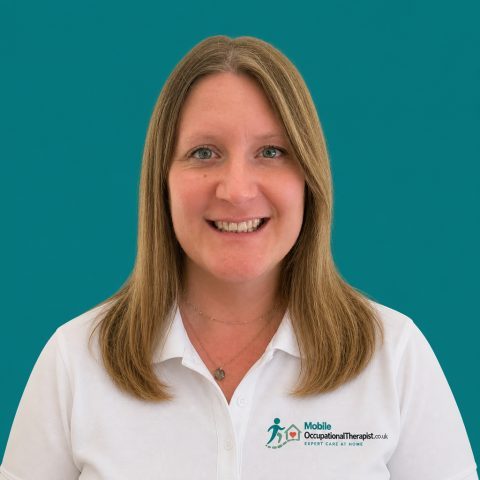
Helen Harrison, Staffordshire
Deciding to pay for private occupational therapy is usually a considered step - often taken after a hospital stay, a new diagnosis, or months of watching daily life get slowly harder for yourself or someone you love. Having decided, the next question is who. Anyone searching from Stafford, Tamworth or Newcastle-under-Lyme will find a mix of national agencies, sole practitioners and directory listings, and from the outside it is genuinely difficult to tell them apart. This guide covers the checks that matter, the questions worth asking, and how to work out whether a therapist's specialism actually fits your situation - using Helen Harrison, the occupational therapist covering Staffordshire on this site, as a worked example of what to look for.
First, the non-negotiable: the HCPC register
"Occupational therapist" is a protected title in the UK. Anyone using it must be registered with the Health and Care Professions Council (HCPC), which checks qualifications, requires ongoing professional development and provides a route for complaints. Checking takes two minutes: ask for the therapist's registration number, then look it up on the HCPC's public register online. A legitimate therapist will expect the question and answer it without hesitation - Helen's registration, for example, is OT61688, listed openly on her profile. Many therapists are also members of the Royal College of Occupational Therapists, the profession's UK body; membership is a good sign of engagement with the profession, but it is the HCPC registration that is the legal essential.
If a person or company is vague about registration, or offers "assessments" without naming a registered therapist who will carry them out, walk away. There is a fuller national version of this advice in our guide to choosing a private occupational therapist in the UK.
Specialism: when a generalist is fine, and when it is not
All occupational therapists share a core training, and for many situations - a straightforward equipment assessment, advice on managing at home in later life - a good generalist serves you well. But occupational therapy has genuine specialisms, and matching the specialism to your situation is probably the single biggest factor in how much value you get.
The clearest example is neurological conditions. If the reason you are seeking help is a stroke, a brain injury, a spinal cord injury, or a progressive condition such as Parkinson's, MS, Huntington's or motor neurone disease, you want a therapist who works with these conditions all the time. Neurological rehabilitation involves things a generalist rarely touches: cognitive rehabilitation for memory and planning difficulties, upper limb rehabilitation, splinting, specialist seating, and the slow, staged rebuilding of daily activities around a changed brain or nervous system. Helen is a neuro specialist by background - fifteen years in neurological rehabilitation, first in NHS neurological inpatient units including a Level 1 rehabilitation unit for complex brain injury and polytrauma, then community neuro teams, and in independent practice since 2018. That history shows up in the detail of her training list: Bobath, splinting and casting, functional electrical stimulation, cognitive rehabilitation, seating and posture. A therapist's training record is worth asking about precisely because it tells you what they have invested in beyond the core qualification.
The reverse also applies. If your need is not neurological - a housing adaptation report, say, or general support after a fall - a neuro specialism is not a disadvantage, but it is not the deciding factor either, and other parts of this guide matter more. Our page on home adaptations describes that broader work.
Questions worth asking on the first call
Most good private therapists, Helen included, offer a free initial phone call. Use it. Reasonable questions include:
- Have you worked with my condition before? Listen for specifics rather than a blanket yes.
- What would the first visit involve, and what do I get afterwards? You should hear something like an assessment leading to a written plan, built around your goals. Our post on what happens in a private OT assessment sets out the standard to expect.
- How many sessions do you think this needs? An honest answer is often "I'll know after the assessment" - be wary of anyone selling a fixed block up front.
- What happens if you're not the right person? The best therapists will tell you when they are not, and point you elsewhere.
- What are your fees and travel arrangements? Clear, published pricing is a good sign in itself.
What the associates model means for you
Some private practices are one person; others, like Helen Harrison Occupational Therapy Ltd, are a lead therapist working with associate occupational therapists. It is worth understanding what that means, because it is often misread as a warning sign when it is usually the opposite.
In a well-run associates model, the lead therapist takes the first call, and matches each enquiry to the person best placed to handle it - which is sometimes themselves and sometimes a colleague with more relevant experience or better availability in your part of the county. The thing to check is simple: every therapist who might actually visit you should be HCPC registered, and you should be told who is coming before they come. Helen is explicit that if an enquiry suits a colleague better, she says so - which is exactly the behaviour you want, because it means the recommendation you get on that first phone call is about your needs rather than her diary. What you should not accept, from any provider, is being passed to an unnamed "assessor" whose credentials you cannot check.
Frequently asked questions
Do I need a GP referral to see a private occupational therapist?
No. You can contact a private therapist directly. It is still sensible to keep your GP informed, and a good therapist will suggest speaking to your GP if the assessment turns up anything they should know about.
Is private occupational therapy a replacement for NHS care?
No - it runs alongside it. Many people use private therapy for speed, for continuity with one named therapist, or for specialist input while remaining under NHS teams. Nothing about seeing a private therapist affects your NHS entitlements.
What if I'm choosing on behalf of someone else?
That is very common - adult children arranging help for a parent in Rugeley or Burntwood, or case managers instructing therapists for a client. The same checks apply, with one addition: make sure the therapist is comfortable building the plan around the goals of the person receiving the therapy, not the person paying for it.
Next steps
If your situation is neurological, or you simply want a specialist's view on whether occupational therapy can help, the free initial call is the natural first step - contact us and Helen will either take it on or tell you straight if someone else would serve you better. Her full background, training and registration details are on Helen's profile, and our prices page shows what visits cost before you commit to anything.