
Care Home Occupational Therapy Assessments in London
By Mobile Occupational Therapist • 8 September 2026 • 6 min read
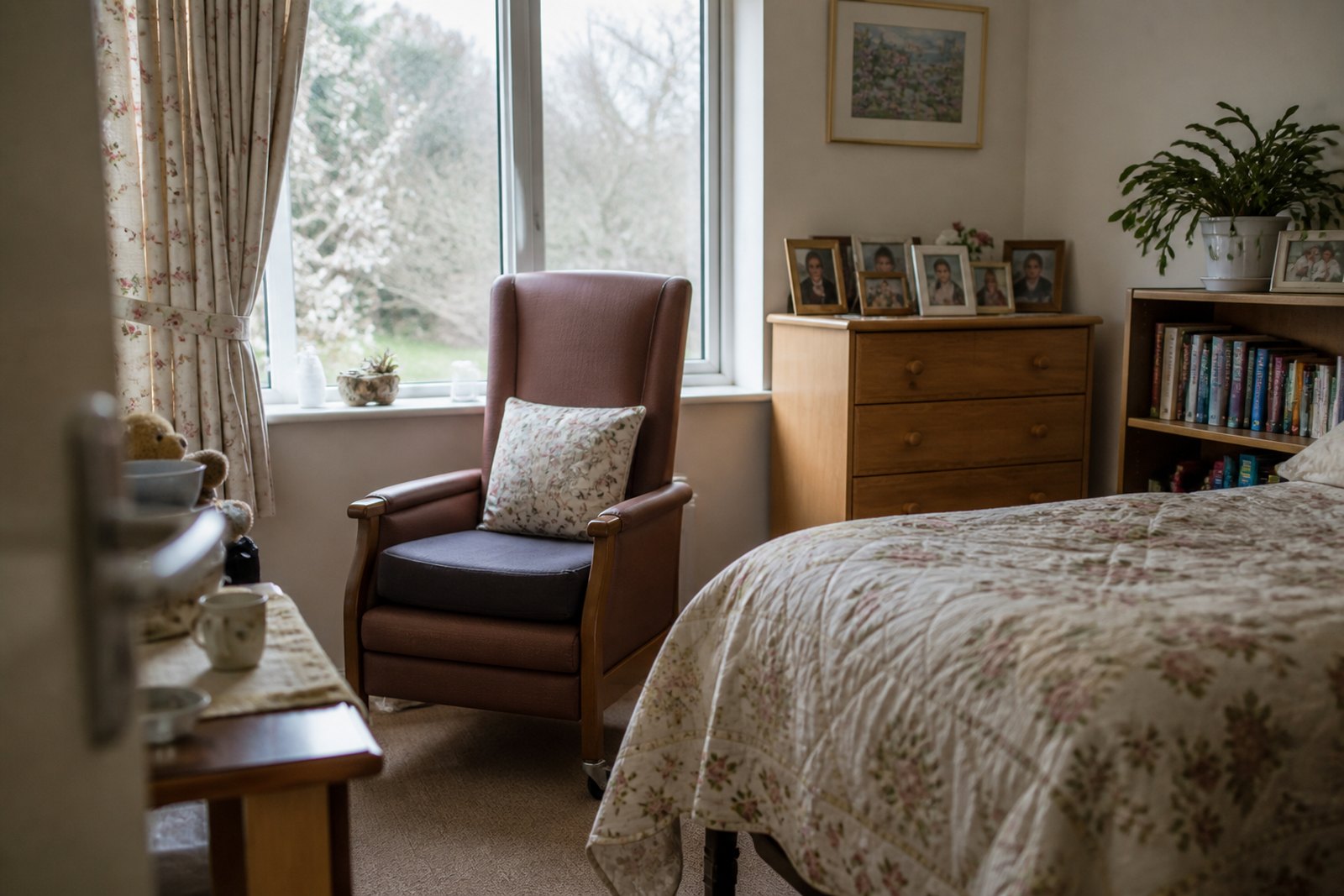
Occupational therapy is usually pictured in someone's own house, but a care home room is a home too - often the most concentrated home a person will ever have, with one chair, one bed and one window doing the work a whole house used to do. Getting that small world right makes an enormous difference to comfort, dignity and how much of the day a person can still do for themselves. Care home assessments are part of our London service, in homes across London, from Barnet and Edgware down to Sutton and Bromley. This guide explains what such an assessment covers and who it helps.
Why bring in an outside OT at all?
Good care homes look after people attentively, but their staff are carers, not therapists, and the questions an occupational therapist asks are different: not "is this person comfortable and safe right now?" but "what could this person still be doing for themselves, and what is quietly stopping them?" A visiting OT also brings independence in the plain sense - recommendations belong to the resident and family, not to the home's budget or routines. In practice most care homes welcome the input, because clear, practical recommendations make their job easier, not harder. And because no referral is needed, a family can simply arrange it, starting with a free phone call.
Seating and positioning: the chair is half the day
Many care home residents spend more waking hours in a chair than anywhere else, and the wrong chair does slow, quiet damage - sliding that needs constant rescuing, leaning that makes eating and conversation harder, discomfort that gets read as agitation. An assessment looks at how a person actually sits over time: whether the seat's height, depth and support match their body, whether they can rise from it with the least help necessary, and whether the position they end up in lets them eat, drink and join in. Sometimes the answer is adjusting what is already there; sometimes it is a different chair entirely. Our guide to choosing the right chair explains the principles, which apply just as much to a care home room as to a lounge at home.
Pressure care in plain English
Skin breaks down when a body stays in one position too long with its weight pressed on the same small areas - over the heels, the base of the spine, anywhere bone sits close to the surface. People who cannot shift their own weight easily are most at risk, which describes many care home residents. The OT contribution is practical: checking that cushions and mattresses actually suit the person's level of risk, that seating does not concentrate pressure in the wrong places, and that the daily pattern includes genuine changes of position rather than the same chair from breakfast to supper. Any actual skin damage, or concern about it, is a medical matter for the home's nurses and the GP - an assessment complements that care, it never substitutes for it.
Making one room work as a whole home
A care home room is a life compressed into a few square metres, and small choices carry weight. Can the person reach what they use most without asking? Does the furniture layout let them get to the toilet, the window, the door - with a frame if they use one? Is the bed at a height they can manage, and does the lighting suit eyes that have changed? For residents living with dementia, familiarity and visual clarity matter even more - the right photographs in the right places, contrast that makes the toilet door findable, a room arranged so it makes sense at 3am; our pages on dementia cover this way of thinking in more depth. Equipment plays its part too, chosen for the person rather than pulled from a store cupboard - our plain-English equipment guide is a good primer, and an equipment and aids assessment matches items to the individual.
Recommendations people can actually use
The product of a care home assessment is a short, concrete set of recommendations written for three audiences at once: the resident, the family, and the care staff who will carry most of it out day to day. That means specifics - which chair, set how, cushion of what type, items moved where, what to watch for - rather than general encouragement. For families, especially those visiting from across London or beyond, it turns a vague unease ("Mum seems to slump all the time") into an actionable list, and gives them fair, informed questions to raise with the home.
Sometimes the answer is home, with support
An honest word for families weighing up a move into care: sometimes an assessment of the current home shows that the move is not yet necessary. A surprising share of "we think it is time" conversations trace back to specific, fixable problems - a bathroom, a staircase, a fear of falling - rather than to needs that only a care home can meet. A home assessment in the person's own house, alongside our older people's independence work, can test the "home, with support" option properly before anyone signs anything. And when a care home genuinely is the right choice, that same clear-eyed look means the family chooses it with confidence rather than doubt.
Frequently asked questions
Will the care home allow a private OT to visit?
Almost always, yes - residents are entitled to arrange their own professional input, and visits are coordinated with the home's manager so staff can be involved. Most homes value the recommendations, since they help staff as much as residents.
Is an assessment worth it before choosing a care home?
It can be, in two ways: by checking whether staying at home with changes and support is still realistic, and - if a move is right - by helping you judge whether a particular room and set-up will actually work for your relative's needs.
Who pays for equipment the assessment recommends?
It varies - some items are the home's responsibility, some are personal purchases, and funding depends on individual circumstances. The recommendations set out what is needed and why, which is exactly what you need for that conversation with the home or the local authority.
Next steps
If someone you love is in a care home in London - or you are trying to decide whether they should be - a conversation with us costs nothing and obliges you to nothing. Contact the office and we will be happy to help; any fee is agreed with you before anything is booked.
Occupational Therapist in London
Local occupational therapy enquiries
We are currently arranging new occupational therapy cover for this area. Contact the office with your requirements and we will confirm whether we can help.
Mobile Occupational Therapist
HCPC-registered occupational therapists, visiting you at home.