

Bathing Aids and Bathroom Safety: An OT's Practical Guide
By Mobile Occupational Therapist • 17 July 2026 • 6 min read
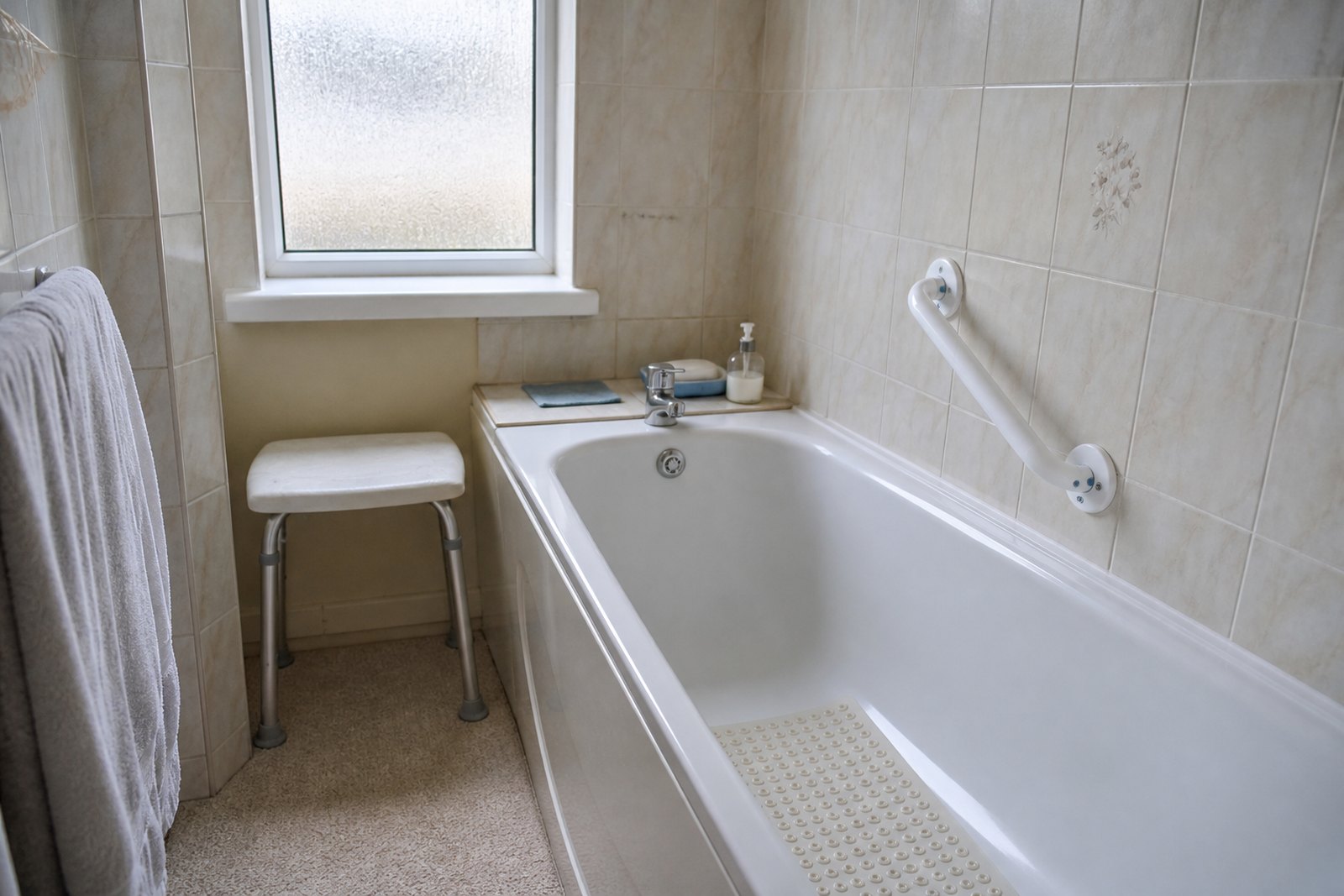
The bathroom is consistently one of the highest-risk rooms in the home, and one of the areas occupational therapists focus on most often. Wet, slippery surfaces combined with awkward movements - stepping over a bath edge, lowering onto a low toilet seat - make it a genuine safety priority, but also one of the places where relatively small, low-cost changes can make a disproportionately large difference.
Why bathing carries particular risk
Bathing combines several risk factors at once: wet and potentially slippery surfaces, undressing and balance challenges, and often getting in and out of an enclosed space with limited handholds. For anyone with reduced strength, balance, joint pain, or confidence following a previous fall or near-miss, these factors compound quickly. This is exactly why bathroom safety features so heavily in home assessments and forms a large part of many home adaptations conversations.
Common bathing aids and what they help with
Bath boards and bath seats
A bath board sits across the top of the bath, allowing someone to sit and transfer their legs over the side rather than stepping in and out while standing. Bath seats sit inside the bath itself, reducing how far someone needs to lower themselves. The right choice depends heavily on the exact shape of your bath and how you currently get in and out - a generic "best bath aid" recommendation found online is rarely reliable without seeing your actual bathroom.
Grab rails
Well-positioned grab rails are one of the simplest, most cost-effective safety improvements available, but positioning genuinely matters - a rail fitted in the wrong place, or into a wall that can't properly support it, can be actively misleading, giving false confidence in something that isn't secure. This is worth getting professionally assessed rather than guessed, particularly for anything fitted into tiled walls.
Non-slip mats and flooring
A good non-slip mat, correctly sized and positioned, reduces one of the most basic risks in the bathroom. It's worth checking mats regularly, as suction grips can wear out or fail to hold on certain floor surfaces over time.
Shower chairs and stools
For anyone who finds standing for the full duration of a shower tiring or unsteady, a suitably sized shower chair or stool can make a considerable difference to both safety and comfort - again, sizing and stability for your specific shower matter more than the item itself.
Raised toilet seats and toilet frames
These can significantly ease transfers on and off the toilet, particularly after hip or knee surgery, or where strength has reduced. Height and secure fitting both matter - an ill-fitting raised seat can make things harder rather than easier.
Beyond equipment: simple environmental changes
- Lighting. A brighter, well-positioned light reduces the chance of a missed step or misjudged distance, particularly for early morning or night-time trips to the bathroom.
- Clutter. Removing anything on the floor between the door and the toilet or bath reduces trip hazards.
- Temperature and timing. Bathing when least fatigued, and keeping the room warm, both reduce risk in a way that costs nothing.
- Towels and clothing within reach. Reduces the need to move around the room while wet.
Checking equipment you already own
It's worth periodically reviewing bathing equipment already in use rather than assuming it's still doing its job. Suction grips on mats and seats can weaken over time, particularly on textured or slightly uneven tile surfaces, and rubber feet or ferrules can wear smooth. A bath board or seat bought several years ago may also no longer suit your current mobility, even if it fitted well when it was first purchased. A quick check - is it still stable, still the right height, still comfortable - takes only a few minutes and can catch problems before they lead to an accident.
When equipment isn't enough
Sometimes the honest answer is that no amount of equipment will fully solve the problem - a deep, high-sided bath may simply not suit someone's current mobility, however it's equipped. In these cases, a home adaptation, such as a level-access shower, is worth discussing as a longer-term option, alongside lower-cost equipment as an interim measure. A good occupational therapist will be honest about which category applies to your situation, rather than defaulting to the most expensive option by default.
Who benefits most from a bathroom safety assessment
- Anyone who has had a fall or a near-miss in the bathroom
- People managing conditions such as arthritis or frailty where bathing has become noticeably harder
- People recovering after surgery, illness or a hospital stay - see our guide to discharge planning
- Family members concerned about a relative's safety, wanting an outside professional opinion before making changes
Frequently asked questions
Can I fit grab rails myself?
Physically, yes - but positioning and secure fixing genuinely matter for a rail to be trustworthy under real weight-bearing use. An occupational therapist assessment beforehand ensures the rail goes exactly where it will actually be used, fixed into a surface that can safely support it.
What's the difference between a bath board and a bath seat?
A bath board sits across the top of the bath for a seated transfer over the side; a bath seat sits inside the bath itself, lowering how far someone needs to bend. Which suits you depends on your bath shape, your current mobility and how you get in and out now - an assessment is the most reliable way to choose correctly.
Is a walk-in shower always the safest option?
Often, yes, but not automatically for everyone - some people manage a well-equipped bath perfectly safely, and a full conversion involves cost and disruption that isn't always necessary. An occupational therapist can advise honestly on whether equipment, a smaller change, or a full adaptation is the right fit for your specific situation.
Next steps
If bathing has started to feel harder or less safe, a bathroom safety assessment is a practical first step. Find your local occupational therapist via our areas we cover page, or see our prices page for current guide pricing.
Talk to an occupational therapist near you
This guide is general information. For advice about your own situation - or someone you look after - a local occupational therapist can visit you at home and see it for themselves.
Choose your area: